AliPay Parent Ant Group Launches 'Anvita,' a Crypto Transaction Platform Built for AI Agents
Ant Group's blockchain arm unveils Anvita, an agentic commerce platform enabling AI agents to autonomously hold assets, trade, and settle payments via the x402 protocol and USDC in real time.

Key Takeaways
- Ant Group's blockchain division launched "Anvita," a crypto platform purpose-built for AI agents, unveiled at the Real Up summit in Cannes
- Composed of two products — Anvita TaaS for asset tokenization and Anvita Flow for agent-to-agent payments via the x402 protocol and USDC
- Ant Group joins Visa, Coinbase, and Google in an intensifying race to build the payment infrastructure for agentic commerce
Ant Group Goes All In on the "Agent-to-Agent Economy"

Anvita includes tokenization services and a platform for agents to coordinate tasks and settle payments in real time using stablecoins.
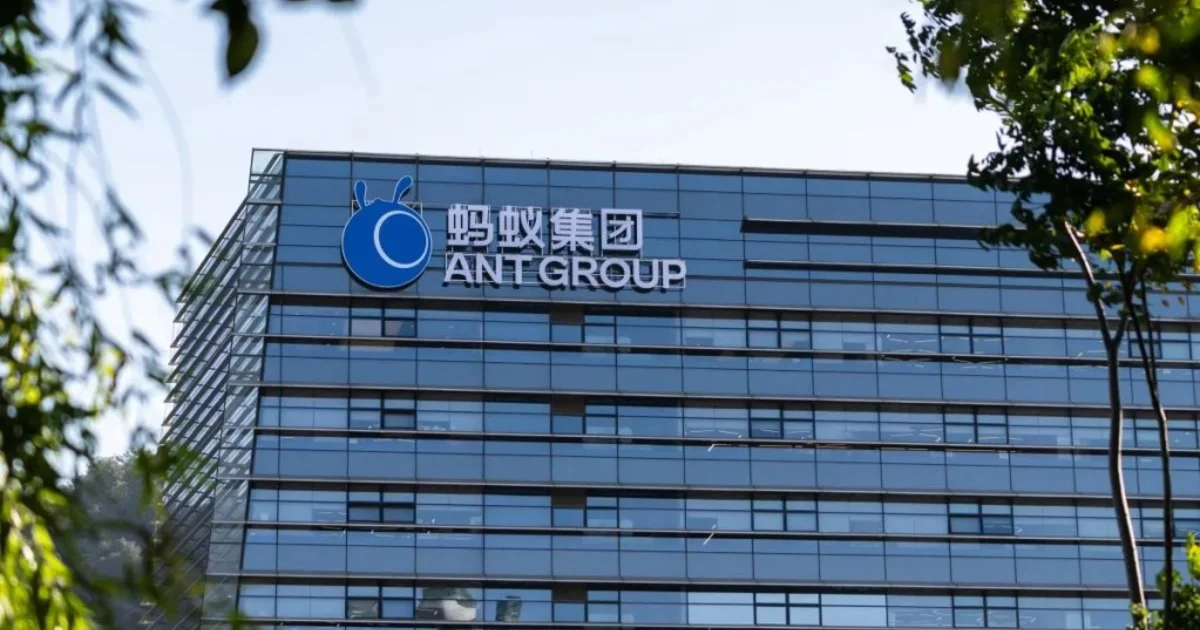
www.coindesk.comAnt Group, the Chinese tech giant behind AliPay, has unveiled "Anvita" — a crypto platform designed exclusively for AI agents. The announcement came on March 31, 2026, at the company's "Real Up" summit in Cannes.
What stands out is that Anvita is not simply another blockchain service. Branded as an "agent-to-agent economy" platform, it is architected from the ground up for autonomous software agents to hold assets, execute trades, and complete payments without human intervention. Zhuoqun Bian, president of blockchain business at Ant Digital Technologies, told CoinDesk:
Pure RWA is just the 'static infrastructure' of digital assets. The real transformation lies in moving toward an onchain agentic economy, where autonomous agents will not just analyze data — they will hold assets, execute trades, and optimize portfolios.
Anvita's Two Pillars: TaaS and Flow
Anvita is composed of two distinct products serving different layers of the stack.
The first is Anvita TaaS (Tokenization-as-a-Service), an institutional offering for tokenizing real-world assets (RWAs). It includes custody and treasury tools, enabling traditional assets like real estate, bonds, and funds to be digitized on-chain in a form that AI agents can interact with.
The second is Anvita Flow, the core agentic commerce product. It provides infrastructure for AI agents to register on the platform, discover other agents, coordinate tasks, and settle payments in real time. Payments are powered by the x402 protocol developed by Coinbase and Cloudflare, enabling instant micropayments in the USDC stablecoin. No subscriptions or human approvals are required, and the system handles sub-cent transactions.
Anvita Flow also features an "Agent Store" with modules for data collection, financial analysis, and gaming. Developers can list their own agents, and the platform supports major frameworks including OpenClaw and Claude Code, with flexible hosting options.
A Crowded Race for Payment Infrastructure
Ant Group's entry signals that the competition for agentic commerce payment infrastructure has entered a new phase.
Several major players were already staking out positions. Visa has been developing its "Trusted Agent Protocol," which lets AI agents check out through existing card payment rails. Coinbase is pushing stablecoin-based micropayments through the x402 protocol. Google unveiled its Agent Payments Protocol (AP2) in September 2025, backed by over 60 organizations.
Most recently, Mastercard acquired stablecoin firm BVNK for $1.8 billion — the largest stablecoin infrastructure deal on record — signaling that traditional payment networks are integrating blockchain settlement into their future strategies.
Why are so many players converging on this market? McKinsey projects that AI agents could mediate $3 trillion to $5 trillion of global consumer commerce by 2030. The Solana Foundation has reported over 15 million onchain agent transactions already processed on its network, and Coinbase CEO Brian Armstrong has said he expects agent transaction volume to surpass human activity.
That said, a significant gap remains between expectations and reality. Daily volume on the x402 protocol sits at roughly $28,000, and Artemis analysts have flagged approximately half of observed transactions as test activity.
What This Means for E-Commerce Operators
Anvita's primary targets are institutional investors and blockchain developers, but e-commerce operators should pay close attention.
Ant Group, through AliPay, commands a payment infrastructure serving over 1.3 billion users worldwide. The fact that this company is building dedicated agentic commerce payment infrastructure suggests that the era of AI agents "actually making purchases" is drawing closer.
Anvita Flow's adoption of the x402 protocol, combined with AWS's reference implementation and Google's AP2, indicates that industry standards for agent payments are converging. The technical choices facing e-commerce operators when making their APIs and product data agent-ready are becoming clearer.
However, stablecoin-based payments still face regulatory and accounting challenges in various jurisdictions. For now, keeping a close eye on overseas agent payment developments while beginning to design API architectures that anticipate agent interactions represents a practical first step.
Looking Ahead
The fact that AliPay's parent company has launched a dedicated agentic commerce platform tells us this space has moved from experimentation to an infrastructure-building race. Visa, Coinbase, Google, Mastercard, and now Ant Group — the battle for payment infrastructure dominance is accelerating, premised on a future where AI agents become primary economic actors.
The next milestone to watch is the actual transaction volume on Anvita Flow and whether the broader x402 protocol ecosystem can accelerate its transition to commercial-scale usage.