AI Commerce News Digest (March 6, 2026)
Visa and Mastercard battle for agentic commerce standards, OpenAI drops ChatGPT direct checkout plans. Agentic commerce infrastructure advances across payments, logistics, and security layers.


Key Takeaways
- Visa and Mastercard compete for agentic commerce standards leadership, with Mastercard unveiling "Verifiable Intent"
- OpenAI drops plans for direct checkout inside ChatGPT, pivoting to third-party transactions
- Agentic commerce infrastructure advances simultaneously across payments, logistics, and security layers
Top Stories
Visa and Mastercard Compete to Set Agentic Commerce Standards

The card networks are locking arms with big tech players and digital payments to shape the evolving agentic commerce ecosystem.
www.paymentsdive.comVisa and Mastercard are vying for leadership in standardizing agentic commerce, where AI agents make purchases on behalf of consumers, each taking a distinctly different approach.
Mastercard has announced an open standard called "Verifiable Intent," a mechanism that uses cryptographic proofs to verify whether AI agent transactions truly reflect user intent, with Google and Fiserv among the initial partners. Visa, meanwhile, is taking an approach that emphasizes integration within its own ecosystem through Visa Intelligent Commerce, including a pilot with DBS Bank.
Both companies are strengthening partnerships with big tech and digital payment providers, signaling that agentic commerce infrastructure has entered a full-scale competitive phase.
Full Article: Visa and Mastercard's Battle for Agentic Commerce Standards Heats Up
OpenAI Drops Plans for Direct Checkout Inside ChatGPT

OpenAI is abandoning direct checkout inside ChatGPT and will complete transactions through third-party apps, according to The Information, marking a shift in its AI commerce strategy.
www.thekeyword.coOpenAI has scaled back its plans for a checkout feature that would allow direct purchases within ChatGPT, pivoting to a strategy where transactions are completed through third-party apps and websites. This move, reported by The Information, represents a major turning point in OpenAI's e-commerce strategy.
OpenAI initially envisioned ChatGPT as a comprehensive shopping platform, but the complexity of payment processing and customer service reportedly led to a shift toward specializing in product search, comparison, and recommendations. For e-commerce businesses, ChatGPT's positioning as a traffic referral channel rather than a direct competitor has been clarified, with existing e-commerce platform stocks reacting positively.
Full Article: OpenAI Drops Plans for Direct Checkout Inside ChatGPT
Agentic Commerce
Walmart Details Agentic Commerce Strategy at Morgan Stanley Conference

Walmart's EVP of AI Acceleration details the company's agentic commerce strategy, including its AI shopping agent Sparky and partnerships with OpenAI and Google.
www.investing.comWalmart presented at Morgan Stanley's Technology, Media & Telecom Conference, detailing its approach to agentic AI commerce.
As an initial partner of Google's Universal Commerce Protocol (UCP), the company is building infrastructure that enables AI agents to seamlessly handle everything from product search to ordering, delivery tracking, and returns processing. Walmart positions its massive product catalog and logistics network as key competitive advantages in the agentic era.
Full Article: Walmart Details Agentic Commerce Strategy at Morgan Stanley Conference
Meta Quietly Trials Agentic Commerce Within Meta AI

Meta is stepping up its drive into conversational commerce, quietly integrating shopping features into its Meta AI assistant in the US and paving the way for the group's response to ChatGPT and Google.
ww.fashionnetwork.comMeta has begun quietly integrating shopping features into its Meta AI assistant in the US. When users consult Meta AI about products, they now receive specific product suggestions and purchase links, positioning this as a conversational commerce move to counter ChatGPT and Google Gemini.
Leveraging its massive user base across Facebook, Instagram, and WhatsApp, the expansion holds significant promise, though it remains in a limited testing phase for now.
Klarna Expands BNPL into Agentic Commerce Through Stripe

The integration expands consumers' payment options within agentic commerce, available now for US merchants and set to expand further in future.
www.performancemarketingworld.comKlarna has expanded its BNPL (buy now, pay later) options in agentic commerce through its integration with Stripe. Consumers can now select Klarna's installment payments even when AI agents make purchases on their behalf.
Currently available for US merchants with further market expansion planned, this follows the recent Stripe-Affirm partnership as BNPL players continue to enter the agentic payment ecosystem.
Splitit Backs Google's Universal Commerce Protocol (UCP)
Splitit, the global leader in card-linked installment payments, today announced its backing of Google's Universal Commerce Protocol (UCP), an open standard that provides the building blocks for agentic commerce.
finance.yahoo.comCard-linked installment payment provider Splitit has formally announced its support for Google's Universal Commerce Protocol (UCP). UCP is an open standard co-developed by Shopify, Target, Walmart, Etsy, and Wayfair that standardizes the end-to-end process from AI agent product search through checkout and post-purchase experiences.
Splitit's participation adds installment payment options to the UCP ecosystem, further expanding payment choices in agentic commerce.
As AI Agents Start Making Purchases, Security Teams Must Rethink Risk
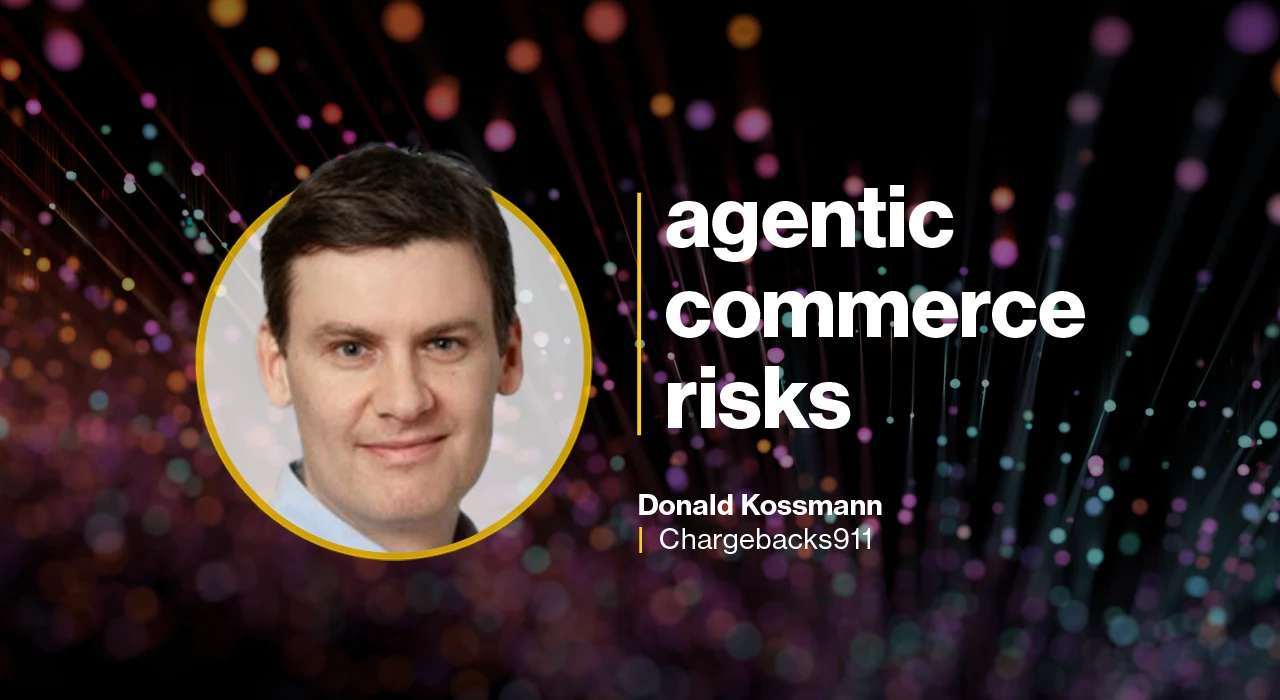
Donald Kossmann, CTO at Chargebacks911, talks about the emerging security, fraud, and governance risks of agentic commerce.
www.helpnetsecurity.comDonald Kossmann, CTO at Chargebacks911, is raising alarms about security, fraud, and governance risks in agentic commerce.
When AI agents make purchasing decisions on behalf of consumers, new risks emerge that traditional identity verification and authentication mechanisms cannot fully address. Security teams face a fundamental rethinking of their approach, from setting agent permission boundaries to transaction audit logs and fraud detection redesign.
Full Article: As AI Agents Start Making Purchases, Security Teams Must Rethink Risk
AI Commerce Tools
Stord Unveils AI Assistants to Transform Commerce Operations

Stord, the $1.5 billion-dollar e-commerce enablement platform, powers nearly $10 billion in annual commerce for brands like AG1, True Classic and Native.
www.forbes.comStord, the $1.5 billion e-commerce enablement platform, has unveiled AI assistants designed to power the next era of commerce operations.
Serving D2C brands like AG1, True Classic, and Native, the company supports nearly $10 billion in annual commerce. The new AI assistants automate fulfillment operations including inventory management, order processing, and shipping optimization, enabling brands to move faster.
Full Article: Stord Unveils AI Assistants to Transform Commerce Operations
Global E-commerce
JD.com Posts First Quarterly Loss in Over 3 Years Amid Fading Subsidies and Intense Competition

China's JD.com missed market estimates for quarterly revenue on Thursday as stiff competition and waning benefits from government subsidies ate into demand at the e-commerce giant.
www.reuters.comChinese e-commerce giant JD.com has posted its first quarterly loss in over three years, with full-year 2025 profits declining 52%.
As the effects of government appliance subsidy programs wane, fierce price competition with Pinduoduo and Douyin (TikTok's Chinese counterpart) continues. Aggressive investment in instant delivery services is also pressuring margins, underscoring the intensity of competition in China's e-commerce market.
TikTok Shop Reverses US Fulfillment Control Plans
TikTok Shop rolled back its plan to control fulfillment for US merchants due to potential loss of business.
www.retailbrew.comTikTok Shop has reversed its plan to take control of shipping and fulfillment for US merchants, driven by the risk of seller attrition.
Sellers voiced strong preferences for maintaining their own logistics partners, pushing back against TikTok Shop's control over fulfillment. For TikTok Shop, still in its marketplace growth phase, seller retention has emerged as the top priority.
Back Market's GMV Grows 32% to Over 3.5 Billion Euros in 2025

French marketplace for pre-owned phones, laptops, and other electronic devices, Back Market, has reached a GMV of more than 3.5 billion euros.
ecommercenews.euFrench refurbished product marketplace Back Market has announced that its 2025 GMV (gross merchandise value) grew 32% year-over-year to over 3.5 billion euros.
The growth of this platform dealing in pre-owned smartphones, laptops, and other electronics is supported by both rising sustainability awareness and cost consciousness. As new product markets mature, the refurbished market expansion trend continues.
Payments & Fintech
Coupang Begins Building Stablecoin Legal Team

Coupang Pay is hiring junior and senior in-house counsel to lead stablecoin business structuring, as Korea's ruling party debates a KRW stablecoin framework.
beincrypto.comCoupang Pay, the payment subsidiary of South Korean e-commerce giant Coupang, has begun recruiting to build a legal team for its stablecoin business. This preemptive move comes as Korea's ruling party debates a legal framework for KRW-denominated stablecoins.
As a NYSE-listed e-commerce company, stablecoin payments could provide Coupang with significant cost advantages through projected annual fee reductions in the hundreds of millions of dollars.
Corporate News & Partnerships
Kroger Reports Q4 Earnings Under New CEO, Emphasizes E-commerce Growth and AI Investment
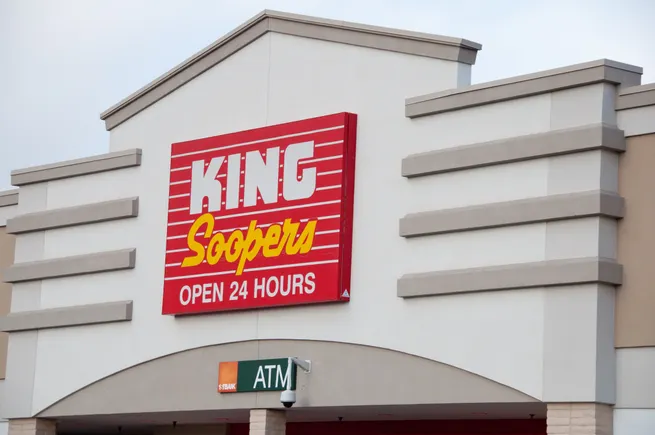
The company will focus on improving the store experience and cutting prices as it strives to grow faster, said Greg Foran, who recently took over as the grocer's chief executive.
www.grocerydive.comUS grocery giant Kroger has released its fourth-quarter earnings, the first under new CEO Greg Foran, recording solid e-commerce sales growth.
New CEO Foran outlined a growth acceleration strategy centered on improving the store experience and cutting prices while reaffirming continued investment in AI and e-commerce. As competition intensifies in grocery e-commerce, the strategic pivot to compete against Walmart and Amazon Fresh is drawing attention.
Summary
Today's news demonstrates that agentic commerce infrastructure is advancing simultaneously across multiple layers. From payment standards (Visa vs Mastercard), protocols (Splitit joining Google UCP), security (Chargebacks911's warnings), to BNPL integration (Klarna x Stripe), each component of the ecosystem is rapidly taking shape.
Meanwhile, OpenAI's abandonment of ChatGPT checkout illustrates just how complex "completing transactions" in AI commerce really is. While AI excels at search, comparison, and recommendations, the core commercial activities of payments, shipping, and returns require integration with existing e-commerce infrastructure, a reality that has been underscored once again.