Topsort Launches 'Sponsored Prompts': The First Agentic Ad Format Redefining Retail Media
Topsort unveils Sponsored Prompts, turning chatbot conversations into auction-eligible ad inventory and signaling how retail media must rebuild for the AI agent era.


Key Points
- Topsort has unveiled Sponsored Prompts, the industry's first agentic ad format that turns chatbot and AI agent conversations into auction-eligible retail media inventory.
- The product is built on the premise that roughly 70% of retail media, which rests on keyword search, will break down in the AI agent era, and replaces it with a semantic, auction-based monetization layer.
- For Amazon, Walmart, Instacart and every mid-market marketplace, the next competitive battleground is who can monetize the AI-native conversational surface first.
A New Ad Surface Built for the End of Search

Silicon Valley AI-native Commerce Infrastructure Company Topsort launches an AI-native ad format, turning conversational moments into product discovery with a new agentic ad format.
www.accessnewswire.comOn April 22, 2026, Silicon Valley retail media infrastructure company Topsort announced Sponsored Prompts, a new ad format designed for the AI agent era. It reframes chatbot and AI-agent conversations themselves as auction-based ad inventory.
Topsort CEO Regina Ye framed the thesis bluntly in the announcement: "For the past two years, we've been asking ourselves, what if search goes away? What if the 70% of retail media built on it becomes something completely different?" Sponsored Prompts is the company's answer to that question.
The US retail media market is approaching roughly 70 billion dollars in annual spend, yet the overwhelming majority of it still runs on keyword-driven Sponsored Search and Sponsored Products. As ChatGPT, Perplexity, Amazon's Rufus and Walmart's Sparky become primary surfaces for product discovery, the assumptions behind those ad formats are beginning to crack.
How Sponsored Prompts Works: Turning Conversations into Auctions
At the core of Sponsored Prompts is a simple shift. A user's free-form prompt inside a marketplace chatbot is evaluated in real time and treated as auction-eligible inventory.
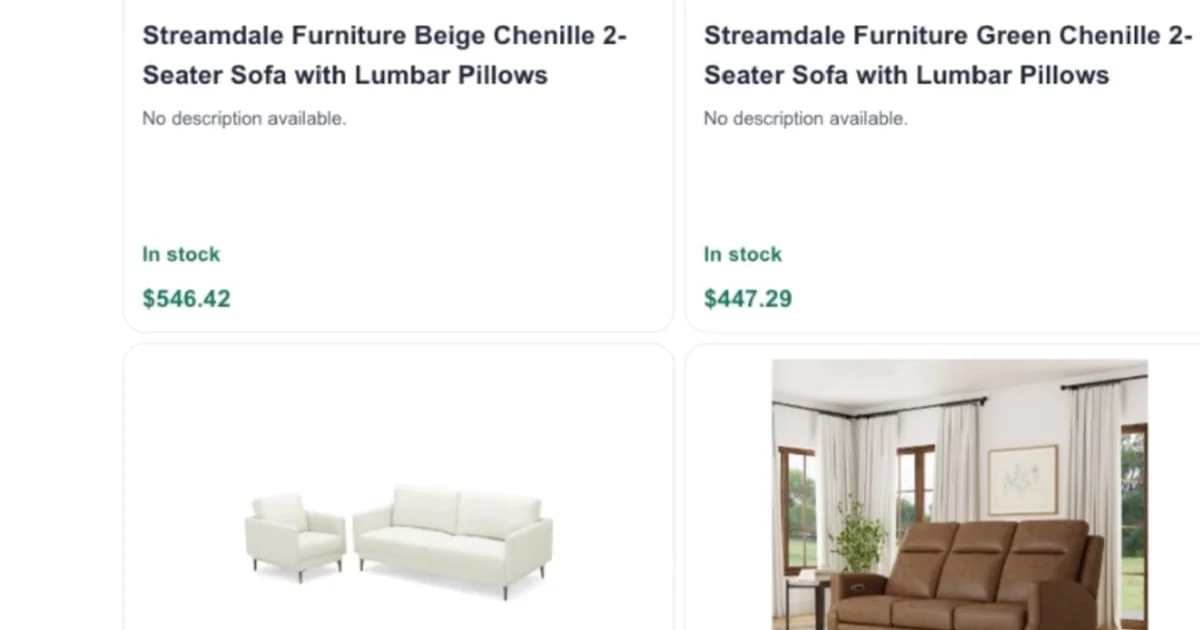
When a shopper types a prompt, Topsort's system interprets the intent semantically and matches it to relevant advertiser campaigns. If a match exists, the system returns a blended set of sponsored and organic product tiles, with sponsored placements prioritized.
The wiring behind this runs through a dedicated Topsort MCP server. MCP, the Model Context Protocol introduced by Anthropic in late 2024, has become the de facto connector between AI agents and external tools. Amazon Ads recently launched its own MCP server in open beta for agent-driven advertising, and Topsort is now using the same protocol on the supply side.
The billing model is notable. Topsort does not introduce a new ad product or invoicing rail. Spend is billed through the existing Sponsored Listings model when a product from a sponsored prompt campaign is shown. In practice, marketplaces and advertisers can extend into conversational advertising as an extension of campaigns they are already running, without new workflows or retraining.
Why Keyword-Based Ads Break Down in the Agent Era
To see why this matters, consider what the legacy model assumed. Sponsored Search required a user to type keywords into a search box, and placement was decided by the bid attached to that keyword. It worked as long as users kept searching.
In the AI agent era, users do not type "nike black running shoes size 9" anymore. They write, "I got blisters last week, find me three black cushioned running shoes under 150 dollars that I can run 30km in without pain, and compare them." Digiday's analysis warns that this shift alone threatens the 38 billion dollar retail media search ad market.
Keyword-level bids cannot price that sentence. Topsort replaces keyword matching with semantic intent matching, describing it as expanding reach "beyond predefined keywords" to free-form prompts. In effect, the atomic unit of ad targeting moves from keywords to intent vectors.
What This Means for Amazon, Walmart and Instacart
On the surface, Topsort's move looks like a direct challenge to the giants. eMarketer projects US retail media ad spend will hit roughly 69.3 billion dollars in 2026, with Amazon and Walmart capturing 89% of the incremental growth.
The incumbents, however, are already moving. Amazon has rolled sponsored prompts into Rufus, Walmart is testing ads inside its Sparky assistant, and Google is piloting ads in AI Mode. The monetization of AI chat surfaces is no longer a future idea: it is the central theme of retail media in 2026.
The difference is that those efforts are internal builds, only available to the platform that owns them. Topsort, which serves 100+ retailers across 40+ countries including Coles, DoorDash, Woolworths and Falabella, is staking out the opposite position: a shared, AI-native ad infrastructure for every marketplace that cannot build its own Rufus. Mirakl's 2026 retail media trends report frames the same question: whoever provides the monetization layer for chat surfaces first will shape the rest of the decade.
Implications for Brands, Marketplaces and Platforms
Sponsored Prompts is less a feature and more a signal that the retail media business model is being re-architected. Each stakeholder should read it differently.
For brand advertisers
Retail media budgets have historically been organized around keywords. In an agentic format, campaigns are instead scored on how well an intent vector matches product attributes. Creative, product descriptions and structured data now need to be optimized for retrieval inside natural-language prompts.
On the demand side, Criteo has joined OpenAI's ChatGPT ad pilot as its first ad-tech partner, opening the door for its 17,000 advertisers to buy inside conversations. For performance teams, learning "prompt SEO" has quickly become as urgent as keyword SEO once was.
For e-commerce operators and marketplaces
Many operators already run chatbots or AI assistants, but almost none monetize them. Sponsored Prompts targets exactly that gap, reusing existing campaigns and catalog so new revenue can be activated without a parallel ad stack.
Put simply, treating conversational surfaces as a pure cost center is becoming untenable. The more shopping time shifts into chat, the more those surfaces behave as ad inventory whose yield is left on the table.
For retail media platforms
The business model itself may move from keyword auctions to contextual, intent-based auctions. BCG and McKinsey both argue that agentic commerce will rewire the retail value chain, and new monetization primitives such as AI inclusion fees, outcome-based pricing and data collaboration models are already on the table.
Topsort is getting ahead of that shift by defining a specific stack: auctions plus semantic matching plus the advertiser's existing campaign infrastructure. Whether this becomes an industry standard or fragments into proprietary stacks will be one of the defining storylines of retail media over the next 12 to 24 months.
Conclusion
Sponsored Prompts marks the moment where retail media stops being an extension of search advertising and starts being the monetization of AI agent conversation itself. Topsort's underlying bet, that keyword-based retail media will not survive in its current form, is no longer a thought experiment given how Amazon, Walmart and Google are behaving.
The real question for operators is whether your chatbot is still just a support feature, or a future ad surface. If the end of search is even partially true, the rethinking of ad operations, product data and conversational UX needs to start now, not after the shift is complete.