Amazon Retires Rufus, Folds Shopping AI Into Alexa+ as 'Alexa for Shopping' — An Agent in the Search Bar and What It Means for Sellers
On May 13, 2026, Amazon effectively retired the Rufus brand and merged its shopping AI capabilities into Alexa+ under the new name Alexa for Shopping. We unpack the search-bar integration, the defensive play against ChatGPT and Gemini, and the implications for sellers.

Key Takeaways
- On May 13, 2026, Amazon effectively retired the Rufus brand and folded its shopping AI capabilities into the revamped Alexa+ as a new offering called "Alexa for Shopping."
- Rather than living as a chatbot in the corner of the screen, the new assistant is embedded directly into the Amazon search bar, framing this release as a defensive line against external AI entry points like ChatGPT, Gemini and Perplexity.
- The fact that Amazon retired Rufus just five days after expanding it via "Join the Chat" signals how fast AI decisions are moving across the industry — and sellers now need a deliberate plan for how their products surface inside the Alexa+ recommendation stack.
The Rufus brand disappears, and the search bar becomes an agent
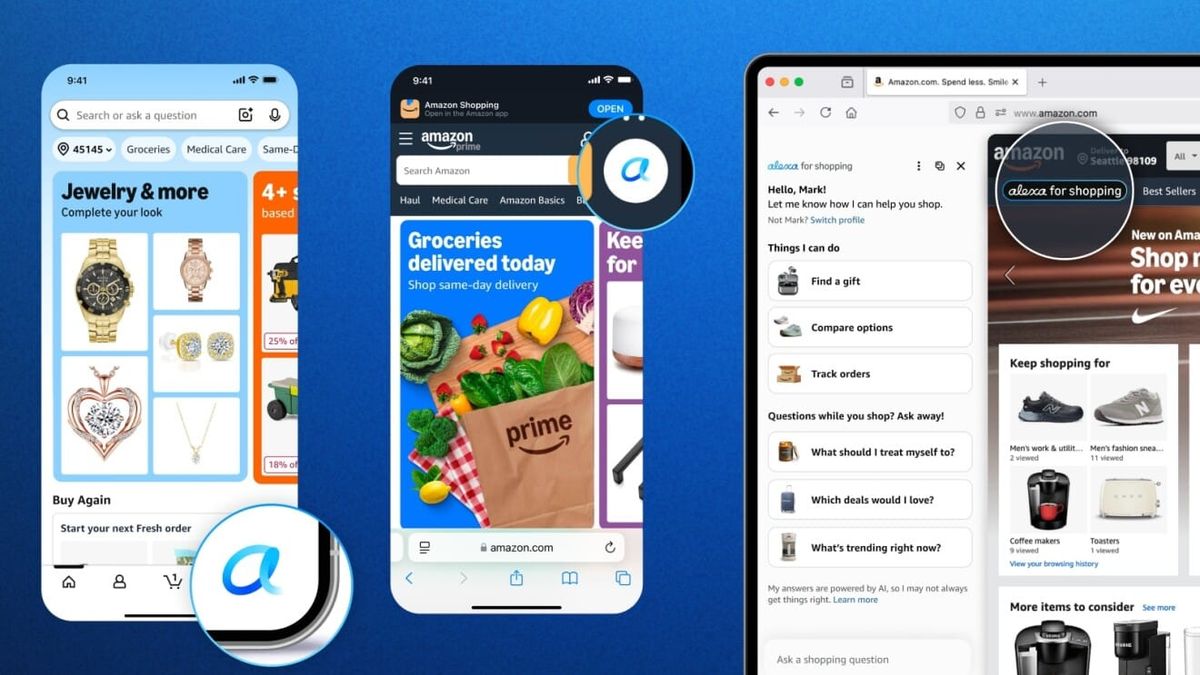
A new capability that connects its Rufus e-commerce chatbot with its Alexa+ assistant.
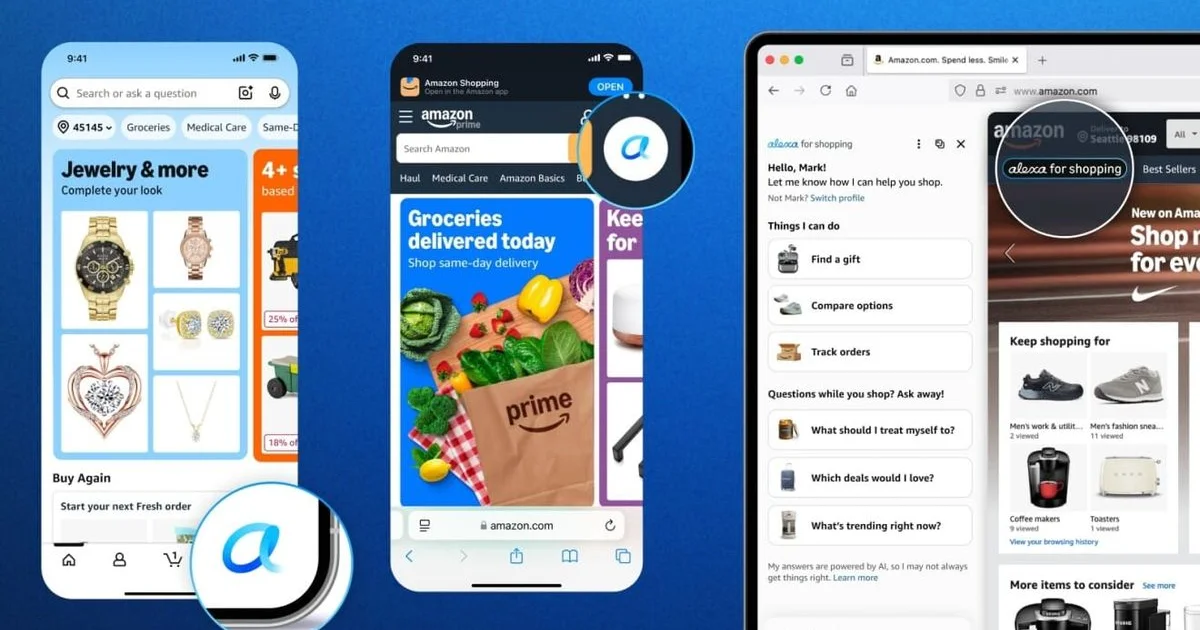
massmarketretailers.comOn May 13, 2026, Amazon announced the U.S. rollout of Alexa for Shopping, an agentic AI assistant for its retail experience. As Mass Market Retailers reported and Adweek unpacked, this is less of a feature addition than a brand consolidation: Rufus, the shopping assistant Amazon launched in 2024, is being effectively retired and its capabilities are being pulled under the Alexa+ umbrella. Adweek summarized it bluntly: "Goodbye Rufus, hello Alexa for Shopping."
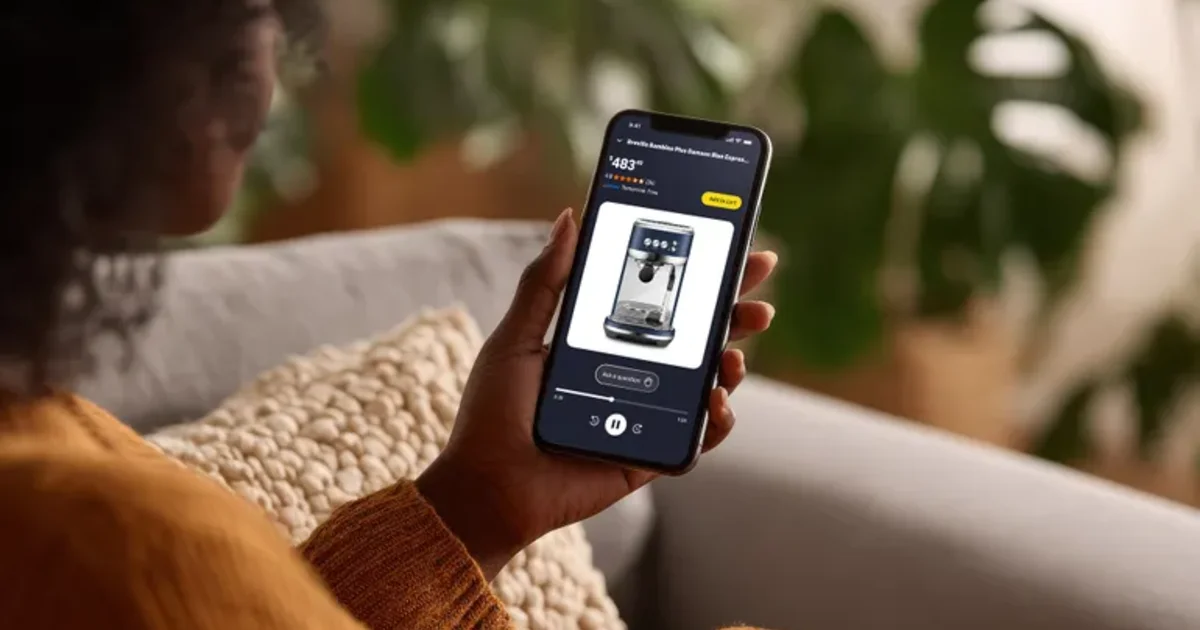
The biggest change is where the AI assistant lives. Until now, Rufus appeared as a blue-and-orange chat icon in the corner of Amazon's interface — an assistant kept on the sidelines. With Alexa for Shopping, the search bar itself becomes the entry point to the AI agent. When a shopper types a contextual query like "compare beginner-friendly espresso machines" or "suggest a birthday gift for a specific family member," the result is no longer a static product list but an AI-generated comparison or recommendation. Simpler queries such as "pants" or "bananas" still resolve to standard product listings, Futunn's coverage of Zhitong Finance noted, citing Amazon's VP of Alexa, Daniel Rausch.
The reach also expands significantly. You don't need a Prime membership, and you don't need an Echo device — anyone opening the Amazon app or website can use Alexa for Shopping. While the broader Alexa+ assistant costs $20 per month (free for Prime members), the shopping piece is unbundled and offered free. That is an unusually pure signal of strategic investment for Amazon: the company is sacrificing direct monetization on this surface to keep shopping intent in-house.
A brand re-org in five days — the speed signal
The detail you cannot miss is the velocity. Just five days earlier, on May 7, Retail Dive covered the launch of "Join the Chat," a feature that lets shoppers interrupt audio product summaries on Amazon's product pages and ask questions of an AI host. At that moment, Rufus was still being treated as a growing standalone brand sitting at the center of the AI-host experience.
Five days later, Amazon detached the same AI capabilities from Rufus and re-anchored them under Alexa+. A product brand launched in 2024 — one that according to Amazon's own disclosures reached 300 million users in 2025 and generated roughly $12 billion in incremental annualized sales — had its sign taken down in barely 18 months. As Adweek points out, this is not just a rebrand. Amazon appears to have decided that asking customers to remember multiple AI assistant names is not sustainable. Consolidating into a single Alexa+ brand creates a cleaner counterweight to external AI entry points like ChatGPT and Gemini.
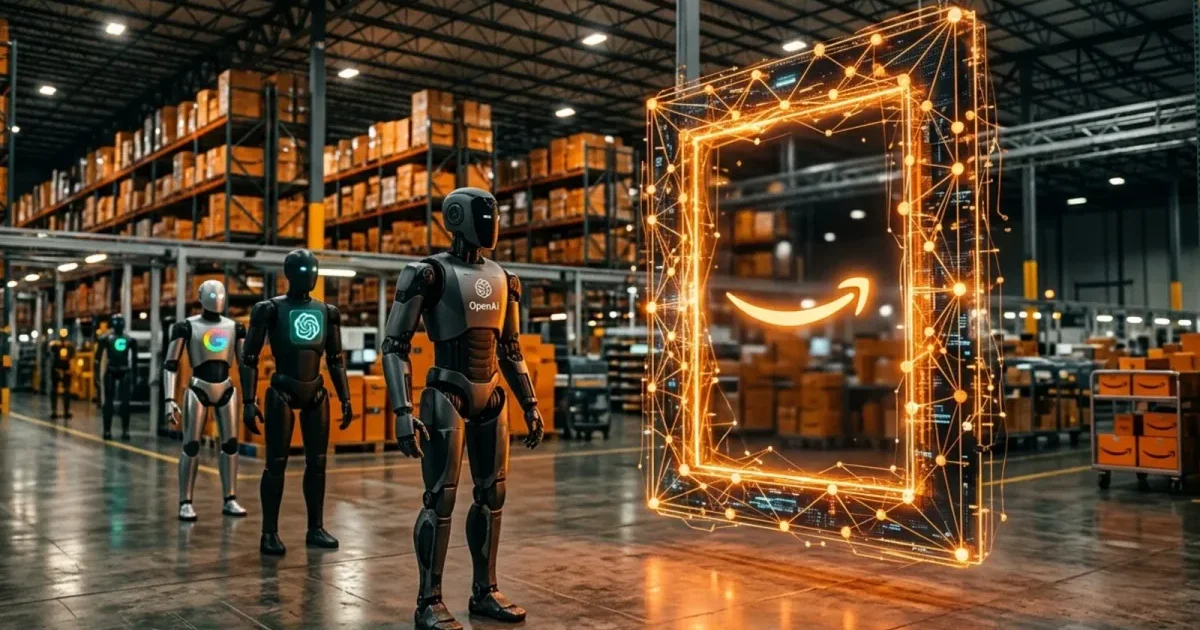
This compresses with a separate datapoint we covered earlier in the week. On May 11, Amazon's quietly posted Principal TPM listing revealed a 40-person engineering organization dedicated to integrating Amazon's marketplace with third-party AI agents like ChatGPT and Perplexity. Put the two together and a clear two-front strategy emerges: Alexa for Shopping is the inbound front (keep shopping intent on Amazon's own surface), while the 40-person team is the return path front (siphon AI-driven intent back to Amazon's catalog and logistics).
A defensive line against ChatGPT, Gemini and Perplexity
Mass Market Retailers framed Amazon's intent as "directly confronting AI shopping pushes by ChatGPT and Gemini." Futunn's Zhitong Finance write-up was even more explicit: Amazon is reacting to shoppers turning to other websites or chatbots for product research. The underlying recognition is that the agentic commerce battle is no longer being decided inside commerce — it is being decided at the AI assistant entry point.
The evidence is everywhere. Google AI Mode is pushing into checkout. ChatGPT's Instant Checkout completes transactions via Stripe. Perplexity is building end-to-end comparison-to-purchase flows. ChannelEngine's data this week showed that traffic to e-commerce sites from AI sources grew 393% year-over-year, and Adobe's research points to a similar order of magnitude for generative-AI-driven retail visits. Consumers are handing the first step of their shopping journey to AI assistants.
In response, Amazon really only has two strategic options. Option one: harden your own entry point so external AI doesn't capture demand. Option two: supply your products and logistics to external AI and collect a transaction fee. Alexa for Shopping handles option one. The 40-person team revealed on May 11 handles option two. Morgan Stanley's call that Amazon is one of the AI wave's undervalued winners likely reflects this two-handed posture.
It's worth lingering on a phrase Rausch used: "If you make something so simple and truly helpful, you will continue to benefit from it." The emphasis on simple is the tell. Rufus required clicking an icon. Alexa+ required a subscription. Both had friction. Alexa for Shopping in the search bar — free, no Prime needed, no Echo needed — strips that friction to near zero.
How sellers should think about the Alexa+ stack
Once you put the picture together, the natural seller question is "how do I show up inside Alexa+?" Most of the Rufus optimization playbook — the AEO (AI Engine Optimization) discipline of making product data discoverable, verifiable and transactable, lifting the quality of review prose, and treating Q&A as a first-class information source — transfers cleanly. The brand name changed; the underlying retrieval-augmented logic did not.
That said, the search bar integration shifts the weight of a few specific levers.
The first is query shape. Until now, Amazon's internal search has been dominated by "product name + spec" keywords. Alexa for Shopping is designed for long-form contextual queries like "compare beginner-friendly espresso machines" or "suggest a birthday gift for my mother." The implication: the set of questions your product data needs to answer just expanded sharply. Bulleted specs alone don't give the AI enough raw material to respond to context-rich prompts. Use scenarios, intended audiences, fair comparisons against adjacent products — these subjective, relational signals belong somewhere in your product text if you want to be cited in generated answers.
The second is personalization depth. Amazon's announcement is explicit that Alexa for Shopping draws on customer purchase history and prior conversations across the account. That capability existed inside Rufus too, but with a persistent assistant living in the search bar, the precision of personalization tightens. For brands, this means investing not just in "ads to win the first purchase" but in the review and Q&A scaffolding that helps Alexa+ recall your brand at the moment of a repeat purchase. Alexa+ is likely to compare new products against brands the customer already owns, and the reviews that describe the post-purchase experience will quietly shape retention.
The third is voice continuity. Alexa+ grew up as a voice assistant. Folding the shopping experience into it means owners of Echo Show smart displays can now open the full Amazon site, and the voice and text surfaces draw from the same backend. The "PDP SEO to PDP Voice UX" shift that was already implied by Join the Chat now becomes hard requirement. Your product copy needs to read naturally when spoken aloud — short clauses, fewer symbol-heavy specs, more declarative sentences. This isn't just for voice-first product categories anymore.
The fourth lever is media and advertising. Adweek's piece argues that Alexa for Shopping is poised to become "the next growth frontier for Amazon's advertising business." When the search bar becomes an AI response surface, the sponsored product placement formats shift with it. Amazon has historically rolled out new ad formats in lockstep with search UI changes. It's reasonable to expect sponsored slots to appear inside AI responses as Alexa for Shopping scales, and sellers should plan their budget allocation assumptions accordingly.
Conclusion
Alexa for Shopping is best read as a brand consolidation rather than a feature launch. By retiring Rufus and pulling the AI shopping capabilities under Alexa+, Amazon is choosing to fight the entry-point war with a single conversational brand. The search bar integration, the decision to open it to non-Prime members, and the speed — barely five days after Join the Chat expanded Rufus — all signal how urgent this battle has become.
For sellers, the takeaway isn't to chase the surface-level rename. The deeper shift is that Amazon's internal search is moving from "keyword matching" to "generated answers to contextual questions." That changes what you stock your product page with: more situational context, higher-quality review prose, deliberate Q&A authorship, voice-friendly copy. And in parallel, Amazon's 40-person team building toward ChatGPT and Perplexity integration is moving on its own clock. First-party search bar and third-party AI assistants will both start surfacing your products soon — and the runway to optimize for either is, as the Rufus retirement just demonstrated, shorter than most teams expect.