AI Commerce News Digest (January 26, 2026)
US online grocery sales hit record $12.7B in December, AI becomes the defining catalyst for retail transformation, and 'Anti-Coupang' trend grows in South Korean e-commerce market.

Key Takeaways
- US online grocery sales hit record $12.7B in December, up 32% year-over-year
- AI becomes the defining catalyst for retail transformation, agentic commerce competition intensifies
- 'Anti-Coupang' trend grows in South Korean e-commerce as competitors strengthen membership services
Top Stories
US Online Grocery Sales Hit Record $12.7B in December

Number represents a 32% jump from the previous year
progressivegrocer.comAccording to the latest data from Brick Meets Click, US online grocery sales reached a record $12.7 billion in December 2025. This represents a significant 32% increase compared to the same month last year.
The online channel accounted for 19% of weekly grocery spending, reaching its highest level since May 2020. More than half of monthly users placed three or more orders, an 8% increase year-over-year. Notably, order frequency increased by 17% among the 30-44 age group, indicating that digital grocery shopping is transitioning from an "occasional convenience" to a "daily habit."
David Bishop of Brick Meets Click noted, "December set a new monthly record for e-grocery sales to close out the year, though growth varied by format and banner." Consumers are increasingly combining multiple fulfillment methods including delivery, pickup, and ship-to-home, with average order values rising 11% across all fulfillment types.
Full article: US Online Grocery Sales Hit Record $12.7B
Why AI Is Commerce's Defining Catalyst

The renaissance of the 15th and 16th centuries marked the cultural transition from the Middle Ages to modern thinking, empowering a societal and scientific
aijourn.comThe AI Journal published an in-depth analysis positioning AI as "the catalyst driving a 21st century retail renaissance." The perspective draws parallels to how the Renaissance of the 15th-16th centuries brought fundamental cultural transformation from medieval to modern thinking—arguing AI is now bringing similar transformation to retail.
The article explores specific areas of AI-driven transformation including personalization, demand forecasting, inventory optimization, and customer service automation. Particularly noteworthy is the observation that AI agents are evolving from mere tools to "purchasing proxies," with the potential to fundamentally change consumer buying behavior.
For e-commerce operators, the era where AI adoption becomes a source of competitive advantage has arrived, requiring early strategic planning and investment decisions.
Full article: AI Brings the "21st Century Renaissance" to Retail
AI Commerce Tools
AI Agents Turn Product Shots into Viral Ads
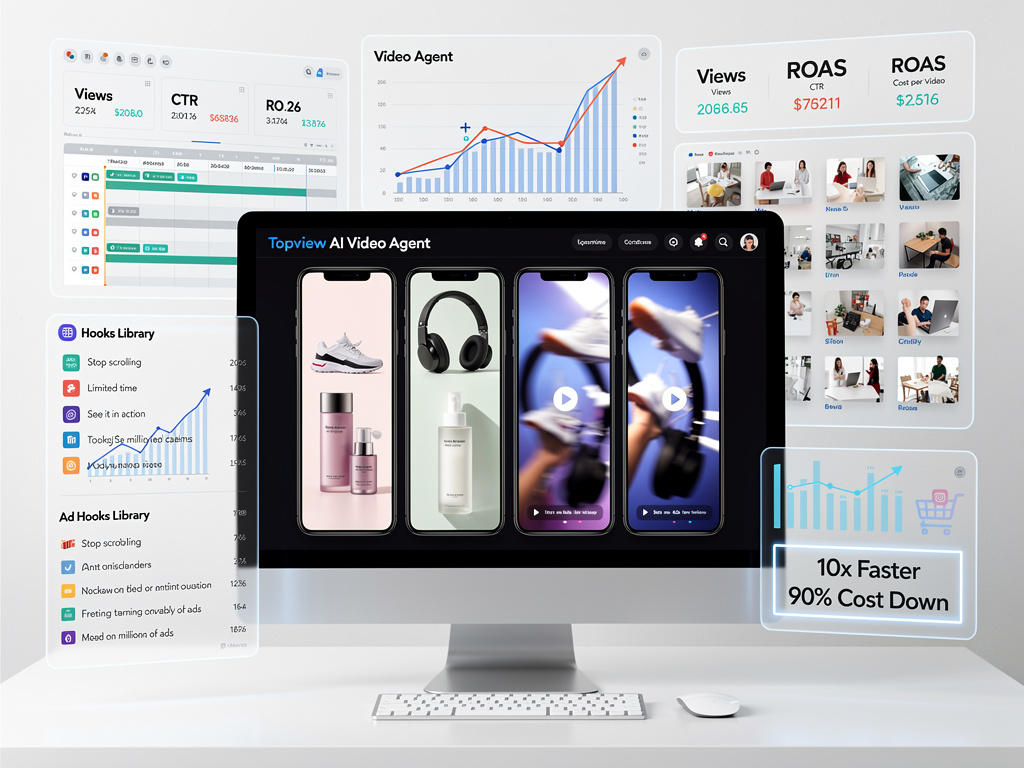
AI video agents like Topview transform product images into viral marketing clips in minutes, slashing costs and rivaling production teams. Trained on millions of ads, they replicate hooks and enable massive scaling for e-commerce brands.
www.webpronews.comVideo generation AI agents like Topview can now generate viral marketing videos from product images in just minutes. Trained on millions of ad data points, these AIs replicate effective hooks and dramatically streamline ad production for e-commerce operators.
Traditional video production required days to weeks for shooting, editing, and voiceover recording, but AI agents can now achieve equivalent or better quality in minutes. Beyond cost reduction, mass variation generation for A/B testing becomes easy, accelerating ad performance optimization.
For small and medium-sized e-commerce operators, this represents a potential competitive game-changer—enabling them to produce ad creatives on par with major players at a fraction of the cost.
Full article: AI Video Agents Transform Product Images into Viral Ads in Minutes
Agentic Commerce
Chinese Tech Giants Enter Agentic Commerce Race

Chinese technology giants pivot to race for agentic commerce
www.globaltimes.cnAccording to Global Times, major Chinese technology companies are intensifying competition in the agentic commerce space—AI-powered autonomous purchasing on behalf of consumers.
Major players including Alibaba, JD.com, and Bytedance (Douyin) are focusing on developing next-generation commerce experiences powered by AI agents. These AI agents can learn consumer preferences and autonomously execute product search, comparison, and purchase.
The Chinese market leads the world as an experimental ground for AI commerce, and models established here may be deployed globally. The combination of live commerce and AI agents in particular is creating new purchasing experiences.
Global E-commerce Trends
'Anti-Coupang' Trend Grows in South Korean E-commerce

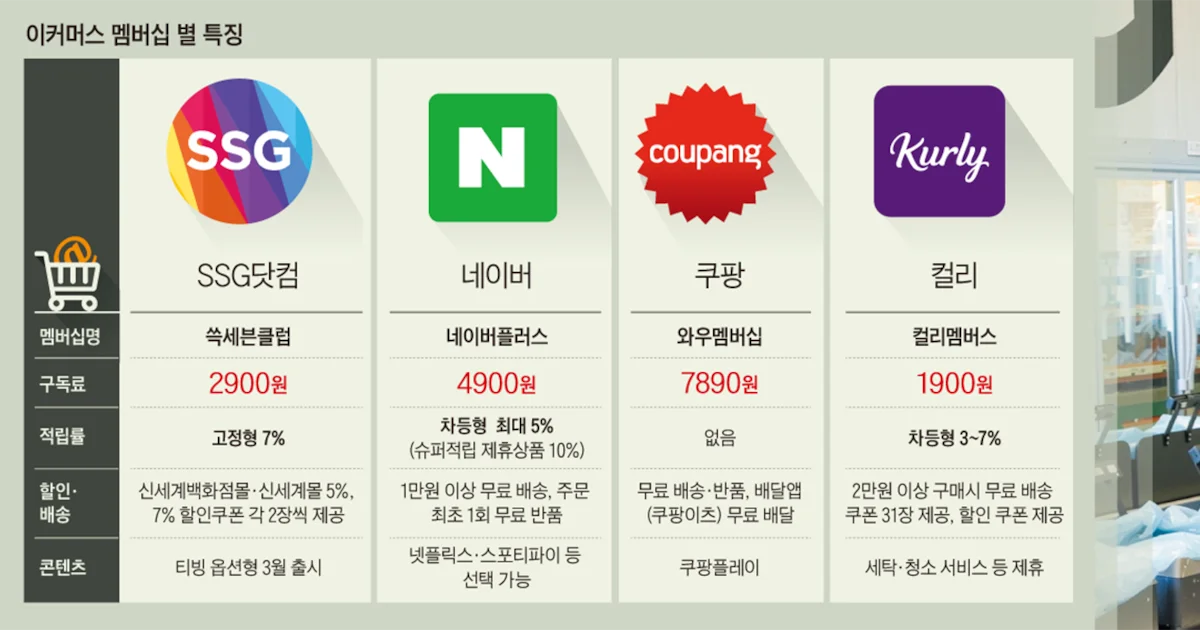
E-commerce Memberships Vie as Anti-Coupang Trend Grows SSG.com, Naver launch competitive memberships with rewards, OTT deals to lure Coupangs defecting shoppers
www.chosun.comAn "anti-Coupang" trend is expanding in South Korea's e-commerce market. Competitors like SSG.com and Naver are launching attractive membership benefits including reward programs and OTT service partnerships to win customers away from Coupang.
While Coupang holds an overwhelming market share in South Korean e-commerce, it has faced headwinds from recent data breach issues and regulatory investigations in the US. Seizing this opportunity, competitors are trying to attract consumers with differentiated membership programs.
Developments in the South Korean e-commerce market serve as a reference for platform competition dynamics in Asian markets including Japan.
Douyin Buying Team Lands in Korea as KOTRA Backs K-Consumer Exports

South Korea is moving to broaden market access for K-consumer goods in China through a partnership linked to Douyin, the country's largest short-form video and live-commerce platform.
The Korea Trade-Investment Promotion Agency (KOTRA) has launched an integrated program supporting Korean consumer goods exports to China in partnership with Douyin (the Chinese version of TikTok), China's largest short-form video and live commerce platform.
Douyin's buying team has landed in Korea, establishing a system to directly procure Korean products including K-Beauty and K-Food. Sales through live commerce offer greater immediacy and appeal than traditional cross-border e-commerce, potentially significantly expanding reach to Chinese consumers.
Consumer Trends
7 Consumer Trends Defining What Shoppers Want in 2026

Consumer trends point to a customer who is looking for better products that support themselves and their homes.
www.forbes.comForbes analyzes seven consumer trends for 2026. This year, consumers are increasingly seeking "better products that support themselves and their homes."
With emphasis on quality, interest in sustainability, and expectations for personalized experiences, value proposition quality is being prioritized over pure price competition. E-commerce operators need to clearly define differentiation factors beyond price.
Brick-And-Mortar Makes A Comeback

Despite headlines of major store closures and bankruptcies like Saks, the retail sector shows resilience with more planned openings than closing announced in January.
www.forbes.comDespite prominent news of major closures like Saks' bankruptcy, physical retail is showing recovery. January announcements showed more planned new store openings than closures.
As the fusion of online and offline progresses, physical stores are redefining their value as "experience venues." For e-commerce operators too, strategic utilization of physical touchpoints like pop-up stores and showrooms is worth considering.
Corporate News & Partnerships
Walmart Marketplace Opens Premium Musical Instruments Shop

Walmart Marketplace opened a new musical instruments shop to broaden selection but is currently limiting which sellers can list on the shop
www.ecommercebytes.comWalmart Marketplace has opened a new curated "Premium" musical instruments shop. While expanding product selection, they are limiting which sellers can list, indicating an operational approach emphasizing quality control.
Walmart is differentiating from Amazon by building expertise in specific categories. For marketplace sellers, this serves as a reference for considering category-specialized listing strategies.
Other Highlights
The Fraud Hiding in Email Signups

Payment fraud often starts at the new-account stage, where criminals deploy valid but fake email addresses.
www.practicalecommerce.comMany payment fraud cases begin at the new account creation stage. Criminals create accounts using valid but fake email addresses, which are later used for fraudulent purchases.
E-commerce operators should consider strengthening email verification during account creation and implementing systems to detect fraudulent signup patterns. Early-stage fraud detection significantly reduces downstream losses.
Summary
Today's news reveals three major trends.
First, the normalization of e-commerce usage continues to advance, as exemplified by the record-breaking online grocery sales. Second, AI agent applications are expanding from ad production to purchasing proxies, with major Chinese tech companies intensifying agentic commerce competition. Third, platform competition dynamics are shifting, as seen in South Korea's "anti-Coupang" trend.
Going forward, watch for the concrete deployment of AI strategies announced at NRF 2026 and developments in Chinese agentic commerce.