AI Commerce News Digest (January 31, 2026)
Salesforce and Google jointly announce UCP, a comprehensive look at the agentic AI protocol landscape, Visa and Mastercard emphasize agentic AI strategies, and 14 more commerce news stories

Key Takeaways
- Salesforce and Google jointly announce the "Universal Commerce Protocol" for AI-driven shopping
- The Register maps out the growing landscape of competing agentic AI protocols
- Visa and Mastercard both emphasize agentic AI strategies in their earnings calls
Top Stories
Salesforce and Google Announce "Universal Commerce Protocol" to Standardize AI Shopping
Discover how Salesforce and Google are revolutionizing online shopping with the launch of the Universal Commerce Protocol, an innovative framework designed to enhance AI-driven shopping experiences. Learn about its implications for retailers and consumers alike.
smallbiztrends.comSalesforce and Google have jointly announced the "Universal Commerce Protocol (UCP)," a new open protocol that enables AI agents to communicate with e-commerce sites in a standardized way.
UCP allows AI shopping agents to perform product search, price comparison, inventory checks, and purchase processing through a unified interface. Previously, AI agents required custom integrations for each e-commerce site, but UCP enables seamless shopping experiences across platforms.
Combining Salesforce's Commerce Cloud infrastructure with Google's AI technology, this protocol represents a major step toward standardizing agentic commerce infrastructure. For retailers, UCP adoption could efficiently open up sales channels through AI agents.
Full article: Salesforce and Google Jointly Announce "Universal Commerce Protocol," Launching a New Standard for AI Shopping
Deciphering the Alphabet Soup of Agentic AI Protocols

Tools, agents, UI, and e-commerce - of course each one needs its own set of competing protocols
www.theregister.comThe Register published an analysis organizing the rapidly growing landscape of agentic AI protocols. The article examines the positioning and differences between MCP (Model Context Protocol), UTCP, A2A (Agent-to-Agent), and other protocols.
The article clearly maps the current state where different protocols compete across tool integration, agent-to-agent communication, UI control, and e-commerce domains. In the e-commerce space specifically, multiple standardization efforts are underway, including the aforementioned UCP.
For industry stakeholders, this provides a useful framework for understanding the full protocol landscape and determining their own approach.
Full article: MCP, A2A, UCP — Making Sense of the Proliferating Agentic AI Protocols
Agentic Commerce
Visa and Mastercard Both Emphasize Agentic AI Strategies in Earnings Calls
Payments networks Visa and Mastercard are moving toward deployment of their agentic AI payments tools globally in 2026, leadership at both said during their earnings calls this week.
finainews.comBoth Visa and Mastercard revealed plans for global deployment of agentic AI payment tools during their earnings calls this week.
Visa is advancing credential management and secure payment infrastructure for AI agents. Mastercard is focusing on supporting merchant-side AI agent adoption through its recently announced "Agent Suite." With both payment network giants positioning agentic commerce as a growth area, 2026 is expected to enter the implementation phase.
Rezolve AI Stock Drops 17.4% After $250 Million Raise — Spotlight on Agentic Commerce Valuation

Rezolve AI PLC recently closed an oversubscribed US$250,000,000 registered direct offering of 62,500,000 common shares at US$4.00 each, materially boosting its balance sheet for expanded enterprise deployments, M&A activity, and sales-force growth.
simplywall.stAgentic commerce company Rezolve AI completed a $250 million registered direct offering but saw its stock price drop 17.4% on dilution concerns.
The raised capital will fund expanded enterprise deployments, M&A, and sales force growth. The company's "Agentic Checkout" platform is designed as a secure payment layer for AI-driven conversational commerce. As a major fundraise by a pure-play agentic commerce company, it has drawn mixed market reactions.
AI Commerce Tools
Talkdesk Launches AI-Powered Commerce Orchestration Platform

Talkdesk has shared an update. The company has announced the launch of Talkdesk Commerce Orchestration, a new AI-driven platform positioned at the intersection of retail and CX automation.
www.tipranks.comContact center leader Talkdesk has announced "Talkdesk Commerce Orchestration," an AI-driven platform for the retail industry.
The platform integrates retail and CX (customer experience) automation, with AI orchestrating order management, customer support, and inventory coordination. The convergence of commerce and CX is one of the key trends in the agentic commerce era.
AI Product Discovery Drives Brand Site Traffic

Phillip Jackson's company surveyed U.S. 2025 holiday shoppers. When AI recommends a product, 77% of respondents leave to buy on the brand's site.
www.practicalecommerce.comFuture Commerce released a survey of US 2025 holiday season consumers. When AI recommends a product, 77% of consumers said they leave the AI platform to purchase on the brand's official site.
This finding challenges the prediction that AI agents will complete all purchases end-to-end. With 35% of Gen Z and 40% of Gen X saying they purchase online rather than in-store based on AI recommendations, AI may impact physical retail faster than digital. For brands, ensuring AI visibility is becoming directly tied to customer acquisition.
Gemini Checkout Offers US E-Commerce Stores a New Traffic Gateway

Gemini Checkout launches in the US, giving e-commerce stores a new traffic gate that reshapes checkout flow and conversions
freedomforallamericans.orgGoogle's AI assistant "Gemini" has introduced "Gemini Checkout" payment functionality in the US.
For e-commerce stores, this creates a new traffic gateway enabling direct purchases from Google Search and Gemini conversations. This could reshape checkout flows and conversions, as AI platform-driven sales channels continue to expand.
Corporate Developments & Partnerships
Saks Global Closing Most Off 5th Stores, Ending Amazon Partnership
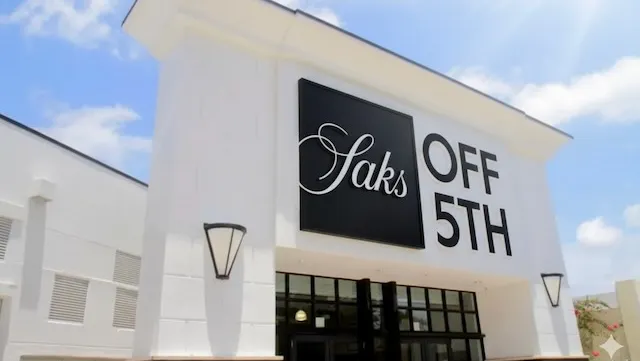
Just a dozen Saks Off 5th locations will stay open, and they'll sell only residual inventory from Saks Fifth Avenue, Neiman Marcus and Bergdorf Goodman.
www.retaildive.comSaks Global announced the closure of most "Saks Off 5th" stores and a complete shutdown of its e-commerce operations. The remaining approximately 12 stores will only sell residual inventory from Saks Fifth Avenue, Neiman Marcus, and Bergdorf Goodman.
The "Saks on Amazon" partnership is also ending. Amid bankruptcy proceedings, the company is clearly pivoting to focus on its core luxury business. The restructuring of luxury e-commerce business models is accelerating.
Instacart to Power Costco's European Grocery Delivery
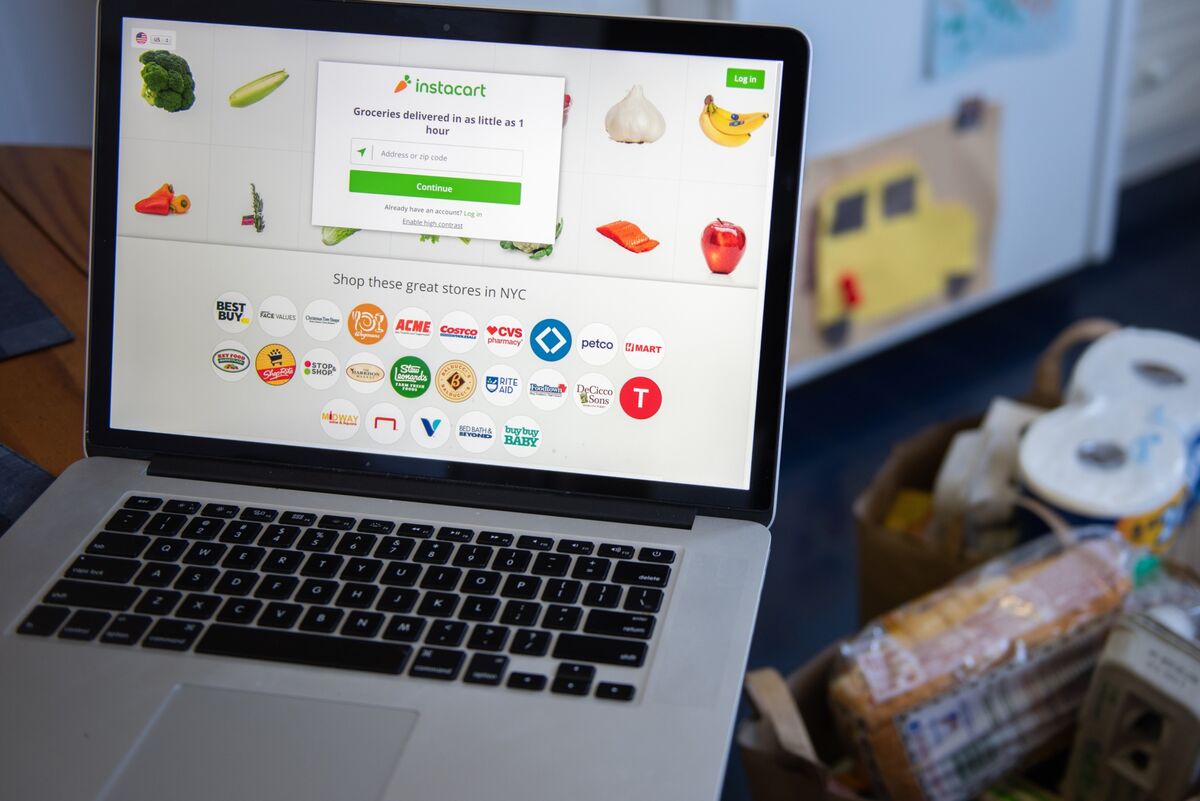
Costco Wholesale Corp. will use Instacart's technology to power online grocery ordering in Spain and France, extending their partnership beyond North America for the first time as the delivery company looks overseas for growth.
www.bloomberg.comCostco will use Instacart's technology for online grocery ordering in Spain and France. This marks the first expansion of their partnership beyond North America, as part of Instacart's international growth strategy.
Instacart's new growth model of expanding into international markets as a technology platform for grocery e-commerce is drawing attention.
DoorDash Expands Commerce Reach with Hibbett Partnership and AI Hire
DoorDash announced a nationwide partnership with Hibbett to offer on demand delivery of athletic footwear, apparel, and gear across the US. The company also appointed Milan Kovac, a former robotics and AI leader at Tesla and Boston Dynamics, to its board of directors.
ca.finance.yahoo.comDoorDash announced a nationwide partnership with sporting goods chain Hibbett, launching on-demand delivery of athletic footwear and apparel.
The company also appointed Milan Kovac, an AI and robotics leader from Tesla and Boston Dynamics, to its board of directors. DoorDash is simultaneously expanding from food delivery into everyday commerce and investing in AI and automation.
TikTok Acquisition Finalized, Signaling End of "Wait and See" Era for US Retailers

There is no longer any excuse for U.S. retailers not to have an active TikTok presence.
chainstoreage.comWith the TikTok US business acquisition finalized, Chain Store Age argues that there is no longer any excuse for US retailers not to have a TikTok presence.
The confirmed acquisition ensures platform continuity and reduces investment risk in commerce features including TikTok Shop. TikTok's influence is expected to grow further, particularly in reaching younger demographics.
Global E-Commerce Trends
South Korean E-Commerce Accelerates Ahead of Lagging Retail Regulations
South Korea's e-commerce market continues to grow at a pace that outstrips existing retail regulations
pulse.mk.co.krSouth Korea's e-commerce market continues to grow at a pace that outstrips existing retail regulations. According to Maeil Business, traditional retail regulations are failing to keep up with e-commerce realities, widening the regulatory gap.
With the rapid growth of Korean e-commerce platforms led by Coupang, an urgent review of existing legal frameworks is needed.
Logistics & Fulfillment
UPS vs. Temu: Legal Battle Over Logistics
The homepage of Temu Ireland is a smorgasbord of consumerism: slippers, a jumpstarter power pack, cleaning shoes, watches.
thecurrency.newsLogistics giant UPS and Chinese e-commerce giant Temu are facing off in court. While UPS's recently announced major layoffs were driven by reduced Amazon business, a dispute over logistics contracts with Temu has also emerged.
As cross-border e-commerce continues its rapid growth, friction in logistics partnerships is increasingly coming to the surface.
Summary
Today's news clearly shows agentic commerce infrastructure development accelerating further. The Salesforce and Google UCP announcement signals the emergence of a new layer — a standard protocol for AI shopping agents. As The Register's analysis illustrates, we're in an "alphabet soup" state with MCP, UTCP, A2A, and UCP all competing, but the battle for de facto standards is set to intensify.
Both Visa and Mastercard positioning agentic AI as a pillar of their growth strategies in earnings calls demonstrates that payment infrastructure preparation is steadily progressing. Meanwhile, the Future Commerce survey showing that consumers still prefer to buy on brand sites even after AI recommendations confirms that brand importance remains unchanged in the AI agent era.