AI Commerce News Digest (May 4, 2026)
Alibaba's Accio Work AI agent platform reaches 230,000 businesses just one month after launch, signaling the rise of B2B agentic commerce. Ascott becomes the first major hospitality operator to formally adopt agentic travel commerce, partnering with Accenture, Amadeus, and EHL. Rezolve AI's SQD token gets listed on Revolut, opening agentic AI commerce infrastructure to 70 million mainstream fintech users. GameStop reportedly preparing a bid for eBay; Vietnam Q1 e-commerce GMV surges 47% to $5.64bn; Catch Group founders plan to revive Click Frenzy — May 4, 2026 EC and AI commerce news roundup.


Key Takeaways
- Alibaba's B2B AI agent "Accio Work" has been adopted by 230,000 businesses just one month after launch, autonomously handling Alibaba.com store operations, marketing, and localization. Ahead of Q4 FY26 earnings on May 15, Alibaba is taking a clear lead in B2B agentic commerce
- Ascott Limited (CapitaLand subsidiary, the world's #2 serviced apartment operator) becomes the first major hospitality company to formally adopt "AI-ready agentic travel commerce" as a corporate strategy, partnering with Accenture, Amadeus, and EHL Hospitality Business School
- Rezolve AI's SQD token has been listed on Revolut, extending agentic commerce infrastructure to 70 million mainstream fintech users — a logical extension of the Estée Lauder × EMEA 70-market partnership. Plus: GameStop reportedly bidding for eBay, Vietnam Q1 e-commerce GMV +47% at $5.64bn, and Catch Group founders planning to revive Click Frenzy
Today's Top Stories
Alibaba's Accio Work AI Agent Hits 230,000 Businesses in One Month — B2B Agentic Commerce Goes Mainstream

Alibaba said its Accio Work AI tool has been adopted by over 230,000 businesses worldwide one month after launch.
ts2.techAlibaba International Digital Commerce Group (AIDC) revealed that its B2B-focused AI agent "Accio Work," launched in late March, has been adopted by 230,000 businesses worldwide in just one month. Accio Work executes product research, marketing copy generation, multilingual localization, customer chat, and inventory operations as autonomous agent teams for Alibaba.com sellers — and sits at the core of Alibaba's broader agentic AI commerce strategy.
In late April, Accio Work expanded to handle Alibaba.com store operations and launched the "Accio Launchpad" program for non-product-focused enterprises (consulting, education, services). A Mucha Foundation Art Museum case study showed Accio Work's agent team automating thousands of production steps — from museum merchandise planning to cross-border e-commerce listings.
Alibaba's Q4 FY26 earnings on May 15 will spotlight Accio Work's monetization economics and the impact of US tariffs and e-commerce regulation. While OpenAI/Anthropic/Google's B2C-leaning agents dominate headlines, Alibaba is carving out a distinct path attacking agentic commerce from the B2B side (Alibaba.com / 1688), putting pressure on Amazon Business, SAP Ariba, and other B2B marketplace incumbents.
Detailed article: Alibaba's Accio Work Hits 230,000 Businesses — Why B2B Agentic Commerce Is Now the Battleground Between Alibaba.com and the OpenAI/Google Camps
Ascott Becomes First Hospitality Operator to Adopt Agentic Travel Commerce — Partners with Accenture, Amadeus, and EHL

AI in hospitality drives Ascott strategy with Accenture, Amadeus and EHL, enabling agentic commerce and AI-led travel booking.
www.traveldailynews.asiaSingapore-based serviced apartment giant Ascott Limited (CapitaLand subsidiary, world's #2) became the first hospitality operator to formally adopt "AI-ready agentic travel commerce" as a corporate strategy. Ascott is partnering with Accenture, Amadeus, and EHL Hospitality Business School to build an integration layer that lets AI agents access hotel booking, personalization, check-in, and loyalty across the full stack.
The partnership's core is the integration of Amadeus's global distribution system (GDS) with Ascott's direct channels into an AI-agent-callable standard API, enabling consumer-side agents (ChatGPT, Gemini, Claude) to complete bookings in a single step. Accenture leads operational integration, while EHL co-develops a hospitality-specific agent evaluation framework.
As OTAs (Booking.com, Expedia) historically held "booking conversion control," agentic commerce threatens to shift this to consumer-side agents. Ascott's move is a leading example of the "direct booking × AI agent direct connection" strategy aimed at OTA disintermediation. Marriott, Hilton, and IHG are likely to follow, potentially rewriting hospitality's standard UI in 2026.
Detailed article: Ascott Unveils AI-Ready Agentic Travel Commerce Strategy — Accenture, Amadeus, EHL Partnership Set to Rewrite Hospitality's Standard UI
Rezolve AI's SQD Token Lists on Revolut — Agentic Commerce Infrastructure Reaches 70 Million Mainstream Fintech Users

Rezolve AI's SQD token has been listed on Revolut, expanding access to more than 70 million users worldwide.
simplywall.stRezolve AI (NasdaqGM: RZLV) has listed its SQD token, tied to its agentic commerce infrastructure, on UK fintech giant Revolut. With over 70 million users worldwide, Revolut takes SQD beyond crypto-focused exchanges to a mainstream fintech platform.
Rezolve AI joined the agentic commerce B2B camp with the late-April Estée Lauder × EMEA 70-market partnership, and continues collaborations with Visa, Microsoft, and Google Cloud. The Revolut listing symbolically delivers SQD-token-based decentralized AI commerce to consumers via regulated fintech channels.
However, Simply Wall St analysis notes that despite a temporary share-price bump after the Estée Lauder announcement, concerns about monetization certainty remain, and valuation questions linger. For e-commerce operators, the key question is how decentralized agentic commerce infrastructure (token-based) will compete or complement centralized models like Visa Agent Pay and Stripe Shared Payment Tokens.
Detailed article: Rezolve AI's SQD Token Listed on Revolut — Decentralized Agentic Commerce Camp Forms via 70M Fintech Users, Extending the Estée Lauder Deal
Agentic Commerce
The Vibe Coding Era — Build Your Own E-commerce App with AI (Practical Ecommerce)

Creating tools to automate routine, repetitive tasks is becoming much easier.
www.practicalecommerce.comPractical Ecommerce reports that "Vibe Coding" — Andrej Karpathy's term for using ChatGPT or Claude to write code from natural language — is rapidly democratizing custom tool development for e-commerce operators. The article walks through building a Funko collector inventory tool using Claude Code, demonstrating that even non-engineer solo entrepreneurs can develop e-commerce automation apps in 10 minutes.
Especially notable is how this represents a shift away from SaaS e-commerce platform app store dependency. Niche workflows (inventory alerts, repeat-customer special offers, custom analytics) that don't justify monthly subscription apps are increasingly being handled by AI-built custom tools. For SMB e-commerce operators, the choice has expanded from "buy an app" to "have AI build one."
AppLovin Q1 Earnings (May 6) and "Axon Ads" E-commerce Launch Loom — €90M Q1 EC Revenue at Stake

AppLovin (APP) heads into a busy stretch, with investors watching the May 6 Q1 earnings release and the planned Axon Ads e-commerce rollout.
simplywall.stMobile ad platform AppLovin (NASDAQ: APP) faces a critical week with its May 6 Q1 2026 earnings release and the launch of new e-commerce ad business "Axon Ads." Per kapitalmarktexperten.de analysis, AppLovin's e-commerce business is projected at €90M in Q1, marking a serious move from gaming ads into general e-commerce.
Axon Ads combines AppLovin's MAX SDK and proprietary "Axon" AI engine to offer AI-optimized performance ads for e-commerce operators. As a new contender in the Meta/Google/TikTok-dominated EC ad market, AppLovin's entry could meaningfully impact Shopify, WooCommerce, and other SaaS EC ad strategies.
Corporate / M&A
GameStop Reportedly Preparing eBay Bid — WSJ, Economist, and Multiple Outlets Cover Industry Reshuffle

eBay has staged a comeback under Jamie Iannone's leadership, focusing on collectibles, fashion and car parts while improving authentication and seller services.
www.economist.comGameStop is reportedly preparing an eBay acquisition offer, with WSJ, The Economist, FashionNetwork, and EcommerceBytes all covering the story on May 3. The Economist analyzes how, under Jamie Iannone's leadership, eBay has staged a comeback in long-tail categories — collectibles, fashion, and car parts — backed by improved authentication and seller services.
GameStop holds $4.5B in cash, with CEO Ryan Cohen pushing structural reform of the gaming retail core business and aggressive expansion in e-commerce / collectibles. eBay's market cap exceeds $30B, so a buyout with premium would mean a $40B+ deal — the largest US marketplace M&A since Walmart × Vizio in 2024. Some retail investors argue Etsy would be a better target, signaling broader industry restructuring scenarios.
Catch Group Founders Acquire Australia's "Click Frenzy" — Plan AI-Era Marketplace Relaunch

Gabby and Hezi Leibovich are among Australia's most successful e-commerce entrepreneurs and say they can make the liquidated business work in the AI era.
www.afr.comAustralian e-commerce veterans Gabby and Hezi Leibovich (Catch Group founders) have acquired liquidated Australian marketplace "Click Frenzy" and plan to relaunch it, per Australian Financial Review. Catch Group was acquired by Wesfarmers in 2019 — the Leibovich brothers are now returning to the e-commerce frontier.
The brothers state that "the AI era is precisely when failed marketplaces can be revived," suggesting a relaunch built on AI-agent-driven sales events, inventory matching, and personalized flash sales. In Australia's market — currently divided between Amazon Australia, Catch, and Kogan — whether AI-native new marketplaces can disrupt this triangle becomes a key question.
Global E-commerce
Vietnam Q1 EC GMV +47% to $5.64bn — Shopee, TikTok Shop, Lazada, Tiki Lead the Way

Vietnam's online retail market continued its rapid expansion in the first quarter of 2026 as total gross merchandise value (GMV) across four major platforms reached about $5.64 billion, up 47% year-on-year.
theinvestor.vnVietnam's online retail market reached $5.64bn in Q1 2026 GMV (+47% YoY), per analytics firm Metric. The four major platforms — Shopee, TikTok Shop, Lazada, and Tiki — drive the market, with TikTok Shop's livestream-led growth particularly notable.
Within ASEAN, Vietnam's +47% pace exceeds Indonesia's ~+35%, positioning it as Southeast Asia's fastest-growing EC market. For Japanese, Korean, and Chinese cross-border EC operators, Vietnam emerges as a strategic priority market, accelerating investment decisions in local logistics, payments, and localization.
Naver — Korea Investment & Securities Calls for "New Catalysts" Despite Q1 Beat (Update)

Korea Investment & Securities Co. said even though Naver delivered Q1 beat, new growth catalysts are needed.
biz.chosun.comKorea Investment & Securities published a view that Naver needs "new growth catalysts" despite Q1 2026 results beating analyst expectations. While Naver continues diversifying across search, commerce (Smart Store), payments (Naver Pay), and content (Webtoon, Snow), AI-led commerce/advertising differentiation against US and Chinese rivals remains a challenge.
Combined with the April 28 Smart Store "zombie listing" cleanup policy (effective June), Naver is improving AI commerce quality and pursuing new growth axes (HyperCLOVA X integration into commerce/ads). With Coupang caught in US-Korea trade friction, Naver may be reassessed as a stable anchor in Korean e-commerce.
Logistics & Fulfillment
India Heatwave Triggers Coordinated Worker Protection — Amazon Now, Zomato, Blinkit, Bigbasket, Zepto, Flipkart Step Up
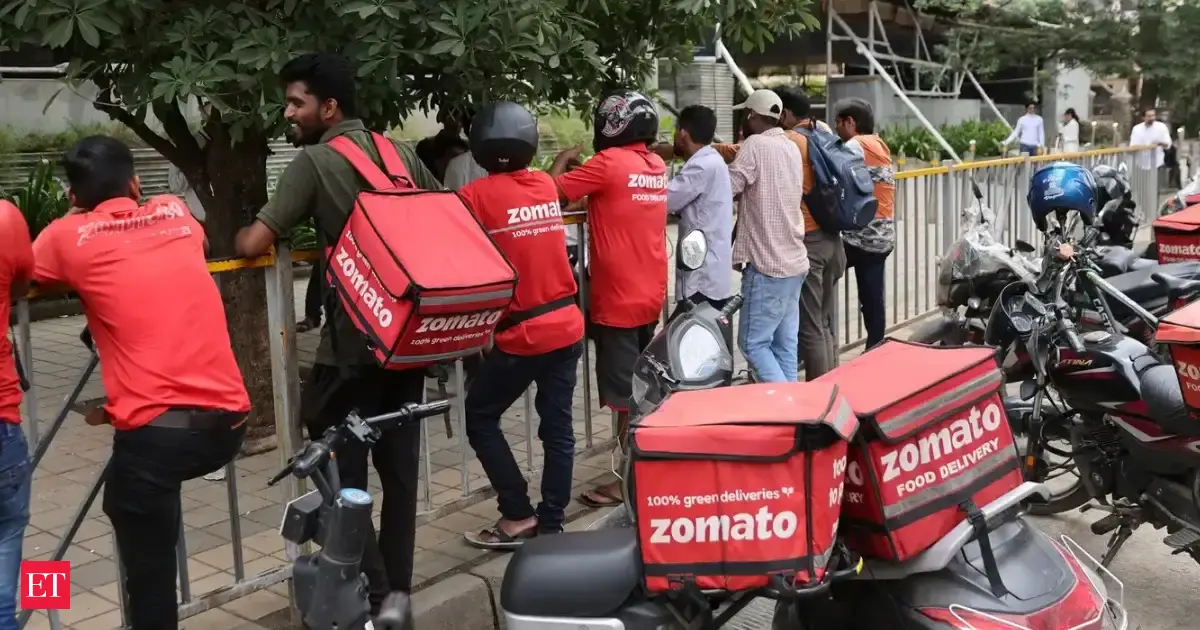
Indian e-commerce and quick-commerce platforms are introducing measures to protect delivery workers from severe heatwaves.
economictimes.indiatimes.comWith temperatures exceeding 45°C in India, e-commerce / quick-commerce platforms — Amazon Now, Zomato, Blinkit, Bigbasket, Zepto, Flipkart — collectively rolled out delivery worker protections, per The Economic Times. Measures include cooling jackets, AC-equipped rest hubs, health checks, and hydration stations.
As India's quick-commerce market intensifies its 10-minute delivery race, gig worker injury and attrition rates have become major operational concerns. The heatwave response combines ESG investor optics with preemptive responses to unionization risks, and similar measures are likely to spread to Delivery Hero, Talabat, and Rappi operations in tropical regions.
Shiprazor Raises $2.65M to Accelerate African EC Logistics — South Africa-Based Smart Logistics Platform

South African e-commerce merchant technology and smart logistics platform Shiprazor has raised US$2.65 million in seed funding.
techtrendske.co.keSouth African e-commerce logistics platform Shiprazor raised $2.65M in seed funding. Shiprazor offers a SaaS that consolidates rate comparison, label generation, and tracking across multiple courier partners — and plans to expand across South Africa, Nigeria, Kenya, and broader Africa.
Africa's EC market — driven by Jumia, Konga, and Takealot — continues to face logistics standardization delays. Shiprazor's positioning resembles Easyship (which launched an MCP server April 30), targeting the "last mile" of agentic commerce. With cross-border EC potential in Africa significant, VC investment in local logistics SaaS is accelerating.
Cambodia Establishes Nationwide EC Delivery Network — K-Worldbridge × DRSB Express × Cambodia Post Tripartite Deal

K-Worldbridge Logistics, DRSB Express Co. Ltd., and Cambodia Post have signed a tripartite Memorandum of Understanding (MoU) to establish a comprehensive delivery network.
www.khmertimeskh.comK-Worldbridge Logistics, DRSB Express, and Cambodia Post signed a tripartite MoU to build a nationwide EC delivery network across Cambodia, per Khmer Times. This extends and expands the late-April WorldBridge × DRSB Express deal, with Cambodia Post's nationwide infrastructure now bringing seamless coverage from urban to rural areas.
While mid-sized within ASEAN, Cambodia's potential as a cross-border EC transit hub is rising — sitting at the crossroads of EC logistics from China, Thailand, and Vietnam. For Japanese EC operators expanding into ASEAN, this opens new logistics options worth monitoring.
Retail Tech & Industry
Live Commerce and Barcode Retirement — April's Retail Tech Highlights (Whatnot, Shopify, Hanshow, Home Depot, etc.)

RTIH Editor brings stand out 'future of retail' technology deployments and launches from April, including Whatnot, Shopify, Sobeys, Hanshow, The Home Depot, Amazon, and DressX.
retailtechinnovationhub.comRetail Technology Innovation Hub (RTIH) editor Scott Thompson compiled April's standout "future of retail" tech deployments and launches. Coverage includes the Whatnot × Shopify livestream commerce partnership (April 29 announcement), Hanshow's AI electronic shelf labels, The Home Depot's AI inventory management, Sobeys' AI food security, and DressX's virtual try-on.
Particularly notable is the "barcode retirement" trend, with Sobeys (Canada) and Carrefour Israel adopting next-generation POS combining RFID + AI cameras. The 1970s barcode standard is being replaced by AI image recognition and RFID tags — a paradigm shift now in early stages.
MercadoLibre Q1 Analysis — LATAM EC and Fintech Twin Engines Power Long-Term Growth

Bullish thesis on MercadoLibre, Inc. — LatAm e-commerce dominance and fintech expansion drive long-term thesis.
www.insidermonkey.comA bullish investment thesis on Latin American EC/fintech leader MercadoLibre (NASDAQ: MELI) was published on Insider Monkey via Daan's "Rijnberk InvestInsights" Substack. MercadoLibre's EC (Marketplace) + payments (Mercado Pago) + logistics (Mercado Envios) + lending (Mercado Crédito) four-pillar model emphasizes LATAM EC market dominance and fintech growth as twin engines.
The May 7 Q1 2026 earnings will spotlight MercadoLibre's full agentic commerce strategy — confirming its position as a leader in the "commerce × fintech in-house" model alongside Shopify (US) and Naver (Korea).
Summary
May 4, 2026 was a symbolic day where Alibaba demonstrated B2B agentic commerce scale via Accio Work, Ascott declared the first hospitality-industry agentic travel commerce strategy, and Rezolve AI brought decentralized AI commerce infrastructure to mainstream fintech via Revolut. In US large-cap EC, GameStop's reported eBay bid reignited industry restructuring scenarios; globally, Vietnam's +47% Q1 EC GMV growth marks it as ASEAN's growth engine.
Looking ahead, watch for: AppLovin Q1 + Axon Ads launch on May 6, MercadoLibre Q1 on May 7, and Alibaba Q4 FY26 on May 15 — a stretch of major EC and ad-platform earnings. Agentic commerce is now clearly bifurcating into B2C-leaning OpenAI/Anthropic/Google camps and B2B-leaning Alibaba/SAP/Amazon Business camps, with industry-specific agentic UI standardization (hospitality, travel, handmade) becoming the next battleground.