AI Commerce News Digest (May 28, 2026)
Amazon starts selling its AI shopping tech to outside retailers with Kate Spade as first customer, Highnote and Visa launch AI-initiated payments, plus agentic commerce false declines, Robinhood's AI agent card, and more EC and AI commerce news from May 28, 2026.

Key Takeaways
- Amazon has started selling its AI shopping technology to outside retailers, with Kate Spade (part of Tapestry) signing on as the first customer. Platform companies are entering a new phase of monetizing the core technology of AI commerce itself
- Highnote has partnered with Visa to launch AI-initiated payment capabilities, as infrastructure for letting agents execute payments accelerates on both the merchant and issuer sides
- The day surfaced both the challenges and the results of agentic commerce in its implementation phase all at once, from the false-decline risk that grows as AI agent payments expand, to Robinhood's credit card for AI agents, to Fast Simon's conversion data on AI shoppers
Top Stories Today
Amazon Starts Selling Its AI Shopping Technology to Outside Retailers, With Kate Spade as First Customer

Amazon said it's already signed up Kate Spade as a customer for its AI shopping technology.
www.cnbc.comAmazon announced a new business that offers and sells its in-house AI shopping technology to outside retailers. It takes the conversational, agentic buying experience honed through its own shopping assistant Rufus and Alexa and makes it available on other companies' e-commerce sites.
The first customer is Kate Spade, the fashion brand under Tapestry. On Kate Spade's site, customers will be able to search for products and receive suggestions while conversing with an AI assistant. For Amazon, this means expanding beyond its own massive retail operation toward monetizing the AI technology itself.
What makes this significant is that the axis of competition in agentic commerce has widened from "our own AI shopping experience" to "the AI commerce infrastructure we provide to others." As Google, TikTok, and Shopify battle over the foundational layer, Amazon's entry as an AI technology provider for retailers forces EC businesses to choose between building in-house or adopting an external platform.
Highnote Partners With Visa to Launch "Agentic Commerce" Capabilities for AI-Initiated Payments

Courtesy of a partnership with Visa, modern issuing, acquiring, credit, ledger, and money movement platform Highnote has launched new Agentic Commerce capabilities this week.
finovate.comHighnote, a payment platform that provides issuing, acquiring, credit, ledger, and money movement in one place, announced "Agentic Commerce" capabilities supporting AI-initiated payments through a partnership with Visa. It handles the payment infrastructure — authorization, identity verification, tokenization — for when agents purchase on a consumer's behalf.
Highnote's strength lies in handling both the issuer and the acquirer (merchant) sides on a single platform. Settling agent transactions securely over the card network requires support from both sides, and Highnote aims to bridge them.
With a payment platform provider joining the agent-payment standardization race that Visa, Mastercard, Alipay, and Stripe have been driving, the choices facing EC businesses over "which infrastructure to accept agent transactions through" are becoming more concrete.
Full article: Highnote Partners With Visa to Implement AI-Initiated Payments — Merchant and Issuer Support in Agent Payment Infrastructure
Payments & Fintech
Robinhood Launches Agentic Trading and a Credit Card for AI Agents

Robinhood announced that customers can now use agents to conduct stock trading and shop with its credit card.
fortune.comRobinhood announced agentic trading — stock trading via AI agents — and credit card payments that agents can use. Users can delegate trading and shopping to agents, and card usage reportedly comes with 3% cash back.
What stands out is the arrival of a consumer financial product built on the premise that AI agents "pay on behalf of humans." Until now, agent payments centered on infrastructure-layer discussions, but Robinhood has made it concrete in the form of a card that consumers touch directly.
The trend of agents becoming the payment subject heightens the need for EC businesses to identify "who is paying, and with what authority." A card issuer launching an agent-friendly product shows that agent-driven purchasing is moving closer to everyday life.
Full article: Robinhood Launches a Credit Card for AI Agents — A Financial Product for the Era When Agents Pay
Agentic Commerce Surfaces a New "False Decline" Risk

As AI systems begin initiating more purchases and financial actions, merchants and financial institutions face growing pressure.
www.pymnts.comPYMNTS reported that as AI agents begin initiating purchases and financial transactions, merchants and financial institutions will be forced to address false declines — the phenomenon of legitimate transactions being mistakenly judged fraudulent and rejected.
Conventional fraud detection scores transactions on the assumption of human buying patterns. Agent transactions differ from humans in timing, device, and frequency, so existing rules tend to flag them as "anomalous." As a result, transactions that should go through get declined, and merchants lose sales opportunities.
This point follows on from the "agentic commerce dispute handling is not ready" observation we covered on May 25. While payment execution is coming together, operational areas like fraud prevention and dispute handling are emerging as the next challenge.
Full article: The "False Decline" Problem in Agentic Commerce — The Lost Sales AI Payments Invite and How to Address It
Visa, Mastercard Predict Agentic Commerce Will Boost Transactions and Fees

Taking humans out of purchases is likely to multiply transactions and thereby boost fees, chief financial officers of the card networks said.
www.paymentsdive.comThe CFOs of Visa and Mastercard said that the spread of agentic commerce will increase the number of transactions and, in turn, boost fee revenue. Their read is that removing human effort from purchases will increase the sheer frequency of transactions.
Both companies are already advancing agent-payment frameworks such as Intelligent Commerce and Agent Pay, underscoring the revenue opportunity for card networks. They made clear their position that as long as agent transactions run over their rails, the fee business will actually expand.
PayPal's Online Checkout Business Under Competitive Pressure
One of the biggest success stories of the original dot-com era, PayPal has seen its territory steadily conquered by new and existing competitors.
www.scrippsnews.comPayPal, an emblematic success story of the dot-com era, is reportedly seeing its online checkout business steadily eroded by old and new competitors. With the rise of Apple Pay, Shop Pay, and various wallets, the battle for control of the payment entry point is intensifying.
As agent payments spread, control of checkout becomes even more important. Because which payment method an AI agent chooses will sway sales, the fight over the payment button is moving to a new dimension.
AI Shopping & Commerce Tools
Fast Simon Analysis Finds AI Shopper Agents Lift Product Discovery Conversion to 22%
Fast Simon's analysis of nearly 50,000 e-commerce shoppers revealed that AI shopper agents are a powerful new dual-engine approach to e-commerce.
www.globenewswire.comFast Simon, a search and recommendation platform for e-commerce, announced that an analysis of roughly 50,000 EC shoppers found AI shopper agents lifted product discovery conversion to 22%. It describes a "dual-engine" approach combining AI-driven discovery with conventional search as effective.
What matters is that the effect of AI shopping is shown with a concrete number — conversion rate. For EC businesses, it is data backing up that AI agent support is not a mere fad but an investment target tied to actual sales.
Elastic Path and ReFiBuy Partner to Optimize Product Catalogs for AI Shopping
Elastic Path partners with ReFiBuy to optimize product catalogs for AI shopping, helping B2B merchants evaluate, enrich, and monitor agentic commerce.
www.globenewswire.comElastic Path, a composable commerce platform, announced a partnership with ReFiBuy to offer a service that optimizes product catalogs for AI shopping. It helps B2B merchants evaluate, enrich, and monitor product data for agentic commerce.
Structured product data is essential to make AI agents understand products correctly. The appearance of a specialized service in the unglamorous but essential area of catalog optimization shows that agent readiness is entering the "data preparation" stage.
Stripe Founders Say AI Agents Will Transform Commerce
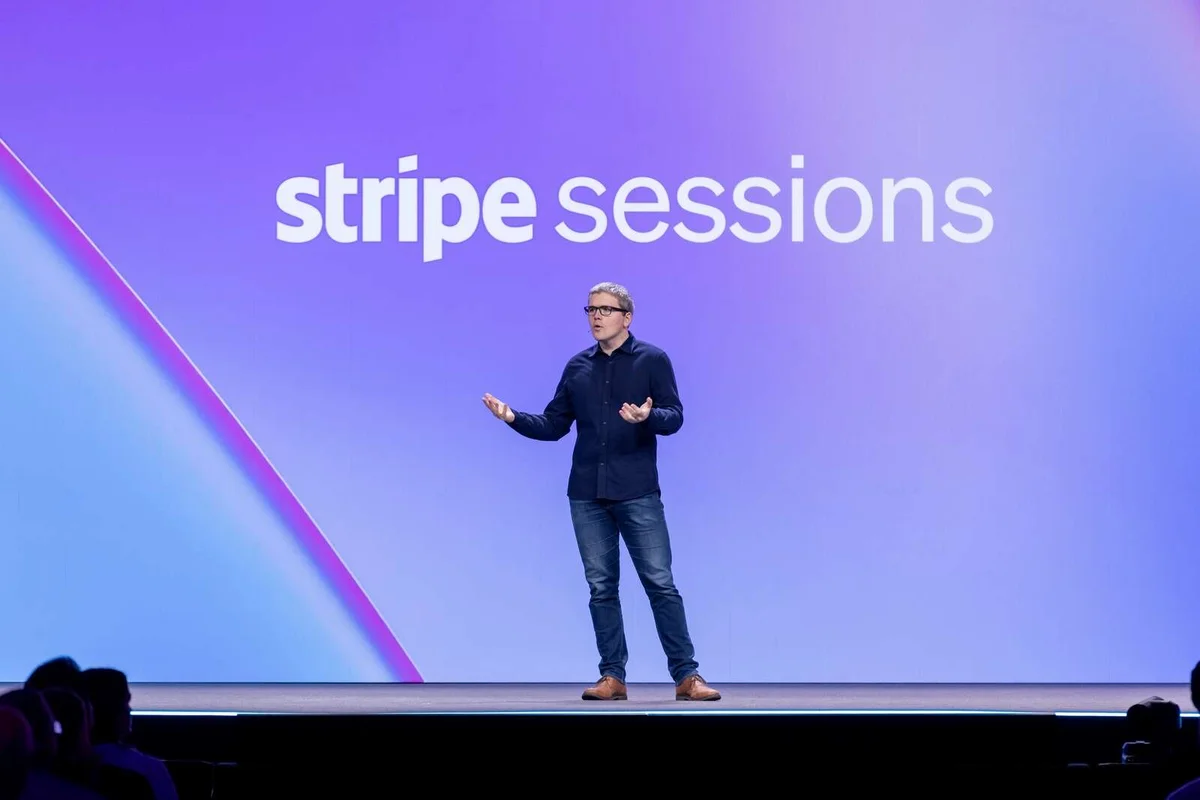
A recent interview in which Stripe's Collison brothers say AI agents will fundamentally change commerce.
www.businesspost.ieThe Collison brothers leading payment giant Stripe said in a San Francisco interview that AI agents are fundamentally transforming commerce. Looking ahead to an era when agents become the subject of transactions, a redesign of payment infrastructure is underway.
Stripe is one of the leaders driving the standardization of agent payments. The founders themselves putting this theme front and center symbolizes that agentic commerce is shifting from the experimental stage toward full-scale adoption.
Summary
May 28 was a day when attention focused all at once on implementation-phase questions of agentic commerce: who provides the technology, how payments are settled, and what operational challenges arise. Amazon stepped into selling its foundational technology, Highnote partnered with Visa as a payment platform, and Robinhood launched a card for AI agents. The supply side is accelerating.
At the same time, operational challenges like false declines are beginning to surface. The more payment execution comes together, the more "operational quality" — fraud prevention, dispute handling, conversion — becomes the next axis of competition. EC businesses are entering a period where, alongside choosing which infrastructure to ride, they should consider revisiting their operations on the premise of agent transactions.