
AI Commerce News Digest (September 28, 2026)
AI commerce news from September 25 to 27, 2026: SharkNinja's AI agents handle about 20,000 customer chats a week, Perform.AI launches an AI Commerce Operating System built around delivery performance, and GoKwik says AI voice calls double cart recovery.

Key Takeaways
- SharkNinja's AI agents now handle about 20,000 customer chats a week
- Perform.AI launched an AI commerce OS built around delivery performance
- Agents are moving into listing, voice support and other work around the transaction
This edition covers news reported from Friday, September 25 to Sunday, September 27. Late last week the focus was on AI agents opening their own purchase channels, with Meta's Muse and Google's UCP. This time the stories come from the other side: how brands and merchants are rebuilding their customer service and operations to receive those agents. Appliance brand SharkNinja has rolled out a setup in which AI agents handle much of its customer chat worldwide. Perform.AI, formerly Parcel Perform, launched a new product suite on the premise that whether an AI agent recommends a merchant depends on its delivery and returns record rather than its advertising.
Today's Top Stories
SharkNinja moves to Salesforce and rolls out globally, and AI agents now handle about 20,000 customer chats a week
CIO Velia Carboni is helming an agentic race forward with Salesforce.
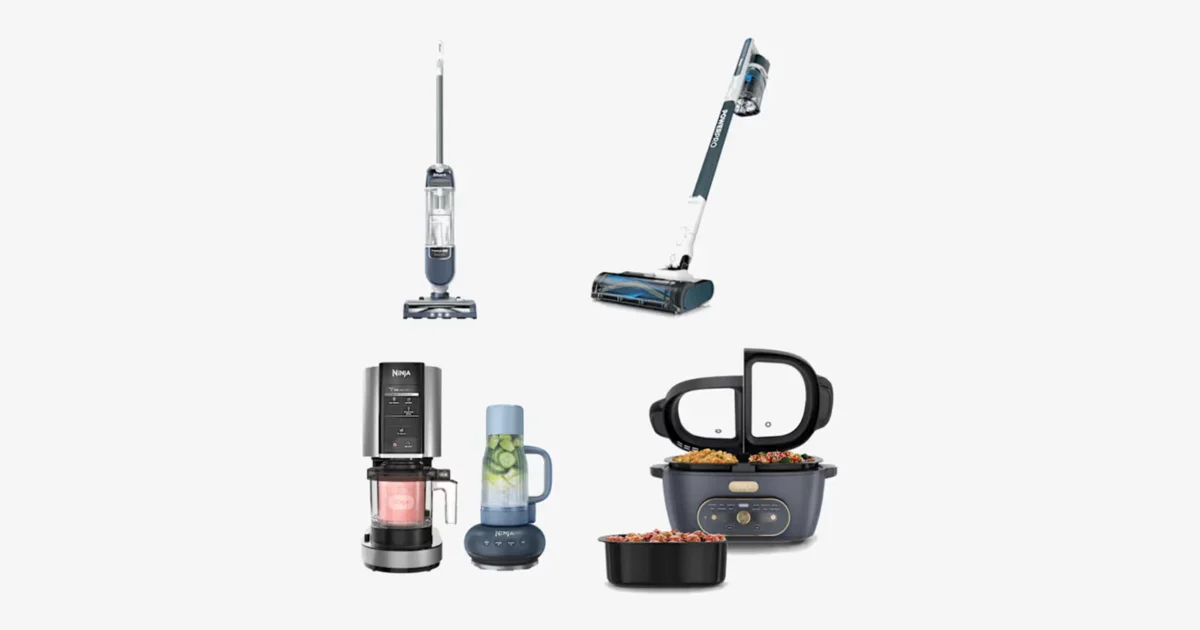
diginomica.comSharkNinja, which sells Shark vacuums and Ninja kitchen appliances, moved its commerce platform to Salesforce, rebuilding it in nine months and going live in the US and Canada before rolling out globally. CIO Velia Carboni described the project in an interview with diginomica. Commerce Cloud, Service Cloud, Data 360 (formerly Data Cloud), Agentforce and Shopper Agent all went live as part of the program.
The agents do more than pre-purchase support. Agentforce now handles around 20,000 customer chats each week. Scanning a QR code on a product opens a chat that walks the customer through setup, and the AI can also look up replacement parts such as brushes and filters. Carboni is particularly keen on the "unboxing agent", which aims to enroll customers who bought through retailers, Amazon or TikTok Shop as members of the SharkNinja family. She also said the company became the largest brand on TikTok Shop in the US in less than a year on the platform.
What stands out is that the agents cover post-purchase touchpoints as well as pre-purchase ones. Many brands sell mostly through other companies' channels and struggle to build direct customer relationships. Using the product itself as the entry point to an agent is a design that applies regardless of how large a brand's own e-commerce business is. Salesforce's published case study puts the conversion rate of shopping-enabled chats at 11%, though it does not define how that figure is calculated or what it is compared against.
Related article: SharkNinja Rolls Out Agentforce and Shopper Agent Globally: AI Agents Handle 20,000 Chats a Week Before and After Purchase
Perform.AI launches an "AI Commerce Operating System," arguing that delivery performance decides which merchants AI agents recommend

Perform.AI has announced the launch of an AI Commerce Operating System for end-to-end ecommerce.
thepaypers.comOn September 22, delivery tracking data company Parcel Perform renamed itself Perform.AI and announced an "AI Commerce Operating System" that brings e-commerce operations together in one system. The company's view is that AI agents helping consumers shop assess products on price and delivery speed, and recommend only brands whose delivery record matches what they promise. In its framing, neither loyalty nor advertising influences an agent, but consistent performance does.
The system consists of four modules, AI Commerce Visibility, Checkout, Post-Purchase and Returns, plus a Logistics layer that handles day-to-day work with shipping partners. A component called AI Decision Intelligence runs across the system, reading incoming data, deciding what should happen next and acting on it, with gross margin as the optimization target. AI Commerce Visibility, announced in October 2025, shows how AI tools talk about a brand's specific product lines, not just its name, as well as its delivery and returns.
Marketing, logistics and customer service teams at merchants on the platform can connect to their e-commerce operations data through the Model Context Protocol (MCP), querying it from the AI tools they already use instead of a separate dashboard. The key point of the announcement is that it treats delivery and returns records, not just product data, as something merchants need to audit if they want AI agents to pick them.
Agentic Commerce
Block joins the x402 Foundation, which promotes the x402 standard for agent payments

Block has joined the x402 Foundation to help advance open, agentic commerce, Steve Reis, head of product, Block Financial Platform, said in a
www.pymnts.comBlock, the operator of Square and Cash App, joined the x402 Foundation on September 24, according to a blog post by Steve Reis, head of product at Block Financial Platform. x402 is an open standard that uses the web's "402 Payment Required" status so that AI agents can pay for APIs and data on the spot.
Block will bring its experience in payments and consumer products to the foundation's working groups and will keep contributing to Bitcoin Lightning support for x402. The company has previously contributed its open-source AI agent goose, helped launch the Agentic AI Foundation (AAIF) and joined the Universal Commerce Protocol (UCP).
It is worth noting that Block, which does not run a card network, is involved in both UCP and x402. That reads as an effort to cover product checkout and small machine-to-machine payments with separate standards. For merchants, the next question is which standards they will be able to support through Square.
AI Commerce Tools
GoKwik says adding AI voice calls to WhatsApp cart recovery doubles recoveries, based on data from 30 D2C brands

AI-powered WhatsApp voice calls boost D2C recoveries and ROI, with 60-65% call answers driving 2.5x purchases vs single channels.
www.thehindubusinessline.comIndian e-commerce technology company GoKwik published six months of data from 30 D2C brands using its AI Calling feature. Brands that added AI voice calls to their WhatsApp cart recovery campaigns saw abandoned-cart recoveries double, and incremental return on spend was more than 10 times that of WhatsApp-only recovery.
Average call answer rates were 60 to 65 percent. Customers who engaged through both AI calls and WhatsApp were 2.5 times more likely to complete their purchase than those reached through only one channel. GoKwik's KwikEngage platform now handles more than one million AI calls a month. The AI answers last-minute questions about products, delivery timelines, payment options, discounts and return policies.
Co-founder and CEO Chirag Taneja said carts are not always abandoned because of weak intent or pricing, and that in many cases a shopper's question has gone unanswered. All of the figures are GoKwik's own data, and no third-party verification has been presented. Following the GoKwik and PayU ChatGPT integration we covered in July, investment in completing purchases through conversation continues.
Related article: GoKwik Says AI Voice Calls Doubled Abandoned Cart Recovery: Reading the 30-Brand, Six-Month WhatsApp Data
SureDone pilots Taska AI, an agent that handles marketplace listing work
SureDone, a multichannel e-commerce listing, inventory and order management platform, introduced Taska AI, an AI listing agent built on its commerce platform.
www.prnewswire.comSureDone, which provides multichannel listing, inventory and order management, introduced Taska AI, an AI listing agent, on September 23. It is live with select pilot customers, and access will expand in phases over the coming weeks.
Taska brings SureDone's product data, channel integrations and listing workflows into a conversational interface. Sellers can ask it to examine products, improve titles and descriptions, prepare channel-specific fields and create scoped listing plans for review. Once a seller authorizes a plan, Taska carries it out and tracks outcomes across the selected channels. A distinctive feature is that it distinguishes submission from a verified marketplace result, surfacing rejections and suggesting the next step.
It launches with a review-first experience, and SureDone plans to expand customer-controlled automation over time. Like Amazon's Seller Assistant, it is another example of agents moving into sellers' back-office work.
AnyMind adds Alibaba's Qwen large language models to its AnyLive live-commerce platform

Qwen will be added to AnyLive’s multi-model AI stack to strengthen real-time intent analysis and response accuracy
anymindgroup.comAnyMind Group announced a strategic agreement with Alibaba Cloud on September 24 to integrate Alibaba's Qwen models into AnyLive, its live-commerce platform. Qwen will operate as one model within AnyLive's multi-model architecture rather than replacing the existing stack.
The goal is to help AI avatars interpret ambiguous viewer questions and respond with contextually relevant answers. In Asian languages, honorifics, code-switching and local phrasing can determine whether an automated host understands the question. In a live stream the answer has to arrive while the viewer is still watching, so both intent recognition and response speed matter.
AnyLive is designed to run AI-fronted streams alongside human-hosted sessions and fill hours when a brand would not normally have a host on camera. The companies have not disclosed how Qwen changes accuracy or conversion rates, or the financial terms.
Google Search Console now separates traffic from Google Lens and other image-based searches

Google ajoute un filtre multimodal dans Search Console pour mesurer le trafic issu de Google Lens, Circle to Search et des recherches basées sur une image.
www.ecommerce-nation.frSince September 24, Google has added a "multimodal" filter to the performance report in Search Console. Site owners can now separate traffic from searches that start with or include an image from regular typed searches. The filter is also due to be added to the report on generative AI features.
It covers Google Lens, Circle to Search on Android, images uploaded to Google Search and Chrome's "Search this image" feature. Until now, traffic from image-led searches was folded into overall Google Search performance.
For e-commerce merchants, this makes it easier to see how much traffic product photos bring in through visual search. Google does not, however, disclose the queries or images behind those impressions. The practical use is as a starting point for checking whether product image quality is driving traffic.
Consumer Trends
Criteo data: grocery order values up 17% in the Americas, and 86% of CPG advertisers logged a ChatGPT-referred sale

86% of CPG advertisers on Criteo logged a ChatGPT-referred sale in July, while 40% of shoppers would let AI restock personal care. What do the figures prove?
ppc.landPPC Land published a detailed analysis of Criteo's consumer packaged goods report, CPG Pulse 2026. In the Americas, online food and grocery traffic fell 8% year over year between July 1 and August 18, but spend per order rose 17% and revenue grew 12%. Shoppers visited less often but bought more each time.
On AI, 86% of Criteo's CPG clients recorded at least one transaction referred by ChatGPT in July, and 40% of shoppers said they would let AI restock personal care products. The survey covered more than 6,300 consumers in the US, the UK, France, Germany, Japan and South Korea. In Japan, 69% of recent buyers shop for groceries or household items daily or several times a week.
PPC Land points out that sample sizes vary between slides and that no margins of error are published. The 17% increase is also not separated from price rises or larger pack sizes. Even so, the data is a useful indication that ChatGPT has already entered the purchase path for everyday goods.
Global E-commerce Trends
Temu matches Amazon as a cross-border shopping destination, with 24% each in a 37-country survey

In cross-border e-commerce, the gap between Amazon and Temu virtually disappeared according to the metric analyzed by Statista.
www.merca20.comAccording to data compiled by Statista, 24% of digital shoppers surveyed across 37 countries made their most recent cross-border purchase on Temu in 2025, the same share as Amazon. The figures were reported by Mexican marketing publication Merca2.0.
Temu only began international operations in September 2022. Its operator, PDD, has competed head-on with established players such as Amazon, Shein, AliExpress, eBay and Walmart, largely on price. In about three years it has drawn level with the largest player as an entry point for cross-border shopping.
With Europe tightening taxes on low-value imports, how long Temu's price advantage lasts is an open question. For merchants selling across borders, the fact that consumers no longer default to Amazon alone is relevant when choosing where to list.
ASOS returns to GMV growth in its fourth quarter, but its customer base is still smaller than a year ago

ASOS recorded growth in the value of products sold in the final quarter of its financial year, which ended on 30 August. The increase was in the low single digits, following a year in which that value fell by 12 percent. The online fashion retailer also reported its first quarter-on-quarter…
ecommercenews.euUK online fashion retailer ASOS said gross merchandise value (GMV) grew in the low single digits in the final quarter of its financial year, which ended on August 30, after falling 12% the previous year. It also reported its first quarter-on-quarter increase in customer numbers since 2022.
The recovery is still at an early stage. Full-year GMV was down 5%, and ASOS ended August with 16.4 million active customers compared with 17 million a year earlier. ASOS added around 30 partner brands during the year and expanded two fulfilment models: one in which it stores a partner's stock and handles delivery and returns, and one in which the partner ships directly to ASOS customers. Together these accounted for 21% of partner brand sales value, up more than 10 percentage points.
ASOS is improving gross margin by broadening its range without holding all the stock and by showing customers their return rates. The reported growth refers to GMV, which includes partner activity, and does not establish that revenue has returned to growth. Full-year results are due on November 5.
Corporate News and Partnerships
Shopify acquires Tailwind Labs, the company behind Tailwind CSS, to strengthen interfaces for agentic commerce

Shopify Inc. (NASDAQ:SHOP) is bringing Tailwind Labs into its platform through an acquisition of the widely used open-source design tool. The deal adds another piece to the company’s vision of becoming the interface layer for “agentic commerce.”
finance.yahoo.comShopify has acquired Tailwind Labs, the company behind Tailwind CSS, a CSS framework widely used to build websites. Financial terms were not disclosed. Tailwind creator Adam Wathan pointed to Shopify's custom storefront design work and its efforts on interfaces for agentic commerce.
Tailwind's open-source projects will continue under the MIT license, led by their existing teams. Existing Tailwind Plus and ui.sh customers keep access, but new sign-ups are closed as the team refocuses on Tailwind CSS itself.
As AI agents increasingly assemble and present products and checkout screens, owning a standard for the components that render those screens matters more. At the same time, Shopify shares fell sharply in early September on concerns that AI investment would weigh on margins, and investors remain sensitive to additional spending.
Common Thread Collective acquires TikTok Shop agency TBAR Partners

Common Thread Collective (CTC), a growth agency for direct-to-consumer e-commerce brands backed by The Acacia Group, has acquired TBAR Partners, an official TikTok Shop Agency Partner specializing in creator-led content, TikTok Shop management, and performance advertising.
pulse2.comCommon Thread Collective (CTC), a growth agency for D2C brands, has acquired TBAR Partners, an official TikTok Shop Agency Partner. Financial terms were not disclosed.
TBAR has helped scale more than 40 e-commerce brands and manages over $5 million in monthly GMV, with clients including Grüns, Vita Coco, Ridge and HexClad. CTC says it will combine creator partnerships, storefront management, affiliate marketing and performance advertising with its existing data-driven marketing and financial planning services.
TikTok Shop is becoming a major channel for established brands, with SharkNinja, featured in today's top stories, now the platform's largest brand in the US. Consolidation among the agencies that run it reflects the channel's growing maturity.
Logistics and Fulfillment
Amazon expands Global Warehousing and Distribution to reach eight countries, including Japan, from one inbound shipment by year-end
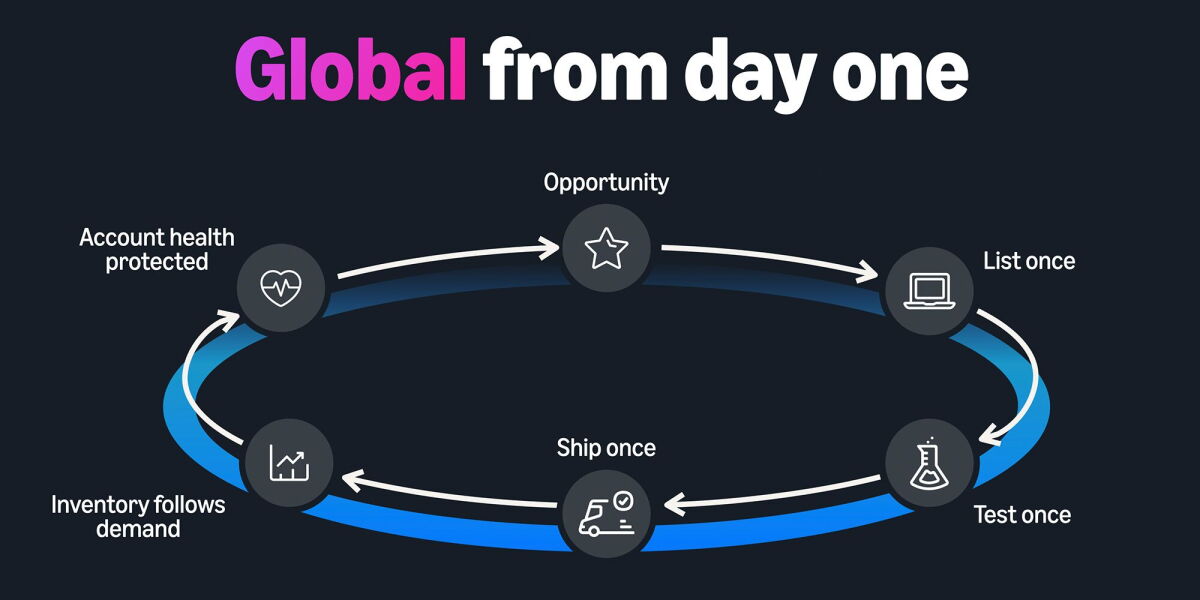
Only 30% of Amazon sellers list in more than one country. New capabilities spanning compliance, logistics, and the selling experience are designed to change that.
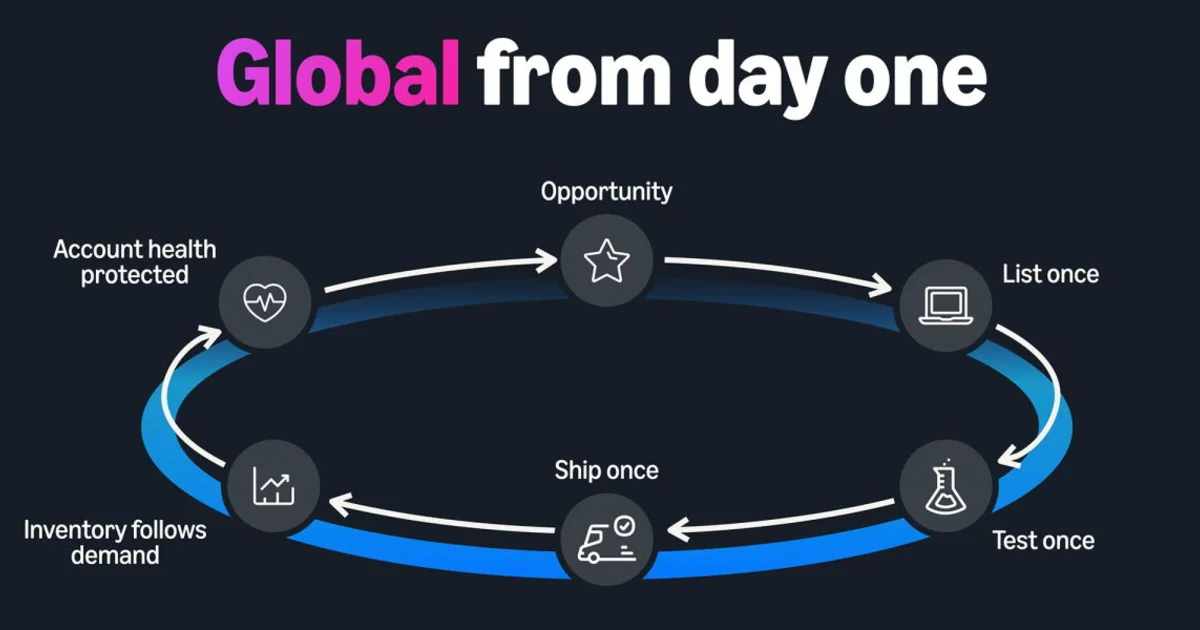
www.aboutamazon.comAt its seller conference, Amazon announced a set of services to support international expansion. At the center is Global Warehousing and Distribution (GWD), which lets a seller ship one manufacturing run to a single Amazon facility near the factory and reach customers in multiple countries. It connects to the US today and will add seven countries by year-end: the UK, Japan, Germany, France, Italy, Spain and Canada.
Inventory sits in one pool and moves to a specific country only when demand appears there. Once all eight countries are connected, storage costs will be up to 45% lower than Amazon Warehousing and Distribution (AWD) in the US, and replenishment into FBA up to five days faster. New compliance tools let sellers test once and certify across multiple countries, with early pilot sellers reporting savings of up to 60%.
According to Amazon, only 30% of its selling partners list in more than one country, but those that do earn 70% more revenue on average. Together with Seller Assistant, covered last week, the direction is clear: Amazon wants listing and inventory placement to work as one process across countries.
DHL eCommerce keeps looking for parcel acquisitions in Eastern Europe, with Venipak in the Baltics next

DHL eCommerce is looking for more parcel companies to acquire in Eastern Europe. The planned purchase of Venipak in the Baltics is its latest step. CEO Pablo Ciano says the region is now the focus of the division’s European acquisition plans.
ecommercenews.euDHL eCommerce plans to keep acquiring parcel delivery companies in Eastern Europe, with the planned purchase of Venipak in the Baltics as its latest move. CEO Pablo Ciano explained the strategy in an interview with German logistics publication DVZ.
Ciano said there are fewer gaps to fill in Western and Southern Europe. In the UK, DHL merged its parcel operations with Evri, and in Spain and Portugal it formed a partnership with Portuguese postal company CTT. In Italy, it launched a parcel locker joint venture with Poste Italiane.
The aim is to connect national networks so that cross-border parcels are delivered like domestic ones. For merchants selling across Europe, this could change the options available on delivery quality and price.
Payments and Fintech
BlackRock research says AI agents will drive demand for stablecoins

Reporting on crypto, blockchain developments
bitcoinke.ioIn a research paper published in mid-September, BlackRock, the world's largest asset manager, said the spread of AI agents could make them a new source of demand for stablecoins, as software begins paying for data, services and computing power without direct human involvement.
The paper says stablecoins suit machine-to-machine payments because they settle around the clock and support small payments that are hard to process economically on traditional networks. It estimates adjusted stablecoin transaction volume exceeded $11 trillion in 2025 and market capitalization had passed $300 billion by September 2026. Protocols such as x402, started by Coinbase to let software pay for APIs and data with stablecoins, are already being tested.
BlackRock itself cautions that AI-agent payments remain at an early stage. Stablecoins are still some way from being used for consumer product purchases, and for now machine-to-machine transactions such as APIs and data will dominate.
FIDO Alliance works on identity standards for agent payments, while its CEO sees large-scale adoption years away

The industry consortium and payments players are considering standards for agentic commerce, particularly for verifying identity.
www.paymentsdive.comAndrew Shikiar, CEO of the FIDO Alliance, which develops authentication standards such as passkeys, spoke to Payments Dive about identity standards for agentic commerce. The alliance's members include Visa, PayPal, Apple, Meta, JPMorgan and Wells Fargo.
Shikiar stressed the importance of verifying not only the agent itself but also the individual behind it. With AI fueling credential theft, deepfakes and accounts opened under fraudulent identities, he argues that services need signals that give them confidence the person is who they say they are for every transaction.
He also does not expect agentic commerce to happen at scale for years. In his view, it will take time before merchants and consumers trust that agentic transactions will happen as expected without significant fraud.
EBANX plans to enter Pakistan and brings Apple Pay token decryption in-house in Latin America

EBANX is preparing to enter Pakistan with JazzCash, Easypaisa and Raast, and now decrypts Apple Pay tokens in-house across Latin America.
thepaypers.comEBANX, which provides payment services for emerging markets, announced plans to start payment operations in Pakistan in the next half-year. The first methods to go live will be the local wallets JazzCash and Easypaisa, each with more than 50 million users, followed by integration with Raast, the country's national instant payment rail.
EBANX already expanded into Thailand, Indonesia, Malaysia, Vietnam and Türkiye earlier in 2026. World Data Lab figures cited by the company project Pakistani e-commerce spending to grow an average of 22% a year from 2026 to 2030. Separately, from September EBANX is decrypting Apple Pay tokens within its own infrastructure across Latin America and the Caribbean.
In emerging markets, local wallets and instant payments are overtaking cards. For merchants expanding abroad, a payment provider that covers local methods in one integration is becoming one of the factors in choosing where to go.
Digital wallets expected to overtake credit cards in Taiwan's e-commerce payments by 2030

Taiwan’s e-commerce payments market is expected to reach $30b by 2030, up from $23b in 2025, as digital wallets take a larger share of online transactions.
asianbusinessreview.comAccording to Worldpay data, Taiwan's e-commerce payments market is expected to grow from $23 billion in 2025 to $30 billion by 2030. Today, credit cards lead with 39% of transaction value, followed by digital wallets at 34%.
By 2030, wallets are forecast to rise to 40% and overtake cards at 35%. Cash is expected to fall from 15% to 11%, and account-to-account payments to rise from 6% to 8%. Wallets already lead at the point of sale with 36% and are expected to reach 44% by 2030. Popular services include LINE Pay, Apple Pay and PayPal.
For Japanese merchants selling cross-border into Taiwan, the data suggests that relying on card payments alone may increasingly leave sales on the table.
Wrap-up
The common thread in this edition is that preparations for receiving AI agents have moved beyond cleaning up product data. SharkNinja connected pre- and post-purchase touchpoints through the same agents, and Perform.AI treated delivery and returns records as the very criteria for being chosen by AI. GoKwik's voice calls and SureDone's listing agent are further examples of AI taking over work around the transaction that people used to handle.
At the same time, as the FIDO Alliance CEO's view that large-scale adoption is years away suggests, building trust for agents that pay on a person's behalf is still a work in progress. This week, watch whether companies' agent initiatives can show verifiable results beyond their own data, and in what order Amazon's GWD rolls out country by country.