Egypt Opens MENA's Largest AI-Powered Quick-Commerce Hub for Talabat: A Blueprint for Emerging-Market Logistics
Talabat Egypt has inaugurated MENA's largest AI-powered quick-commerce fulfilment centre near Cairo, processing one million items daily across 27,000 sqm. Inside the AI stack, Talabat's regional strategy, and what it means for global e-commerce players.

Key Takeaways
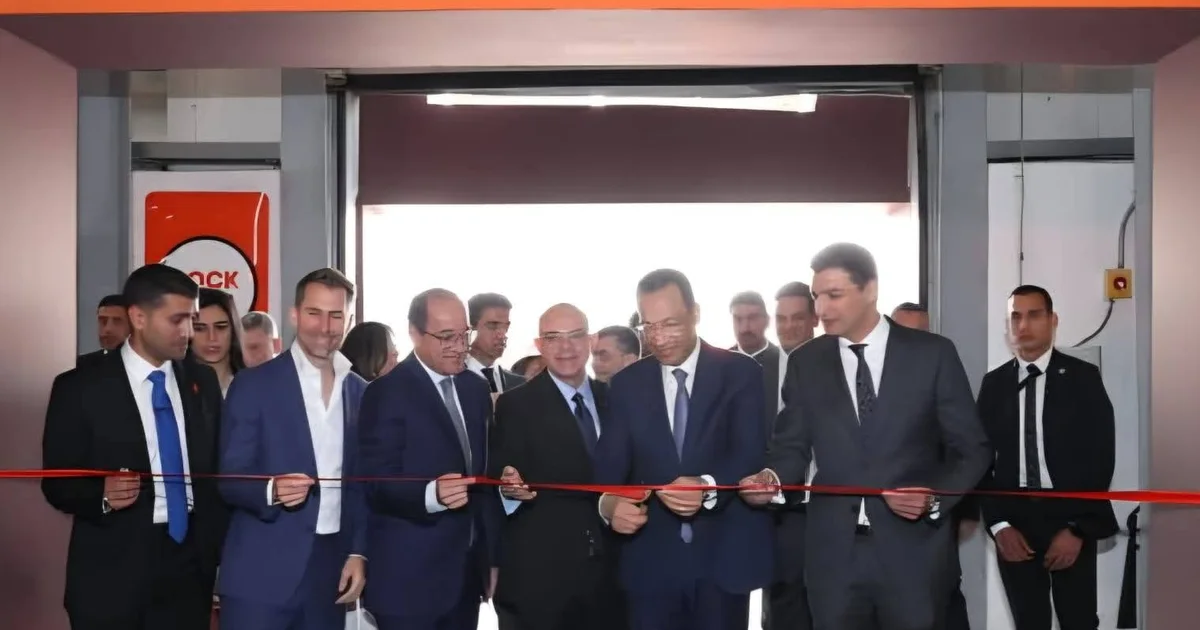
- Talabat Egypt has opened MENA's largest AI-powered quick-commerce fulfilment centre on the Cairo-Suez Road, spanning 27,000 sqm with capacity for one million items per day
- Proprietary AI models drive demand forecasting, inventory allocation and supply automation, while space-optimisation tech can double throughput within the same footprint
- With MENA e-commerce projected to reach $57bn in 2026, Talabat (a Delivery Hero subsidiary) joins India's Blinkit and JioMart as a leading emerging-market quick-commerce operator
A regional-scale hub appears outside Cairo
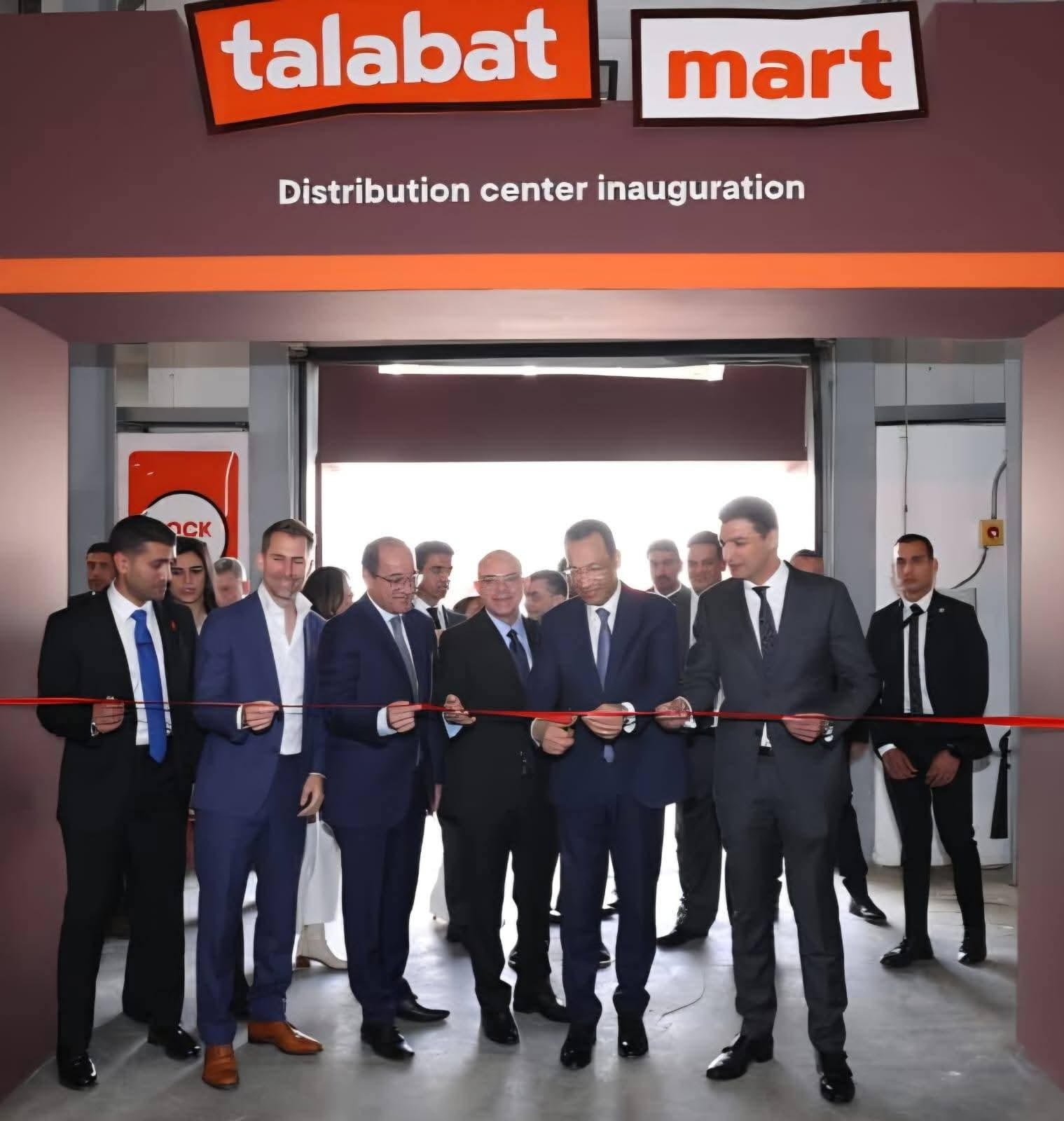
Egypt has taken a significant step in advancing its digital economy and logistics capabilities with the inauguration of the Middle East and North Africa's largest quick-commerce fulfilment centre, developed by Talabat Egypt.
www.dailynewsegypt.comOn 28 April 2026, Egypt inaugurated what is now the Middle East and North Africa's largest quick-commerce fulfilment centre. The hub, located inside the Yanmu East logistics complex on the Cairo-Suez Road, was developed by Talabat Egypt in partnership with Hassan Allam Utilities.
The headline numbers are striking: 27,000 sqm of floor space, one million items per day in throughput, and roughly 75,000 storage locations. That is several times larger than the typical urban dark store (300-500 sqm) used by India's Blinkit, and it exceeds many of Europe's mini-fulfilment centres. Quick commerce is splitting into two architectures globally: lean micro-stores nested in the city, and consolidated mega-hubs on the periphery. Talabat has clearly chosen the latter for Egypt.
The opening ceremony brought together a heavyweight cabinet line-up, with Minister of Communications and IT Raafat Hindi representing the Prime Minister, joined by the Ministers of Finance, Investment and Foreign Trade, and Industry. That level of state attendance signals something more than a private investment milestone: it positions the facility as a centrepiece of Egypt's digital economy and regional logistics-hub ambitions.
Operationally, the centre already serves 100% of Talabat Mart's quick-commerce business across 12 Egyptian cities, with expansion to 17 cities planned shortly. Egypt's roughly 110-million population, its concentration along the Nile, and Cairo's geography as a hinge between MENA, Europe and Africa, all converge to make this a natural anchor location.
Inside the AI stack: forecasting, allocation and spatial optimisation
What sets the announcement apart is how specifically Talabat describes the AI layer. This is not a marketing veneer; the proprietary models are placed at the operational backbone.
| Capability | Description |
|---|---|
| Demand forecasting | Predicts purchase patterns by city, SKU and time window to optimise inventory placement |
| Inventory allocation | Real-time decisions on replenishment timing and quantity, suppressing both stockouts and overstock |
| Supply chain automation | Automates procurement and replenishment, dynamically optimising picking paths and routing |
| Spatial optimisation | High-density storage and automation tech that can double throughput without physical expansion |
| Integrated systems | Real-time integration across inventory, retail platforms and supply chain operations |
The most consequential design choice is the claim that throughput can be doubled inside the same footprint. Quick commerce bottlenecks are usually not land or labour, but how many SKUs can be processed per square metre per hour. AI-driven slotting, dynamic picking-path recalculation, and tight integration with automation hardware together unlock that elasticity. If it works at scale, it offers a partial answer to the unit-economics problem that has plagued quick commerce globally.
Mohamed Sakina, Regional GM of Talabat Mart, framed the centre as "a smart logistics ecosystem rather than a conventional warehouse." That framing aligns with the broader trajectory across emerging markets. Amazon's expanding Amazon Now footprint in India, Flipkart's plan to double dark stores to 1,600 by end of 2026, and Reliance JioMart's integration with 18,000 stores all share the same DNA: AI plus automation plus retail platform fused into next-generation infrastructure. Talabat's Cairo hub is MENA's entry to that league.
Why Talabat, and why Egypt
Talabat is not a household name in Japan, but in MENA it is widely regarded as the region's largest internet company. A subsidiary of Germany's Delivery Hero, it operates across UAE, Saudi Arabia, Kuwait, Egypt, Qatar, Bahrain, Oman, Iraq and other Gulf and North African markets, and listed on the Dubai Financial Market in December 2024.
Egypt occupies a strategic position within Talabat's footprint. Talabat Egypt employs roughly 3,100 people, and notably, more than 1,600 of those work in the technology and shared-services centre that supports operations across eight markets. Egypt is therefore both a sales market and the operational brain and backbone of Talabat's regional business. The new fulfilment centre adds a physical logistics core to that already-critical hub.
Parent Delivery Hero is targeting GMV growth of 11-14% and revenue growth of 14-17% for FY2026, backed by approximately $150m of investment, with quick commerce and subscriptions as primary growth engines. As pure food delivery decelerates, the company is pivoting toward an integrated q-commerce model that spans groceries, household goods and health products. This pattern is shared by every major global player.
CEO Tomaso Rodriguez described the project as a major milestone for the company in Egypt and across the region. The more interesting subtext is what comes next: deeper expansion across MENA's three-pole structure (Saudi Arabia, UAE, Egypt) and a southward push into Africa. The Cairo hub is designed not as a standalone facility but as a core node in a regional network.
MENA's three-pole e-commerce map in 2026
Why Egypt now? The market structure tells the story.
| Indicator | Value | Source |
|---|---|---|
| MENA e-commerce market size (2026 forecast) | $57bn | EZDubai / Euromonitor International |
| MENA e-commerce CAGR (2022-2026) | 11% | EZDubai / Euromonitor International |
| Middle East & Africa quick commerce (2024) | $3.2bn | Globe Newswire research |
| Middle East & Africa quick commerce (2029 forecast) | $4.9bn | Globe Newswire research |
| Egypt population | ~110 million | Various |
MENA's e-commerce market has settled into a three-pole structure: Saudi Arabia (purchasing power, Vision 2030 spending), UAE (logistics hub, international gateway) and Egypt (population scale, young demographic). By choosing Egypt for its largest physical asset, Talabat is effectively betting that Egypt becomes the volume centre of that three-pole map.
Within quick commerce, Talabat, Careem and Breadfast are competing for regional leadership, all leaning on AI and vertical integration. The 1.5x growth projected from 2024 to 2029 looks modest compared with India or China, but the structural tailwinds — fast mobile-payment adoption, a young population, accelerating urbanisation — point to a longer runway than the headline rate suggests.
For global e-commerce operators, the cross-region comparison matters. India's Flipkart plans to double dark stores to 1,600 by end of 2026, and the global quick-commerce market is forecast to expand from $68.4bn in 2025 to $382.7bn by 2034 at 22.1% CAGR. MENA's absolute scale is smaller than Asia's, but per-capita basket size and logistics maturity in parts of the Gulf can be more attractive on unit economics.
Egypt's regional-hub-state ambition
Minister Hindi's framing of the AI hub as a "reflection of investor confidence" is more than diplomatic language. It belongs to a broader policy push to position Egypt as a digital-economy and logistics-hub state.
Over recent years, Egypt has invested in digital infrastructure, accelerated online-platform adoption and seen rapid growth in mobile-based services. Combined with proximity to the Suez Canal, geographic adjacency to the Arab world, Africa and Europe, and a deep multilingual talent base in Arabic, English and French, the country has been actively courting global firms to locate their regional operating centres there. Talabat's 3,100-strong workforce in Egypt — including 1,600 in technology and shared services — is exactly the kind of result that policy was aiming for.
Beyond efficiency gains, the new hub is expected to improve distribution access for local producers, suppliers and merchants. If Egypt can flip from being primarily a destination for imports to a node that pushes locally produced goods across MENA, its role evolves from consumer market to regional logistics platform.
What this means for global e-commerce operators
Three takeaways stand out for international brands and operators.
First, "emerging-market quick commerce" is not a single category. India, Southeast Asia, MENA and Latin America are all expanding fast, but the market structures, payment rails, logistics infrastructure and competitive dynamics differ sharply. MENA's combination of mobile-wallet adoption, young demographics and three-pole structure (Saudi-UAE-Egypt) calls for a region-specific playbook. Lifting India's playbook wholesale will not work.
Second, quick commerce is no longer just rapid grocery delivery. Talabat's Cairo hub is a textbook case of a food-delivery-rooted operator evolving into integrated q-commerce, with AI-driven logistics at the core. Even outside MENA, the same three axes — delivery speed, category expansion, and AI inventory optimisation — are converging into the standard architecture for next-generation logistics.
Third, MENA market entry deserves serious reconsideration. Japanese brands in food, cosmetics, household goods and health have meaningful brand equity in MENA, but logistics costs and fragmented local channels have historically been blockers. With a regional fulfilment hub now operating in Egypt, it becomes more practical to design a single integration that covers multiple countries via local partnerships.
A note of caution: MENA market entry carries higher geopolitical, currency and regulatory volatility than other regions. Short-term test launches tend to disappoint; deeper, longer-term commitments — local partnerships, adoption of regional AI/logistics SaaS, and local hiring — are what move the needle.
Conclusion
Talabat Egypt's new AI quick-commerce hub is not just a regional headline. It is a marker that emerging-market quick commerce is shifting from "urban micro" toward "mega plus AI." India's Blinkit and Flipkart, China's JD and Meituan, and MENA's Talabat are each crafting market-specific answers to the same underlying question.
For operators, the strategic point is straightforward: the quick-commerce battleground has expanded beyond developed-market cities into emerging-market regional hubs. With AI-driven demand forecasting, spatial optimisation and supply-chain automation now defining competitive advantage, how you re-architect logistics over the next few years will shape your position. The next signposts to watch are Talabat's 17-city rollout timeline, the synergy it can extract across the Saudi-UAE-Egypt three-pole structure, and how Japanese brands choose to plug into the resulting regional network.