Feedonomics Launches 'Agentic Commerce Engine' — Translating Catalog Data into Agent-Readable Form Marks the Start of Agentic SEO
Feedonomics, the BigCommerce-owned data feed manager, released the 'Agentic Commerce Engine' to convert product catalogs into agent-friendly structured formats and export them to multiple standards including UCP and ACP simultaneously. The launch signals the start of the Agentic SEO market, where attribute granularity, real-time inventory accuracy, and price update frequency become the new ranking factors.


Key Takeaways
- Feedonomics, the BigCommerce-owned data feed manager, released the "Agentic Commerce Engine" to convert product attributes into structured formats agents can read, with simultaneous export to multiple standards including UCP and ACP.
- The premise of catalog optimization is shifting from "rank well in Google Shopping" to "be picked up by AI agent recommendations" — a transition the industry is starting to call Agentic SEO.
- Attribute granularity, real-time inventory and price updates, and return policy clarity are emerging as the new ranking factors, with multiple SaaS vendors expected to follow in the coming quarters.
Catalog Optimization Pivots from "the Human Eye" to "the Agent's Eye"
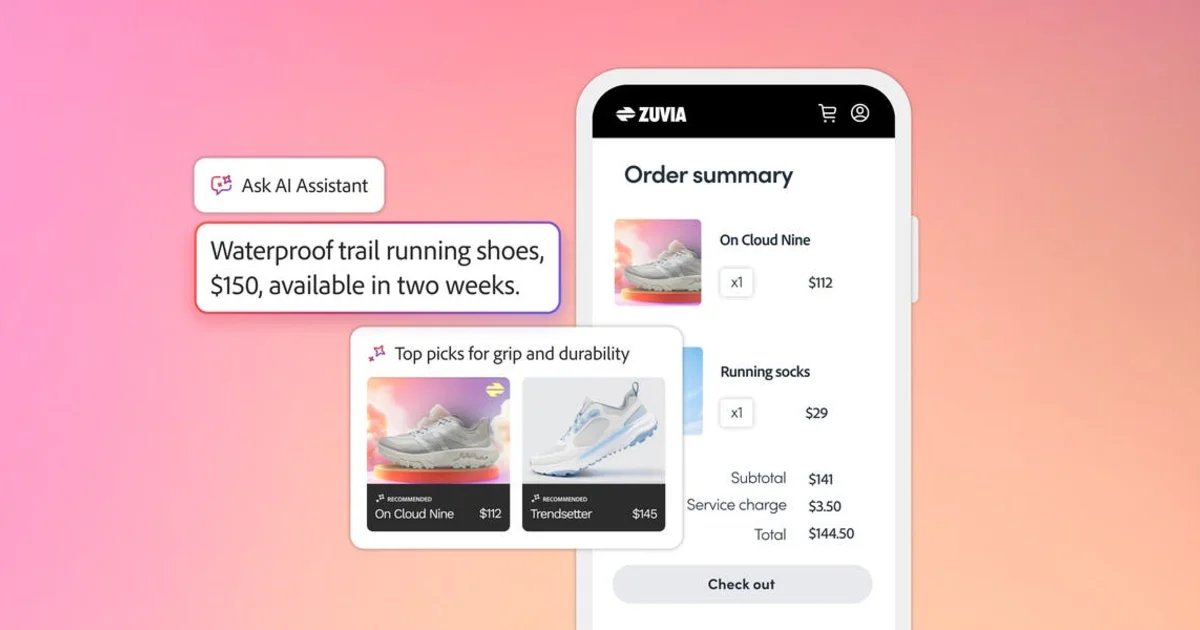
Feedonomics releases agentic-ready catalog exports to power product discovery across AI shopping agents.
www.commerce.comFeedonomics, the largest product data feed manager in the industry and a BigCommerce subsidiary, has announced the Agentic Commerce Engine — a catalog optimization feature aimed squarely at AI shopping agents. The product converts product attributes into structured formats agents can interpret and exports them simultaneously to multiple standards including UCP (Universal Commerce Protocol) and ACP (Agentic Commerce Protocol).
For most of the last decade, "catalog optimization" has been shorthand for "ship a clean Google Shopping feed." Polish the title, GTIN, price, image and inventory; clear errors in Merchant Center; lower CPA. Quietly, that premise is being replaced. When AI agents compare and select products on behalf of consumers, the work of being indexed shifts from the human eye to the agent's algorithm.
Agents don't read thumbnails — they read structured attributes. They don't "compare" prices — they evaluate them as numerical fields. They don't trust the "in stock" label on a card — they verify whether the SKU can actually ship right now. Even though the surface task — keeping the catalog clean — looks unchanged, the substance of what "clean" means has been rewritten. Feedonomics' announcement is the first major productized response to that rewrite.
What Problem the Agentic Commerce Engine Is Trying to Solve
As agentic commerce expands, a structural pain point has emerged for merchants: the same product has to be exposed simultaneously in multiple, slightly different specs.
Google is pushing UCP. OpenAI is pushing ACP. ChatGPT, Gemini, Copilot and Perplexity each demand subtly different attribute sets and signing schemes. On top of the traditional feeds that live inside Shopify or BigCommerce, payment protocols like Mastercard Agent Pay and Visa Intelligent Commerce have started carrying their own product metadata requirements.
For mid-sized merchants, building all of this in-house quickly turns into hundreds of engineering hours per quarter. The Agentic Commerce Engine positions itself as a translation layer between a single source catalog and each downstream protocol spec. As long as the merchant maintains a clean PIM (product information management) layer, the engine absorbs spec-level changes across UCP, ACP and PSP variants on their behalf.
The second pain point is update cadence. Agents compare candidates in parallel and re-rank by price and inventory freshness. A nightly batch feed leaves stale prices visible to agents long enough to mislead a recommendation. Feedonomics has anchored the product around minute-level API sync and real-time delta publishing — a requirement that wasn't really part of the Google Shopping playbook.
What Are the Ranking Factors of "Agentic SEO"?
Lining up the Google Shopping era against the Agentic SEO era makes the change in competitive variables stark.
| Dimension | Google Shopping Feed Era | Agentic SEO Era |
|---|---|---|
| Discovery starting point | Search results page ranking | AI agent recommendation list |
| Who compares | Users click through and compare | Agents compare in parallel behind the scenes |
| Important attributes | Title, image, price | Attribute granularity, real-time inventory, shipping terms, return policy |
| Update cadence | A few times per day is acceptable | Inventory and price sync expected at minute-level |
| Output destinations | Mostly Google Merchant Center | Parallel output to UCP, ACP, and multiple PSP specs |
The decisive shift is in who does the comparing. When users clicked through and compared visually, thumbnail aesthetics and title catchiness moved sales. Agents score multiple candidates in parallel and surface only a pre-filtered top-N to the consumer. The pretty thumbnail is no longer a primary lever.
What replaces it is attribute granularity. Beyond size and color, agents now weigh material, thickness, washing instructions, country of origin, sustainability certifications and more. Accuracy of return policy and shipping lead time, plus structured review data (not just star ratings, but tagged signals like "fits true to size" or "warm enough for early winter") become competitive variables. Adobe is similarly investing in agentic commerce standards inside Adobe Commerce, which makes the PIM and catalog layer a cross-vendor priority.
For inventory and price freshness, "is this synced in real time?" has moved from a nice-to-have to a checkbox requirement. Agents call multiple merchants in parallel, re-verify inventory and price right before checkout, and quietly drop stale records from the candidate set.
Why SaaS Vendors Are Crowding into the Agentic SEO Space
Feedonomics' announcement isn't a one-off — it's a visible point in a broader investment wave hitting the catalog and product data layer.
Since Google introduced UCP at NRF 2026, the council has doubled to 10 members with Amazon, Meta, Microsoft, Salesforce and Stripe joining, and the spec is iterating noticeably faster. The catalog-data surface that agents read against has become a core front in the standards race, alongside payments and identity.
PIM and feed management — historically a quiet category — is suddenly crowded. Salsify, Akeneo, Channable, DataFeedWatch, and now Feedonomics are each shipping agent-ready features from different angles, and the term Agentic SEO is starting to settle into industry vocabulary. Some vendors prefer AEO (AI Engine Optimization); the labels are still drifting, but the problem they describe is roughly the same.
Worth noting: Feedonomics is a BigCommerce subsidiary, not part of BigCommerce's core platform. BigCommerce is the second-largest SaaS commerce platform after Shopify and competes with Adobe Commerce (Magento) and Salesforce Commerce Cloud. Releasing this from a feed-management subsidiary rather than the core platform is deliberate — Feedonomics already manages multi-platform catalogs across Shopify, Magento and Salesforce Commerce Cloud, which means BigCommerce can sell into competitor platforms without forcing a re-platform.
What Merchants Should Do Now
The implications for merchants are reasonably concrete.
First, establish a single source of truth for product data. Title, attributes, inventory, price, shipping terms, return policy and loyalty pricing should all live in one PIM or catalog master that can be auto-translated to UCP, ACP and other specs. Whether that means adopting Feedonomics or building PIM in-house depends on scale, but a fragmented master is the worst possible starting point for the Agentic SEO era.
Second, revisit attribute coverage and depth. For fashion: material, thickness, seasonality, fit-from-reviews. For electronics: power draw, supported specs, compatibility. For groceries: allergens, storage requirements, origin. When an agent answers a natural-language query — "a shirt I can wear in summer and machine wash, under $30" — its match accuracy depends directly on attribute quality. Resources previously spent tuning title strings now belong in structured attribute work.
Third, treat real-time inventory and price sync as an architectural decision. A nightly batch feed is structurally disadvantaged in the agent era. The ability to publish deltas in real time will increasingly drive PSP, OMS and feed-vendor selection. Adyen, Stripe and Shopify Plus have already moved this direction; assembling payments, OMS and feed management as a real-time-first stack is becoming the priority over the next 12 months.
Wrap-Up
The right way to read Feedonomics' Agentic Commerce Engine is not as a single product launch, but as a signal that the competitive axis of catalog optimization has changed. The familiar Google Shopping feed work is being extended with a translation layer for UCP and ACP, attribute structures designed for agents to read, and real-time inventory and price sync as a baseline.
For merchants, that means the product-data layer has clearly joined PSP selection and standards compliance as a near-term agenda item. Waiting for the standard to settle was already a losing move in the Google Shopping era; in the Agentic SEO era, the same pattern repeats — competitors who move first end up on the agent's recommendation list, and the rest learn what "stale" means in a new context. Whether or not Feedonomics is the right vendor, every merchant should be auditing whether their own catalog is "readable, current, and structured" from the agent's perspective right now.