Klarna Launches Shopping Search in ChatGPT, Pumps 100M Products Through MCP Server as BNPL Moves Into Agentic Commerce
BNPL leader Klarna debuts Shopping Search inside ChatGPT, piping 100M products via an MCP server. Here is what it means for merchants and payment players.

Key Takeaways
- BNPL giant Klarna launched the Klarna Shopping Search app in ChatGPT, piping more than 100 million products and 400 million merchant listings across 13 markets through its own Product Search MCP server
- The move is timed against Adobe data showing AI-driven retail traffic up nearly 700% YoY in the 2025 holiday season, with conversion rates 31% higher than non-AI channels
- For merchants, Klarna network membership now doubles as an automatic ChatGPT discovery channel, but storefronts must be redesigned as conversion endpoints rather than discovery destinations
Klarna Becomes the Shopping Search Inside ChatGPT
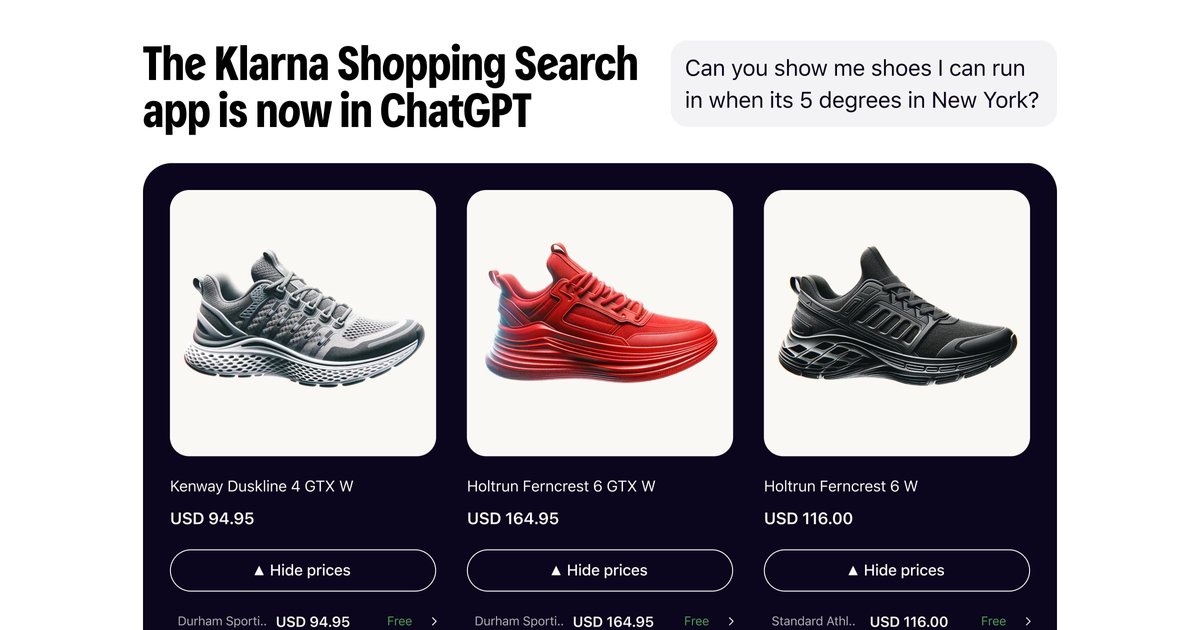
BNPL giant Klarna has launched its AI-powered shopping search app in popular conversational AI ChatGPT for real-time product discovery
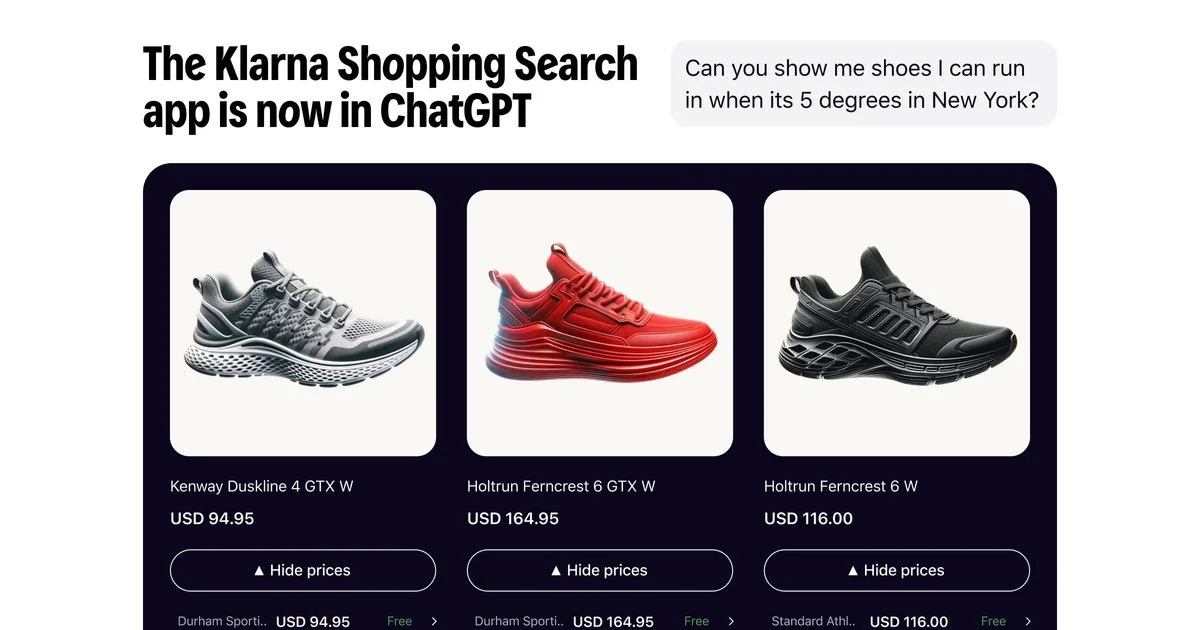
fintechmagazine.comOn May 20, 2026, Swedish BNPL leader Klarna went live with the Klarna Shopping Search app inside ChatGPT. Open the Apps sidebar, pick Klarna Shopping Search, describe what you want in plain language, and visual results appear right in the conversation, showing live prices, availability, and offers from multiple merchants.
According to the official BusinessWire release, the final transaction still happens on the merchant's own site. ChatGPT becomes the discovery layer, the merchant's storefront keeps the checkout. Investors reacted quickly: Klarna shares (NYSE: KLAR) climbed more than 4% on launch day.
David Sykes, Klarna's Chief Commercial Officer, framed the bet plainly.
ChatGPT is where millions of people already turn when they're figuring out what they want. We're plugging our merchant network directly into that moment. A consumer who last week would have spent twenty minutes comparing tabs now gets a real answer in one conversation.
A Product Search MCP Server Doing the Heavy Lifting
The engine under the hood is Klarna's Product Search MCP server. MCP (Model Context Protocol) is the open spec that lets AI agents reach external tools and data sources; OpenAI's Apps SDK is built on top of it.
As PYMNTS reports, the server exposes more than 100 million product records, 400 million merchant listings, and live inventory and pricing across 13 markets. ChatGPT extracts intent from the conversation, calls the server, and renders the results as inline cards within the chat.
The clever part of the design sits in the split between organic and sponsored placements. Merchants can earn organic visibility based on relevance, and they can buy clearly labeled sponsored slots to amplify reach. In effect, Klarna has stood up a brand-new ad inventory layer on top of a conversational interface. With 119 million active users and 3.4 million transactions a day, Klarna's merchant network now has a discovery channel that flows through dialogue rather than search engines.
Why Now: Adobe's Numbers Pushed the Trigger
The timing aligns with data Adobe has been releasing all winter. In its 2025 holiday season analysis, Adobe found that traffic from generative AI platforms to US retail sites grew nearly 700% YoY, and AI-referred shoppers converted at a rate 31% higher than other channels.
Klarna cites those exact numbers at the top of its press release. AI-sourced visitors arrive with intent, and the funnel is widening fast. That is the equation that pulled a payments and BNPL company into the discovery layer rather than waiting at checkout.
There is also a Klarna-specific subplot. In February 2024, Klarna unveiled an OpenAI-powered customer service assistant that handled 2.3 million chats in its first month, equivalent to the workload of 700 full-time agents. By 2025, CEO Sebastian Siemiatkowski had publicly walked back parts of that AI-only support pivot, admitting service quality slipped. Today's ChatGPT integration is best read as the second act of Klarna's AI strategy, this time aimed at the commerce and discovery side rather than support. Klarna and OpenAI have collaborated since 2023, and the MCP server tie-up shows that partnership has now sunk deep into the technical stack.
The Shifting Topography of ChatGPT Commerce
Klarna's launch did not appear in isolation. It rides a wider reshuffle of how commerce works inside ChatGPT. OpenAI launched Instant Checkout with Etsy and Shopify in September 2025, hoping to close transactions inside the chat. Six months later, OpenAI publicly stepped back, saying Instant Checkout failed to deliver the flexibility merchants needed. The new direction: let retailers keep checkout on their own sites; ChatGPT focuses on discovery and experience (Digital Commerce 360).
Apps SDK has since become the default surface. Walmart shipped its agent Sparky, Etsy a gift-discovery app, ASOS a video-led stylist app. These are brand-specific UIs. Klarna Shopping Search occupies a different slot: a cross-merchant search layer.
A two-tier landscape is taking shape inside ChatGPT. The first tier is multi-merchant comparison search, the role Klarna is grabbing, the role Amazon's general search or a price comparison site plays elsewhere. The second tier is brand-specific apps like Walmart Sparky or ASOS Stylist, closer to a storefront extension. Klarna's Sykes put it well: ChatGPT is where people decide what they want. Klarna is now planting itself at the top of the decision funnel.
The BNPL Race Into Agentic Commerce
Zoom out to payments, and Klarna's move is one front in a broader BNPL race to plug into agentic commerce.
Affirm, Klarna's biggest rival, is attacking from a different angle. In May 2026, Affirm announced that pay-over-time will surface inside Google Gemini and Google Search's AI Mode via Google Pay. It is also building Shared Payment Tokens with Stripe so AI agents can transact with user consent without exposing credentials (Crowdfund Insider).
The rough lines: Klarna is going deep on ChatGPT and MCP (the OpenAI orbit), while Affirm is leaning toward Gemini, UCP, and Stripe (the Google orbit). For merchants, BNPL choice is starting to look like a vote on which agentic commerce protocol family they want default-on.
What This Means for Merchants and Payments Teams
For Klarna's existing merchants, the launch delivers automatic exposure to ChatGPT discovery with no extra fees and no separate application. The 119-million-user network is published wholesale through the MCP server, which means whether you sit inside Klarna's merchant book is becoming a prerequisite for ChatGPT presence.
That is not a free win, though. Walmart's earlier experiment showed ChatGPT-native checkout converted at roughly one-third the rate of Walmart's own site. Klarna's "discovery in ChatGPT, purchase on the merchant" model is built precisely on that lesson. Merchants need to redesign their storefronts as landing pages tuned to convert ChatGPT-sourced traffic: instant inventory and sizing display, short checkout paths, and BNPL options including Klarna lined up at the right moment.
Data ownership is the other open question. The signals about which words pulled up your products, where users dropped off, what alternatives were shown — those flow primarily into OpenAI and Klarna's MCP server. Your own server logs will not show the full picture. Merchant teams need to figure out how to connect Klarna's merchant analytics with their internal customer data to keep visibility on the new funnel.
Conclusion
Klarna's ChatGPT Shopping Search launch marks the moment a BNPL incumbent climbed all the way up to the top of the discovery funnel. MCP servers are emerging as the new spigots feeding product data into AI assistants, and ChatGPT is the highest-volume tap. The roles of OpenAI, Klarna, and the merchant are crystallizing fast.
Watch two things next. How quickly Klarna extends this experience into non-English markets, especially Japan. And how PayPal, Affirm, and Apple respond. The race to own the new shelf inside conversational AI is no longer hypothetical.