AI Commerce News Digest (May 22, 2026)
Klarna joins ChatGPT for agentic commerce, Walmart's Q1 FY2027 earnings show 26% e-commerce growth and 37% ad business growth, Pattern Group launches Pattern Intelligence (Pi) AI execution engine, and Nike invests in Google Agentic Commerce — a digest of EC and agentic commerce news for May 22, 2026.


Key Takeaways
- Klarna officially joined ChatGPT's Instant Checkout ecosystem, becoming the first major BNPL player to enter the agentic commerce conversational interface. The trend of payment players jumping onto the ACP rails launched at Stripe Sessions is now crystal clear.
- Walmart Q1 FY2027 earnings delivered strong numbers — e-commerce +26%, advertising +37%, third-party marketplace surge — alongside a profit warning over fuel costs. The world's largest retailer is making a full-stack pivot to e-commerce, advertising, and AI (centered around its assistant Sparky).
- Pattern Group launched Pattern Intelligence (Pi), Nike invested in Google Agentic Commerce, Bessemer Venture Partners published the "Delegated Buyer" report, Bank of England released a payments infrastructure analysis, and Adyen projected $100B+ in EC fraud by 2029 — a single day where vendor, brand, regulatory, and research stakeholders all validated the move to commercial agentic commerce.
Today's Top Stories
Klarna Joins ChatGPT for Agentic Commerce — BNPL Giant's AI Shopping Integration

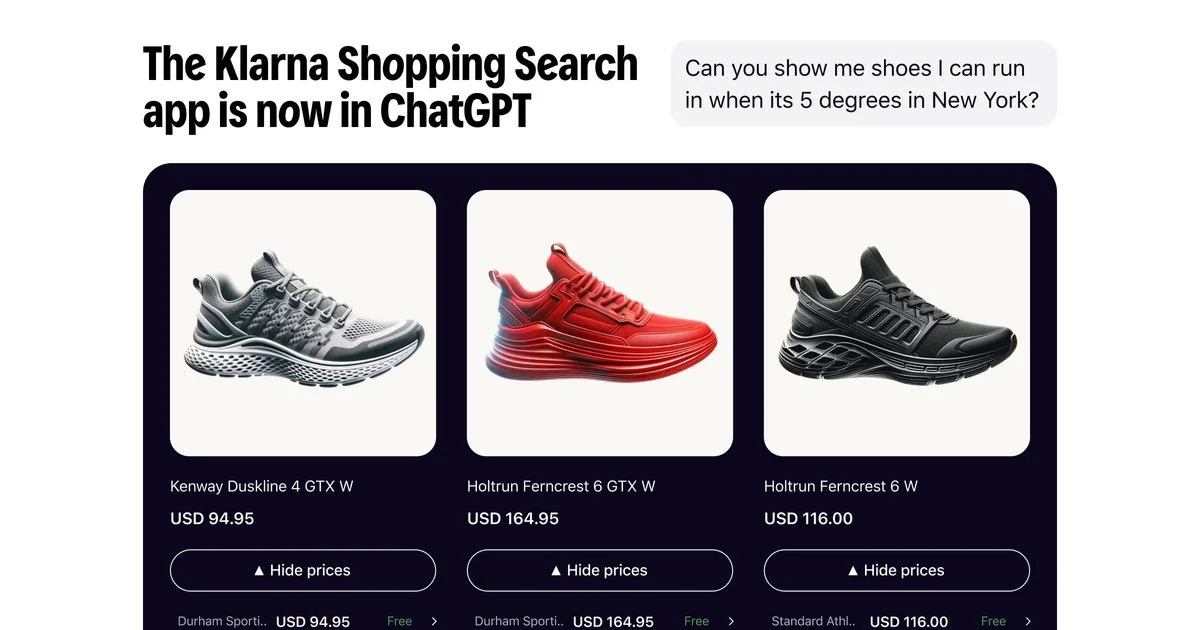
BNPL giant Klarna has launched its AI-powered shopping search app in popular conversational AI ChatGPT for real-time product discovery
fintechmagazine.comSwedish BNPL giant Klarna has officially launched an AI-powered shopping search app inside ChatGPT. Over 800 million monthly ChatGPT users can now access Klarna's proprietary shopping AI for product search, comparison, recommendation, and checkout, all within the conversational interface. This is a ChatGPT Apps SDK integration, joining Walmart, Etsy, and Asos (May 21) as a major third-party app.
Notably, Klarna is positioned as the first ChatGPT integration partner with BNPL functionality. When checking out via OpenAI Instant Checkout, Klarna's installment/buy-now-pay-later options are available — bringing the "BNPL context" into agentic commerce for the first time. Klarna CEO Sebastian Siemiatkowski has consistently said "AI will change everything about shopping," and this launch is a direct result of his AI investment strategy.
This launch lands directly after Stripe Sessions on May 18, where Collison declared "keyword search is ridiculous." It cements the picture of payment players — Stripe (ACP originator), Klarna, Affirm, Visa, Mastercard — successively entering the ChatGPT Instant Checkout ecosystem.
Deep dive: Klarna x ChatGPT Deep Analysis — BNPL Giant's Agentic Commerce Entry and Implications
Walmart Q1 FY2027 Earnings: EC +26%, Ads +37%, 3P Marketplace Surge

Plus, the retailer's AI assistant Sparky is gaining traction.
www.adweek.comWalmart reported its Q1 FY2027 earnings with e-commerce sales up 26%, advertising business up 37%, marketplace surge, and AI assistant "Sparky" gaining traction. The world's largest retail chain is accelerating growth in e-commerce, advertising, and AI while maintaining its store-based core.
Walmart Connect (advertising) grew 37% YoY, securing its position as the world's #2 retail media network after Amazon Ads. Third-party marketplace growth was double-digit for the third consecutive year, with AI assistant Sparky supporting shoppers from product discovery to checkout. Walmart's messaging is clear: "We are no longer a retail company; we are a commerce infrastructure company."
However, a profit warning over fuel costs accompanied the report, pushing the stock down on the day. The mix of strong e-commerce and ad growth with short-term macro risk creates layered implications for EC operators, 3P sellers, and advertisers.
Pattern Group Launches Pattern Intelligence (Pi) — AI Execution Engine for Marketplace Brands

Pattern Group Inc. (NASDAQ: PTRN) announced the launch of Pattern Intelligence (Pi)
www.businesswire.comPattern Group (NASDAQ: PTRN), which supports global e-commerce operations in 100+ countries, has launched its AI execution engine "Pattern Intelligence (Pi)". Pi autonomously executes listing optimization, advertising operations, inventory replenishment, and customer support across Amazon, Walmart, TikTok Shop, Tmall, Mercado Libre, and other marketplaces — an "AI Operating System for Marketplace."
Pattern operates 200+ brands in 40+ countries and is the largest global e-commerce operations service provider with $1B+ in annual revenue. Pi's key selling point is "execution, not just analysis", placing it in the "Agentic Execution Engine" category alongside Triple Whale Moby 2 (May 20) and StoreClaw (May 21). The differentiator: Pattern Pi is marketplace-focused (Amazon, Walmart, etc.), while Triple Whale/StoreClaw target proprietary EC (Shopify) operations.
For D2C brands, this is a litmus test of whether AI can remove the "marketplace-specific expertise required" barrier when expanding globally. Pi is the largest new product since Pattern's IPO (2024), and the "execution layer" competition in agentic commerce is now a serious contest among publicly disclosed companies.
Nike x Google Agentic Commerce — World's Largest Brand Invests in AI Commerce

The experience aims to help consumers move more quickly from product discovery to checkout directly within conversations with AI agents.
consumergoods.comNike announced a strategic investment in Google Agentic Commerce (Universal Cart / UCP) and the build-out of an experience where consumers can discover and check out Nike products directly within AI agent conversations. This expands on the Google Marketing Live 2026 announcement that "Nike, Sephora, Target, Walmart, Wayfair, and Shopify's Fenty/Steve Madden support Universal Cart Google Pay", now with Nike's deeper commitment made explicit.
For Nike, this extends its D2C strategy centered on SNKRS, Nike.com, and Direct (proprietary EC) into the AI agent era — securing its own control of purchase paths via ChatGPT, Gemini, and other agents. It is also a strategic choice to maintain brand authority against sneaker resale and StockX-like ecosystems in the agent age.
The pattern of brands investing in Google's agentic commerce as capital partners follows L'Oréal (May 20-21 SAPMENA investment / Big Bang Beauty Tech). The structure where vendors build infrastructure and brands invest to become preferred partners is solidifying.
Agentic Commerce
Bessemer Venture Partners Publishes "Delegated Buyer" — Agentic Commerce Market Map

Agentic commerce is on the rise, but before shopping is completely transformed, a new technology stack must be built for buyers and brands.
www.bvp.comMajor Silicon Valley VC Bessemer Venture Partners (BVP) published "The rise of the delegated buyer", a report mapping the agentic commerce market and technology stack. It argues that a new technology stack must be built for both buyers and brands and organizes the investment opportunity into three layers: Buyer Layer, Brand Layer, and Infrastructure Layer.
BVP is known for early-stage investments in Shopify, Twilio, and Auth0, with strong credentials in commerce and SaaS. The report breaks down investment targets into Buyer Layer (ChatGPT, Perplexity, Gemini), Brand Layer (Stripe ACP, Visa Intelligent Commerce, Google UCP), and Infrastructure Layer (DataDome, Akamai, Cloudflare) — useful for EC operators' vendor selection criteria.
The framing of "Delegated Buyer" as a concept clarifies where agency resides when consumers delegate purchases to agents, and could become standard industry terminology.
Bank of England Underground: Agentic Commerce and the Battleground for New Payments Infrastructure

Agentic commerce creates shared responsibility: developers must build legally sound systems, while regulators and infrastructure operators must consider how existing frameworks apply.
bankunderground.co.ukBank Underground, the think-tank run by the Bank of England, published a paper on agentic commerce and new payments infrastructure. It is the first serious analysis from the regulatory side examining how responsibilities should be allocated among developers, regulators, and infrastructure operators in a world where AI acts on behalf of users to search, negotiate, and pay.
The paper concretely examines how existing payment frameworks (CHAPS, Faster Payments, etc.) might apply to agent payments and where new frameworks may be needed. It analyzes the lines drawn for responsibility (consumer, agent developer, PSP, bank) when agents intervene in Authorization, Authentication, and Settlement layers.
This is one of the earliest instances of a central-bank-affiliated researcher explicitly addressing "agentic commerce" as a defined topic and may influence regulatory direction in multiple jurisdictions.
Bloomreach Emphasizes Loomi Connect as Agentic Layer for Commerce

Bloomreach is emphasizing Loomi Connect as an 'agentic layer' designed for commerce and personalization.
www.tipranks.comEC personalization leader Bloomreach has rebranded "Loomi Connect" as an "Agentic Layer for Commerce and Personalization." It re-positions the conventional recommendation/search engine as the "Brand Layer" for the agent era.
The messaging: Bloomreach's data layer (post-Emarsys integration spanning USPs) becomes the control point that returns products to AI agent queries "in the order brands want." It positions itself as the intermediary layer that agent queries from ChatGPT, Gemini, and others must pass through to reach the brand's personalization engine.
Klaviyo, Yotpo, Salesforce Marketing Cloud, and other existing marketing platforms are pursuing similar strategic pivots, and the industry-wide shift from "Customer Data Platform" to "Brand Layer for Agents" is in progress.
OpenAI Upgrades ChatGPT Ads Visuals — Brand Customization Expanded

The platform is building on its single format to include some new iterations that give advertisers more optionality over their appearances.
digiday.comOpenAI upgraded the visual format of ChatGPT ads, adding new options that let brands customize how their ads appear. Choices now include brand colors, product imagery, and carousel formats — expanding beyond the previous single format.
This can be read as OpenAI's initial response to the "brand visibility problem" in agentic commerce (UK retailers' concern, May 21). It gives brands a mechanism to maintain their visual and tonal identity through the ad UI even when reaching consumers via agents.
Alongside Asset Studio and Demand Gen announcements from Google Marketing Live 2026 (May 19), this signals industry-wide standardization of advertising creative for the agent era.
Xnurta Launches Agentic Retail Media Council
Xnurta launches industry council to set standards for agentic retail media.
www.martechcube.comRetail media platform Xnurta launched the "Agentic Retail Media Council" to establish industry standards for agentic retail media. Major retail media players including Amazon Ads, Walmart Connect, and Criteo will discuss how they should collaborate and standardize for the agentic commerce era.
The plan is to set cross-industry guidelines for forecasted inventory, performance measurement, and creative optimization when retail media is agent-driven. Alongside LiveRamp x Publicis (May 21), this is part of the retail media industry's standardization for agentic commerce.
Digital Catalogs Become Adaptive Commerce Tools (E-Commerce Times)

Retailers are moving beyond static digital catalogs by using shopper engagement and real-time analytics to improve conversions.
www.ecommercetimes.comE-Commerce Times reports that digital catalogs are evolving from static PDFs/image collections into "adaptive commerce tools" that use shopper engagement and real-time analytics. Product data feeds are being linked to behavioral data, with the same catalog dynamically serving agents, chatbots, and proprietary sites.
In the agentic commerce era, the "product master" is no longer static SKU-level data. It must be an adaptive catalog responding flexibly to context, with PIM (Product Information Management) vendors and recommendation engines like Bloomreach at the center of the evolution.
Accenture: AI Agents Are Reshaping Marketing — Consumers' "Second Self" Report
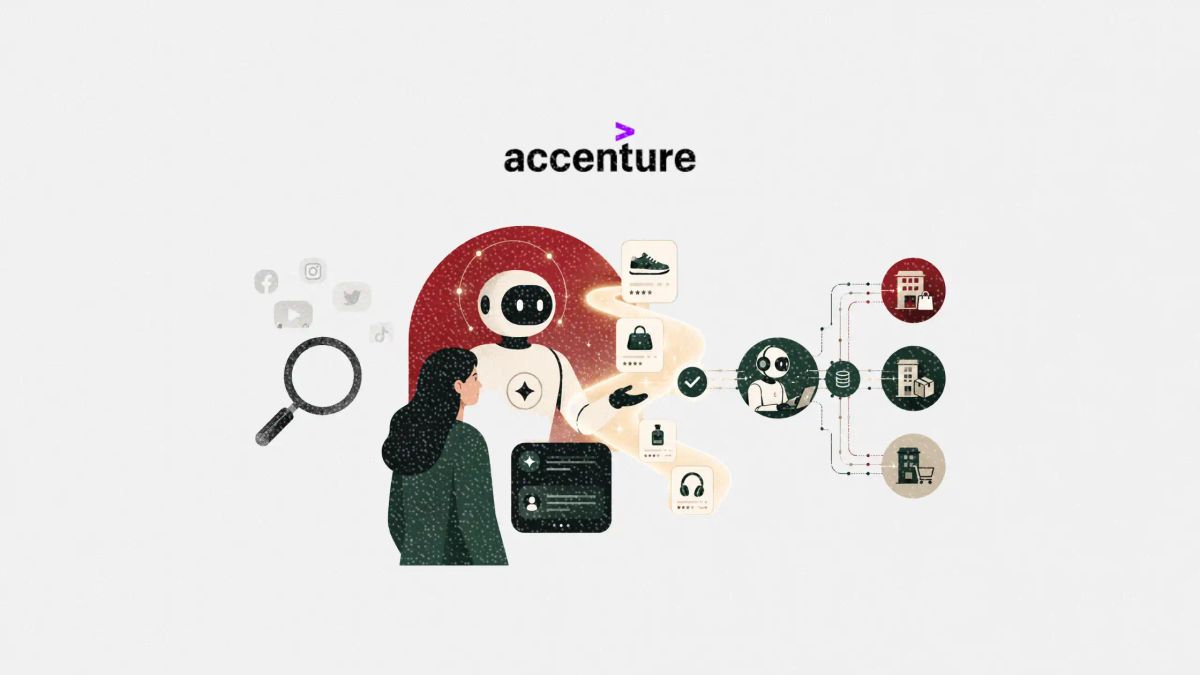
Accenture's latest research reveals how AI is becoming a trusted shopping companion and reshaping consumer engagement.
www.contentgrip.comConsulting giant Accenture published a research report on how AI agents are becoming a trusted shopping companion as consumers' "Second Self," recommending marketers need a "new playbook."
The report shows AI agent usage evolving from mere search delegation to "agents that understand consumers' preferences, history, and budget," and argues brands must redesign loyalty, community, and brand experience under the assumption of agent-mediated touchpoints.
In contrast with eMarketer's cautious view (May 21, 46% rejection), this is the optimistic side. Both studies converge on the reality that "agentic commerce depends on how consumers use it," which forces EC operators to develop segment-specific strategies.
Consumer Trends and Market Risk
Adyen: E-Commerce Fraud Projected to Exceed $100B by 2029 — Friendly Fraud Surge

The average value of a fraudulent chargeback is going down, but it isn't necessarily good news for retailers.
chainstoreage.comNetherlands-based payment giant Adyen projects that EC fraud (particularly chargeback fraud) will exceed $100B (approx. ¥15 trillion) globally by 2029. Average fraud value per incident is decreasing, but the volume increase is overwhelming, with "friendly fraud" — consumer-initiated unauthorized claims — surging.
Adyen positions AI behavioral analysis, tokenization, and stronger 3D Secure as three pillars for payment fraud prevention in the agentic commerce era. This is the third major payment player strategy statement following Visa Agentic Ready (May 20-21), Stripe ACP, and Mastercard's Juniper #1 ranking (May 18).
For EC operators, this reframes chargeback fraud from "a cost to absorb" to "an investment in trust infrastructure." It informs investment decisions for trust layers such as DataDome (May 21 Priority Protect), Akamai, and Cloudflare.
Saudi Arabia Requires Shipping Companies to Allow Pre-Delivery Inspection

Saudi Arabia's Ministry of Commerce issued an official directive requiring all private-sector shipping companies to allow consumers to inspect packages before completing final delivery.
english.aawsat.comThe Saudi Arabian Ministry of Commerce mandated all private-sector shipping companies to guarantee consumers the right to open and inspect packages in the presence of the delivery agent before accepting delivery. The background is Saudi Arabia's rapidly growing EC market and the policy intent to strengthen consumer protection and standardize commercial practices.
For EC operators, this is a case of "delivery quality assurance" being enforced at the logistics layer, affecting cross-border EC operations and local subsidiary design. The Middle East is rapidly developing EC regulations under Vision 2030, and global EC operators need stronger region-specific compliance management.
Mirour (Atlanta): Capturing Gen Z's Return to Stores — Pivot from Social Shopping

Atlanta founder Loren Mount-O'Brien pivoted Mirour from social shopping to in-store retail technology.
hypepotamus.comAtlanta-based startup Mirour announced a strategic pivot from social shopping to digitizing in-store experiences (OMO). Against the backdrop of Gen Z's return to stores, it provides technology for local brands to deliver EC-like digital experiences in physical stores.
Gen Z (born 1997-2012) consumer behavior is not exclusively EC; multiple studies show they value combining EC with store experiences. Mirour is positioned in this context as a player "EC-izing the inside of stores." Like Shopify POS, Square, and Lightspeed in adjacent territory of existing POS vendors, the rise of new players continues.
Corporate and Earnings
Lightspeed Commerce Q4: Focused on North American Retail and European Hospitality, Open to Acquisitions

Lightspeed Commerce executives said the company's fiscal fourth quarter capped a 'pivotal' year with narrower focus on North American retail and European hospitality.
www.marketbeat.comCanadian POS / EC SaaS giant Lightspeed Commerce reported Q4 results, with the strategic focus on North American retail and European hospitality showing initial results. The CFO said "no large acquisitions planned, but small strategic acquisitions are on the table", suggesting potential consolidation in the EC SaaS industry.
Beyond the three-way Shopify, Square/Block, and Lightspeed competition, with Klaviyo, Triple Whale, and other AI-Native SaaS rising, Lightspeed's strategy is to differentiate with "vertical specialization + regional focus." It is a litmus test of how mid-tier POS / EC SaaS players survive the AI era.
Sea Limited Q1 2026: Shopee and SeaMoney Drive Strong Results Despite -34% YTD Stock
Sea reported strong first quarter results, with e-commerce platform Shopee and digital financial services leading performance.
finance.yahoo.comSoutheast Asian EC giant Sea Limited reported Q1 2026 results, with Shopee (EC) and SeaMoney (fintech) both as driving forces. Shopee's VIP loyalty program and logistics improvements pushed orders/revenue, and SeaMoney announced new expansion into Brazil.
However, the stock is down 34.2% YTD and 47% over the past year. The market is questioning the EC-fintech margin trade-off strategy. Among regional EC-fintech integrated players — MercadoLibre (Latin America), Coupang (Korea), Sea Limited (Southeast Asia) — Sea's strategy reassessment is a key EC industry topic.
Summary
Today's EC and agentic commerce landscape was defined by four major announcements: Klarna x ChatGPT, Walmart Q1 (EC +26%/Ads +37%), Pattern Group Pi, and Nike x Google Agentic Commerce. The fact that four players in different positions — payments (Klarna), retail (Walmart), EC operations (Pattern), brand (Nike) — all announced concrete agentic commerce implementations/investments in the same week is symbolic.
Add to that the Bessemer Venture Partners "Delegated Buyer" report and the Bank of England Underground payments infrastructure analysis, which organized the agentic commerce market map and regulatory points from the VC side and central bank think-tank side, respectively. The "full-stack agentic commerce deployment" strategy declared at Stripe Sessions and Google I/O a week ago is now landing as concrete moves across vendor, brand, regulatory, and research layers.
Looking ahead, watch for the continuation of US retail Q1 earnings (Walmart, Target), Visa Agentic Ready's additional regional rollouts, ChatGPT Apps SDK's new brand integrations, and risk management solutions for "fraud" and "brand visibility" challenges in agentic commerce.