How L'Oreal Is Actually Implementing Agentic AI: A Three-Stage Framework, Beauty Genius, and the Vertical Stack Behind It
L'Oreal's Global Ecom Tech Director Beyza Kapu breaks agentic commerce into three stages and explains how Beauty Genius, Noli, NVIDIA, and CREAITECH form a brand-side implementation stack designed for an AI-mediated world.

Key Takeaways
- L'Oreal's Global Ecom Tech & Data Analytics Director Beyza Kapu has publicly framed agentic commerce as a three-stage transition — AI-assisted, AI-mediated, and Agentic — making this one of the few CPG-side narratives that maps the journey at an implementation level rather than as a vague trend
- L'Oreal's stack now combines Beauty Genius (an Agentic AI assistant on Azure OpenAI launched in late 2025), the self-funded multi-brand AI marketplace Noli (built on Azure with NVIDIA NIM/NeMo), a Microsoft and NVIDIA partnership, and CREAITECH for brand-compliant content — all backed by 16 petabytes of proprietary beauty data
- Kapu argues that 'consistency of signals across the web' decides whether AI agents trust a brand. Brands now have three audiences — shoppers, search algorithms, and machines — and product data, taxonomy, ratings, and metadata become the trust layer that decides recommendation outcomes
Why L'Oreal Is Acting As If AI Agents Are Already the Front Door

L'Oréal is using agentic AI to reshape commerce across consumer touchpoints
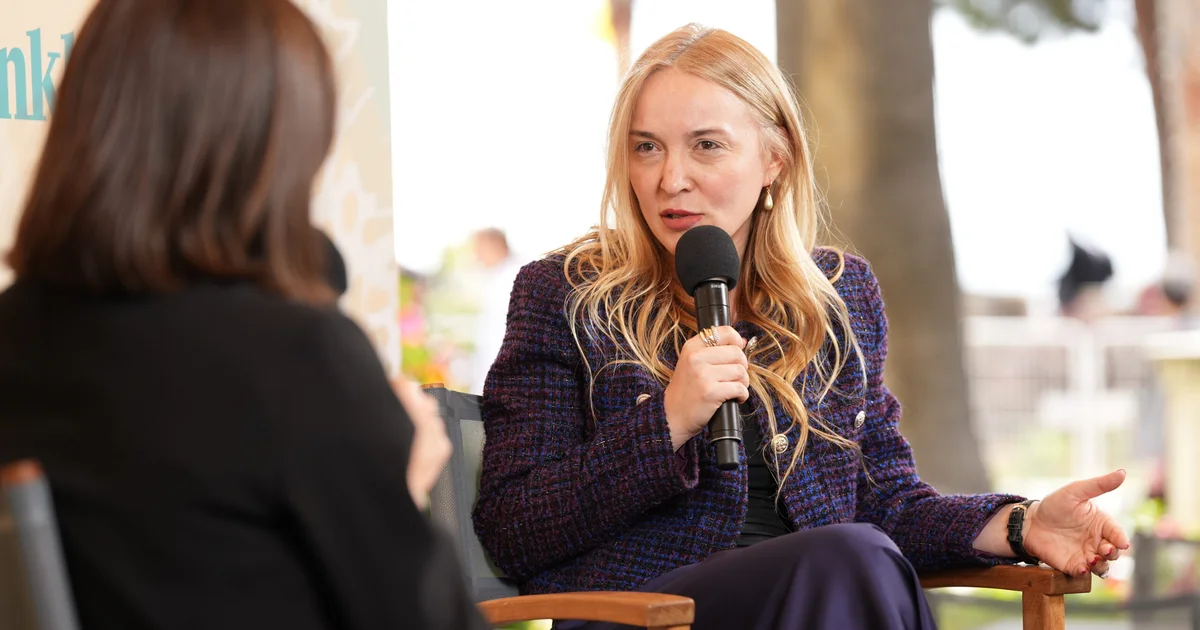
brand-innovators.comSpeaking at the Brand Innovators Entertainment Marketing Summit during the Cannes Film Festival, L'Oreal's Global Ecom Tech & Data Analytics Director Beyza Kapu laid out the company's agentic commerce strategy in unusually direct terms. Her opening line was striking: 'The next transformation in commerce will not simply change how consumers shop online — it will fundamentally change how humans make decisions.'
This is not abstract AI cheerleading. Kapu places the AI shift on the same continuum as the internet, social, and streaming — each of which rewrote consumer behavior in turn — but argues that this one moves the distribution of power, attention, and wealth itself. While many brands are still treating generative AI as a productivity tool, L'Oreal is operating on the assumption that AI systems will become permanent intermediaries between brands and consumers.
This is also notably different from the investment-side news around L'Oreal from a week earlier, where the company backed AI-commerce startups across South Asia Pacific, Middle East and North Africa. The Brand Innovators piece is about the heavier question: what L'Oreal is doing on its own operating stack to be ready for agent-mediated commerce.
The Three-Stage Framework: AI-Assisted, AI-Mediated, Agentic
The most useful piece of the talk is Kapu's three-layer model.
The first stage is AI-assisted commerce, where consumers stay in the driver's seat but use AI tools to search, filter, and evaluate products more efficiently. The second is AI-mediated commerce, where AI becomes the primary interface for discovery and recommendation — instead of navigating between marketplaces, consumers rely on conversational systems that learn their preferences and curate options. The third is truly agentic commerce, where AI agents act on behalf of consumers to compare and transact.
What is interesting here is the contrast with Sephora and Estee Lauder, both of which already describe their environments as 'agentic.' L'Oreal instead frames the transition as layered, which gives brands a more honest checklist: what to build for each stage, in what order, with which capabilities.
Kapu observes that conversational discovery is already becoming native behavior, particularly with younger audiences. 'Modern consumers are extremely overwhelmed. There are too many choices, too much information, too many options. We don't really want 500 different choices. We just want something fewer but more relevant, more refined.' The underlying demand in an agent era is not 'freedom to choose' — it is 'freedom from choosing.'
The Actual Stack: Beauty Genius, Noli, NVIDIA, CREAITECH
The Brand Innovators piece is mostly conference quotes, but behind them sits a year of concrete builds.
The centerpiece is Beauty Genius, launched in October 2025 by L'Oreal Paris as 'the first personal beauty assistant powered by Agentic AI.' Per Microsoft's customer story, Beauty Genius runs on Azure OpenAI Service and is structured in three layers: classical AI for diagnostics and personalization, generative AI for conversation and routine recommendations, and Agentic AI for memory, context, and proactive guidance. It is trained on a skin atlas containing 150,000 dermatologist annotations, draws on more than 750 L'Oreal Paris SKUs, and is protected by more than 10 patents. A Meta partnership rolling out in early 2026 will make it accessible through WhatsApp — L'Oreal is racing to own the conversational interface Kapu is describing.
The second pillar is Noli, the multi-brand AI beauty marketplace that L'Oreal Groupe founded and backs, with Accenture and Microsoft as build and consulting partners. Noli's agent models run on Azure and use NVIDIA NIM and NeMo (including NeMo Retriever) microservices. L'Oreal's century of beauty science feeds Noli's 'Beauty Knowledge Graph' — the explicit positioning is an 'AI Beauty Trust Agent' that combines scientific authority with agent-style execution. Noli is, in effect, an agentic commerce experience built as a marketplace by a brand-side player.
Around this, L'Oreal has a broad NVIDIA partnership (personalization and sustainability), the CREAITECH generative content lab (using Google Imagen and Gemini to build brand-custom models for La Roche-Posay and Kerastase, cutting campaign turnaround from weeks to hours), and a presence at CES 2026 to push beauty tech. CEO Nicolas Hieronimus has publicly framed the company's 16,000 terabytes — 16 petabytes — of proprietary beauty data as the 'fuel' for these AI models. Volume, exclusivity, and scientific provenance are positioned as L'Oreal's negotiating power against any LLM or agent vendor.
Machine Readability Decides Brand Visibility
The sharpest line in Kapu's talk is about how brands appear to machines, not humans. 'If your signals are not consistent all around the web, then actually AI loses confidence in you and doesn't choose you and goes to the next option.'
In the traditional digital shelf model, visibility depended heavily on search rankings, paid media, and retail execution. In an AI-mediated environment, brands must also optimize for machine interpretation. Kapu splits the audience into three: shoppers, search algorithms, and machines — and argues that each needs its own information design.
Unlike humans, AI systems evaluate products through structured consistency, not emotional interpretation. Taxonomy, attribution, reviews, and data formatting become the trust signals that decide whether you appear in a recommendation. L'Oreal is rebuilding product information, ratings, metadata, and digital ecosystems across markets so that the same brand looks the same to a shopper, a search engine, and an agent. Kapu calls this challenge 'orchestration' — aligning content, data, technology, and retail infrastructure so products are simultaneously consumer-friendly and machine-readable.
For more on the data side of this, see our pieces on agent-ready product data and structured data and AI Engine Optimization (AEO). The L'Oreal case is best read as confirmation that large brand-side operators are landing on the same conclusion these analytical pieces predicted.
Kapu is also clear about AI's limits. Beauty, she says, is one of the rare categories where 'you see AI shine and where you see AI limitations very clearly.' AI is strong in the 'messy middle' of the journey, where consumers are overwhelmed by information — a new skincare user can get a personalized regimen in minutes. But 'when it comes to texture, when it comes to excitement of opening a good package, when it comes to scent, when it comes to putting the product on your skin, AI has certain limitations. You need creators, you need influencers or at least another human being's trusted voice.'
How This Compares to Sephora, Estee Lauder, and Coty
To place L'Oreal correctly, it helps to look at adjacent moves.
Sephora has put agentic commerce front and center at Shoptalk Spring and Europe 2026, framing the goal as collapsing app-tab-website navigation into one continuous interaction. Sephora's intent is to own the agent-style experience itself as a retailer.
Estee Lauder is taking a different path, partnering with AI startup Rezolve Ai to power AI-driven search and discovery across 70 EMEA markets, and co-developing a multi-phase unified DTC experience with Shopify, with phase one launching in Q1 2026. The lean is on rebuilding the DTC base for AI orchestration.
Coty has been deploying AI broadly to lower marketing asset production costs and simplify the operating model, but its public agentic-commerce posture is the most reserved of the three.
L'Oreal stands apart because it is vertically integrating across brand content (CREAITECH), brand-side AI product (Beauty Genius), brand-funded marketplace (Noli), and proprietary data (16PB). Sephora attacks from the retailer position; Estee Lauder attacks from the DTC base. L'Oreal is the brand-side player that is also moving down into the consumer interface itself. Kapu's three-stage framework sounds different once you read it as the natural argument of a company that has already invested in every layer.
What Brand and E-Commerce Operators Should Take From This
Few operators can replicate L'Oreal's scale or R&D budget. But three lessons abstract well.
First, treat agentic commerce as a phased transition, not a single launch. If AI-assisted, AI-mediated, and Agentic stages emerge in sequence, then the question becomes which of your assets — product data, content, customer support — to make machine-readable first. The investment sequence matters as much as the destination.
Second, elevate machine-facing information design to a first-class citizen of the product master. The 'signal consistency' Kapu describes maps to a boring, important task: making sure product names, attributes, ratings, inventory, shipping, and sustainability claims do not contradict each other across your own site, retailer pages, social, and third-party review sources. Without that, even a proprietary agent like Beauty Genius will disagree with how external models like ChatGPT or Gemini see your brand.
Third, be explicit about where AI fails. Kapu's distinction between the messy-middle (where AI excels) and the sensory-emotional layer (where it does not) is useful as a budget allocation tool. Let AI carry the discovery and comparison load; reserve creator and human-voice investment for the experiential layer. This forces a sharper prioritization than 'AI everywhere.'
Brand-side perspectives on agentic commerce are also covered in our pieces on luxury brands facing the agentic AI challenge and AI agent orchestration in e-commerce recommendation.
In Summary
Beyza Kapu's three-stage framework — AI-assisted, AI-mediated, Agentic — is one of the more implementation-honest agentic commerce narratives in circulation. It is backed by a vertically integrated stack: Beauty Genius on Azure OpenAI, Noli on Azure plus NVIDIA NIM/NeMo, the NVIDIA partnership for personalization, CREAITECH for content generation, and 16 petabytes of proprietary beauty data underneath all of it.
The answer L'Oreal is giving to 'how should a brand-side operator implement agentic AI' is unambiguous. Own the conversational interface yourself, make your product data machine-readable, and let creators and human voices cover what AI cannot reach. Startup investments are supporting moves; the main game is rebuilding your own infrastructure.
Kapu closes with the right warning: 'The biggest mistake brands are making is thinking this is a hype. This is not a technology evolution. It's really the change in human beings, how we are thinking, how we are making decisions.' In a world where AI agents become buyers, product data hygiene and brand content consistency are no longer back-office concerns — they become the medium through which you face the human at all. L'Oreal is making the case from the implementation side.