Mondelez Creates Global Lead Role for Agentic Commerce — Preparing for 30% AI Agent Traffic by 2028
Mondelez establishes a dedicated agentic commerce leadership role as retail partners project 30% AI agent-driven traffic by 2028. Inside the $3.5B digital commerce giant's technical playbook for the shift from clicks to intelligent agents.


Key Takeaways
- Mondelez has created a dedicated "Global Lead of Emerging Commerce Platforms" role focused on agentic commerce — tasked with building global strategy, running pilots, and developing a scalable playbook
- The company's retail partners project that 30% of their site traffic will come from AI agents by 2028, while McKinsey estimates the agentic commerce market will reach $3–5 trillion by 2030
- Brands should prioritize AI crawler accessibility, structured product data via MCP servers, and Generative Engine Optimization (GEO) strategies immediately
Mondelez Creates a Dedicated Role for the AI Agent Era

Mondelez is creating a new role to help the company prepare for agentic commerce.
digiday.comMondelez, the snacking conglomerate behind Oreo, Cadbury, and Sour Patch Kids, has established a dedicated global leadership role for agentic commerce. The position, formally titled "Global Lead of Emerging Commerce Platforms," was first posted on LinkedIn in February 2026. Responsibilities include shaping global strategy, running pilots, and building a scalable playbook.
The move reflects the urgency felt by Andrew Lederman, VP of Global Digital Commerce, who oversees Mondelez's $3.5 billion digital commerce business. Speaking on the Digiday Podcast, Lederman was direct about the inevitability of the shift.
There's not too much question around 'will it happen?' The question just comes up of when it will happen.
This is more than a symbolic appointment. Mondelez's retail partners have told the company they expect 30% of their site traffic to come from AI agents by 2028. Lederman himself anticipates that 20–30% of Mondelez product purchases will occur via agents within the next year or two. This is not a distant future scenario — it is a shift already underway.
The Scale of the $3–5 Trillion Opportunity
Agentic commerce refers to a model in which AI agents search, compare, and purchase products on behalf of consumers. The traditional pattern of "search, click, and buy" transforms into "instruct an AI and delegate."
McKinsey estimates the global agentic commerce market will be worth $3 to $5 trillion by 2030. In the U.S. alone, retail sales via AI agents could reach up to $1 trillion. Flywheel's Mike O'Donnell, SVP of Innovation and Business Transformation, calls it "the most disruptive shift in ecommerce since mobile."
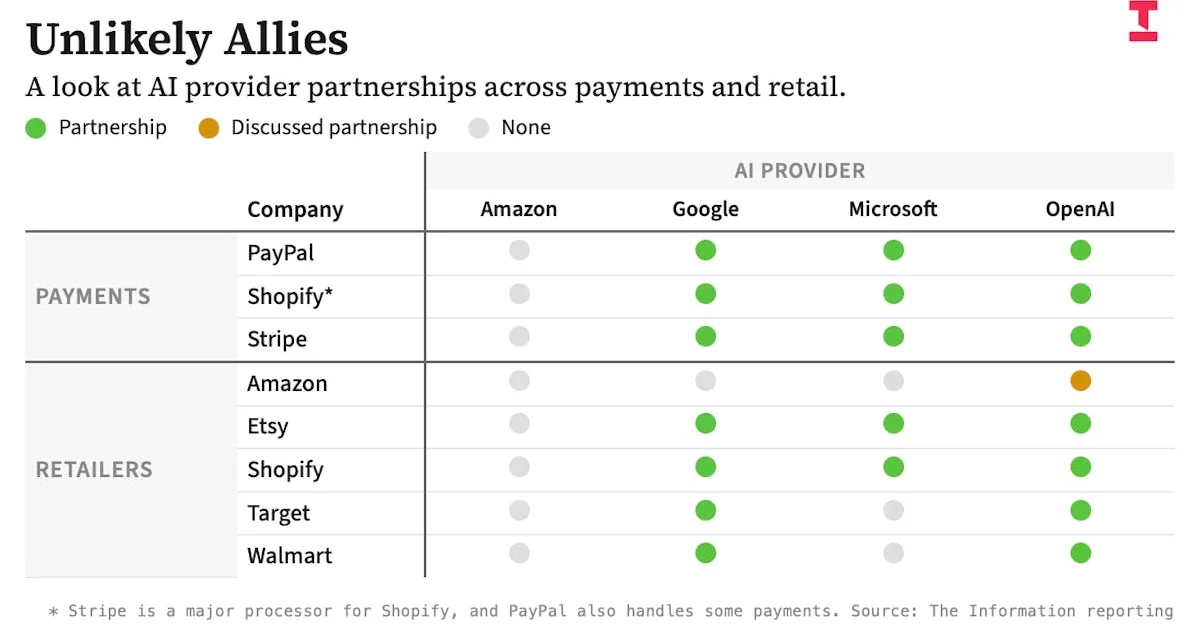
Platforms are already moving. Amazon's shopping assistant Rufus added an auto-buy feature in November 2025, automatically executing purchases when items hit a user's target price. Monthly active users surpassed 250 million, generating $12 billion in incremental annualized sales. Google announced the Universal Commerce Protocol (UCP) at NRF in January 2026, building an open standard for agent-led checkout with over 20 partners including Shopify, Target, and Walmart.
Not everything has gone smoothly, however. OpenAI's Instant Checkout feature was forced to pivot just six months after its September 2025 launch. Walmart reported AI checkout conversion rates at just one-third of its own website. Discovery through agents and purchasing through them are not yet progressing at the same speed.
Mondelez's Three-Pillar Technical Approach
What makes Mondelez's strategy notable is that it starts not with buzzword chasing, but with concrete infrastructure work.
The first pillar is opening up sites to AI crawlers. Lederman told the Digiday Podcast that "if AI crawlers can't crawl our site, nothing else matters." Mondelez prioritized clean sitemaps, proper robots.txt files, fast page loads, and machine-readable content.
The second pillar is building consistent product data. The company is working to unify structured product knowledge across brand sites, earned media, and online channels.
We need to make sure that we can translate what humans think of when they think of Oreo or Cadbury or Milka into what AI thinks when they're going after these brands. That's not an easy task.
The third pillar is expanding AI-native content. Rather than relying solely on traditional keyword searches for "cookies," Mondelez is scaling content to improve visibility in broader "snacking" category queries. Currently, Oreo appears in roughly 70% of cookie-specific AI searches but only about 30% of broader snack queries — closing that gap is a strategic priority.
The Walled Garden Problem Facing the Industry
Viewed in the context of the broader industry, Mondelez's move highlights another structural challenge. The agentic commerce landscape is fracturing into multiple walled gardens rather than converging into a unified open ecosystem.
Some consumers shop through Amazon Rufus. Others use Walmart's Sparky. Still others go through standalone AIs like ChatGPT or Gemini. VML's Leah Sallen, Managing Director of Retail & Commerce Media, told Digiday that "we haven't even gotten past social commerce yet. Now it's social commerce plus agentic, plus AI."
Two approaches are emerging to address this fragmentation. The first is standardization through open protocols like Google's UCP. The second involves direct connections to individual AI platforms, as seen in the example of a Flywheel client sending product data directly to OpenAI via a Model Context Protocol (MCP) server. MCP, a protocol developed by Anthropic, standardizes how LLMs securely connect to external data sources and APIs. When brands build MCP servers, they can provide real-time inventory, pricing, and fulfillment data to AI systems, improving the accuracy of agent responses.
The very reason Mondelez is establishing a dedicated leadership role is to manage these multi-platform strategies in a coordinated manner.
What E-commerce Operators Should Do Now
It would be premature to dismiss this as relevant only to CPG giants like Mondelez. The agentic commerce wave affects brands of every size.
Start with verifying AI crawler accessibility. Check whether your robots.txt is blocking AI bots, confirm that structured data (JSON-LD) is properly implemented, and ensure page load speeds are adequate. As Mondelez stated, this is the foundation for everything else.
Next, develop a GEO (Generative Engine Optimization) strategy. Where traditional SEO aimed for top rankings in Google search results, GEO focuses on increasing the likelihood that AI agents cite your brand in their responses. The metrics Mondelez tracks — AI platform visibility, citation rates, and sentiment — will become critical KPIs for e-commerce operators.
For the medium to long term, build a technology roadmap that accounts for UCP and MCP compatibility. Shopify merchants, in particular, have an early path into the agentic commerce ecosystem thanks to Shopify's official UCP integration.
Conclusion
When a company managing $3.5 billion in digital commerce creates a dedicated agentic commerce leadership role, it signals that this shift has moved beyond the exploration phase. As Flywheel's O'Donnell put it, "There are realities of today. There are probably opportunities for tomorrow that are yet to be determined." The gap between companies that build their infrastructure now and those that wait will become unmistakable by 2028.