AI Commerce News Digest (April 21, 2026)
Mondelez creates the industry's first dedicated agentic commerce global lead role. Coinbase launches Agentic.Market for AI agent payments via x402. eMarketer analyzes the 'definition-less mainstreaming' of agentic commerce.

Key Takeaways
- Mondelez becomes the first major CPG company to create a dedicated agentic commerce global lead role, with retail partners projecting 30% of site traffic will come from agents by 2028
- Coinbase launches Agentic.Market, a services marketplace for AI agents, with the x402 protocol ecosystem reaching 165,000 transactions and $50 million in volume
- California sues Amazon for price fixing while ByteDance sees profits plunge from AI investment even as TikTok Shop drives growth, signaling accelerating structural shifts in platform economics
Top Stories
Mondelez Creates Industry-First Agentic Commerce Global Lead Role

Mondelez is creating a new role to help the company prepare for agentic commerce.
digiday.comMondelez, parent company of Oreo, Cadbury, and Sour Patch Kids, has created a new "Global Lead of Emerging Commerce Platforms" position. This marks the first time a major CPG company has established a dedicated role for agentic commerce.
Andrew Lederman, VP of Global Digital Commerce, stated that "we're at the beginning of a fundamental change in commerce—moving from clicks and channels to intelligent agents that guide decisions, discovery and transactions." The move is driven by retail partners projecting 30% of site traffic to come from agentic channels by 2028, and McKinsey's estimate of a $3-5 trillion market by 2030.
Full article: Mondelez Creates Industry-First Agentic Commerce Global Lead
Coinbase Launches Agentic.Market for AI Agent Payments
Coinbase has launched a marketplace designed to help developers and AI agents discover, compare and integrate tools for agentic commerce.
www.pymnts.comCoinbase has officially launched Agentic.Market, a marketplace where AI agents and developers can discover, compare, and integrate services. The platform is built on the x402 protocol, an open standard enabling stablecoin micropayments over HTTP that transitioned to Linux Foundation governance in April.
The ecosystem has grown to 165,000 transactions, $50 million in volume, and 480,000 active agents. However, CoinDesk reports that actual daily transaction volume sits at roughly $28,000, with much of the activity still coming from testing.
Full article: Coinbase Launches Agentic.Market — Building AI Agent Economy Infrastructure via x402
Agentic Commerce
eMarketer: Agentic Commerce Going Mainstream Without a Clear Definition
Industry experts debate the definition of agentic commerce at IAB Connected Commerce.
www.emarketer.comAn IAB Connected Commerce session revealed a fundamental split in how the industry defines agentic commerce. Bayer's Ryan Verklin defined it as fully autonomous end-to-end shopping, while Moloco's Scott Collins argued for a "spectrum of agentic behavior."
Notably, SimilarWeb data shows AI referral visitors outperform standard traffic across all engagement metrics. Walmart reported that 50% of ChatGPT traffic represents net-new customers, suggesting market expansion rather than cannibalization.
Full article: The 'Definition-Less Mainstreaming' of Agentic Commerce — How Should the Industry Prepare?
What Happens to Brands When AI Goes Shopping?

Agentic shopping is fast moving from an interesting curio to an integral part of the customer journey.
www.marketingweek.comMarketing Week analyzes the structural challenges brands face as AI agents autonomously search for and purchase products. The internet is shifting from a "link economy" to an "answer economy," where brands not appearing in AI-generated answers risk becoming invisible.
The article proposes four strategic imperatives: transitioning from SEO to "Share of Model," rethinking monetization, structuring content for machines and humans, and rebuilding loyalty within AI ecosystems.
Full article: When AI Does the Shopping — How Brands Can Avoid 'Invisibility'
Adobe Commerce Introduces Agentic Upgrades
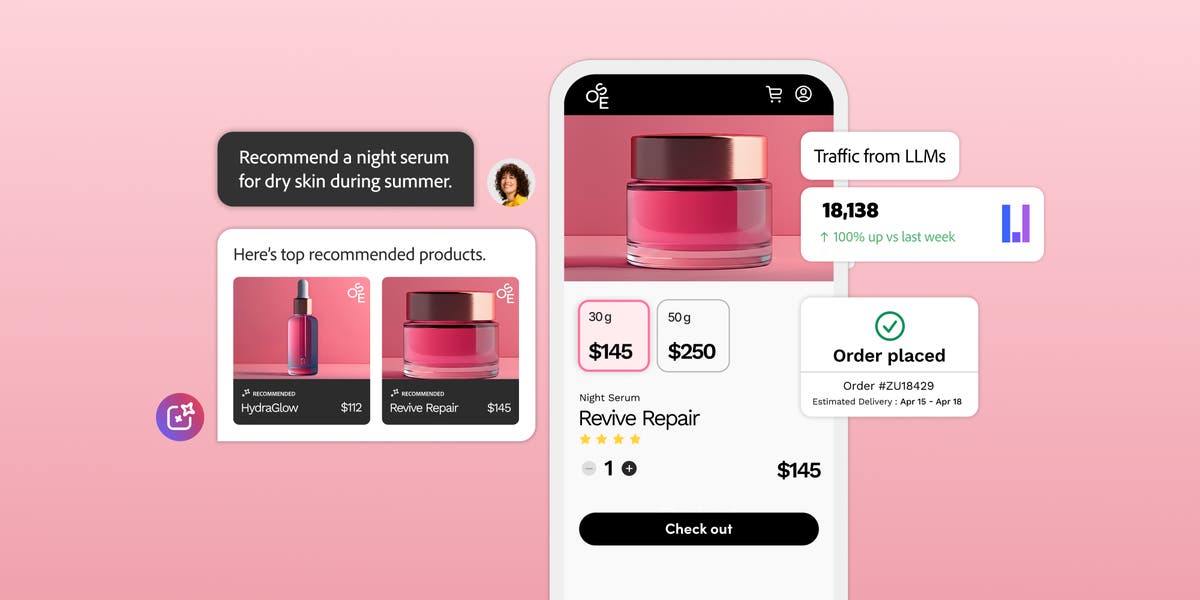
Adobe Commerce introduces agentic upgrades to streamline platform updates.
business.adobe.comAnnounced at Adobe Summit 2026, the agentic upgrade feature automates platform version updates using AI agents. Upgrades that previously took weeks of manual work can now be significantly accelerated.
For e-commerce operators, reduced platform maintenance costs mean more resources can be directed toward strategic investments.
Global E-Commerce
California Sues Amazon for Price Fixing

Who would have thought?
gizmodo.comCalifornia has filed an antitrust lawsuit against Amazon, alleging the company pressured sellers to raise prices. The suit claims Amazon's "fair pricing policy" effectively suppresses price competition across other channels, harming consumers.
This case could influence platform regulation debates across the e-commerce industry, particularly around the balance between marketplace price control and seller pricing freedom.
China Fines 7 E-Commerce Platforms Over 'Ghost Shops' (Update)

China cracks down on ghost takeaway shops across major e-commerce platforms.
insideretail.asiaChinese regulators have fined seven major e-commerce and delivery platforms for food safety violations related to "ghost shops" — delivery-only operations without physical storefronts. Targets include Pinduoduo and Meituan, with stricter vendor verification requirements being imposed.
In an update from earlier reports, all seven platforms have issued statements saying they "sincerely accept" the penalties.
European Marketplaces Account for 61% of E-Commerce

A large majority of online transactions in Europe take place on marketplaces.
ecommercenews.euAccording to ECDB data, 61% of European e-commerce transactions in 2025 occurred through marketplaces. Globally, the figure reaches 83.4%, with further concentration expected in Europe.
For independent e-commerce sites, differentiation strategies become increasingly critical. As agentic commerce grows, API compatibility with marketplaces may become a competitive requirement.
Corporate News
ByteDance Profits Plunge on AI Investment as TikTok Shop Drives Growth

'All-in' AI drive cuts profits by 70 per cent, while booming TikTok Shop sales help overseas markets outpace China, reports say.
www.scmp.comByteDance's profits have dropped sharply due to massive AI infrastructure investment, while TikTok Shop has emerged as a key growth driver, pushing overseas revenue share to a new high.
As social commerce scales, ByteDance is pursuing a two-front strategy of AI investment and commerce expansion. For e-commerce merchants, TikTok Shop's growing importance as a sales channel is becoming increasingly evident.
Shoplazza Launches 'AI-Native Commerce OS'

Shoplazza, a leading global commerce platform, announced the launch of the world's first AI native commerce operating system.
www.prnewswire.comCross-border e-commerce platform Shoplazza has launched an "AI-Native Commerce Operating System" designed with AI at its core. Rather than bolting AI onto an existing platform, the system is built from the ground up with AI integrated into product listing, pricing, marketing, and customer support.
While Shopify and VTEX take an "AI-enhanced" approach, Shoplazza is explicitly positioning itself as "AI-native" for differentiation.
Payments & Fintech
EBANX Expands to Southeast Asia and Turkey
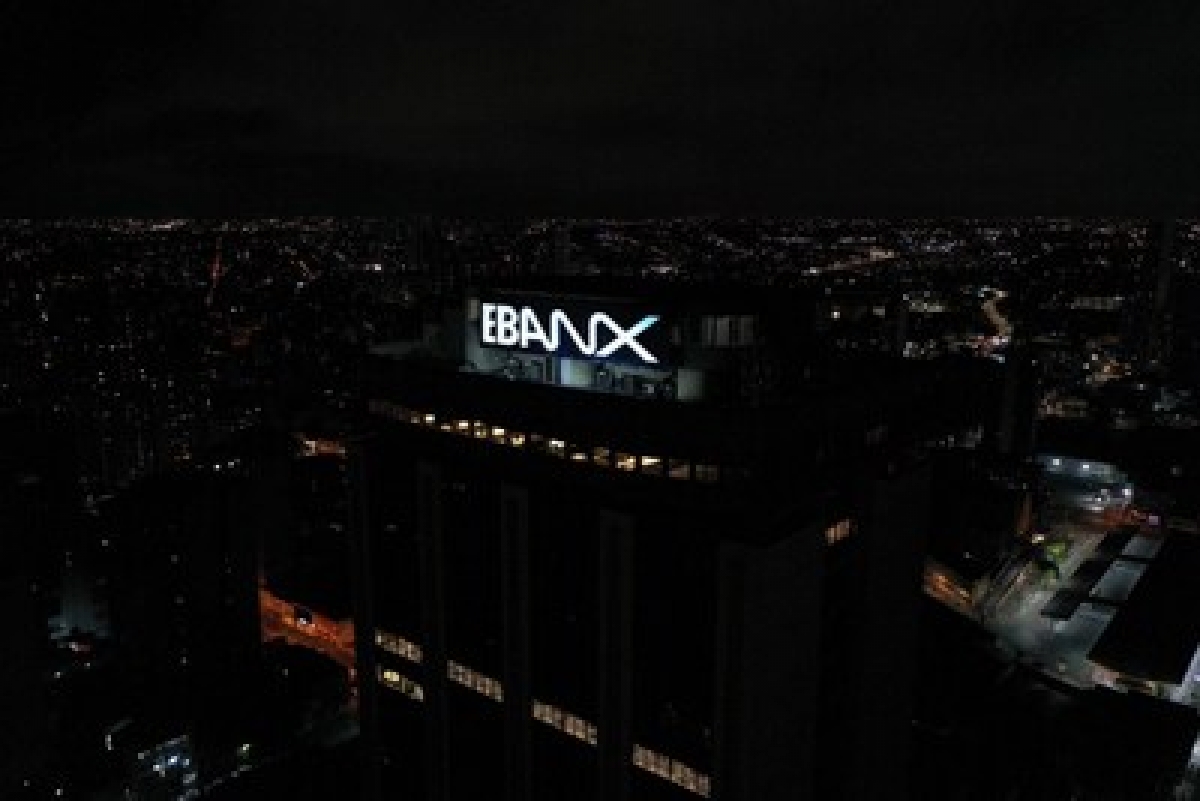
The Brazilian payment processor entered four regional markets and Turkey accessing $610 billion in digital commerce opportunity.
vir.com.vnBrazil-based cross-border payment platform EBANX has announced expansion into four Southeast Asian countries (Indonesia, Malaysia, Philippines, Thailand) and Turkey, adding to its existing presence in Latin America and Africa.
For globally operating e-commerce businesses, supporting local payment methods in emerging markets is key to improving conversion rates.
Summary
The most significant signal in today's news is that agentic commerce response is shifting from "technology adoption" to "organizational design." Mondelez's dedicated role creation shows CPG companies are treating AI shopping agents as a management priority, not a passing trend.
At the same time, the eMarketer IAB session highlighted that the industry cannot even agree on what agentic commerce means. This definitional gap means investment decisions and organizational structures will vary significantly across companies. A key area to watch is how individual companies define agentic commerce and translate those definitions into concrete organizational actions.