Wassist Raises $1.1M for No-Code AI Agents on WhatsApp Commerce
Wassist raised $1.1M pre-seed to turn WhatsApp into a no-code agentic commerce channel for brands. Why conversational commerce matters as OpenAI and Google compete for shopping conversations.

Key Takeaways
- Wassist, which offers no-code AI commerce agents that run on WhatsApp, raised $1.1M in pre-seed funding led by Playfair
- A stark engagement gap, 20% open rates for email versus 98% for WhatsApp, is fueling investment in conversational commerce
- For merchants, the core question becomes channel ownership: who owns the customer conversation, the brand or ChatGPT and Google
Turning WhatsApp Into a Storefront
London-based Wassist has raised $1.1M in pre-seed funding led by Playfair to let brands deploy no-code AI agents on WhatsApp, handling product questions, recommendations, cart recovery and checkout inside the chat thread.
startupsmagazine.co.ukIn June 2026, London-based startup Wassist announced it had raised $1.1 million in pre-seed funding. The round was led by Playfair and joined by Meta board member Charlie Songhurst, Indeed co-founder Paul Forster, and Cleo founder Barney Hussey-Yeo, along with angels from Balderton and Dawn Capital.
The company wants to make WhatsApp the default storefront for online retailers. Founder and CEO Josh Warwick, an Oxford computer science graduate who previously served as a technical lead at Theodo and co-founded proptech startup Ark, built the core of the product largely alone across weekend hackathons over ten months.
In that time, end-user conversations on the platform grew from roughly 2,000 to more than 80,000. What stands out is that this happened without any paid marketing. The company recently made its first hire and has been selected for Balderton's Launched Programme.
How a No-Code Agent Spins Up
Wassist's value lies in absorbing a steep technical barrier. Building on WhatsApp's Business API has never been a casual undertaking.
The WhatsApp Business API is the enterprise interface companies use to interact with customers through WhatsApp. Building it in-house traditionally meant webhook configuration, message template approvals, and media handling. Wassist compresses that entire process into a single workflow.
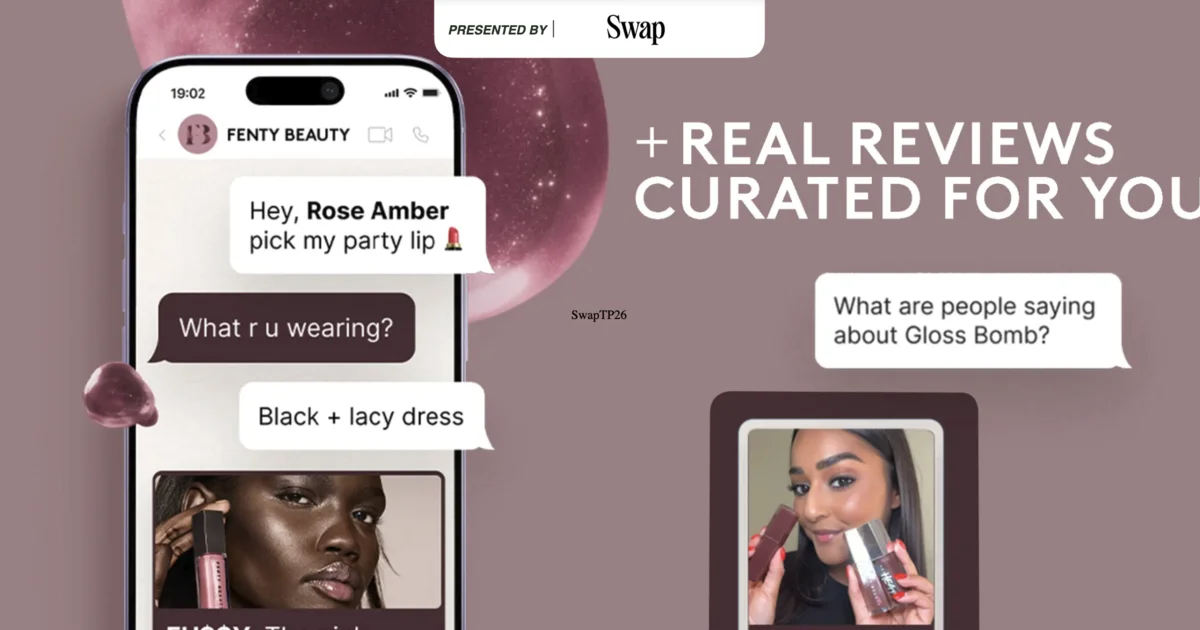
A brand enters its store URL, and within minutes a working AI agent is generated. The agent is trained in the brand's tone of voice, answers product questions, retrieves order updates, and recommends items based on prior conversations. Even small brands without dedicated engineers can stand up a conversational front desk instantly.
The payment design is clever too. Wassist does not redirect shoppers to a browser to complete a purchase. Checkout runs through the website, but the flow is surfaced inside the WhatsApp thread, with receipts and shipping notifications arriving in the same conversation. Integrations include Shopify alongside Klaviyo for email, Yotpo for reviews, and Recharge for subscriptions.
Why WhatsApp Commerce, in the Numbers
At the heart of Wassist's pitch is a stark gap in engagement metrics. As channels, WhatsApp and email simply differ in their ability to reach people.
According to figures cited by Meta, email open rates sit around 20%, while WhatsApp messages open at 98%. The click-through gap is even wider: 1-2% for email versus 20-60% for WhatsApp. Wassist says cart recovery via WhatsApp is four times more effective than email.
What drives this difference is the nature of the channel itself. Email is sent on the assumption it may go unseen, and even when opened it gets skimmed. WhatsApp, by contrast, is where people talk with those they trust every day, so notifications reliably land. Two billion people open WhatsApp daily, a habit Warwick repeatedly emphasizes.
That said, these figures come from Meta and Wassist themselves. They are numbers offered by parties arguing for the channel's superiority, and results will vary by vertical and execution. Even so, an order-of-magnitude gap in open rates is reason enough to fuel investment in conversational commerce.
Who Owns the Conversation
The WhatsApp commerce debate carries a theme deeper than engagement: who holds the customer conversation and the data behind it.
When a consumer asks ChatGPT or Google's Gemini about a product, the brand sees none of that exchange. Even when an item is recommended, the context of why and where the customer hesitated stays locked inside the AI platform. In Wassist's design, the retailer retains that dialogue and the customer relationship.
Warwick frames the conflict sharply. "WhatsApp is about to become the default commerce channel for businesses. LLMs have changed that. OpenAI wants those commerce conversations to happen in ChatGPT, and Google wants them in Search, but two billion people already open WhatsApp every day to talk to people they trust."
In other words, Wassist is trying to pull the pre-purchase conversation, which platforms are racing to capture, back into the brand's own territory. Tech Funding News framed it as OpenAI wanting shopping in ChatGPT while Wassist keeps it on the user's WhatsApp. The tug-of-war over conversation ownership is becoming a new front in agentic commerce.
Why Now
Even a strong product fails if the market is not ready. Investors and Wassist point to several conditions that aligned in just the past few years.
In 2022, WhatsApp expanded its Business API, creating the foundation for companies to handle messaging at scale. Large language models then became cheap enough to make natural conversation at scale economically viable. And in November 2024, Meta removed the cost of outbound messaging, making proactive WhatsApp outreach feasible for small businesses for the first time.
This sense of timing is not Wassist's alone. Tellingly, around the same time as Wassist's announcement, on June 3, 2026, Meta itself rolled out Meta Business Agent globally on WhatsApp. According to TechCrunch, it is a full agentic platform that connects to systems like Shopify and Zendesk and can complete transactions inside the conversation.
Playfair investor Lucia Polverino noted that no one has built a truly agentic WhatsApp layer for small businesses, and that the recent changes to the API, the models, and the economics have only just aligned. Meta lays the foundation; the competition over who builds the brand-friendly layer on top starts here.
Emerging Markets and the Competition
The view that WhatsApp commerce is next gains credibility from regions where reality already runs ahead. In some markets, this is not a forecast but a description of the present.
In markets such as India, Brazil, and Mexico, WhatsApp is already the dominant channel for small business commerce. From product inquiries to orders and payment discussions, everyday commerce happens inside the chat. Wassist argues this pattern will spread to Europe and the United States, with a global user base of billions as its soil.
Yet the space is not without rivals. WhatsApp customer-support and marketing tools already include established players like Charles, which raised $20M from Salesforce Ventures, and Wati, which has raised $35M in total. Wassist's differentiation lies in being an LLM-driven agent that responds dynamically rather than a rigid flowchart bot, and in a commerce-first design anchored on WhatsApp.
Early customers include beauty brand Hollywood Browzer, which uses the platform to guide shoppers through technical product questions and convert FAQ traffic into completed sales.
What Merchants Should Take Away
For Japanese merchants, WhatsApp is hardly a primary channel. Even so, the structural shift this funding reflects carries meaning beyond any single channel's name.
The first takeaway is that the battleground of conversational commerce is moving from the search results page to the conversation thread. Customers no longer click links and browse product pages; they ask, get recommendations, and buy inside a trusted messaging app. In Japan, LINE could play a comparable role, and designs that complete service and checkout within the dialogue become worth examining.
The second is the choice Wassist forces: own your conversations and data, or hand them to the platforms. When an item gets recommended in an AI chat you cannot see, customer understanding never deepens. Accumulating dialogue in your own channel and holding the customer relationship directly becomes an asset in the agentic commerce era.
Conclusion
Wassist's $1.1M raise matters less for its size than for the direction it points to. Cheaper LLMs, the removal of WhatsApp messaging fees, and a mature API have aligned, and this funding symbolizes conversational commerce maturing into an investable space.
Behind it sits a clear strategy: reclaiming the pre-purchase conversation that OpenAI and Google are trying to capture, and returning it to the brand. Who owns the customer dialogue? As the center of gravity shifts from search to chat, that question is aimed at every merchant.