Agentic Commerce Puts Data Quality at Retail's Center: How to Build Product Data Agents Will Choose (Snowflake Summit)
When AI agents buy on behalf of consumers, product data quality decides whether your brand gets picked. Starting from the Snowflake Summit 2026 discussion, we break down the product data work e-commerce operators should start now.


Key Takeaways
- At Snowflake Summit 2026, the argument that data quality is the center of retail in the agentic era took center stage. In a world where AI agents discover, compare and buy on behalf of consumers, data readiness is becoming the gating factor for every AI initiative.
- The rules of competition shift from winning human attention to being chosen by AI. Where traditional e-commerce competed on design, advertising and search ranking, agentic commerce makes product data quality, catalog completeness and protocol compliance the selection criteria.
- The work for e-commerce operators is structuring the product feed. Attribute completeness, descriptions written for natural language, and trust signals such as GTINs and verified reviews are what decide AI-driven discovery and purchase.
What Snowflake Summit said about data quality becoming retail's center
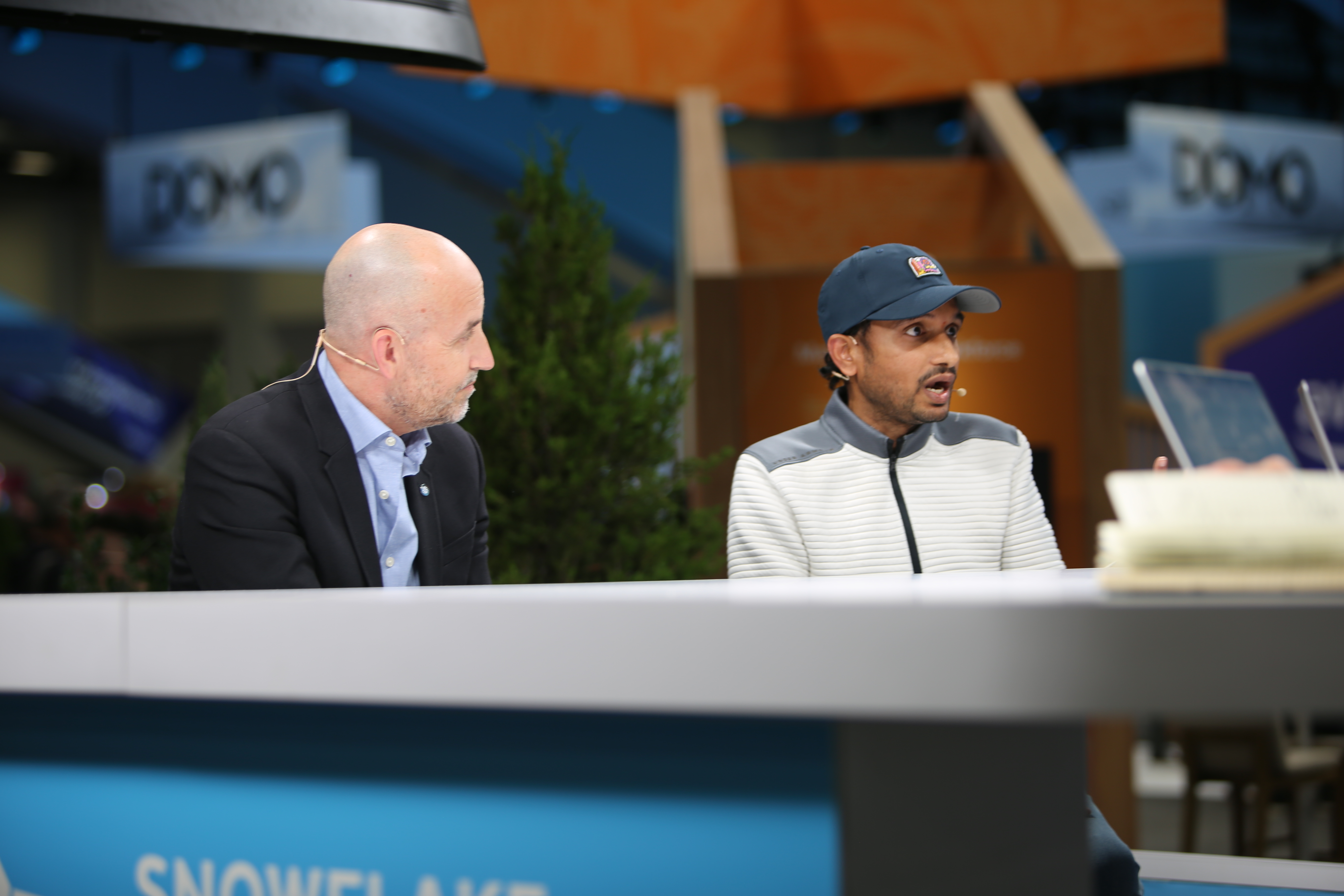
Agentic commerce puts data quality at the center of the retail industry as AI agents are now making purchasing decisions on behalf of consumers.
siliconangle.comAt Snowflake Summit 2026, held in San Francisco from June 1 to 4, one argument about retail's next era came up again and again. Once AI agents make purchasing decisions on behalf of consumers, what decides a retailer's competitiveness is the quality of its product data. This was framed not as a future concern, but as the immediate prerequisite for competing at all.
The speakers were Gowtham Gundu, chief AI officer of Fetch Rewards, and Paul Winsor, head of retail EMEA at Snowflake. Fetch serves roughly 13 million monthly active users and processes about 13 million receipts a day. Gundu noted that in terms of GMV data volume, Fetch is "the third biggest, only after Walmart and Amazon," and that this enormous transactional data is the foundation of its readiness for agentic commerce.
Winsor's words capture the core of this story most directly.
Your inventory data, your customer data in terms of understanding everything about the customer behavior and the purchasing and the history, as well as all of your product data. Your data is going to be absolutely critical to the next evolution, which is going to be agentic commerce.
Why data quality is now the gating factor
Agentic commerce refers to a model in which a consumer's personal AI agent handles product discovery, comparison and purchasing. The consultancy Bain & Company points out that full agent-to-agent commerce could eventually bypass traditional retail websites altogether, as consumers delegate buying decisions to AI. The catch is that this shift is moving far faster than most retailers anticipated.
What changes decisively here is how AI finds products. When a shopper asks an AI to "find the best waterproof hiking boots under $200," the AI does not crawl your site in real time. It queries structured product data that has already been indexed from feeds. In other words, if you aren't presenting data in a form the AI can parse, the issue isn't that you rank low — you simply don't make the candidate list at all.
This is exactly the pattern Snowflake observes across its retail customer base: data readiness has become the entrance that determines the success of every AI initiative. What Winsor and Gundu described was a recognition that natural language access to data is no longer a nice-to-have but a requirement. Fetch is building a natural language interface so a brand like Pepsi can instantly query buyout rates, basket sizes or trend shifts — a pipeline that converts a question into a SQL query, retrieves the data and returns a readable answer in real time.
From competing for attention to being chosen by AI
In traditional e-commerce, brands fought to capture human attention. Polished design, striking ads, top placement in search results. With agentic commerce, that battleground changes at the root.
The evaluator is an AI agent, not a human. Agents don't respond to visual beauty or clever copy. They select products based on data quality, catalog completeness, and compliance with the protocols that mediate payment and purchase. Agents like Google's AI Mode, ChatGPT and Perplexity already pull product information from feeds and structured data to generate answers. If a feed has gaps, stale information, or poor formatting, these agents quietly switch to a competitor with a more complete feed.
Underpinning this "being chosen" competition technically are each camp's product data standards. In January 2026 Google launched the Universal Commerce Protocol (UCP) with partners including Shopify, Wayfair, Target, Etsy and Walmart; OpenAI's Agentic Commerce Protocol (ACP) powers ChatGPT's purchasing features; and Perplexity offers a way for brands to submit structured product catalogs directly. All of them assume you can present data in a format agents can interpret. If you aren't compliant, your products don't ride that distribution path — which makes protocol support a new kind of shelf space.
Gartner estimates that by 2030, 20% of online shopping transactions will flow through AI platforms and agents. The brands shown in those results aren't necessarily the biggest or the ones with the best products. They are the ones with structured, machine-readable data. Stores with 99.9% attribute completion are reported to see three to four times higher visibility in AI recommendations than stores with sparse data.
The product data e-commerce operators should build now
So what exactly should you prepare? Product feed optimization is easier to organize if you think in three layers.
The first is structural completeness. What the product is, how much it costs, whether it's in stock — filling these in as fields the AI can parse, without gaps, is the foundation. In Google Merchant Center terms, required attributes like product ID, title, description, URL and image will block feed approval if missing. On top of that, variants should be registered as separate rows each with a unique ID, rather than collapsed under a parent product.
The second is semantic density. AI agents match products to natural language queries. Titles should include "brand + product name + key attribute + size or color" in a structured order, and avoid promotional phrases like "best seller" or "on sale," which AIs treat as noise rather than signal. The richness of the description directly affects how well it matches natural language queries.
The third is trust signals. GTINs (global trade item numbers), verified reviews, accurate shipping data, and consistency between Schema.org markup and the submitted feed. Agents prioritize this kind of corroborated data when building recommendations.
Beyond product data itself, the other implication from the Summit discussion is the importance of keeping the entire data foundation — inventory, customers and purchase history — queryable in real time. The future Fetch envisions is a marketplace of thorough automation, where you wake up and are automatically rewarded for activities like walking or watching a show, and are proactively told "based on your history, you probably need stationery today." Experiences like that rest on data that is prepared and instantly accessible.
Conclusion
The further agentic commerce progresses, the more retail's center of gravity shifts from the look of the storefront or site to the quality of the data behind it. The Summit's line that "data is critical to the next evolution" was not hyperbole; it pointed to a practical prerequisite for being chosen by AI.
For e-commerce operators, the starting point is auditing whether your product feed is complete, machine-readable and trustworthy enough for AI. Fill attribute gaps, make descriptions natural-language ready, and assemble trust signals. It's unglamorous work, but without it you are effectively invisible at the new entrance that is AI-driven discovery. The next thing to watch is where each platform's feed requirements and protocols converge.