Amazon Supply Chain Services Goes Live: AWS-Style Logistics Play Sinks UPS 10%, FedEx 9%
Amazon launched Supply Chain Services on May 4, 2026, opening its full freight, fulfillment, and parcel network to any business. UPS shares fell 10%, FedEx 9%. We examine the AWS analogy and what it means for ecommerce.

Key Takeaways
- On May 4, 2026, Amazon unveiled Amazon Supply Chain Services (ASCS), bundling freight, distribution, fulfillment, and parcel shipping into a single offering for businesses of all types and sizes. Procter & Gamble, 3M, Lands' End, and American Eagle Outfitters are first-wave customers
- UPS shares dropped roughly 10% and FedEx fell 9% on launch day, with Dow Transports tipping into bear-market territory. Markets priced in structural disruption immediately, given Amazon is already the largest parcel carrier in the US by volume
- ASCS VP Peter Larsen explicitly framed the move as the AWS playbook applied to logistics. Because the service can fulfill orders from Walmart, Shopify, and TikTok, ecommerce operators now face a sharper trade-off between cost savings and Amazon dependency
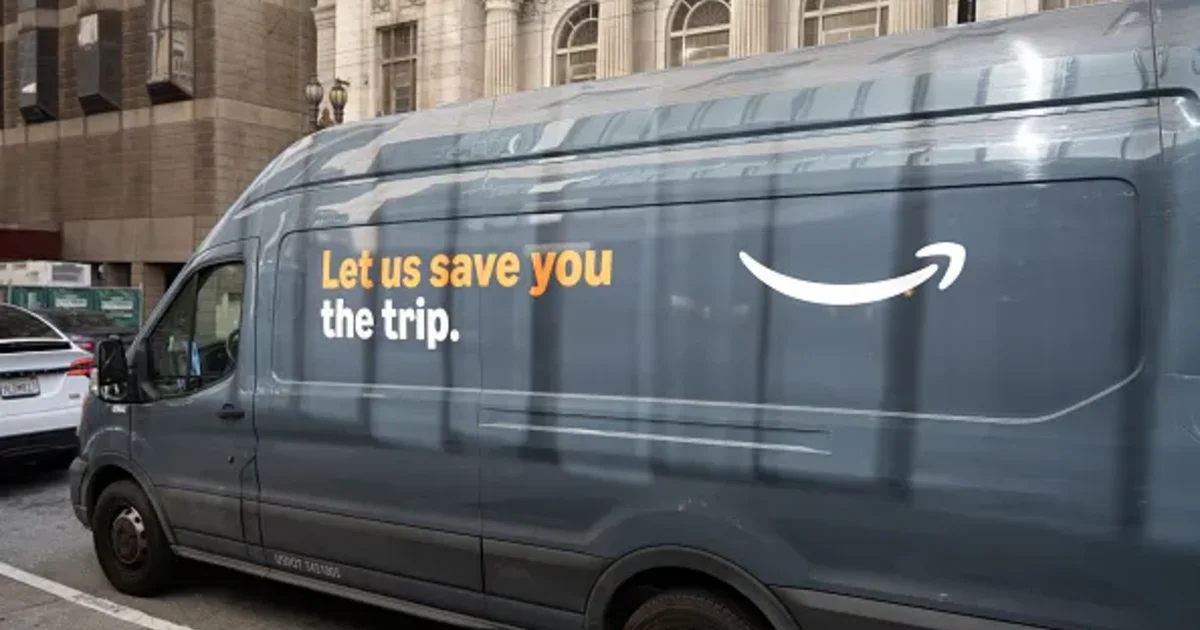
Amazon takes aim at UPS and FedEx by opening its logistics empire

Amazon is launching a new delivery service for third-party companies, allowing businesses of 'all types and sizes' to use Amazon's fulfillment network to store, ship, and deliver products.
www.theverge.comOn May 4, 2026, Amazon launched Amazon Supply Chain Services (ASCS), a new business that opens its end-to-end logistics network to any company, in any industry, at any scale. Freight, distribution and fulfillment, and parcel shipping are packaged into a single, unified offering, available to businesses well beyond Amazon's marketplace sellers, including those in healthcare, automotive, manufacturing, apparel, electronics, food, and retail.
According to The Verge, Amazon is now positioning itself to "compete more directly with giants like DHL, UPS, and FedEx." On launch day, UPS shares fell roughly 10% and FedEx dropped about 9%. Benzinga described the impact as a "logistics bombshell" that pushed Dow Transports into bear-market territory. Amazon's own stock barely moved, capturing the asymmetric narrative: a major new growth lever for Amazon, a structural threat for incumbents.
Procter & Gamble is using ASCS freight to move raw materials and finished goods. 3M is moving products from manufacturing sites to global distribution centers. Lands' End is fulfilling orders across multiple sales channels from a unified Amazon-managed inventory pool. American Eagle Outfitters is leaning on Amazon's parcel network for last-mile delivery from its American Eagle and Aerie sites.
What was actually announced: five existing services, rebranded and unified
ASCS is not a brand-new capability so much as a deliberate consolidation. Amazon spent years incrementally exposing pieces of its supply chain to third parties. ASCS gathers them under a single console, pricing structure, and brand. The three core pillars are freight (ocean, air, ground, and rail), distribution and fulfillment (importing, storing, positioning inventory close to demand, and fulfilling across all sales channels), and parcel shipping (predictable two-to-five-day delivery, seven days a week).
In its announcement, Amazon noted that independent sellers have shipped more than 80 billion units through Fulfillment by Amazon (FBA) since 2006. Over the past three years alone, hundreds of thousands of sellers have used Amazon's network to deliver hundreds of millions of packages to channels beyond Amazon's own store. ASCS is the natural progression: a model proven on sellers, now opened to every kind of business.
GeekWire reports that Amazon's logistics footprint includes 200+ US fulfillment centers, 80,000+ trailers, 24,000 intermodal containers, and 100 aircraft, delivering 13 billion items annually. ShipMatrix data suggests Amazon has already overtaken USPS as the largest parcel carrier in the US, so ASCS is less a market entry and more the formal commercialization of an effective market leader.
Why investors heard "another AWS"
Peter Larsen, the VP running ASCS, did not hedge the comparison. "Amazon is bringing the infrastructure, intelligence, and scale of its supply chain services—proven over decades—to businesses everywhere, much like Amazon Web Services did for cloud computing," he said in Amazon's own announcement. Larsen is an 18-year Amazon veteran who previously led internal transportation and delivery technology, exactly the profile you would expect for someone tasked with externalizing battle-tested infrastructure.
The AWS parallel is more than a marketing line. AWS itself was born in 2006 from infrastructure Amazon had to build to run its retail business. Two decades later it generates hundreds of billions in revenue. ASCS follows the same arc: build for internal needs, prove it with a captive customer base of sellers, then open the doors. CEO Andy Jassy's 2025 shareholder letter flagged similar plays around custom AI silicon and robotics, marking ASCS as a flagship example of the "internal capability as external product" doctrine that has come to define Jassy's tenure.
The analogy has limits, however. Cloud has near-zero marginal cost; logistics does not. Fuel, labor, and warehouse utilization sit squarely on Amazon's books. Amazon's claim that ASCS can deliver up to 25% lower transportation costs than alternatives almost certainly relies on netting external demand against its own retail peaks to flatten utilization. The more outside volume Amazon attracts, the more it spreads its enormous fixed-cost base, but the relationship is not as elastic as cloud capacity.
Implications for ecommerce operators and the 3PL stack
The most strategically loaded detail is that ASCS will fulfill orders placed on platforms that compete with Amazon, including Walmart, Shopify, and TikTok. Shopify, BigCommerce, and WooCommerce merchants now have a credible new option: buy Amazon's logistics without selling on Amazon.
| Dimension | Amazon Supply Chain Services | UPS / FedEx | Traditional 3PLs (ShipBob etc.) |
|---|---|---|---|
| Coverage | Freight + warehouse + delivery + parcel, end-to-end | Parcel and freight focus | Warehousing and fulfillment focus |
| US footprint | 200+ FCs, 80,000+ trailers, 100 cargo aircraft | Nationwide parcel network | Tens to ~100 facilities |
| Annual delivery volume | 13B items (2026) | Billions of parcels | Distributed per operator |
| Anchor customers | P&G, 3M, Lands' End, American Eagle | All sectors | DTC and mid-market ecommerce |
| Marketplace coverage | Amazon, Walmart, Shopify, TikTok, etc. | Platform-agnostic | Shopify-heavy |
| Cost claim | Up to 25% lower transport cost (Amazon) | Scale economics, long-term contracts | Flexible mid-market pricing |
The table makes the competitive shape clear. Against parcel carriers, ASCS leverages a vertically integrated stack from freight to last mile. Against traditional 3PLs like ShipBob and Deliverr, the differentiator is sheer scale, breadth of nodes, and global coverage. The Lands' End pattern—a unified inventory pool inside Amazon's network drawing across multiple channels—is something most 3PLs simply cannot replicate.
Cost optimization, however, is not the whole conversation. GeekWire notes that Amazon has previously been accused of using non-public seller data to compete with merchants on its marketplace, allegations Amazon denies. With ASCS now potentially handling Walmart, Shopify, and TikTok flow, every shipment is also a data point about competitor demand. Larsen told the Wall Street Journal that the company prohibits using ASCS customer data for marketplace decisions, but governance transparency will remain a recurring scrutiny point.
For incumbent 3PLs the picture is harsher. ShipBob, Deliverr, and similar mid-market players have built around Shopify merchants and DTC brands. ASCS targets the same accounts with structurally lower unit costs, broader coverage, and tighter integration. CHRW and GXO were also flagged in Benzinga's coverage as exposed names, signaling that the market is repricing the entire third-party logistics complex, not just last-mile parcel.
What ecommerce leaders should evaluate now
ASCS forces a fresh look at supply chain strategy, especially for Shopify merchants and mid-market DTC brands. The trade-off between immediate cost savings and long-term Amazon dependency deserves rigorous, not reflexive, analysis.
First, leaders need to separate "letting Amazon ship for us" from "selling on Amazon". Technically ASCS can power non-Amazon channels, but operationally inventory data, order data, and customer addresses flow into Amazon's systems. Each company should make explicit which of competitive strategy, data sovereignty, and brand experience they are willing to compromise, and which they will not.
Second, the 25% transportation cost claim deserves rigorous validation. Amazon has not published a public price book; GeekWire reports that pricing varies by service mix. Real comparisons require modeling against current 3PL and parcel rates, including peak surcharges and long-term contractual terms, on a true total-cost-of-ownership basis.
Third, ASCS needs to be positioned within a multichannel strategy. Lands' End's "unified inventory pool" is a high-commitment posture; American Eagle's last-mile-only model is lighter; partial SKU placement is lighter still. As agentic commerce expands and demand starts arriving from Rufus, ChatGPT, Perplexity, and other AI surfaces, retaining flexibility on the logistics side becomes a hedge against a single channel concentrating too much pricing power.
Closing thoughts
ASCS is not just another shipping product. It is Amazon importing the AWS playbook—internal capability commercialized as a horizontal platform—into supply chain. The day-one moves of UPS down 10% and FedEx down 9% capture the market's instant verdict that this is structural, not incremental. For ecommerce operators, the new option of running Walmart and Shopify volume through Amazon's network is real and economically tempting, but it surfaces deep questions about dependency, data, and brand. Pricing transparency, peak-season behavior, and ASCS's data-governance track record will define how the story actually unfolds over the next several quarters. The operators who redesign channel and logistics strategy together, rather than in silos, will be best positioned for the second half of 2026 and beyond.