Forrester Hosts Agentic Commerce Workshop at June CX Forums: Emily Pfeiffer Helps Brands Ask the Right Questions
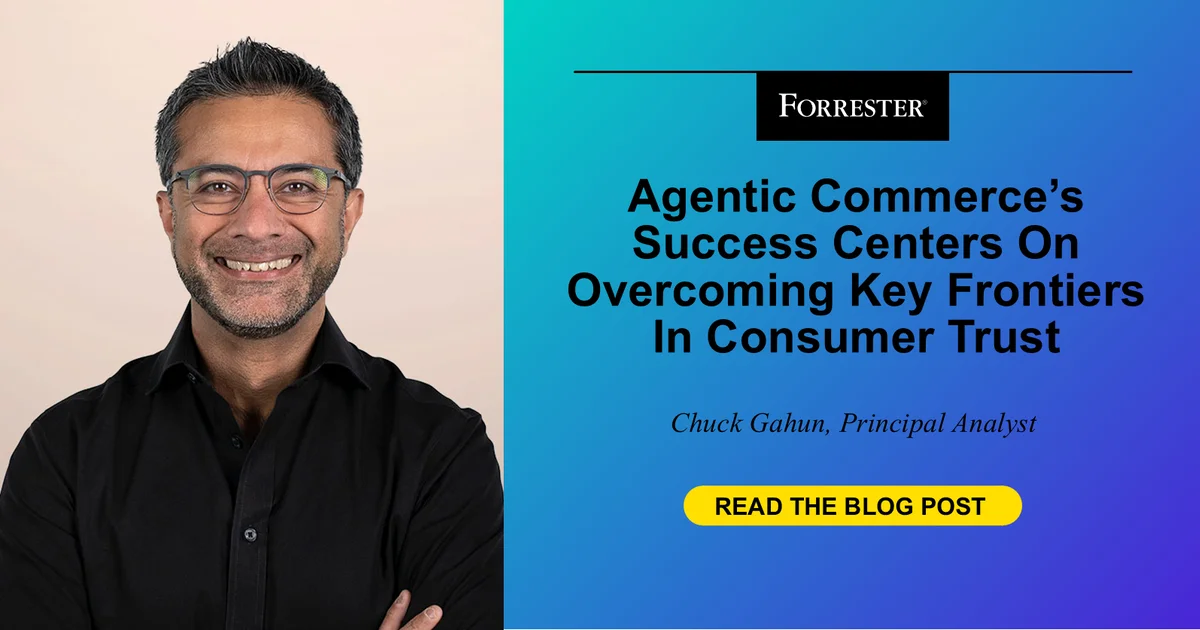
Forrester analysts Emily Pfeiffer and Chuck Gahun lead an interactive Agentic Commerce Workshop at CX Forum East (NYC) and West (SF), guiding brands from FOMO to focus.

Key Takeaways
- Forrester is hosting an Agentic Commerce Workshop at CX Forum East (NYC, June 16-17) and West (SF, June 29-30), led by Emily Pfeiffer and Chuck Gahun
- The theme "from FOMO to Focus" centers on prioritization grounded in your products, customers, and channel maturity
- Unlike panel-heavy conferences, this is a hands-on session built around six practical questions and tangible takeaways
Why a Workshop on Asking the Right Questions, Now?
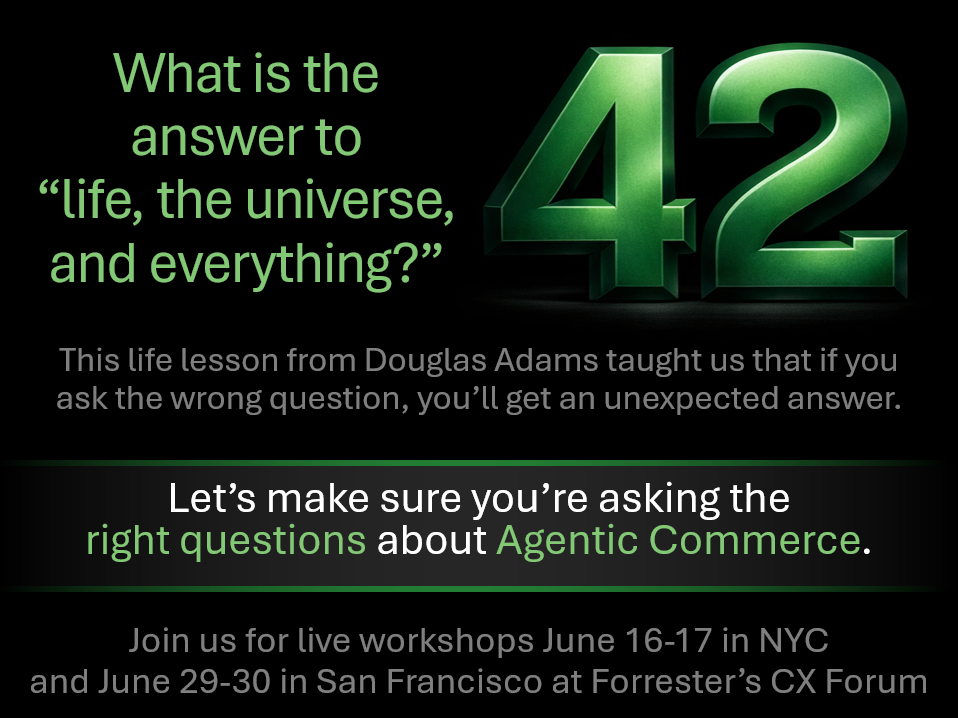
Join Emily Pfeiffer and Chuck Gahun for interactive workshops at Forrester's CX Forums in New York City (June 16-17) and San Francisco (June 29-30).
www.forrester.comIn May 2026, Forrester Principal Analyst Emily Pfeiffer announced that she and Chuck Gahun will run an interactive workshop titled "Catalyze Agentic Commerce — How To Move from FOMO to Focus" at the upcoming CX Forums. The sessions take place at CX Forum East in New York City (June 16-17) and CX Forum West in San Francisco (June 29-30).
Pfeiffer opens with a sharp observation. Companies routinely arrive with questions like "How should we engage in agentic commerce?" or "How do I get my products into answer engines right away?" — but those, she argues, often start from the wrong place. The harder, more useful work is to return to your brand, products, and customers and decide whether new channels even deserve priority.
The message is clear. Before rushing into vendor selection or rollout playbooks, leaders should set aside time to recalibrate their starting point. Forrester's framing of "the right questions" is meant to lift the conversation about agentic commerce a level higher than execution mechanics.
The Six Questions Anchoring the Workshop
Pfeiffer and Gahun structure the session around six questions participants apply to their own organizations. The first asks what forms of Agentic Commerce exist today. Both owned environments (a brand's own site) and non-owned environments (answer engines like ChatGPT) must be in scope; otherwise the picture stays partial.
The next question — how customers are adopting answer engine shopping — pulls thinking back toward demographic patterns and consumer trends, then redirects attention to where YOUR customers actually want to shop. Engaging experiences on emerging channels can drive both conversion and retention, but only when the audience is genuinely there.
The third question, on business impacts, examines how opportunities and risks shift with an organization's experience and technology maturity. Forrester surfaces those dimensions explicitly so participants can read their own readiness and the next step in their agentic commerce evolution.
The fourth question gets concrete. Through an interactive exercise, attendees evaluate how strong a fit answer engine selling is for their products, brand, and customers. The promised outcome: leaving able to clearly articulate whether agentic commerce should be a priority right now.
The final two questions zoom out. How does agentic commerce fit your broader commerce strategy across owned and third-party properties? And — perhaps most importantly given persistent market volatility — does the investment hold up under pressure testing? Forrester applies these stress tests in a structured way participants can replicate at home.
Connecting the Workshop to Forrester's Broader Research
This workshop is best read as the practical capstone of Forrester's 2026 agentic commerce research arc. Pfeiffer and her colleagues have argued in Forrester's analysis of the trust gap that consumers must cross three "trust frontiers" before delegating purchases to agents: discovery on answer engines, agent-driven buying, and standards plus consumer protections. None of these are solvable through technology adoption alone.
Pfeiffer has also drawn explicit parallels with social commerce, warning that "if you build it, they will come" is no longer true. Slapping a "Buy" button onto a feed didn't translate into broad social commerce adoption, and agentic commerce risks repeating that mistake unless brands start by asking whether their customers are actually present and ready to transact in a given channel.
The "FOMO to Focus" framing comes directly from this context. Forrester's own surveys show U.S. adult adoption of answer engines for product discovery moving only from 18% in February 2025 to 19% in October, while just 8% of U.S. online adults had used OpenAI's Instant Checkout by October. The market is moving more slowly than the headlines suggest — and the workshop is designed to give companies a calmer place to recalibrate.
How It Differs from Other Conference Panels
Adobe Summit, Shoptalk, and NRF Big Show have all packed agentic commerce panels onto their 2026 stages. Most of them, however, lean heavily on case-study presentations from platforms or early adopters, leaving attendees with information to consume but few decision-grade takeaways for their own organization.
Forrester Workshop diverges deliberately. Two analysts walk participants through the six questions in a hands-on format, with each company running its own readiness diagnosis and prioritization. According to Forrester's CX Forum East page, the gathering caps under 400 attendees and pairs the workshop with one-on-one analyst meetings and small group discussions.
Forrester also builds in post-event support: paid attendees receive two complimentary research reports plus a "CX Starter Kit" of templates and scorecards. The intent is for the work to flow directly into CX, marketing, and digital roadmaps — a clear differentiator from passive panel viewing.
What E-commerce and CX Leaders Should Bring
Start by assembling the right people. Given the workshop's focus, sending a digital commerce lead, a CX executive, the owner of product data and catalog management, and a checkout product owner together unlocks the most value, because the workshop's outputs can be translated immediately into implementation plans. If you must attend solo, sync with internal decision-makers on the questions in advance so the conversation continues at home.
Three preparation pillars stand out. First, take honest stock of your product data quality and inventory integration. Pfeiffer has written elsewhere that the ability to push accurate product feeds into answer engines is the foundational requirement for any channel play. Second, gather data on how your customers actually engage with answer engines and which devices they use. Third, hypothesize where today's checkout UX and brand experience would break under agent-driven traffic.
Forrester is explicit about the expected output: participants should leave able to state whether agentic commerce should be a priority for their organization right now. They should also walk out with a perspective on how agentic commerce maps to their broader commerce strategy, plus a decision-making lens that holds up under continued market volatility. For Forrester clients, pairing the workshop with a follow-up guidance session multiplies the return on the investment.
Closing Thoughts
Forrester's Agentic Commerce Workshop reframes the conversation from "should we do it and how" to "is this the right thing for us to prioritize now". Drawing on the lessons of social commerce and 2025's consumer data, Pfeiffer and Gahun give companies a calmer frame for resisting FOMO-driven decisions.
Both CX Forum East and West operate as small-format events under 400 attendees and are expected to reach capacity. Forrester's State of Agentic Commerce webinar is available on demand for those who want to test-fit the content before committing.
For e-commerce and CX leaders, June 2026 offers a rare chance to validate agentic readiness with analysts in the room. As inventory and pricing pressure mount on answer engines, the workshop is well worth treating as a strategy reset for re-prioritizing agentic commerce across your products, customers, and channels.