Commerce MCP Explained — The Connection Standard Linking AI Agents to Ecommerce Systems
MCP (Model Context Protocol) is becoming the standard for connecting AI agents to ecommerce systems. Learn the differences from REST APIs and how Shopify, Stripe, and PayPal are implementing Commerce MCP.

Key Takeaways
- MCP (Model Context Protocol) is the emerging standard for connecting AI agents to external systems, simplifying the "M x N problem" of REST API integrations down to M + N
- Shopify has deployed four MCP servers across all stores, while Stripe, PayPal, and Salesforce are each shipping their own Commerce MCP implementations
- Commerce MCP represents a new infrastructure layer that forces ecommerce merchants to decide how and when to open their storefronts to AI agents
What Is Commerce MCP — The Ecommerce Connection Standard for AI Agents
"Just as USB-C connects any device with a single cable, MCP connects any AI agent to any service." This analogy, repeated when Anthropic launched MCP (Model Context Protocol) in late 2024, has taken on concrete meaning in the ecommerce industry by 2026.
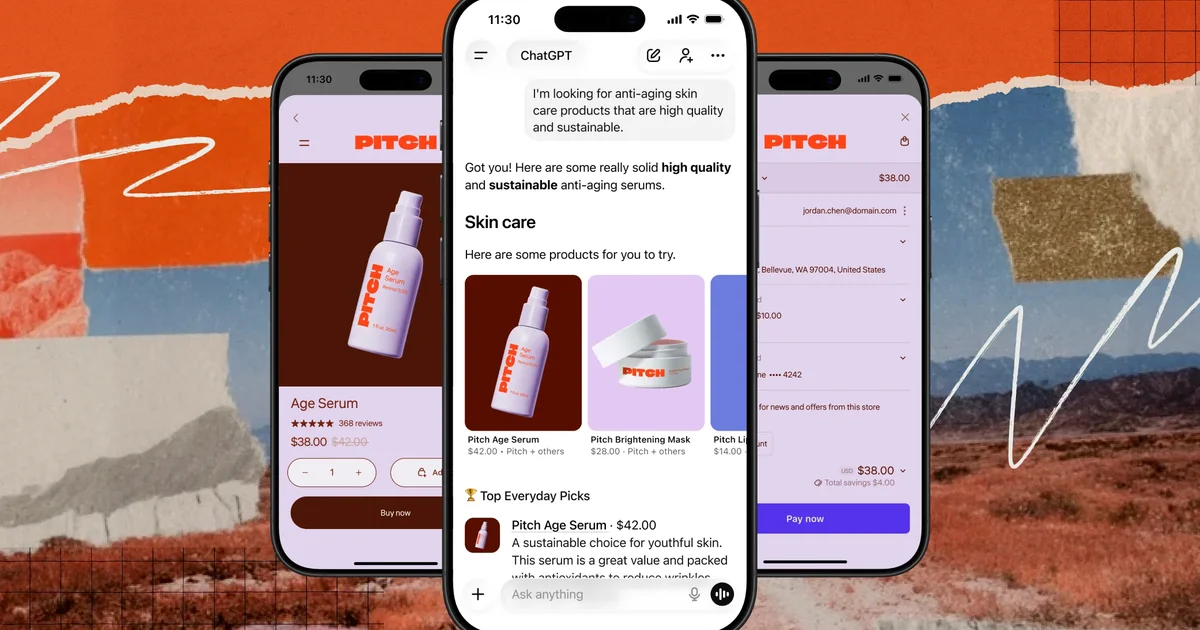
Shopify deployed MCP endpoints to all 5.6 million stores by default. Stripe published its MCP server in official documentation. PayPal released the industry's first remote MCP server. With all major ecommerce infrastructure companies moving to MCP, Commerce MCP is establishing itself as the connection standard underpinning agentic commerce.
So what makes MCP different from existing APIs? And why should ecommerce merchants pay attention now? This article covers MCP's technical foundations, concrete implementations by Shopify, Stripe, and PayPal, and the implications for ecommerce businesses.
The Limits of REST APIs — Why AI Agents Need a New Connection Standard
To understand this, we need to revisit what REST APIs were designed for. REST APIs assume human developers who read documentation, configure authentication, understand JSON response structures, and write code for each endpoint. This assumption becomes a fundamental constraint in the age of AI agents.
Anthropic has termed this challenge the "M x N problem." When M AI models need to connect to N services, the traditional approach requires M x N custom connectors. A GPT-4-to-Shopify connector, a Claude-to-Stripe connector, a Gemini-to-inventory-system connector... Integration costs grow exponentially as model and service combinations multiply.
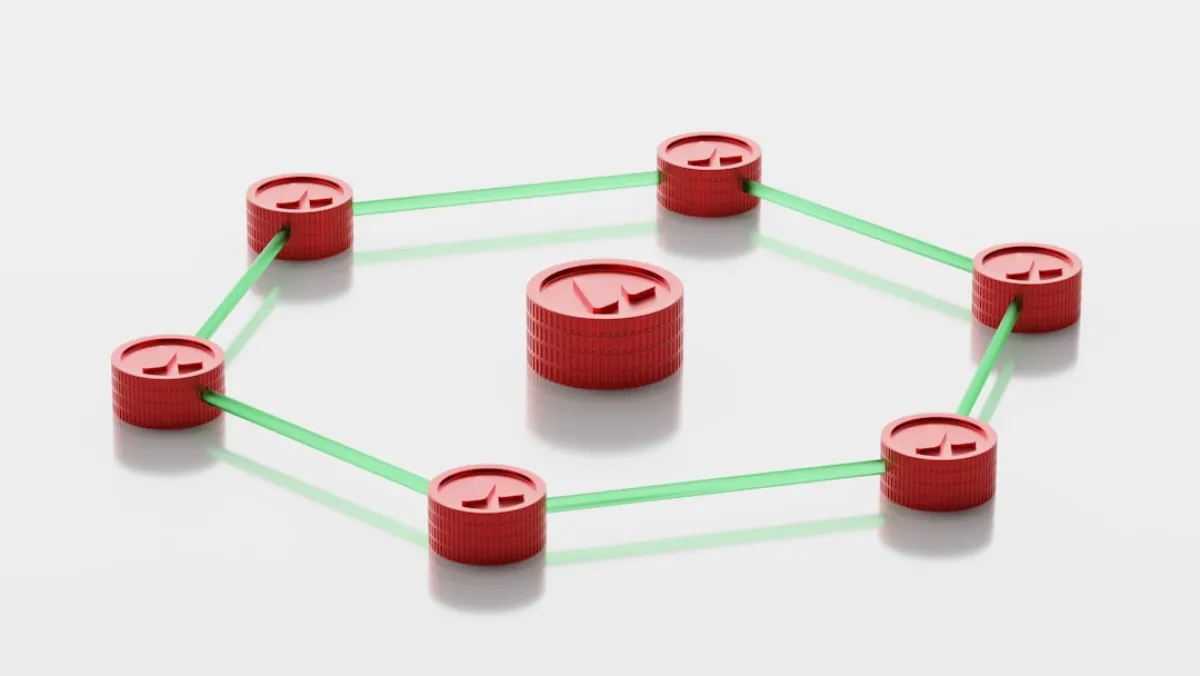
MCP transforms this into M + N. Each AI model implements an MCP client, each service exposes an MCP server, and any model can connect to any service through a standard protocol. The USB-C analogy is apt precisely because it mirrors the same structural solution — replacing device-specific charging cables with a single standard.
| Comparison | REST API | MCP |
|---|---|---|
| Designed for | Human developers | AI agents |
| Connection model | Individual implementation per endpoint | Dynamic discovery via tools/list |
| State management | Stateless (per request) | Session-based (context preserved) |
| Authentication | API keys / OAuth | Protocol-level authentication |
| Integration cost | M x N (models x services) | M + N (reduced via standardization) |
The most important technical difference is dynamic discovery. When an MCP client (AI agent) sends a tools/list request to a server, it receives a complete list of available tools with schemas — including input parameters, output formats, and usage descriptions. The agent can understand and invoke tools without prior programming. While OpenAPI specifications serve as static documentation, MCP discovery happens dynamically at runtime.
Session management is another key difference. REST APIs are stateless — each request stands alone. If you ask "find white running shoes" and follow up with "anything cheaper?", the API has no memory of the previous context. MCP maintains sessions and preserves context, allowing an agent to search products, add to cart, and proceed to checkout within a single, context-aware session.
That said, MCP does not replace REST APIs. Most MCP servers call REST APIs internally. MCP is an orchestration layer that makes existing APIs accessible to AI agents, standardizing agent connections while preserving existing infrastructure.
Shopify's Four-Layer MCP Architecture — The Most Advanced Implementation
Shopify leads Commerce MCP implementation. Default data access endpoints went live across all stores during the Summer 2025 Edition, and four MCP servers were formally introduced in the Winter '26 Edition in March 2026.
Why the aggressive push? AI agent-driven orders grew 11x between January 2025 and March 2026 — outpacing the 7x growth in AI referral traffic. Agents are not just showing products; they are driving purchases. This gave Shopify ample reason to optimize its entire platform for MCP.
Each of the four MCP servers covers a distinct layer.
Storefront MCP is the consumer-facing entry point. Accessible at https://{shop}.myshopify.com/api/mcp without authentication, it exposes four tools according to the official documentation: search_shop_catalog, search_shop_policies_and_faqs, get_cart, and update_cart. These alone enable a complete shopping flow — search products, check policies, add to cart, and get a checkout URL.
The no-authentication design is deliberate. Shopify enabled Storefront MCP on all stores by default with an opt-out model, making roughly 5.6 million stores instantly accessible to AI agents.
Checkout MCP handles the payment flow. It delivers a UCP (Universal Commerce Protocol)-compliant implementation over MCP transport, exposing five tools: create_checkout, get_checkout, update_checkout, complete_checkout, and cancel_checkout. A March 2026 update added multi-item cart support and real-time catalog queries.
The remaining two servers — Customer Account MCP for order history and account management, and Dev MCP for developer documentation and API schema access — round out the architecture. Dev MCP installs via a single CLI command and connects AI coding tools like Claude Code and Cursor directly to Shopify's development resources.
Shopify's engineering team also introduced MCP UI in August 2025, an extension that lets MCP servers return interactive UI components — product selectors, image galleries, cart flows — rather than text-only responses. Commerce experiences require visual elements, and this approach addresses the fundamental "text wall" limitation of chat-based agent interfaces.
Stripe MCP and PayPal MCP — The Payment Infrastructure Side
While Shopify approaches Commerce MCP from the storefront side, Stripe and PayPal are building from the payment infrastructure side. The difference in approach directly maps to the scope of coverage.
Stripe's MCP server exposes tools across nearly the full spectrum of payment operations: customer management, product and pricing setup, PaymentIntent creation, invoice generation and finalization, subscription management, refund processing, and chargeback handling. It also includes tools for searching Stripe's documentation and knowledge base, enabling agents to research implementation details while building payment flows.
Dust's implementation demonstrates the practical value. Dust connected its internal AI agents to Stripe MCP, automating refund request detection, customer history review, charge verification, refund execution, and personalized confirmation emails. Total integration time reported: under five minutes.
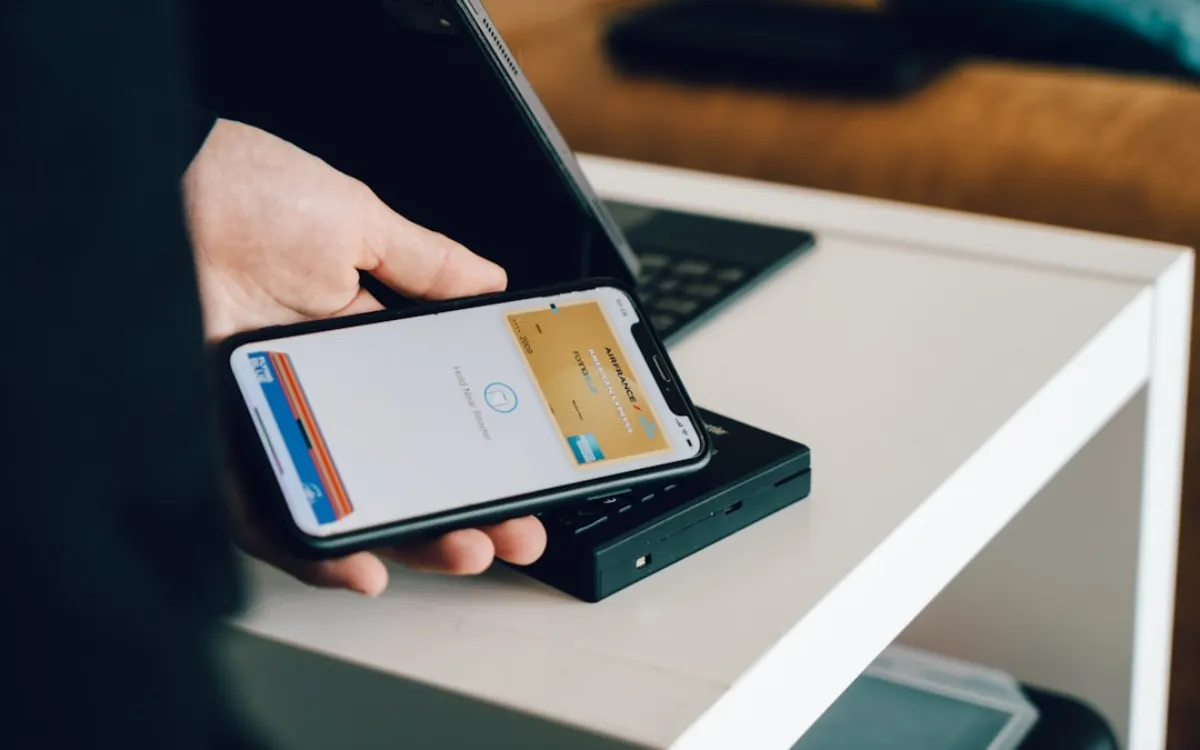
PayPal's MCP server currently focuses on invoicing capabilities, but carries a strategically significant distinction — it is the industry's first remote MCP server. No local installation required; connect to https://mcp.paypal.com and authenticate via PayPal login. This serves as the entry point to PayPal's broader Agent Toolkit and Agent Ready ecosystem.
Salesforce B2C Commerce MCP — Reaching the Enterprise
Commerce MCP extends beyond platform companies. Salesforce launched hosted MCP servers in beta in October 2025, providing B2C Commerce-specific Agentic MCP Shopper Tools.
The core toolset — product search, cart management, checkout integration — mirrors Shopify's Storefront MCP. However, Salesforce's implementation requires SLAS (Shopper Login and API Security) JWT authentication, reflecting enterprise security requirements and standing in contrast to Shopify's open-access model.
Agentforce 3, announced by Salesforce, positions MCP as the foundation for agent interoperability. By connecting directly to PayPal's MCP server, it enables end-to-end flows from product listing through order processing, payment, and refunds.
| MCP Server | Provider | Key Capabilities | Target Users |
|---|---|---|---|
| Storefront MCP | Shopify | Product search, cart ops, policy lookup | Consumer-facing AI agents |
| Checkout MCP | Shopify | UCP-compliant checkout management | Payment flow builders |
| Customer Account MCP | Shopify | Order history, account management | Existing customer support |
| Stripe MCP | Stripe | Payments, invoices, refunds, customer mgmt | Developers / back office |
| PayPal MCP | PayPal | Invoice creation, payment links | Merchant operations |
| B2C Commerce MCP | Salesforce | Product search, cart, checkout integration | B2C brands |
What Commerce MCP Changes for Ecommerce Merchants
Looking beyond the technical implementations, the essential question for ecommerce merchants is: what does MCP actually change?
The most direct shift is that the channel through which AI agents "visit" stores is becoming standardized. Previously, each AI platform required separate API integrations — a ChatGPT plugin, a Google feed, Perplexity-specific support. MCP resolves this "M x N problem" at the merchant level. Publish one MCP server, and any MCP-compatible AI agent can connect.
Equally important is the structural change where data quality becomes the competitive differentiator. When an AI agent calls Storefront MCP's search_shop_catalog, the richness and accuracy of returned product data directly determines the agent's recommendations. Typical ecommerce stores structure 5-8 product attributes, but AI agents need 30+ attributes to make confident recommendations. MCP standardizes the connection, but it does not guarantee the quality of data on the other end.
The relationship with payment protocols is also significant. Shopify's Checkout MCP is UCP-compliant, Stripe is deploying agent payment infrastructure like MPP (Machine Payments Protocol) and SPT alongside MCP, and AP2 (Agent Payments Protocol) is designed to function as an MCP extension. A layered architecture is emerging: MCP handles the storefront layer from product discovery to cart operations, while specialized protocols handle payment authorization and execution.
Summary
Commerce MCP is the infrastructure layer that standardizes the connection between AI agents and ecommerce systems. Shopify's four MCP servers, Stripe and PayPal's payment MCPs, and Salesforce's enterprise MCP — each company implementing MCP from a different layer — are collectively assembling the foundation for agentic commerce from product discovery through checkout. For ecommerce merchants, Commerce MCP is becoming a channel strategy on par with SEO and social media. The time to prepare is now.