Why Consumers Are Boycotting AI Shopping: The Backlash Against AI Purchase Decisions
China's first wave of consumers is rejecting AI shopping assistants. We analyze why shoppers resist AI buying decisions and how e-commerce can rebuild trust.


Key Takeaways
- China's first wave of AI shopping adopters is walking away, with one platform reporting under 15% seven-day retention
- The backlash centers on broken accuracy, lost neutrality from paid recommendations, privacy, and the desire to decide for oneself
- Consumers are not rejecting AI itself; they are drawing a line between AI as an efficiency tool and AI as a decision-making agent
What the "First Boycott" Actually Signals
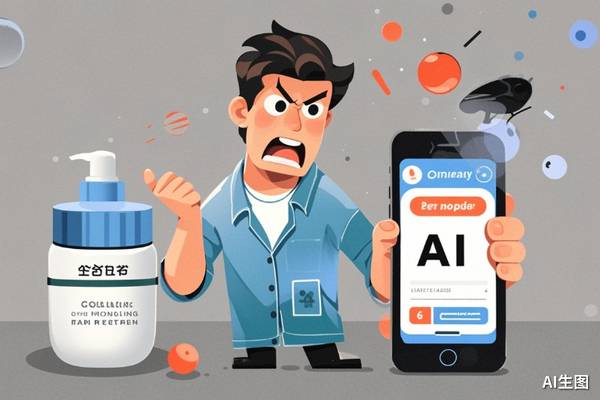
I don't want to rely on AI to decide what color shirt to buy.
eu.36kr.comIn June 2026, the Chinese tech outlet 36Kr published a piece headlined "the first group of consumers has started boycotting AI-powered shopping." The single line under the title captures the temperature of the phenomenon: "I don't want to have to ask AI even what color shirt I should buy."
The article follows a consumer named Lin Xiao, once an enthusiastic early adopter. She loved the thrill of saying "buy me the cheapest carton of room-temperature low-fat milk" and watching the app jump straight to checkout. For a while she handed almost everything to AI, from shampoo to snacks to a birthday gift for her boyfriend. Then, in the middle of the 618 shopping festival, she deleted the assistant and switched off every AI recommendation toggle across the major platforms.
The turning point was a moisturizer the AI recommended for sensitive skin. After three days her face turned red, and the ingredient list revealed alcohol and fragrance. She later learned the brand had been heavily promoting GEO, or generative engine optimization, paying to make AI rank its products first. "I thought AI was my personal assistant," she said. "It turned out to be a salesman for the merchants."
It would be a mistake to dismiss this as one shopper's bad luck. The industry has called 2026 the year of the first AI-native shopping festival, with platforms pouring billions in subsidies to make AI shopping the next battleground for traffic. Against that euphoria, the first consumers to try it are voting with their feet. For e-commerce operators, this is the first warning sign worth examining calmly: is the backlash real, and why do people resist?
The "High Trial, Low Retention" Trap
The optimism rested on genuinely spectacular trial data. A free-order event over the Spring Festival drew more than 130 million first-time AI shoppers, and one major assistant logged 1.9 billion interactions on New Year's Eve alone. During 618, one platform's standalone AI app passed three million conversation users, a more than tenfold jump year over year.
The tide went out quickly, though. An anonymous product manager admitted that "everyone is trying it, but they leave after the trial," disclosing that seven-day retention for AI shopping sits below 15% and thirty-day retention at just 3%. Measured against the height of the trial peak, the retention valley is strikingly deep.
Third-party data points the same way. In a survey of 2,000 consumers by the commerce platform Nosto, 69% of users who received an irrelevant suggestion gave up on the AI assistant and searched elsewhere. China's consumer association index tells a parallel story: shoppers rated AI shopping's convenience a high 8.4, but their trust in the fairness of recommendations and in privacy security came in at just 5.1. They concede it is convenient while refusing to trust it.
So why does this gap open up? The answer lives in the experiences of countless disappointed users like Lin Xiao. The factors are worth taking from the core outward.
Broken Accuracy: A Promise to "Understand You" Left Unmet
The headline pitch of AI shopping was that it understands you. In practice it stumbles over even basic needs.
A field test 36Kr ran in May asked three assistants to recommend prescription food for a puppy diagnosed with a portal vein shunt. One surfaced kidney prescription food, another simply recommended ordinary adult dog food. When a reporter typed "a coffee maker for two, not automatic, easy to clean, under 2000 yuan," the three results were a coffee maker accessory, an item with no official store, and a 4990-yuan machine that blew past the budget.
An industry insider put it bluntly. Today's assistants are essentially upgraded search engines that match products by keyword rather than truly grasping intent, so an unfamiliar word or a slightly complex request throws them off. Some cannot even tell "out of stock" from "discontinued," recommending phones that left the market long ago.
This accuracy problem matches the overseas data closely. In a Gartner survey of US consumers conducted in late 2025, 54% of those who used AI while shopping said they had to double-check all the information it provided, and 62% said the AI's information ended up wasting their time. The complaint "I spent ten minutes explaining my needs, got junk, then found it myself in five" travels across borders.
Lost Neutrality: When AI Becomes the Merchant's Paid Salesman
If accuracy is a technical problem, the neutrality of recommendations is an ethical one. And here the wound to trust runs deeper.
GEO exploded in China this year. One provider openly pitched in a WeChat group that "as long as you pay, AI will rank your brand first," quoting quarterly fees of 9,800 yuan for the basic tier and 39,800 for the advanced one. That is the backdrop to Lin Xiao's remark that "I used to think AI was neutral; now I know it recommends whoever pays more."
Consumer reaction is unambiguous. In the Chinese association's data, 75% said they would lose trust immediately if AI results contained sponsored content. The same number appears abroad: in a Quad and Harris Poll survey of Americans, 75% said paid influence over AI agents would lower their trust. The aversion to pay-to-rank is universal across cultures and markets.
A second neutrality problem is platform lock-in. Many assistants preferentially push goods from their own marketplace and cannot even retrieve cross-platform links. As one user said, "this isn't an AI shopping assistant, it's a traffic tool for the platform; it won't find the lowest price across the whole web, only keep you inside its own ecosystem." That gap between the agentic-commerce ideal and reality is exactly what erodes confidence.
Privacy and Autonomy: The Quietest but Deepest Resistance
From here the territory shifts from inconvenience to discomfort, and from discomfort to anxiety.
Data privacy ranks near the top of stated reasons for quitting in survey after survey. In YouGov data, 51% named privacy as the primary reason to resist, and 88% of Gen Z said AI personalization should be regulated more strictly. Nosto found the top reason to stop was concern over how data is handled, at 24%. One account gives the fear a sharp edge: a user who merely told the AI about trouble sleeping was flooded with ads for sleeping pills the next day. "I use AI for convenience, not to expose all my privacy."
Yet younger shoppers fear something even more than leaks: the loss of decision-making power. A student's video saying "in the past I researched and compared brands myself; it was a hassle, but I felt in control" drew wide agreement. A Fudan research lab found 42% worry that over-reliance on AI degrades their judgment, and 36.8% of college students said excessive personalization narrows their freedom of choice.
At the root of this wish to decide is a simple fact: shopping is a transaction and an emotional experience at once. One shopper born in the 1990s said she likes wandering a mall, trying things on, chatting with friends, and that the process itself is the pleasure. The data agrees. For consumption tied to taste and attachment, the share choosing AI recommendations falls to 42%, far below the 67% for practical goods. Not wanting AI to pick a shirt color is not a rejection of efficiency; it is a defense of selfhood.
Crucially, the large overseas surveys confirm this line. Gartner found that willingness to let AI make the purchase itself topped out at 11% even in the lowest-stakes categories, while roughly three in ten welcomed help narrowing options. Consumers draw a clear boundary: help me, but do not decide for me.
The Structure of the Backlash at a Glance
It helps to lay the factors out side by side.
The four factors look separate, but they share one root: consumers have not received a satisfying answer to the question of who the AI actually works for. Broken accuracy breeds distrust of its ability, paid ranking of its motives, privacy of how it treats people, and autonomy of the relationship itself. The order in which trust collapses varies, but the destination is the same conclusion: I am better off doing this myself.
How E-commerce Should Respond
The practical question follows naturally once the structure is clear.
The most important move is to redefine the AI's role from decision-making agent to decision support. In both China and abroad, where consumers landed was not outright rejection but a mature habit: use AI as an efficiency tool, then decide for yourself. Use it for the tedious, mechanical work of comparing prices, parameters, and price history, but keep the choice of what to buy and which brand in human hands. Designs that respect this line are the ones that hold retention.
Transparency comes next. Separate advertising from genuine recommendations and be able to explain why a given product ranks where it does. Overseas research shows that brands which clearly explain how they use AI are more likely to be chosen. The long-term trust earned through accountability ends up cheaper than the short-term revenue of slipping paid slots into a feed dressed as neutral.
Finally, remember that standardized goods such as electronics and daily necessities call for a very different level of AI involvement than emotionally charged categories like apparel and gifts. For the former, lean into narrowing and comparison; for the latter, limit AI to discovery support and return the lead role, the fitting and the feel, to the human. Designing involvement depth by category is the key to delivering convenience without provoking the backlash.
Conclusion
The "first boycott" is not the end of agentic commerce. It marks the moment the market leaves the euphoria of trials and enters the maturity phase where trust is tested. Consumers are not rejecting AI; they are issuing an entirely rational demand: do not decide for me, but help me.
Sharpen accuracy, make recommendation motives transparent, explain how data is handled, and leave the final decision with people. Each answers one factor of the backlash, and together they answer the underlying question of who the AI serves. More than the convenience of having a shirt color chosen, shoppers will place their next trust in the intelligence that respects their freedom to choose.