AI Commerce News Digest (February 20, 2026)
Forbes analyzes the 'Race for the Glass' in agentic commerce. eBay acquires Depop from Etsy for $1.2B. Google and OpenAI expand AI commerce partnerships globally.

Key Takeaways
- Forbes analyzes the "Race for the Glass" in agentic commerce as the battle for AI agent interfaces intensifies
- eBay acquires Depop from Etsy for $1.2 billion, accelerating fashion resale market consolidation
- Google and OpenAI announce a wave of global AI commerce partnerships, expanding the agentic shift across regions
Today's Top Stories
Forbes: The Agentic Commerce Wars Part 2 -- "The Race for the Glass"

Whose AI agents will consumers actually use for purchases, where will these agents live.
www.forbes.comForbes retail analyst Jason Goldberg delivers a deep analysis of the "interface battle" in agentic commerce. In a future where consumers delegate purchases to AI agents, he poses the fundamental question: where will these agents live, and who will own them?
The competitive landscape is becoming clear as tech giants including Apple, Google, Amazon, and OpenAI vie for position on "the glass" -- the device screen. For AI agents to actually execute purchases, they need a platform where payment credentials, delivery addresses, and preferences are consolidated. Whoever controls that foundation will shape the future of commerce.
This is a pivotal analysis showing that the agentic commerce debate has shifted from "technical possibilities" to "platform competition."
Deep Dive: The Agentic Commerce Wars: What the "Race for the Glass" Means for Interface Dominance
eBay Acquires Depop from Etsy for $1.2 Billion

EBay stock was surging Thursday after the company posted strong Q4 results and said it will buy Depop from Etsy.
www.investors.comeBay announced it will acquire Depop, the Gen Z-popular fashion resale platform, from Etsy for $1.2 billion. Etsy, which purchased Depop in 2021 for $1.625 billion, is letting it go at roughly a 25% discount.
For eBay, this is a strategic move to rapidly strengthen its reach among younger consumers and its presence in the fashion resale market. Meanwhile, Etsy is pursuing a "back to basics" strategy focused on handmade and vintage items, making the deal rational for both parties.
This deal symbolizes the accelerating platform consolidation in the resale market as the circular economy continues to grow.
Deep Dive: eBay Acquires Depop from Etsy for $1.2 Billion: A New Chapter in the Fashion Resale Power Struggle
Agentic Commerce
OpenAI x Pine Labs: Enabling Agentic Commerce Payments in India

OpenAI moves beyond ChatGPT in India with a Pine Labs deal targeting enterprise payments and AI-driven commerce.
techcrunch.comOpenAI has partnered with Indian payments giant Pine Labs to enable direct payments and order processing through ChatGPT. Pine Labs operates a massive merchant network across India, and this partnership creates the environment for AI agents to complete actual commercial transactions.
India's fintech market is experiencing rapid growth, and for OpenAI, this represents a critical step in evolving ChatGPT from an "information search tool" into a "commercial transaction platform." Following the recent Mastercard-authenticated agentic payment, agentic commerce implementation in the Indian market is accelerating.
Deep Dive: OpenAI Partners with Indian Payments Giant Pine Labs: Agentic Commerce Goes Live in India
Akeneo x Stripe: An Agentic Commerce Foundation Integrating Product Data and Payments

Akeneo and Stripe launch integration to pipe AI-ready product data into agentic checkout flows, cutting disruption for merchants.
itbrief.co.ukPIM (Product Information Management) leader Akeneo and payment platform Stripe have announced an integration for agentic commerce. By connecting Akeneo's AI-ready product data directly to Stripe's payment flows, the partnership creates an environment where AI agents can handle everything from product search to checkout in a seamless process.
Realizing agentic commerce requires both "product data that AI can understand" and "automated payments," making this partnership a notable move in providing that foundational infrastructure.
Agentic Commerce Shifts B2B Marketplaces from Intermediaries to Infrastructure

The velocity of change in B2B eCommerce isn't just moving the goalposts. It's creating a whole new ballgame.
www.pymnts.comPYMNTS.com analyzes the impact of agentic commerce on the B2B sector. As AI agents automate ordering, price negotiation, and inventory verification, B2B marketplaces are transforming from mere intermediaries into infrastructure.
This is an important report showing that the agentic commerce conversation, which has been led by the B2C space, is now making serious inroads into B2B transactions.
Fashion Brands Face Shift to Agent-First AI Commerce
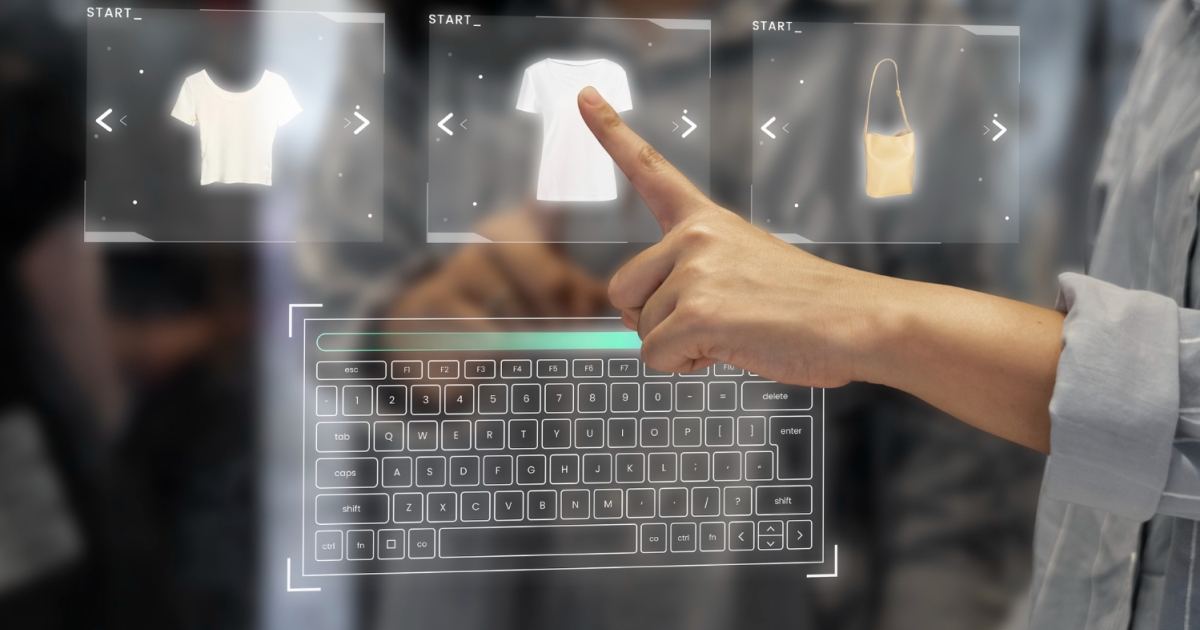
Fashion brands are increasingly adopting agent-first AI commerce strategies as the industry shifts toward automated shopping experiences.
retailasia.comBased on a McKinsey report, Retail Asia reports that the fashion industry is accelerating its transition to commerce strategies built around AI agents. As the era of consumer purchases through AI agents approaches, brands are being asked to optimize product information not for "human eyes" but for "AI comprehension."
This shows that even in experiential, emotion-driven purchasing categories like fashion, agentic readiness is becoming unavoidable.
Inside Marc Lore's AI Shopping Agent "Wizard"

Wizard has become the latest AI shopping agent to launch amid a surge of new tools that search, compare and check out on behalf of consumers.
www.modernretail.coModern Retail reports on the details of "Wizard," an AI shopping agent developed by former Walmart CEO Marc Lore and Melissa Bridgeford. Wizard is a service that searches, compares, and checks out products on behalf of consumers.
As new entrants in the AI shopping agent space continue to emerge, the entry of entrepreneurs with deep retail expertise is further intensifying market competition.
AI Commerce Tools
Google x Sea (Shopee): Co-Developing AI Tools for Southeast Asian E-Commerce

Alphabet Inc's Google and Southeast Asian technology conglomerate Sea Ltd announced a new tie-up on Thursday that will develop artificial intelligence tools for Sea's e-commerce and gaming products.
www.reuters.comGoogle and Sea Ltd (Shopee's parent company) have partnered to co-develop AI tools for e-commerce and gaming. Google Cloud's AI technology will be integrated into Shopee's search, recommendations, and customer support, overhauling the AI infrastructure of Southeast Asia's largest e-commerce platform.
Southeast Asia is one of the world's fastest-growing e-commerce markets, making this a mutually beneficial partnership -- for Google, it opens a major Cloud client, and for Sea, it strengthens AI competitiveness.
Reddit Testing AI Shopping Search

A small group of users in the U.S. will start to see search results that include interactive product carousels with pricing, images, and direct where-to-buy links.
techcrunch.comReddit is testing a new AI-powered shopping search feature with a small group of US users. Search results will display product carousels with pricing, images, and direct links to where products can be purchased.
Reddit has long been used as a place to find authentic reviews before making purchases, and the addition of AI shopping search further strengthens the word-of-mouth-based path to purchase.
Loblaw x Google: Advancing AI-Driven Digital Commerce in Canada
Loblaw Companies Limited today announced a new collaboration with Google that will offer...
www.globenewswire.comLoblaw, Canada's largest food retailer, announced a partnership with Google to build an AI-driven digital commerce infrastructure. The plan accelerates AI adoption for online food ordering optimization and store operations.
It is notable that Google's AI commerce partnerships are being simultaneously deployed across the globe -- Sea (Southeast Asia), Rakuten (Japan), and Loblaw (Canada).
Zalando Redefines Fashion Experience with Generative AI

The future of fashion revolves around emotion, technology, and clear choices, says Laura Toledano, general manager Western Europe at Zalando.
www.retaildetail.euEurope's largest online fashion platform Zalando is rolling out generative AI-powered styling assistants and personalized search at scale. Western Europe GM Laura Toledano states that "the future of fashion lies in the fusion of emotion, technology, and clear choices."
This case demonstrates that AI adoption in fashion e-commerce is expanding beyond recommendations to encompass the redesign of the entire styling and shopping experience.
Google x Rakuten: Launching New Shopping Service on YouTube in Japan

U.S. tech firm Google LLC and Japanese online shopping giant Rakuten Group Inc. said Thursday they will launch a shopping service on YouTube that allows viewers to press a button while watching videos to display a product's name and price on screen and move to Rakuten's e-commerce platform for details.
english.kyodonews.netGoogle and Rakuten announced they will launch a shopping service in Japan where YouTube viewers can press a button while watching videos to display a product's name and price, then seamlessly navigate to Rakuten's e-commerce site.
As the convergence of video content and e-commerce accelerates, this is a noteworthy Japan-specific service. It represents a new form of content commerce, combining YouTube's massive viewer base with Rakuten's product database.
Corporate News and Partnerships
Amazon Surpasses Walmart in Annual Revenue to Become World's Largest

Amazon dethroned Walmart as the world's top company based on their respective sales in 2025 after 13 years of the Bentonville, Ark., company surpassing its competition.
thehill.comAmazon has surpassed Walmart in full-year 2025 revenue for the first time, becoming the world's largest company by sales. After 13 years of Walmart holding the top position, Amazon's growth in e-commerce, cloud, and advertising has finally claimed that crown.
This is a historic turning point for the retail industry and a testament to the influence of digital commerce.
Walmart Q4 Earnings: E-Commerce Sales Surpass $150B, but Forward Guidance Is Cautious

It marks the first earnings report since new Walmart CEO John Furner took over in early February.
www.cnbc.comWalmart reported FY2026 Q4 earnings, with e-commerce sales surpassing $150 billion annually for the first time. Growth was driven by capturing higher-income shoppers and expanding express delivery. However, the profit outlook for FY2027 fell below market expectations, reflecting a cautious stance under new CEO John Furner.
While achieving e-commerce profitability and rapid advertising revenue growth are positive signals, tariff risks and inflation pressures remain key areas to watch going forward.
Amazon + Shopify = 50% of the U.S. E-Commerce Market

Amazon and Shopify together now account for approximately 50% of U.S. e-commerce.
www.marketplacepulse.comAccording to Marketplace Pulse analysis, Amazon and Shopify now account for approximately 50% of U.S. e-commerce. Two models -- the marketplace model (Amazon) and the merchant platform model (Shopify) -- have each matured, and other players are fighting for survival in the remaining space between them.
The oligopolistic structure of the U.S. e-commerce market is becoming starkly clear, making differentiation strategies more critical than ever for mid-tier and emerging players.
Summary
Today's news strongly demonstrates that the agentic commerce conversation is shifting from "technical possibilities" to "platform competition" and "implementation." Forbes's analysis of the "Race for the Glass" signals that Apple, Google, Amazon, and OpenAI have entered a phase of fierce competition over the AI agent interface.
Simultaneously, Google's AI commerce partnerships with Sea (Southeast Asia), Rakuten (Japan), and Loblaw (Canada), along with OpenAI's payment integration with Pine Labs (India), show that the global rollout of AI commerce is accelerating at full speed.
On the corporate restructuring front, eBay's Depop acquisition and Amazon surpassing Walmart demonstrate significant shifts in the e-commerce power map. Going forward, attention will focus on how these partnerships materialize into concrete products and services.