AI Commerce News Digest (April 3, 2026)
Visa and Mastercard accelerate agentic commerce strategies, Coinbase AI payments joins Linux Foundation with Google and OpenAI, fashion industry braces for AI shopping agents.


Key Takeaways
- Visa and Mastercard accelerate agentic commerce infrastructure development, building secure foundations for AI agents to conduct autonomous transactions
- Coinbase's AI payment protocol joins Linux Foundation with backing from Google, OpenAI, and Circle, driving open standardization
- Fashion industry braces for AI shopping agents as both retailers and consumers express mixed expectations and concerns
Top Stories
Visa and Mastercard Accelerate Agentic Commerce Push
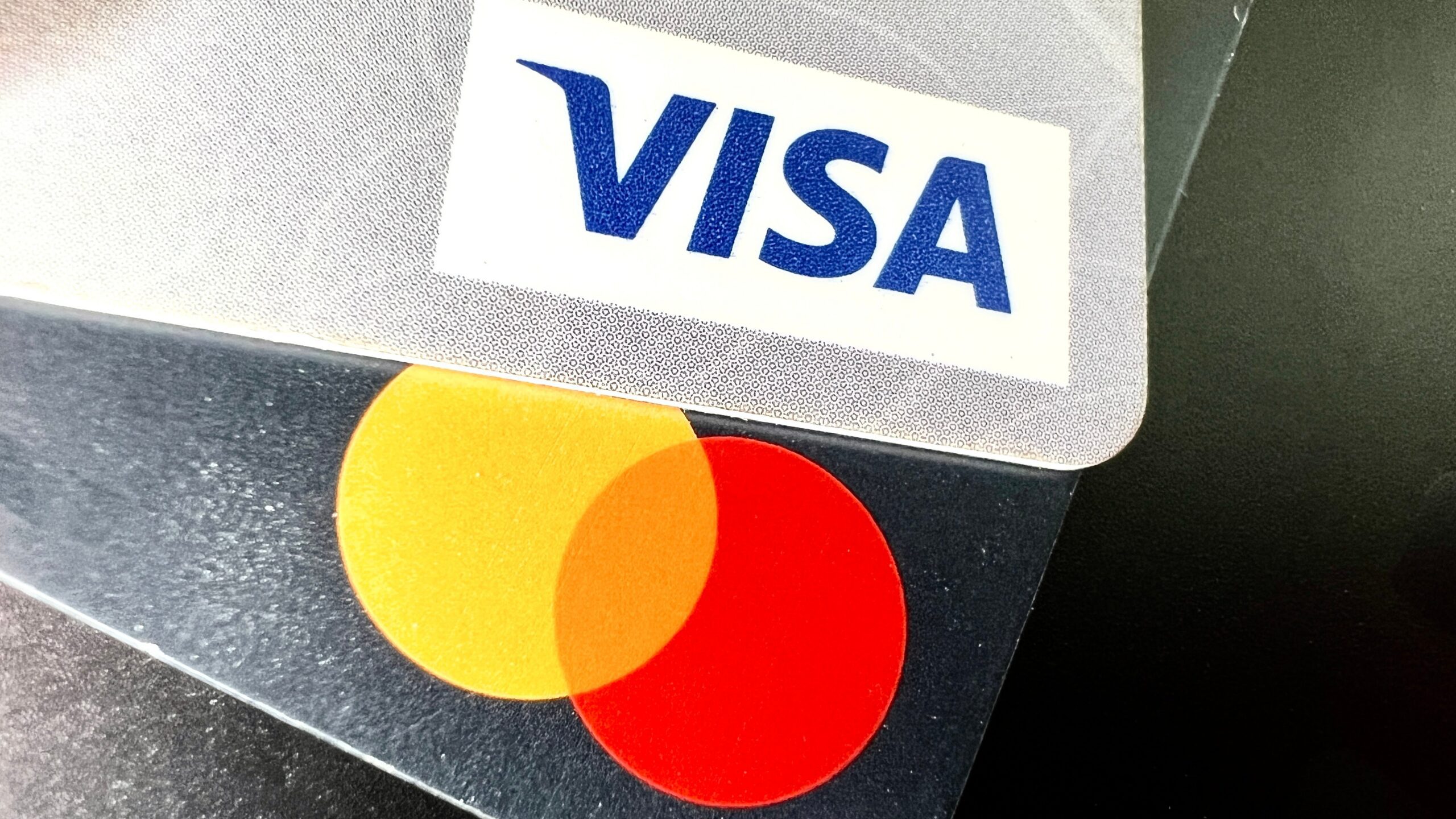
The two payments giants are competitors, but Visa and Mastercard have common allies in their agentic commerce aspirations.
www.digitalcommerce360.comDigital Commerce 360 reports that Visa and Mastercard are accelerating their push into agentic commerce. While competitors, both companies share a common goal of building infrastructure that enables AI agents to execute payments securely and autonomously, each pursuing distinct approaches.
Visa is advancing agent authentication through tokenization technology, while Mastercard is building its ecosystem on the foundation of live transaction experience. With the two payment network giants committing to agentic commerce, the proliferation of autonomous AI-driven transactions is expected to accelerate significantly. The race to standardize payment infrastructure for the agent economy has officially begun.
Full article: Visa and Mastercard Accelerate Agentic Commerce Strategy
Coinbase AI Payments System Joins Linux Foundation, Gains Google, OpenAI, and Circle Support
Tech giants collaborate to power AI-driven global payment infrastructure systems.
www.coindesk.comCoinDesk reports that Coinbase's AI payment protocol has joined the Linux Foundation, with Google, OpenAI, and Circle signing on as participants. The move toward standardizing payments between AI agents as an open standard is gaining cross-industry momentum.
This initiative aims to create common protocols for AI agents executing payments globally, ensuring interoperability. The fusion of crypto infrastructure and AI technology could create a new payment layer independent of traditional banking systems. The significance of AI development leaders Google and OpenAI joining forces with crypto payment majors Circle and Coinbase cannot be overstated.
Full article: Coinbase AI Payments Joins Linux Foundation for Open Standardization
Agentic Commerce
Agentic Commerce Spend to Hit $1.5 Trillion by 2030

Communications Today reports that agentic commerce spending is projected to reach $1.5 trillion by 2030. The market for AI agents autonomously handling product selection, purchasing, and payment is expected to expand rapidly.
This forecast suggests that agentic commerce is not a passing trend but a structural transformation of the e-commerce market. For businesses, optimizing product information for AI agents and ensuring API readiness will become essential elements of growth strategy.
Fashion Industry Braces for AI Shopping Agents
As AI-powered shopping agents increasingly become a part of modern e-commerce, not everyone is happy about their growth.
www.glossy.coGlossy reports that both retailers and consumers in the fashion industry have mixed feelings about the growing presence of AI shopping agents. While AI agents offer style recommendations and purchasing assistance, concerns about diluted brand experiences and biased personalization are spreading.
Fashion is a field where sensibility and experience are paramount, making the question of how AI agent intermediation affects the brand-consumer relationship a critical industry challenge. Balancing agent optimization with brand value preservation is the key question.
Full article: Fashion Industry Prepares for AI Shopping Agents
Shoppers Want AI Help, Not Control

AI is helping consumers decide what to buy, but not yet buying for them.
www.practicalecommerce.comPractical Ecommerce reports that consumers want AI assistance rather than AI control over their shopping. While AI helping with purchase decisions is welcomed, consumers are not yet ready for AI to fully take over the buying process.
These findings highlight the importance of a gradual approach to agentic commerce adoption. Building consumer trust while incrementally increasing AI agent autonomy appears to be the most pragmatic strategy at this stage.
AI Commerce Tools
Shopify Accelerates Growth with AI Commerce Push and Strong Q2
Shopify reported revenue growth of 30.6% year on year, with AI-powered commerce tools driving performance.
finance.yahoo.comYahoo Finance reports that Shopify posted 30.6% year-over-year revenue growth, with AI-powered commerce tools driving performance. The strong Q2 results combined with an accelerating AI commerce push are reinforcing the company's growth narrative.
Shopify's AI commerce tools are delivering results across both merchant operational efficiency and revenue growth, from automated product descriptions to personalized recommendations. This is a prime example of a major e-commerce platform's AI investment translating into tangible business performance.
Global E-Commerce
Shein, Temu: EU Tariff Reform Means Higher Costs for European Consumers

A landmark agreement has been reached by the European Parliament and Council on the reform of EU rules around customs.
www.thelocal.comThe Local Europe reports that the European Parliament and Council have reached a landmark agreement on EU customs rules reform. The reform will raise tariffs on imports from low-cost Chinese e-commerce platforms like Shein and Temu, meaning European consumers will pay higher prices for previously cheap online orders.
The revision of duty-free thresholds for small parcels under 150 euros directly impacts the business model of low-cost cross-border e-commerce. Operators dependent on the European market face an urgent need to restructure their pricing strategies.
Korea E-Commerce Shifts from Speed to Memberships, AI

Perks, lighter shipping costs, and smarter search take center stage as fast delivery competition cools.
biz.chosun.comCHOSUNBIZ reports that major Korean e-commerce companies are shifting their strategic focus from same-day delivery speed competition to AI adoption, membership programs, and free shipping. As the delivery speed race cools, personalization and loyalty programs are emerging as new differentiators.
South Korea is among the world's most advanced e-commerce markets, making this strategic pivot noteworthy as a potential preview of global e-commerce trends. AI-powered search and recommendation accuracy is becoming the next source of competitive advantage.
Full article: Korea E-Commerce Pivots to AI and Personalization
Corporate News
Amazon Adds 3.5% Fuel Surcharge to FBA Fees
Amazon said it would add a 3.5% surcharge to some orders, citing rising fuel and logistics costs amid higher oil prices.
www.businessinsider.comBusiness Insider reports that Amazon will introduce a 3.5% fuel surcharge on select FBA (Fulfillment by Amazon) orders, citing rising fuel and logistics costs. The increase in fuel costs is directly impacting marketplace fee structures.
The FBA fee increase will squeeze Amazon sellers' margins and could ultimately lead to higher consumer prices. For sellers, incorporating logistics cost volatility into pricing and exploring multi-channel fulfillment strategies is becoming urgent.
Logistics & Fulfillment
FedEx Goes After DoorDash, Amazon, UPS with Same-Day Delivery

FedEx has now entered the same ring as the many different retail and logistics companies trying to win on same-day delivery.
www.modernretail.coModern Retail reports that FedEx is making a full push into same-day delivery, directly competing with DoorDash, Amazon, and UPS. The entry of a traditional B2B logistics powerhouse into the fastest segment of last-mile delivery will further intensify same-day delivery competition.
Same-day delivery is becoming an increasingly important differentiator for e-commerce customer experience, attracting players ranging from logistics giants to gig economy companies. For retailers, while delivery partner options are expanding, consumer expectations for delivery speed will also continue to rise.
Other Notable News
How Liberation Day Has Changed Retail One Year On

President Trump promised to Make America Wealthy Again but one year on from the Rose Garden the economy has not bloomed but retail sales have not withered either.
www.forbes.comForbes examines the retail industry impact one year after President Trump's Liberation Day reciprocal tariffs. Against the promise to "Make America Wealthy Again," the results are mixed — the economy hasn't boomed, but retail sales haven't collapsed either.
Tariff impacts vary significantly by product category and supply chain composition. Some companies have adapted through sourcing diversification while others continue to struggle with price pass-through. Global supply chain restructuring remains ongoing, and managing geopolitical risk remains a continuous challenge for e-commerce operators.
Summary
In agentic commerce, the full entry of Visa and Mastercard along with Coinbase AI payments joining the Linux Foundation are intensifying the race to standardize payment infrastructure for AI agents. The $1.5 trillion market forecast for 2030 further underscores the scale of growth expectations in this space.
Meanwhile, consumers welcome AI "assistance" but remain cautious about AI "control," and the fashion industry sees mixed reactions from both retailers and consumers. On the logistics front, Amazon's fuel surcharge and FedEx's same-day delivery entry continue to drive changes in both cost structures and service competition.