AI Commerce News Digest (April 24, 2026)
Swiggy opens its AI commerce stack to developers, NielsenIQ launches Commerce Lab for AI-driven measurement, AmEx formally commits to agentic commerce at Q1, and Alibaba's Accio Work moves agentic AI into operational infrastructure. A roundup of EC and AI commerce news for April 24, 2026.


Key Takeaways
- Swiggy, one of India's largest foodtech companies, is opening its internal AI commerce stack to external developers and enterprises, taking a major step toward platformization
- NielsenIQ launches Commerce Lab to build the measurement layer for AI-driven commerce, accelerating the debate around visibility and standards for the agent economy
- American Express formally committed to agentic commerce strategy at its Q1 2026 earnings call, joining Visa and Mastercard as major payment networks in the AI agent arena
Top Stories of the Day
Swiggy Opens Its AI Commerce Stack to External Developers via "Builders Club"
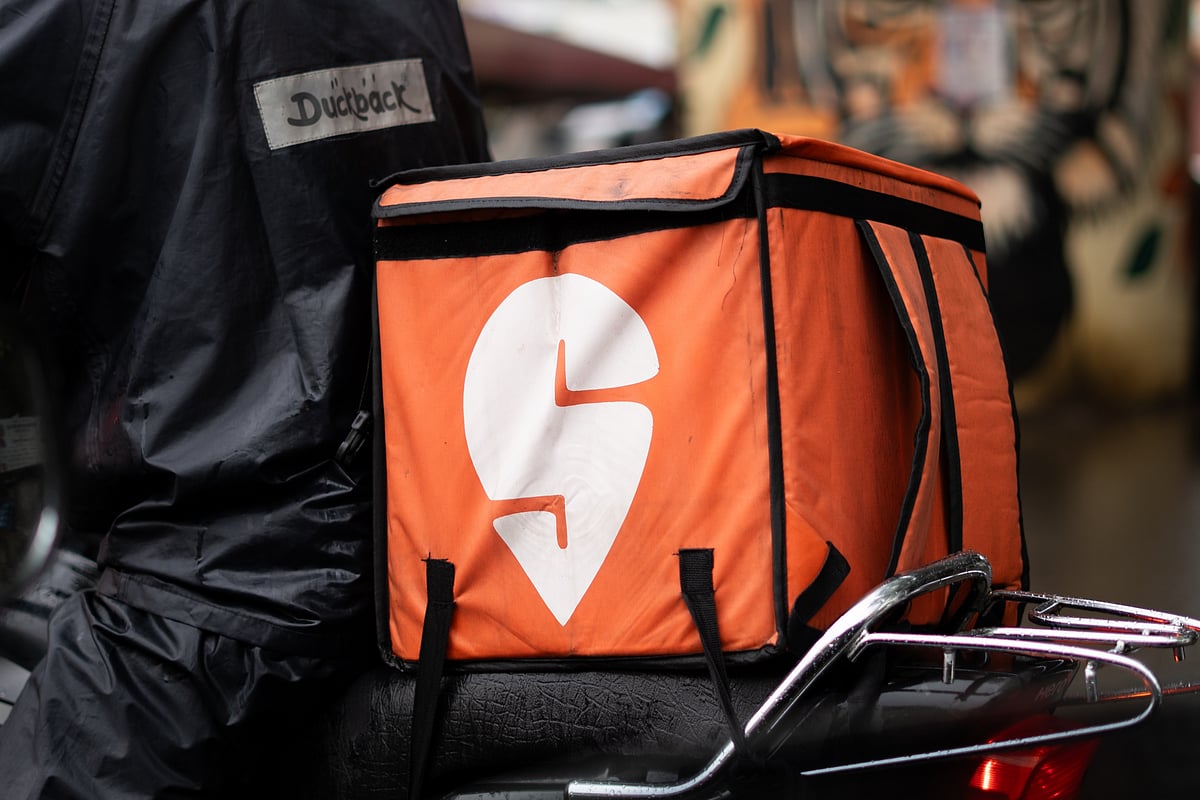
Invite-only initiative offers APIs, MCP servers and 'Skills' so startups and enterprises can create real-world AI commerce integrations on Swiggy
www.fortuneindia.comIndia's on-demand giant Swiggy is launching an invite-only developer program called Builders Club, opening its AI commerce infrastructure to external startups and enterprises. The program provides APIs, MCP (Model Context Protocol) servers, and reusable commerce capabilities called "Skills" — allowing outside developers to build AI experiences embedding Swiggy's payment rails, last-mile delivery, and restaurant discovery.
The strategic intent goes beyond food delivery: Swiggy is positioning itself as "India's AI-native commerce infrastructure." Anticipating a future where ChatGPT and AI agents become the primary shopping interface, the company is platforming its logistics, restaurant network, and payment assets to build an ecosystem economy similar to what Shopify and Stripe built in adjacent domains.
NielsenIQ Launches Commerce Lab to Build the Measurement Layer for AI-Driven Commerce

NielsenIQ (NYSE: NIQ) today announced the launch of NIQ Commerce Lab, where the company is building the technology infrastructure for AI-driven commerce.
www.businesswire.comGlobal consumer intelligence leader NielsenIQ (NYSE: NIQ) has launched NIQ Commerce Lab, a dedicated unit that will build the technology infrastructure for AI-driven commerce. The goal is to give brands, retailers, and platforms a common "measurement and data layer" for a world where AI agents make purchase decisions on behalf of consumers.
Sitting on a global footprint of consumer panels, POS scan data, and retail measurement assets, NIQ is uniquely positioned to build a new framework for tracking and analyzing agent-driven behavior. Alongside the launch, NIQ appointed Lisa Lovallo Ceppos as Head of AI Commerce, formalizing executive ownership. The initiative signals that the power struggle over the "AI shopping era" is expanding from tool providers to data providers.
Agentic Commerce
Alibaba International Unveils "Accio Work" — Agentic AI Moves Into Operational Infrastructure

Alibaba's international division unveiled Accio Work today, an agentic AI platform built to autonomously manage cross-border e-commerce workflows
startupfortune.comAlibaba International Digital Commerce (AIDC) unveiled Accio Work, an agentic AI platform designed to autonomously manage cross-border e-commerce workflows. Building on the earlier "Accio" search and research tool, Accio Work orchestrates multi-agent workflows covering product development, supplier selection, price negotiation, translation, and shipment.
What stands out is the shift in focus from "demo impact" to "how does this plug into daily operations?" Accio Work targets back-office automation for small and mid-sized exporters, tightly linking to Alibaba.com's supplier ecosystem and logistics network. It exemplifies the industry's move toward framing agentic AI in practical ROI terms.
Ascott Invests in AI-Ready Infrastructure for Agentic Commerce
Ascott partners with Accenture, Amadeus and EHL to build AI infrastructure for agentic commerce, where intelligent agents handle travel planning and bookings.
www.hospitalitynet.orgAscott, the world's largest serviced residence operator (part of CapitaLand), is investing in AI-ready infrastructure for agentic commerce, in partnership with Accenture, Amadeus, and EHL Hospitality Business School. Anticipating a future where AI agents drive travel planning and booking, hospitality providers are standardizing the data formats that agents can query — facility descriptions, rates, and availability.
This is essentially the hospitality industry's version of a GDS (Global Distribution System) reimagined for AI agents. The existing chain-of-hands distribution, where brands manually maintain channel-specific data, can't respond to real-time agent queries at scale. The "Agent-ready Infrastructure" conversation that started in retail has now clearly hit hospitality.
Shopify x Avenue Z Platinum Partnership Accelerates AI Search Optimization
Shopify and Avenue Z have entered a new Platinum Partner relationship focused on AI Search Optimization and agentic commerce.
finance.yahoo.comShopify and digital agency Avenue Z have entered a new Platinum Partner relationship focused on AI Search Optimization and agentic commerce. Avenue Z joins a small group of US agencies with platinum status and early access to Shopify's commerce technology roadmap.
For merchants, the implication is that full-funnel operation in the AI agent era is becoming easier to orchestrate through external agency partners. The previous selection criteria of "store construction + SEO + ad operations" is being redefined around "how to be found by AI search" and "how to be selected by AI agents."
Rapidflare x McFadyen Digital Partnership Brings AI Agents to B2B eCommerce
Rapidflare, a leader in AI-powered product intelligence, and McFadyen Digital, a globally recognized leading B2B ecommerce consultancy, partner to deliver AI agents for B2B commerce.
www.prweb.comRapidflare, an AI-powered product intelligence leader, and McFadyen Digital, a leading B2B eCommerce consultancy, announced a partnership to accelerate AI agent deployment for B2B marketplaces and distributors. The collaboration targets complex B2B product lifecycles — product data onboarding, category expansion, and multi-tier inventory mapping — automating them with AI agents.
The long-standing B2B challenges of SKU volume and specification complexity have historically slowed digital transformation. With AI agents now owning product master management and purchase experience design, the agentic commerce conversation — until now centered on B2C — is starting to reach B2B in a meaningful way.
Payments & Fintech
American Express Formally Commits to Agentic Commerce Strategy at Q1 Earnings

American Express is making AI central to its card and payments strategy, with agentic commerce initiatives discussed during Q1 2026 earnings.
www.digitaltransactions.netAmerican Express made clear on its Q1 2026 earnings call that agentic commerce is now central to the company's strategy. Q1 revenue grew year-over-year, card member spending remained strong, and executives signaled a focus on building payment experiences that assume AI agents as primary actors.
Following Visa's April rollout of Intelligent Commerce Connect for B2B and Mastercard's parallel moves, AmEx's Q1 announcement means all three major payment networks are now formally in the agentic commerce arena. The next question is how AmEx's corporate membership base and differentiated loyalty programs will connect to AI-agent-mediated payment flows.
Consumer Behavior
Survey: 77% of US Consumers Use AI to Shop, But Few Trust It to Spend

New survey shows 77% of US consumers now use AI to shop, but only a small fraction trust AI to make final purchases on their behalf.
explodingtopics.comAn exclusive Exploding Topics survey revealed that 77% of US consumers now use AI for product research and shopping, while only a small fraction trust AI with final purchase decisions. The trust barrier has shifted from "compare and recommend" to "execute payment," highlighting the core challenge agentic commerce faces.
This gap reveals that while brands race to optimize "information design for being selected by AI," consumers remain cautious about "handing their wallet to AI." Without a mature trust layer covering identity, consent, and audit trails, agent-led purchasing may remain stuck in the "suggestion-only" phase.
Company News & Partnerships
Best Buy's CEO Transition Signals Serious AI Strategy
Best Buy has hung in there for years, but it badly needs a stock-price jolt. A new CEO could make it happen.
www.businessinsider.comUS electronics retail leader Best Buy is transitioning to new CEO leadership, with AI, retail media, and marketplace now positioned as its second growth pillar. Having survived the direct competition with Amazon, the company is pivoting beyond pure retail to stack revenue via "AI-driven purchase assistance" and "third-party ad platforms."
Consumer electronics is a textbook use case for AI-led purchase research — high consideration, feature-heavy, comparison-oriented. How Best Buy integrates AI advisors, ads, and marketplace will be a reference case for electronics and durable goods sellers at large.
Global EC Trends
South Korea E-Commerce Probe Opens US-Korea Trade Rift, Coupang at the Center

South Korea pushed back against US lawmakers' criticism as a rare spat deepens over Seoul's investigation into online retail company Coupang.
www.barrons.comSouth Korea's investigation into e-commerce leader Coupang is generating ripples in US-Korea trade relations. US lawmakers criticized the probe as "excessive regulation hurting business climate," while Seoul pushed back, calling it a legitimate antitrust and consumer protection measure. KED Global reports that the legal status of Coupang founder Bom Kim could emerge as a diplomatic agenda item.
Retail regulation escalating into diplomacy reflects how cross-border e-commerce has grown in both market weight and political significance. The case will affect Korea's overall e-commerce regulatory environment, Coupang's international strategy, and US e-commerce players' Korea entry plans — relevant for Asian e-commerce including Japan.
Other Notable
Diginomica: "AI Agents Won't Kill Shopping — But Agentic Commerce Could Make Most of It Redundant"

A conversation with the co-CEOs of marketing automation company Klaviyo suggests that, as agents take over the work of finding and evaluating products, much of the shopping journey becomes redundant.
diginomica.comBased on a conversation with Klaviyo's co-CEOs, Diginomica argued that "agentic commerce doesn't eliminate shopping — but it renders most of the product discovery and evaluation journey redundant." In a world where AI selects products on the user's behalf, brands will split into "the selected" and "the invisible."
The key implication is that marketing automation's role may shift from "tracking consumers" to "feeding information accurately to agents." This sets up a reconsideration of traditional customer-touchpoint tech — CDPs, email, ads — around how to optimize for agent visibility.
Conclusion
Looking at today's news together, agentic commerce is moving simultaneously across three layers. At the infrastructure layer, Swiggy and Alibaba are "opening internal AI commerce infrastructure to external developers." At the measurement layer, NIQ is building "visibility infrastructure for the agent economy." At the payments layer, AmEx is aligning "major networks with AI agent workflows." These three layers are starting to mutually reinforce each other.
Meanwhile, consumer survey data reveals the cautious reality: "Let AI pick, but don't let it pay." Without a mature trust layer — identity verification, consent capture, audit trails — agent-led purchasing can't fully scale. The maturation of this trust infrastructure will be the key test for each company's strategy going forward.