AI Commerce News Digest (May 18, 2026)
Stripe Sessions 2026, Mastercard's Juniper #1 ranking, FIDO/Mastercard digital trust standards, Visa's New Zealand readiness survey, and Shein's $100M Everlane acquisition—a snapshot of agentic commerce moves on May 17-18, 2026.


Key Takeaways
- At Stripe Sessions 2026, President John Collison called keyword search "ridiculous" and said shoppers want to leave mundane tasks to AI—Stripe formally committed to a full agentic-commerce transition.
- Mastercard topped Juniper Research's "AI-Powered Commerce Solutions Competitor Leaderboard 2026" on the same day Forbes and Experian×Akamai pushed the digital trust and identity layer for agentic commerce forward.
- A Visa New Zealand survey exposed a readiness gap—banks ready, merchants and regulators lagging—while Shein acquired Everlane for $100M and Ant International's multi-product commerce stack drew deep analytical attention.
Today's Top Stories
Stripe Sessions 2026: Collison declares keyword search "ridiculous"

Stripe Co-Founder and President John Collison believes that agentic commerce will completely transform online shopping.
www.pymnts.comStripe co-founder and President John Collison told both Stripe Sessions 2026 and Bloomberg's Odd Lots that agentic commerce will "completely transform online shopping." His most striking line on Odd Lots—"keyword search will look ridiculous in retrospect"—signals a fundamental replacement of today's search UI rather than incremental layering.
According to PYMNTS, Collison emphasized that "shoppers want to leave mundane tasks to AI." Product discovery, comparison, booking, and subscription management are being handed to AI agents. Stripe Sessions 2026 unveiled 288 new features, with the Agent Commerce Protocol (ACP) and Stripe Issuing for agents as the core. After Mastercard Agent Pay, Visa Intelligent Commerce, and PayPal Agent Toolkit, every major payment platform is now competing on "agent-first checkout."
For ecommerce operators, this means Stripe users should plan for ACP-based agent acceptance in 2026—and even non-Stripe sellers need to redesign their checkout flow for AI agents.
Mastercard tops Juniper Research's "AI-Powered Commerce" ranking

According to Juniper Research's April 2026 report, Mastercard ranked first globally in the payment infrastructure providers category, receiving the highest score across capacity, innovation and market penetration.
techafricanews.comIndependent payments analyst Juniper Research placed Mastercard #1 in its "AI-Powered Commerce Solutions Competitor Leaderboard 2026." The evaluation combines product breadth (Agent Pay, Agentic Tokens, Identity Verification for Agents) with geographic reach and partner ecosystem strength—putting Mastercard ahead of Visa, PayPal, Amex, and Stripe.
Since 2025 Mastercard has launched a stream of agentic-commerce products: Agent Pay (an agent-only transaction scheme), Agentic Tokens (short-lived authority tokens issued to AI agents), and FIDO/W3C-aligned Identity Verification for Agents. Two days earlier, PhotonPay completed the world's first live agentic payment with Mastercard, lending real-transaction credibility.
For ecommerce operators, this is the first objective comparator for PSP/payment vendor selection.
Agentic Commerce
FIDO × Google × Mastercard and Experian × Akamai launch agent authentication standards and ecosystem

Agentic AI and agentic commerce needs standards to ensure authentication and digital trust. FIDO Alliance in partnership with Google and Mastercard wants to change that.
www.forbes.comA Forbes essay argued that "digital trust" is non-negotiable for agentic commerce. The FIDO Alliance, working with Google and Mastercard, is drafting standards by which AI agents can prove identity and delegated authority during a transaction. The same day, Experian added Akamai Technologies to its "Agent Trust" partner ecosystem—so standardization (FIDO) and the implementation ecosystem (Experian) are moving in parallel.
In a world where AI agents shop on a user's behalf, merchants need machinery to verify the agent is acting on real consumer instructions and within authorized scope. The emerging design layers FIDO-based authentication chains with Experian's trust scoring to defend against impersonation, bot fraud, and limit breaches.
EC operators must now redesign cart, payment, and identity-verification flows assuming agents will traverse them.
Visa NZ survey: banks ready for agentic commerce, merchants and regulators lagging

Global payment firm Visa says big Kiwi banks are ready for the rollout of agentic commerce at scale, but that other stakeholders on the acceptance side of the transaction are lagging.
businessdesk.co.nzVisa NZ country manager David Peacock told BusinessDesk NZ that "major Kiwi banks are ready to scale agentic commerce, but acceptance-side stakeholders—merchants and regulators—are lagging." NZ banks can already accept agent transactions thanks to open banking APIs and Visa Intelligent Commerce, but merchant checkout, POS, and customer service have not kept up.
This looks like a New Zealand story but it is the global readiness gap in miniature: payment infrastructure (banks and card networks) standardizes quickly, while merchant, regulatory, and consumer-protection layers lag and become the bottleneck for agentic commerce adoption.
EC operators should audit their checkout, returns, and customer-support workflows under the assumption that AI agents—not humans—will access them.
Practical Ecommerce: A Preview of Agentic Marketplaces — what Anthropic's Project Deal showed

Anthropic's recent 'Project Deal' experiment demonstrated that AI agents could buy and sell in a narrowly focused marketplace.
www.practicalecommerce.comPractical Ecommerce sketched the contours of "agentic marketplaces" by anchoring on Anthropic's recent "Project Deal" experiment, in which AI agents bought and sold in a narrowly scoped marketplace. The piece argues that, in a tightly defined category, agent-to-agent price negotiation, inventory lookup, and transaction execution are already technically feasible.
Looking ahead, a layer of agent-to-agent B2B and B2C transactions could run in parallel with—but separate from—today's "human-browsed" Amazon/eBay-style marketplaces, starting in narrow categories and expanding outward.
BeInCrypto Institutional Research: 10 Firms Powering Autonomous Agentic Payments

Best Autonomous Agentic Payments Platform is a category within the BeInCrypto Institutional 100, an annual research-driven program recognising institutional players.
www.bitget.comBeInCrypto's annual "Institutional 100" identified ten firms powering autonomous agentic payments. The list mixes traditional payment players (Mastercard, Visa, PayPal, Stripe) with crypto-native infrastructure (Coinbase, Circle) and emerging AgentPay startups.
"Autonomous" here means an AI agent transacts within a pre-authorized scope without per-transaction human approval. The list is aimed at investors, but for EC operators it is a useful map of payment providers worth considering as future agentic partners.
Company Moves & Partnerships
Shein acquires SF-born sustainable D2C "Everlane" for $100M

The millennial D.T.C. company built a global brand based on sustainability and radical transparency. Now, after a years-long slump, it's being acquired by one of China's most notorious purveyors of ultra-fast fashion.
puck.newsChinese fast-fashion giant Shein is acquiring San Francisco-based sustainable D2C brand Everlane for $100 million, Lauren Sherman scooped at Puck News on May 17. Everlane shone in the 2010s ecommerce boom alongside Allbirds but slowed thereafter; the $100M valuation is a steep drop from its peak.
With Shein weighing an IPO, the deal looks like a play for brand diversification and a sustainability signal in the US market. Industry watchers expect Shein to preserve Everlane's "Radical Transparency" brand equity as a separate label rather than absorb it into the core Shein business.
That a leading D2C exit went to a global fast-fashion conglomerate rather than a premium retailer marks the end of the 2010s D2C era.
Ant International Multi-Product Commerce Infrastructure (Finextra deep dive)

In recent years, Ant International has evolved into a unified techfin platform powering global commerce.
www.finextra.comPayments analyst Sam Boboev's Finextra essay dissects how Ant International (the Alipay+ / Antom-anchored international arm of Ant Group) is consolidating into a "multi-product commerce infrastructure": Alipay+ unifying consumer wallets, Antom serving merchants as a PSP, and a shared AI risk / FX / loyalty backbone running underneath.
Stripe and Adyen are dominant in specific functions, while Ant differentiates as an integrated cross-border stack starting in Asia and expanding into the Middle East and Europe. Ant International's footprint in Saudi Vision 2030 and Singapore is growing fast, making it an alternative payment rail beyond Visa/Mastercard schemes.
Nectar Social raises $30M for an AI agent platform for social commerce

Nectar Social secured a $30 million Series A round led by Menlo Ventures and its Anthology Fund.
www.tipranks.comNectar Social, focused on AI agents for social commerce, closed a $30M Series A led by Menlo Ventures. Anthropic's Anthology Fund participated—pointing to Claude-based agent integration.
Nectar lets brands "live" as an AI agent on Instagram, TikTok, and Facebook—handling recommendations, conversational product discovery, and checkout link generation. The direction echoes Meta's "Hatch" (deep-dived on May 12), confirming the acceleration of AI in social commerce.
Paymentus launches AI Service Commerce Platform with patented "Billeo" and "BillWallet"

Paymentus introduced its patented Billeo and BillWallet offerings and broader AI-native Service Commerce platform.
simplywall.stBills-and-utilities payments leader Paymentus (NYSE: PAY) unveiled an AI-native "Service Commerce Platform." Pairing the patented Billeo and BillWallet offerings, the platform uses AI to process bills and transactional documents and complete payments. Full-year 2026 guidance was raised to $1.43–1.44B, though shares slid 8.9% post-earnings.
"Service Commerce" isn't a widely used term yet, but it captures the AI-agent layer for service transactions—utilities, subscriptions, medical billing—a quietly large agentic-commerce market separate from BNPL and card payments.
Valu × ElTawkeel.com launch "Valu Shift", Egypt's first integrated automotive ecommerce

Customers can browse, book, pay for, and finance a new vehicle within a single seamless ecosystem.
www.zawya.comEgyptian fintech Valu and automotive ecommerce platform ElTawkeel.com (part of Kasrawy Group) launched "Valu Shift," a single-flow experience for browsing, booking, paying for, and financing a new vehicle. Billed as Egypt's first integrated automotive ecommerce, it exemplifies "category deepening" in MENA cross-border commerce.
This vertical-integration pattern—payments and financing in one stop—is spreading across high-ticket categories like autos, real estate, and home renovation that combine purchase with credit.
Noon opens first official office in Damascus — full Syria entry

Emirati businessman Mohamed Alabbar, founder of Noon, announced the opening of the company's first office in Damascus.
english.enabbaladi.netUAE ecommerce leader Noon (founded by Mohamed Alabbar) opened its first official office in Damascus, Syria. Local media frame it as a first step in a phased Syrian ecommerce opening that follows the country's political shift.
In the MENA region, Noon competes against Amazon and Souq, and now positions Syria as its fourth core market after Saudi, the UAE, and Egypt. Syrian ecommerce penetration is low, so Noon is expected to start by building payment and logistics infrastructure.
Global EC Trends
Sea Limited Q1 2026: revenue +47% to $7B as Shopee growth and logistics expansion lead

Sea Limited posted Q1 revenue exceeding $7 billion, up 47% year-on-year, and adjusted EBITDA surpassing $1 billion for the first time.
www.indexbox.ioSoutheast Asia ecommerce leader Sea Limited posted Q1 2026 revenue of $7B (+47% YoY) with adjusted EBITDA crossing $1B for the first time. Shopee delivered record GMV and orders; SPX Express instant-delivery orders grew over 35%.
Against intense competition from TikTok Shop and Lazada across ASEAN, Shopee maintained a price × logistics-speed × AI-recommendation edge. The Garena gaming arm rebounded, and Sea's broader revenue base—including SeaMoney fintech—is diversifying.
Mobile commerce drives Korea electronic finance revenue +15% to 12 trillion won

Driven by mobile-centered e-commerce and the spread of digital finance.
biz.chosun.comSouth Korea's 2025 electronic financial services revenue surpassed 12 trillion won (+15% YoY), per the Financial Supervisory Service. Mobile ecommerce (Coupang, Naver Shopping, Kurly) and easy-payment integration (KakaoPay, Naver Pay, Toss) are the drivers.
Combined with the Kurly–Naver investment / IPO restart covered in the May 14 digest, Korea's "mobile × payments × commerce" trifecta has entered a clear monetization phase.
MELI (MercadoLibre) shares surge in 2026 — LatAm ecommerce and fintech earn investor confidence

MELI stock continues to attract global investors due to its strong presence in Latin America's e-commerce and fintech sectors.
sebd.inLatin America's largest ecommerce/fintech, MercadoLibre (NASDAQ: MELI), has rallied in 2026. Beyond strong Q1 growth (the Mexico tailwind we noted on May 14), Mercado Pago's fintech revenue expansion is reshaping investor narratives.
In Brazil, Mexico, and Argentina, MELI is holding share against Amazon and Shein incursions—giving global investors a compelling LatAm story.
Chinese-style livestream commerce gains traction overseas — pushed by deepening digitalization

Chinese-style livestream e-commerce model expanding overseas as digitalization deepens.
www.globaltimes.cnThe Chinese livestream commerce model (TikTok Shop, Shopee Live, Lazada Live) is scaling in Southeast Asia, the Middle East, and Latin America, Global Times reported. Combined with Douyin's full-scale self-operated ecommerce push (May 11 digest), the trifecta of livestream × AI recommendation × payments is being exported.
While the US and Europe debate agentic commerce, Asian and emerging markets are ahead with a hybrid model of human live hosts assisted by AI—producing region-specific AI deployment paths.
InPost vs Allegro CEOs debate the future of Polish ecommerce on stage
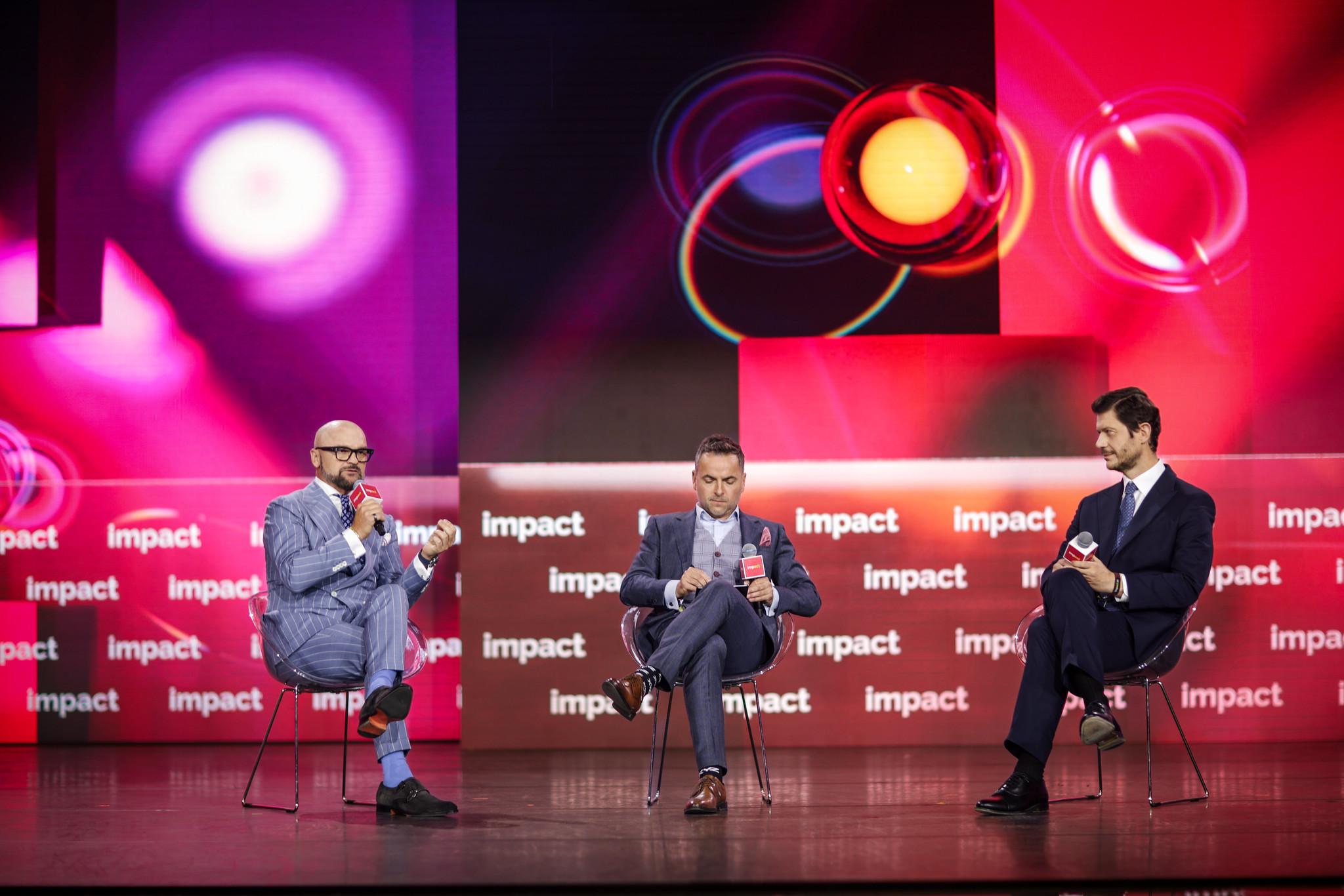
The CEOs of InPost and Allegro met on the main stage at the Impact conference to debate the future of e-commerce.
xyz.plThe CEOs of Poland's ecommerce powers—InPost (parcel lockers) and Allegro (marketplace)—clashed on the main stage at the Impact conference over whether logistics or marketplace defines the future. Their split mirrors a broader European debate.
Allegro announced an OpenAI partnership on May 14, sharpening its AI × marketplace tilt. InPost is doubling down on logistics network and delivery experience as differentiation—the divergence of these two strategies will help decide CEE's ecommerce landscape.
Conclusion
May 17–18 was a symbolic weekend in agentic commerce: Stripe formally committed to a full transition, Mastercard topped an independent ranking, FIDO/Experian/Akamai advanced the authentication and trust layer, and Visa NZ surfaced the "banks ready, merchants lagging" readiness gap. Vision, evaluation, standards, and implementation all moved in parallel.
In tandem, Shein's $100M Everlane acquisition closes a chapter on the D2C era, Ant International's analysis shows the consolidation of cross-border payment stacks, and Nectar Social's $30M round signals AI's deepening grip on social commerce. The priority question for EC operators is shifting to whether their checkout, customer support, and identity flows are ready for AI agents to traverse them.