Stripe's Collison Calls Keyword Search 'Ridiculous' as Sessions 2026 Unveils 288 Launches Reshaping Agentic Commerce
Stripe co-founder John Collison told Bloomberg Odd Lots that keyword search is 'ridiculous' and agentic commerce will reshape online shopping. Combined with 288 Stripe Sessions 2026 launches, we unpack what it means for merchants.

Key Takeaways
- Stripe co-founder John Collison told Bloomberg Odd Lots that relying on keyword search in 2026 is "ridiculous," signaling a decisive shift to AI agent-driven shopping
- Stripe Sessions 2026 announced 288 new products including Google AI Mode integration, agent-ready Link wallets, and token-level streaming payments
- Merchants need to make product data AI-readable and support multiple protocols, as new business creation on Stripe jumped 71% year over year in Q1 2026
Collison Lays Out His Agentic Commerce Vision on Bloomberg Odd Lots
Stripe Co-Founder and President John Collison believes that agentic commerce will completely transform online shopping.
www.pymnts.comOn May 16, 2026, Stripe co-founder and President John Collison appeared on Bloomberg's Odd Lots podcast, arguing that agentic commerce will "completely transform online shopping." The episode dropped right after Stripe Sessions 2026, where the company announced 288 launches at once, painting a clearer picture of Stripe's agentic commerce playbook.
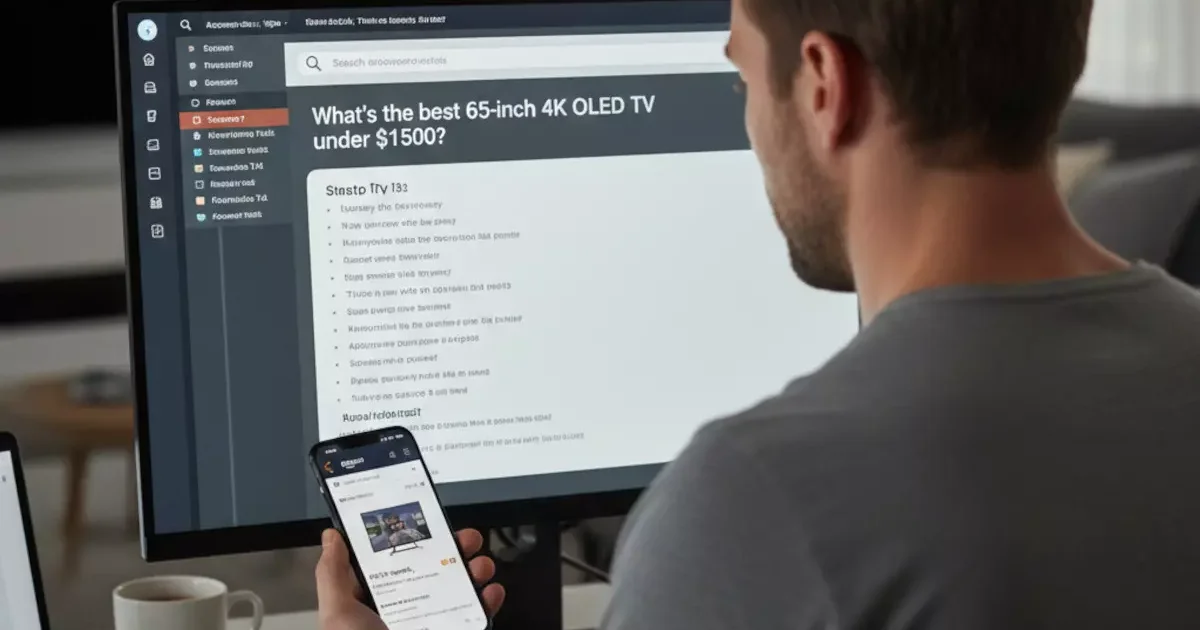
The line that drew the most attention was Collison dismissing traditional keyword search as "ridiculous." His core claim: in an era when AI handles product research, comparison, and purchasing, building shopping experiences around a text input field is already structurally obsolete.
What He Actually Meant by "Keyword Search Is Ridiculous"
According to PPC Land's coverage, Collison put it this way on the podcast.
It's ridiculous that we got to the year 2026 relying on keyword search where that makes sense for buying a book or a DVD, where you know the title, but that's about the limit of keyword search.
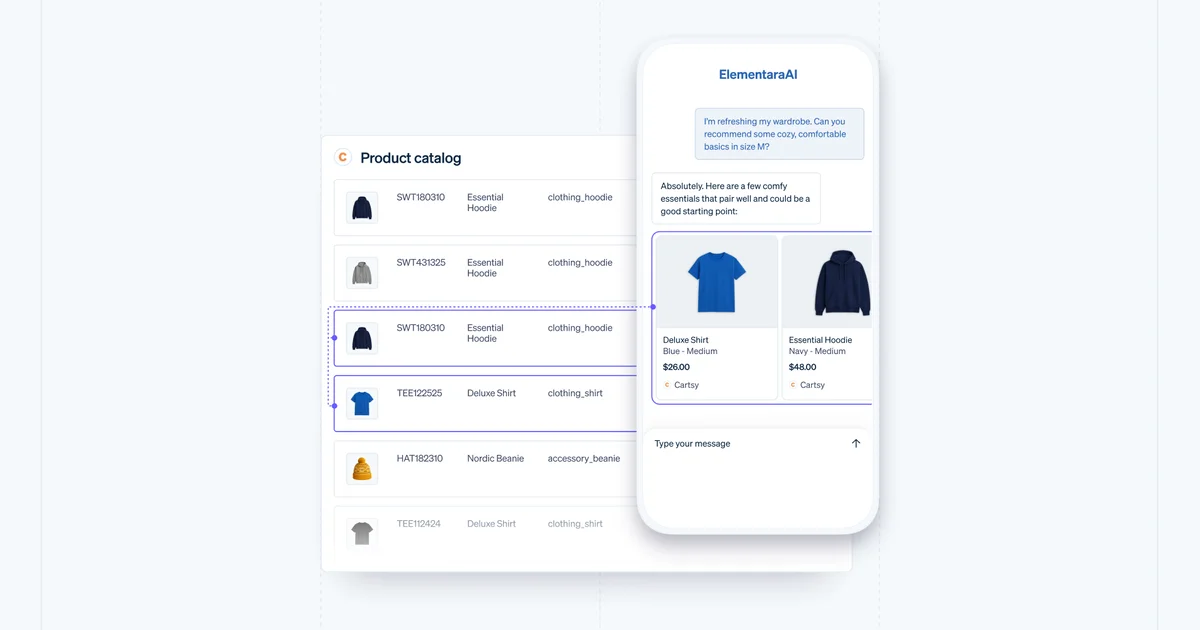
For purchases driven by constraints, such as furniture or apparel, conversational narrowing is dramatically more efficient than keywords. Collison cited the example of looking for furniture that has to fit a specific slot in a room, noting that describing the size, color, budget, and style in a sentence beats typing short queries into a search box.
This is not just a Stripe-specific view. When Google launched the Universal Commerce Protocol (UCP) in January 2026, the announcement, jointly published with Shopify, Etsy, Wayfair, Target, and Walmart, was explicitly built around conversational product discovery. Replacing the search box is becoming an industry-wide direction.
Mundane Tasks vs. Scrolling Jobs: What Shoppers Actually Want to Delegate
The other axis Collison emphasized was the realistic distinction that "shoppers don't want to delegate everything."
As PYMNTS reports, he separated tasks AI agents should handle from those humans want to keep. Buying recipe ingredients or a travel adapter is a "mundane task" worth delegating. Browsing clothing online or planning a vacation is a "scrolling job" people enjoy and want to retain.
This distinction matters enormously for merchants. The optimal strategy diverges depending on whether your category is "delegated shopping" or "enjoyed shopping." Everyday consumables and replenishment items live or die by how clean their data is for agents. Fashion, hobby goods, and high-discovery categories still reward heavy investment in brand experience and storefront design.
Stripe Sessions 2026: 288 Launches That Set Up the Agent Economy
The Odd Lots interview was not an isolated personal opinion. It is directly wired into Stripe's product roadmap. Stripe's press release reports that Sessions 2026 announced 288 new products and features at once, broadly building out the infrastructure to treat AI agents as economic actors.
Key agentic commerce announcements include the following.
| Area | Main Announcement |
|---|---|
| Agentic Commerce Suite | Google partnership announced; merchants can sell inside AI Mode and the Gemini app. Kate Spade, Best Buy, and Coach are early adopters |
| Agent-ready wallets | Link, with 250M+ users globally, is now open to agents. A one-time-use card is issued per task |
| Streaming payments | Combines Metronome's usage metering with stablecoin micropayments on the Tempo blockchain to enable per-token billing |
| Stripe Radar | Extended to defend against agent-era threats like token theft and free-trial abuse |
Stripe had already connected with major AI platforms in parallel: OpenAI's Instant Checkout in September 2025, Microsoft's Copilot Checkout in January 2026, and joining the Universal Commerce Protocol Tech Council in April 2026 alongside Amazon, Meta, Microsoft, and Salesforce. With the Google deal, all three major consumer AI assistants, ChatGPT, Copilot, and Gemini, now have a Stripe-powered checkout path.
On Advertising: "Brand Affinity Really Matters in That World"
Asked whether agentic commerce signals the end of advertising as the consumer internet's economic engine, Collison flatly rejected the premise.
His argument has two parts. First, even when AI narrows the choice set, the final selection is still influenced by brand recognition. In his podcast microphone hypothetical, once an AI shortlists three or four options, the buyer is more likely to pick a name they've heard of. "Brand affinity really matters in that world," Collison said.
Second, he drew a line between directed commerce (the consumer knows what they want and uses search to find it) and undirected commerce (people scroll without specific intent). Directed surfaces like Google text ads may see inventory migrate into AI app results, but undirected surfaces such as Instagram are unlikely to be disintermediated by agents.
The data backs him up. Alphabet's Q1 2026 earnings showed Google Network advertising revenue down 4% year over year, the segment's sharpest recent decline. Collison's read that "crummy aggregator pages" will have a harder time lines up with what the market is already pricing in.
What Merchants Should Do Now
Stitching the Odd Lots interview together with Sessions 2026, the merchant action list resolves into two layers.
Layer one is getting into the model's training corpus. Product pages, third-party reviews, and editorial coverage such as Wirecutter determine whether the LLM "knows" your product. This is continuous with traditional SEO work: clean structured data, accumulating reviews, and earning third-party media coverage all still pay off.
Layer two is what Collison called the "mechanical wiring up": the live API connections that let an AI verify stock, size, and shippability in real time. Without these, even a recommended product can't be transacted. Supporting Stripe's Agentic Commerce Suite, the Agentic Commerce Protocol (ACP) co-developed with Google and OpenAI, and the competing Universal Commerce Protocol (UCP) in parallel is no longer optional.
The most telling number from Sessions 2026 may be the macro one. New business creation on Stripe in Q1 2026 was up 71% year over year. Collison framed this as evidence that AI is lowering the cost of starting a company, hinting that the competitive landscape itself is shifting. As more sellers compete for AI agent recommendation slots, falling behind on implementation translates directly into lost demand.
Closing Thoughts
Bloomberg Odd Lots and Stripe Sessions 2026 should be read as a single message, not two separate events. What Collison laid out is a future where AI agents become the primary path to online purchase, and the Stripe stack designed to implement it.
From keyword search to conversational discovery, from human form-filling to agent-to-agent payments, from monthly subscriptions to per-token streaming settlement, the direction is no longer ambiguous. For merchants, the question has shifted from "should we respond?" to "in what order, and against which protocols?" With Stripe, Google, OpenAI, and Microsoft moving in concert, 2026 looks set to be the year agentic commerce graduates from proof-of-concept to production.