AI Commerce News Digest (July 8, 2026)
BofA upgrades Shopify to Buy on the agentic commerce shift. Meta launches Business Agent on WhatsApp, and the Bank of England flags agentic commerce risks. Today's roundup of agentic commerce news.

Key Takeaways
- BofA upgraded Shopify to Buy with a $150 price target, citing the shift toward agentic commerce
- Meta launched Meta Business Agent on WhatsApp, bringing conversational commerce to a 3-billion-user platform
- Investors, platforms, and regulators all treated agentic commerce as a given today — a notable step change
Here is our AI commerce news roundup for July 8. Today's stories share a common thread: agentic commerce has become an investment thesis. BofA put the shift to AI-agent-driven transactions at the center of its Shopify upgrade. Meta announced a business AI agent for WhatsApp that aims to close the loop from customer service to sales inside a single conversation. Meanwhile, a Bank of England deputy governor discussed the risks of agent-driven payments, showing that regulators and financial-stability watchers are paying closer attention.
Today's Top Stories
Shopify Shares Climb as BofA Upgrades to Buy on the "Agentic Commerce Shift"

Bank of America reinstated coverage of Shopify with a Buy rating and a $150 price objective, arguing the company is positioned to benefit from the shift toward AI-driven agentic commerce.
www.streetinsider.comBank of America reinstated coverage of Shopify with a Buy rating and a $150 price objective, arguing the company is positioned to benefit from the shift toward AI-driven agentic commerce. Shopify shares climbed 2.4% in premarket trading on the news.
The market has been gripped by "platform bypass" fears — the idea that if discovery and transactions move to AI-native interfaces, e-commerce platforms get disintermediated — and Shopify shares had fallen 25% year-to-date. BofA's analysts flipped that argument: as discovery shifts to agentic interfaces, value accrues to the transaction and infrastructure layers — checkout, payments, and product catalogs — where Shopify is deeply embedded. The supporting numbers are concrete: AI-driven traffic to Shopify merchants rose eightfold year-over-year in Q1 2026, while orders from AI-powered searches climbed roughly 13-fold.
Gartner estimates agentic commerce could account for roughly 20% of global e-commerce transactions by 2030, and capital markets are now starting to price that structural shift in.
Deep dive: Why BofA Sees Shopify as a Winner of the Agentic Commerce Shift
WhatsApp Unveils "Meta Business Agent," Pushing Conversational Commerce at Scale
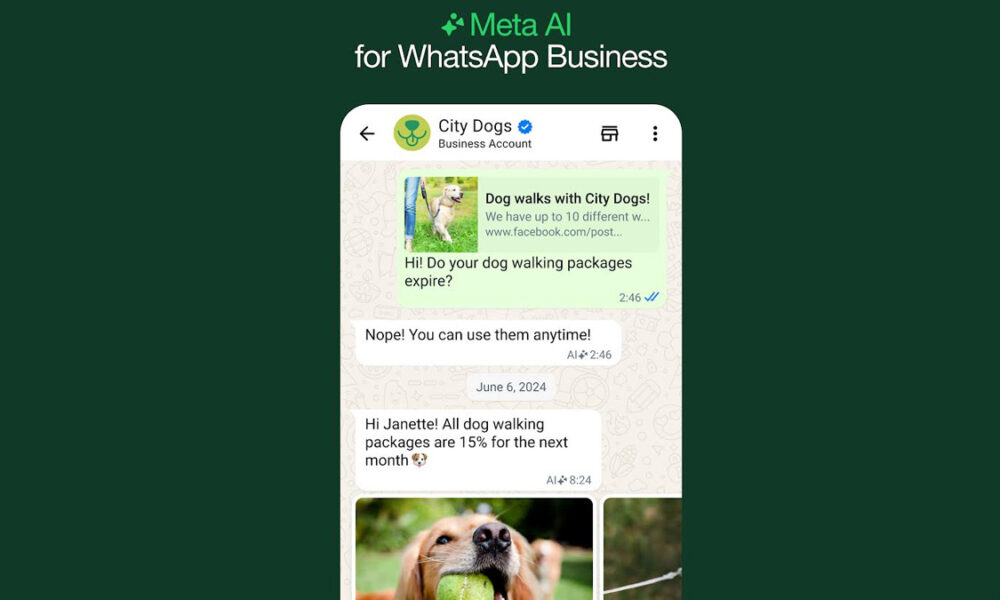
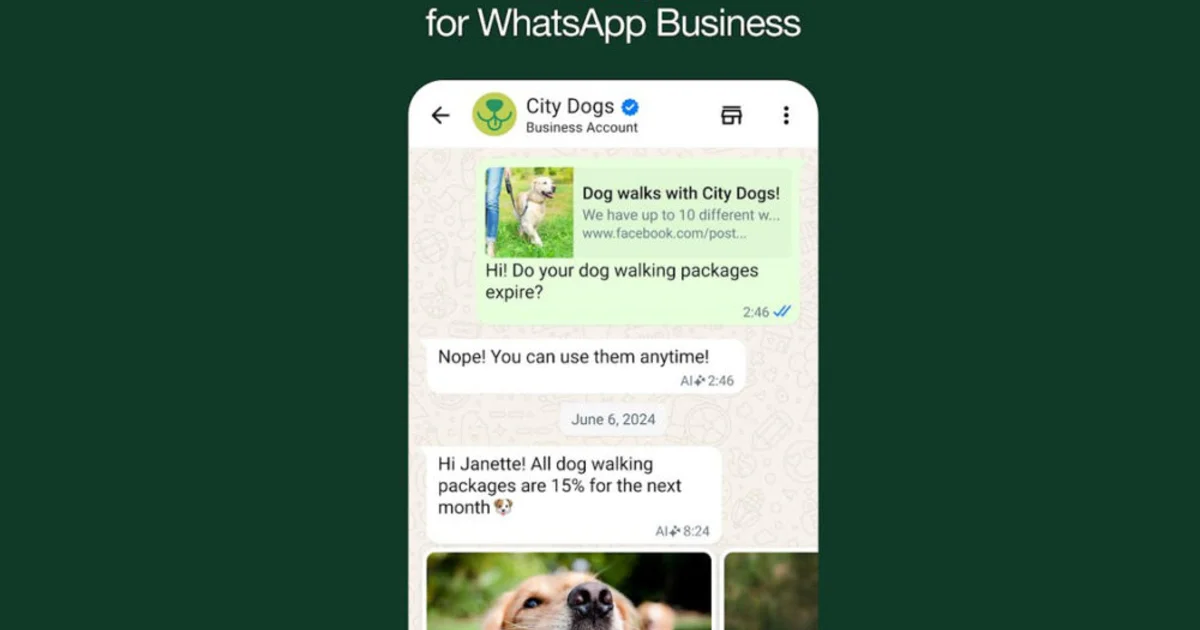
WhatsApp has unveiled Meta Business Agent, an AI-powered assistant designed to help businesses automate customer conversations, manage routine operations and engage with users around the clock.
indiantelevision.comAt its WhatsApp Business Summit in Mumbai, Meta unveiled Meta Business Agent, an AI assistant for businesses. It automates product recommendations from catalogs, appointment booking, lead qualification, and sales conversations, handing off to a human agent when needed.
For large enterprises, Meta also introduced the Meta Business Agent Platform, infrastructure for building, customizing, and deploying AI business agents at scale. It integrates with existing tools such as Shopify, Zendesk, and Shopee, using the WhatsApp Business Platform as the primary customer channel. Early deployments are already showing results: beauty retailer Madhulika Enterprises reported a 25–30% increase in conversions, with the AI now handling 50–60% of repetitive customer queries.
This is conversational commerce — discovery, service, and purchase completed inside a single message thread — being deployed on one of the world's largest user bases.
Deep dive: What Meta Business Agent Means for Conversational Commerce
Agentic Commerce
Bank of England Flags Agentic Commerce Risks

Central banks, including the Bank of England, are facing a dual challenge as AI capabilities accelerate: enabling responsible adoption while transforming how they manage risks in an increasingly autonomous financial system.
www.ukauthority.comSarah Breeden, the Bank of England's deputy governor for financial stability, spoke about the risks of a financial system in which AI agents automate transactions. With models now capable of reasoning and autonomous action, the financial system could operate at a scale and speed not seen before, she said.
Her specific concerns for e-commerce and payments automation: how users securely give consent and authorization, how disputes get settled, and how to avoid fragmentation and walled gardens. With competing agentic payment standards proliferating, a central bank raising interoperability as a policy concern is significant. She also warned of a step change in agentic AI's cyber capabilities and urged financial institutions to prepare.
Atlanta Startup Agentix Builds "Prompt-to-Payment" Checkout Infrastructure

Atlanta startup Agentix is building 'prompt-to-payment' infrastructure to let shoppers complete ecommerce purchases directly inside AI conversations.
hypepotamus.comAtlanta-based Agentix is building "prompt-to-payment" infrastructure that lets shoppers complete purchases inside AI conversations. Today, finding a product in ChatGPT or Claude still means getting redirected to a merchant site to wrestle with forms and logins; Agentix wants to collapse that sequence into checkout that completes inside the chat.
Its strategy is to partner upstream with e-commerce platforms rather than pitching individual merchants — one platform integration gives every merchant on it access to checkout-in-chat. The founder is a payments veteran who served as a Director of Global Product Strategy at Visa, and the company's target segments notably extend beyond retail to events, appointments, travel services, and restaurants.
Rezolve Ai Announces "Auditable AI" to Explain Every Recommendation

Rezolve Ai announced Auditable AI, a technology designed to enable every AI-generated product recommendation to be explained, verified and understood.
rezolve.comNASDAQ-listed Rezolve Ai (RZLV) announced Auditable AI, which generates a clear, human-readable explanation for every AI product recommendation, grounded in verified customer preferences, product attributes, purchase history, and business rules.
The company positions it as the third pillar alongside its hallucination-reduction architecture "brainpowa" and its agent-activity auditing layer "TraceWare" — together forming what it calls a trusted enterprise AI commerce platform. Making recommendation logic explainable to consumers and regulators alike anticipates the questions that will come as agentic commerce moves into production at scale.
Glance and Samsung Partner to Turn Smart TVs into AI Shopping Destinations

Glance and Samsung formed a partnership to transform the living room screen into a personalized AI-powered browsing platform, to be available on millions of Samsung smart TVs.
www.forbes.comInMobi-owned Glance and Samsung announced a partnership to turn millions of Samsung smart TVs in the U.S. into AI-powered shopping destinations. Glance's AI platform runs natively on Samsung's Tizen OS, letting viewers browse personalized product feeds using just voice and the remote.
The agent analyzes viewing context to understand what inspires the user and surfaces products accordingly. Checkout, however, still requires a second device such as a phone — the long-standing friction of TV commerce remains unsolved. Still, this is a notable move to put an agent at the pre-purchase moment of inspiration on the living room's biggest screen.
AI Commerce Tools
Google Unveils Video Commerce Tools for Southeast Asia as YouTube Shopping Videos Hit 6 Million
Google has unveiled new advertising and video commerce solutions for Southeast Asia at Google Marketing Live Southeast Asia in Singapore.
technode.globalAt Google Marketing Live Southeast Asia in Singapore, Google announced new video commerce tools for the region. YouTube video commerce has grown fivefold from 2022 to 2025 and now commands 25% of the region's total e-commerce GMV; more than 6 million videos in Southeast Asia carry shoppable product tags.
The centerpiece, Commerce Media Suite, routes high-intent shoppers from a YouTube ad directly to a marketplace checkout page. In a pilot with Shopee, Maybelline achieved a 7.4% incremental revenue lift. Google also cited surveys showing over 80% of AI Overviews and AI Mode users say they decide faster and more confidently — a clear strategy to own the path from discovery to purchase with AI and video.
Global E-commerce
Prime Day 2026 Hits a Record $26.4 Billion in U.S. Online Sales (Adobe)
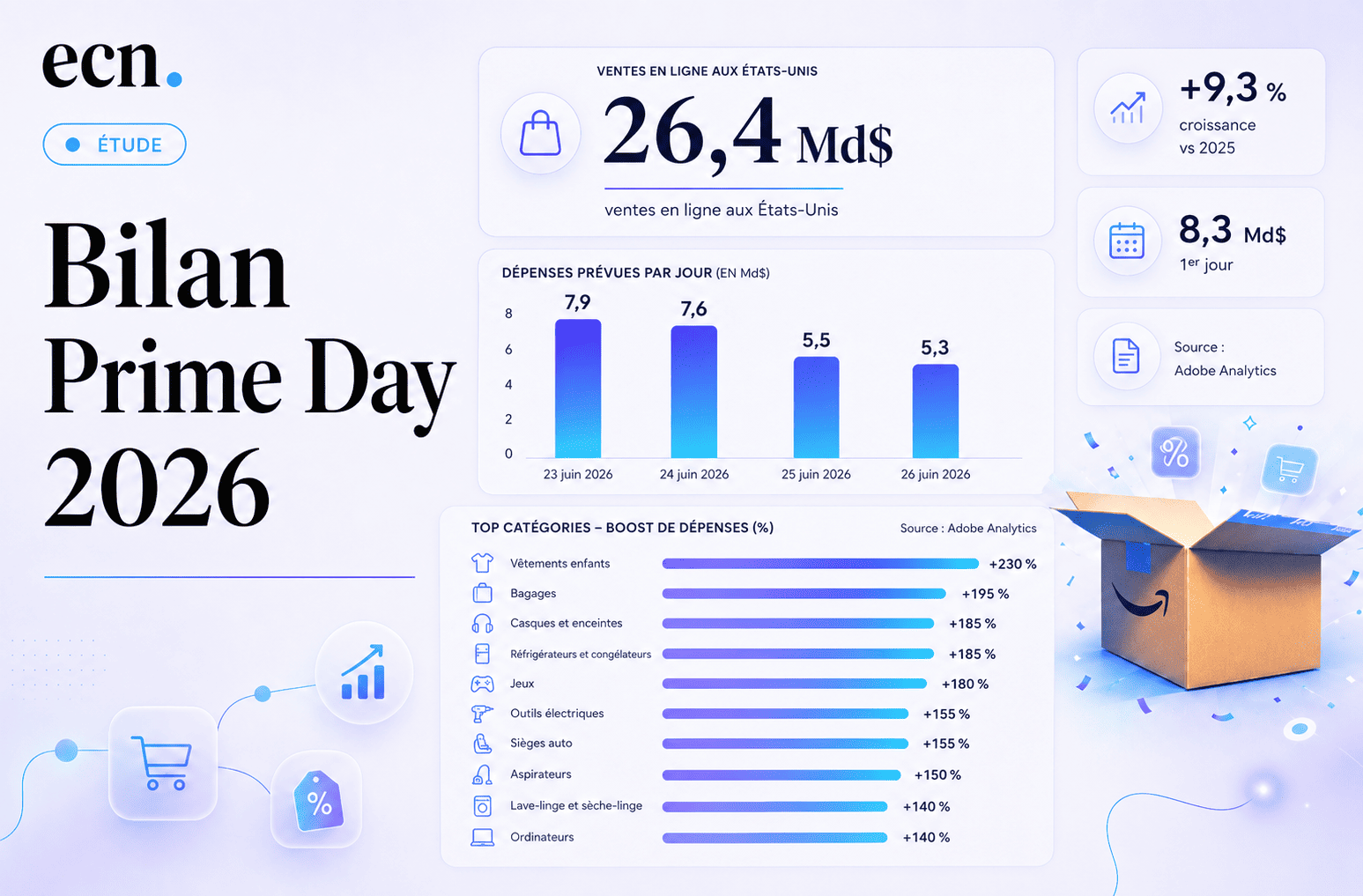
Prime Day 2026 confirms a central e-commerce trend: consumers keep buying, but they are increasingly selective, according to Adobe Analytics data.
www.ecommerce-nation.frAccording to Adobe Analytics, U.S. online sales around Prime Day 2026 in late June reached $26.4 billion, up 9.3% year-over-year. Day one alone generated $8.3 billion, making it the biggest e-commerce day of 2026 so far.
Adobe's more interesting point: Prime Day is no longer just an Amazon event but a market-wide promotional window that other retailers follow, with consumers comparing prices across sites and timing purchases around it. Based on over a trillion visits to U.S. retail sites and 100 million-plus SKUs, it is also baseline data for measuring how AI shopping assistants perform in a market where discount-driven comparison shopping is the norm.
Madras High Court Blocks AI Training Use of Travel Content in Copyright Case

Madras HC says unauthorised use of copyrighted content for AI training, prompts or scraping may infringe copyright.
www.medianama.comIndia's Madras High Court granted an interim injunction to Keshan Infotech, operator of travel media site Travel And Tour World, restraining the unauthorized use of its content as AI training data or prompts, and blocking automated scraping. The court found a prima facie case of copyright infringement.
The injunction's scope is broad: it covers AI-assisted reproduction, summarizing and paraphrasing, use as training data or prompts for any AI model, and access by web scrapers. Against the backdrop of the ANI vs. OpenAI litigation over whether AI training on public content is fair dealing, this shows courts are willing to order AI-training restraints — a ruling AI travel services that depend on third-party content cannot ignore.
Wrap-up
Investors, platforms, and regulators each treated agentic commerce as a baseline assumption today. BofA's Shopify upgrade re-rates a stock sold off on AI fears as a winner of the transaction layer — a sign the capital markets' evaluation framework has shifted. Meta's Business Agent dramatically expands the distribution surface for conversational commerce, while companies like Agentix fill in the checkout plumbing underneath. And as the Bank of England and the Madras High Court showed, the question is moving from "can agents transact?" to "under whose control and accountability?" Watch for Meta Business Agent's regional rollout and further central-bank commentary on agentic payments.