Meta Rolls Out Meta Business Agent on WhatsApp: 25-30% Conversion Lift Signals a New Phase for Conversational Commerce
A breakdown of Meta Business Agent and the enterprise-grade Platform unveiled at the WhatsApp Business Summit: features, pricing, early adopter results, and what it means for e-commerce operators.

Key Takeaways
- On July 7, 2026, at the WhatsApp Business Summit in Mumbai, Meta announced the full-scale rollout of its AI assistant Meta Business Agent in India, along with the enterprise-grade Meta Business Agent Platform. A single agent handles everything from catalog-linked product recommendations to appointment booking and sales conversations
- Early adopters are reporting hard numbers: beauty retailer Madhulika Enterprises saw conversions rise 25-30%, with AI now handling 50-60% of repetitive inquiries, while travel company Kaizen Adventours absorbed peak-season inquiry spikes with instant responses
- The Platform connects to hundreds of external systems including Shopify and Zendesk, positioning WhatsApp as the core customer touchpoint. Messaging apps are absorbing the roles of search and storefront, and the gap between businesses with and without a conversational channel is starting to show up in the numbers
What Was Announced at the Mumbai Summit
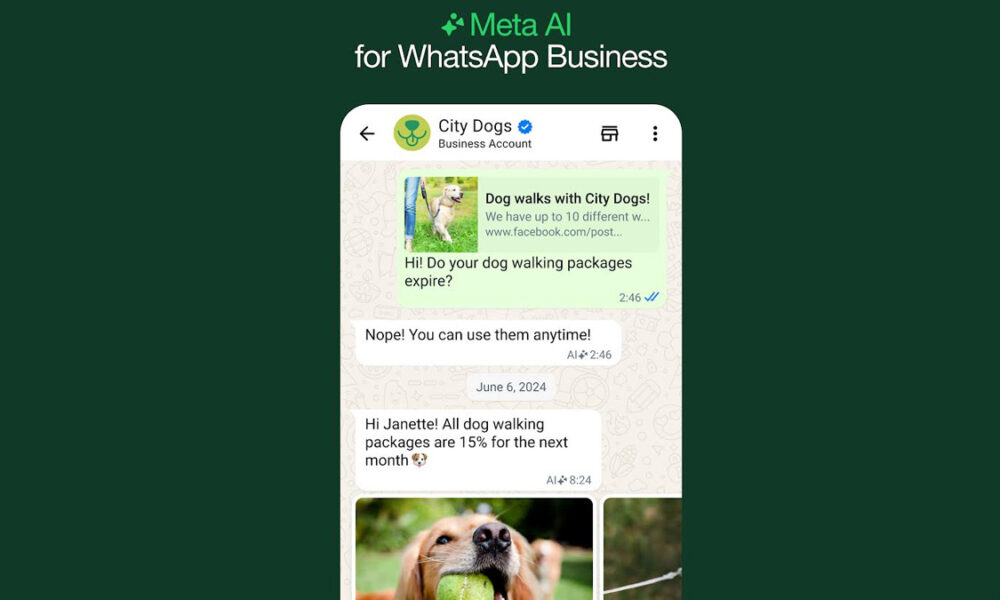
WhatsApp has unveiled Meta Business Agent, an AI-powered assistant designed to help businesses automate customer conversations, manage routine operations and engage with users around the clock.
indiantelevision.comOn July 7, 2026, at the third edition of the WhatsApp Business Summit in Mumbai, Meta announced the full-scale launch of Meta Business Agent, its AI assistant for businesses, in the Indian market. According to Indian Television's report, the agent covers everything from automating customer conversations to managing routine operations and engaging customers around the clock, and it is positioned as the next step in Meta's conversational commerce strategy in India.
There is a backstory. Meta Business Agent itself became globally available on June 3, 2026, following roughly two years of testing in India and Mexico. As TechCrunch reported, returning to India — the primary testing ground — to declare a full rollout amounts to a statement of intent: the world's largest WhatsApp market will serve as the showcase for conversational commerce. Meta says more than one million businesses already use business agents, and active conversation threads between businesses and consumers across WhatsApp, Messenger and Instagram exceed one billion per day.
India has emerged as one of the most dynamic markets for conversational business globally, with messaging becoming the preferred way for people and businesses to connect.
What the Agent Can Do
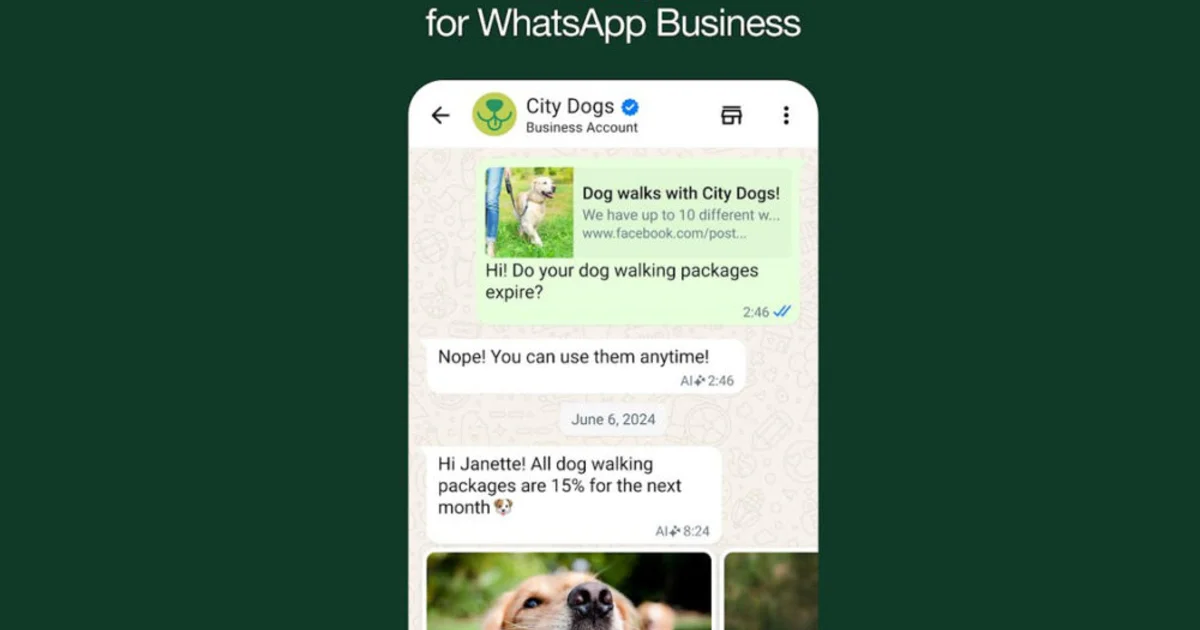
At the core of Meta Business Agent is the ability to carry a customer from the first message to purchase within a single conversation. Concretely, it answers business-specific questions, generates product recommendations linked to the business catalog, books appointments, qualifies incoming leads, and assists in closing sales conversations. Businesses control when an interaction is handed off to a human, establishing a natural division of labor inside the thread — complex consultations go to people, routine exchanges go to AI.
The capabilities extend beyond customer-facing work. The agent generates insights from customer conversations and delivers summaries of missed interactions, so teams know by morning what happened overnight. Responses come in the customer's local language, tuned to the business's tone. Setup takes minutes through the business AI portal, getting started is free, and subscription tiers scaled to business size are expected in the coming months.
How the Enterprise Platform Differs
The other pillar of the summit was the Meta Business Agent Platform, aimed at large enterprises. It provides the infrastructure to build, customize and deploy agents at scale, and according to Meta's announcement, it connects to hundreds of external systems including Shopify, Zendesk and Shopee, allowing agents to take action on behalf of the business. The architecture keeps the WhatsApp Business Platform at the center of customer engagement while adding enterprise-grade scalability, measurement, guardrails and administrative controls.
| Meta Business Agent | Meta Business Agent Platform | |
|---|---|---|
| Primary audience | Businesses of all sizes, centered on SMBs | Large enterprises |
| Setup | Activated in minutes via the business AI portal | Built and customized against existing enterprise systems |
| Core capabilities | Product recommendations, appointment booking, lead qualification, sales assistance, human escalation | Building and deploying agents at scale, measurement, guardrails, admin controls |
| Integrations | The business's own catalog and profile | Hundreds of external systems including Shopify, Zendesk and Shopee |
| Pricing | Free to start (subscription tiers coming) | Usage-based billing tied to token consumption |
Pricing diverges between the two tiers. Smaller businesses will be billed through WhatsApp Business Premium subscription tiers, while large enterprises face usage-based billing tied to token consumption. A model where cost scales with conversation volume signals a monetization shift for Meta: revenue from the operation of AI agents themselves. WhatsApp's revenue has historically come from per-message business messaging fees and click-to-WhatsApp ads; a new layer — AI-executed customer service and sales — is being added on top.
What Early Adopters Are Seeing
The most noteworthy part of the announcement is the concrete numbers from early adopters. Madhulika Enterprises, a beauty retailer, saw conversions increase 25-30% after deployment. AI now handles 50-60% of repetitive inquiries about bridal bookings, beauty products and training programs, freeing human staff to focus on more complex consultations.
Travel is showing results as well. Kaizen Adventours, which runs tours in Ladakh, improved response times by having the agent instantly answer questions about itineraries and bike rentals, absorbing peak-season demand spikes with AI. For travel and booking businesses whose inquiry volume swings sharply by season, handling peaks without adding headcount matters enormously — and the case shows that agent-mediated transactions extend well beyond physical goods. Food delivery giant Swiggy took a different route, using the agent not for customer service but for delivery partner onboarding, simplifying registration and reducing operational overhead.
Messaging Becomes the Storefront
Alongside the agent, Meta announced new business discovery features. Users will soon be able to search for businesses by name directly within WhatsApp and share business contacts with friends and family. It sounds modest, but it means WhatsApp shifts from an app for talking to stores you already know to an app for finding them. Discovery, consultation, recommendation, booking and purchase can all complete inside a single conversation thread — messaging apps are absorbing the roles of the search engine and the e-commerce site at once.
Viewed through the lens of agentic commerce, Meta's approach has a distinct shape. Where the movement exemplified by OpenAI's ChatGPT places the agent on the consumer's side and connects outward to merchants, Meta places the agent on the business's side and aims to complete transactions inside its own messaging base of a billion daily threads. This is not a shopping agent that buys on your behalf but a sales agent deployed at scale — and the two will increasingly face each other from opposite ends of the same conversation. Meta has also outlined plans to expand the agent into a general operations role, covering market research, product insights, calendar management and competitive intelligence.
What This Means for E-commerce Operators
First, structuring product data for conversational touchpoints becomes urgent. Business Agent's recommendations run off the catalog; if product information is not structured, the AI has nothing to recommend from. The same dynamic that SEO created for websites is now beginning in conversational channels.
Second, the ROI of AI-driven customer service can now be discussed in concrete terms. A 25-30% conversion lift and 50-60% automation of repetitive inquiries demonstrate that a conversational touchpoint long treated as a cost center can become a revenue engine. WhatsApp usage is limited in Japan, but LINE official accounts occupy the equivalent position, and it is reasonable to expect AI agent-driven messaging commerce to arrive there in the same configuration.
Third, booking-driven businesses where inquiries convert directly into revenue stand to gain the most. As the Kaizen Adventours case shows, in travel, lodging and service reservations — where response speed determines close rates — having an agent that answers instantly around the clock translates directly into fewer lost opportunities.
Closing Thoughts
The full-scale rollout of Meta Business Agent marks the moment conversational commerce moved from concept to implementation. An agent used by a million businesses, a platform connecting to hundreds of external systems, and adopter cases backing up conversion gains — a world where commerce completes inside a message thread is taking shape, starting from the world's largest WhatsApp market. The gap between businesses that can hand their customer conversations to AI and those that cannot will increasingly show up in the numbers.