AI Commerce News Digest (July 10, 2026)
Animoca Brands and Visa pilot AI agent payments in Hong Kong, DC360 and ReFiBuy launch AI Commerce Rankings scoring 1,000 retailers on AI shopping readiness, and Juniper Research forecasts 1.3 billion agentic commerce users by 2031. A roundup of July 10 AI commerce news.


Key Takeaways
- Animoca Brands and Visa completed a live pilot of AI agent payments in Hong Kong, extending agentic commerce into the Web3 sphere
- Digital Commerce 360 and ReFiBuy launched the AI Commerce Rankings, scoring 1,000 US retailers on AI shopping readiness
- Juniper Research forecasts agentic commerce users will reach 1.3 billion and transaction value $3.5 trillion by 2031
Here is your AI commerce news for July 10. Today's stories converge on a single question: can AI agents be trusted with transactions, and who is ready for them? In Hong Kong, Animoca Brands and Visa completed a live pilot of agent-initiated payments, while in the US a new quarterly benchmark began grading 1,000 retailers on how visible they are to AI shopping agents. Add Juniper Research's 1.3 billion user forecast and a business-identity certificate program, and the theme of the day is trust and visibility in the agent economy.
Today's Top Stories
Animoca Brands and Visa Complete Live Pilot of AI Agent Payments in Hong Kong
Animoca Brands has completed a live pilot of AI-powered commerce capabilities developed in collaboration with Visa, enabling AI agents on its Minds platform to identify relevant Visa rewards and complete purchases on behalf of users.
technode.globalHong Kong-based Web3 giant Animoca Brands has completed a live pilot of AI commerce capabilities developed with Visa. AI agents on the company's Minds platform can now surface Visa offers matched to a user's eligible cards and preferences, then complete purchases at selected Hong Kong merchants within pre-authorized spending controls. The pilot starts with the Bruce Lee Club eShop, with Visa Intelligent Commerce providing tokenized payment credentials, authentication, and fraud protections for agent-initiated payments.
Until now, Visa's agentic payment demonstrations have been led by payment processors and banks such as Nuvei, Worldline with ING, and CaixaBank. This pilot is notable because a consumer-facing Web3 AI agent platform took the lead, showing how "always-on personal agents" plug into existing card rails. The design, where an agent handles offer discovery, rewards application, and checkout end to end, shows that the consumer touchpoint for agentic commerce is not limited to chatbots.
Read more: Inside the Animoca Brands and Visa Hong Kong Pilot: How AI Agents Pick Rewards and Complete Payments
DC360 and ReFiBuy Launch AI Commerce Rankings, Grading 1,000 Retailers on AI Shopping Readiness

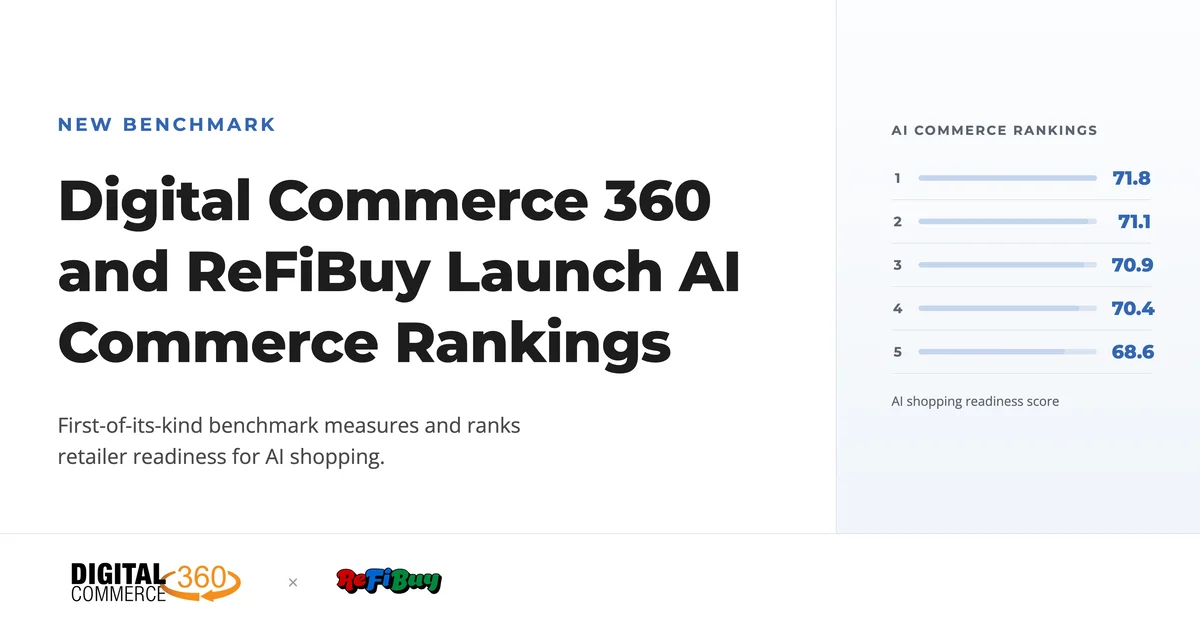
Digital Commerce 360 and ReFiBuy have introduced the AI Commerce Rankings, a quarterly benchmark that scores Top 1,000 retailers on AI shopping readiness.
www.retailtouchpoints.comDigital Commerce 360 and ReFiBuy have introduced the AI Commerce Rankings, a quarterly benchmark that scores every retailer in the DC360 Top 1000 on readiness for AI shopping. Each retailer receives a 0-100 score built from four signals: bot friendliness (including support for agentic protocols like UCP and ACP), AI-referred traffic volume, diversity of AI traffic sources, and 90-day momentum.
The first edition's results are striking. The top spot went to Online Labels, ranked just 814th by online sales, while many of the biggest names in US ecommerce sit in the bottom half. The average readiness score is 41.9, with only 20 retailers scoring above 60, and more than 80% of AI-referred retail traffic today comes from ChatGPT alone. The data makes a blunt point: the winners of the last era of ecommerce are not necessarily positioned to win the next one.
Read more: What the AI Commerce Rankings Reveal: Surprising Winners in AI Shopping Readiness
Agentic Commerce
Juniper Research Forecasts 1.3 Billion Agentic Commerce Users by 2031

According to Juniper Research, while trust in agentic commerce is currently low, users could grow nearly 350% in the next five years.
hellopartner.comPerformance marketing outlet Hello Partner has picked up Juniper Research's projection that agentic commerce users will grow roughly 350%, from under 300 million in 2026 to 1.3 billion by 2031, with transaction value expanding from just $8 billion to $3.5 trillion over the same period.
What stands out in this coverage is the trust data presented alongside the forecast: a June Checkout.com study found 24% of consumers say they will never delegate purchases to AI, and 27% trust "no organisation" to operate an AI shopping agent. Juniper also warns that while card payments currently dominate agent transactions, failure to support local payment methods would limit the market's growth potential.
Related article: Agentic Commerce Users to Reach 1.3 Billion by 2031: Juniper Research's Forecast and the Case for $3.5 Trillion
Proof and Enigma Launch Business Certificates for Agentic Trust

Identity-authorization network Proof and business-identity platform Enigma Technologies are looking to a new certificate program to take on the issue of how to trust businesses operating in an agentic-commerce environment.
www.digitaltransactions.netIdentity-authorization network Proof and business-identity platform Enigma have announced Business Certificates, a verified credential layer that proves a business is real and identifies who is permitted to act on its behalf in agentic commerce. Enigma continuously matches data on more than 100 million US legal entities against government records, and the certificates reflect status changes immediately.
The credentials can be bound to wire instructions and ACH account-change requests to prevent payment fraud, and they serve as the business-identity layer for x401, Proof's newly launched open protocol that lets websites and APIs verify who is behind an agent. Anti-impersonation infrastructure for the agent economy is taking shape on both the protocol and certification fronts.
Payments & Fintech
CaixaBank Completes Spain's First AI Agent Payment with Visa
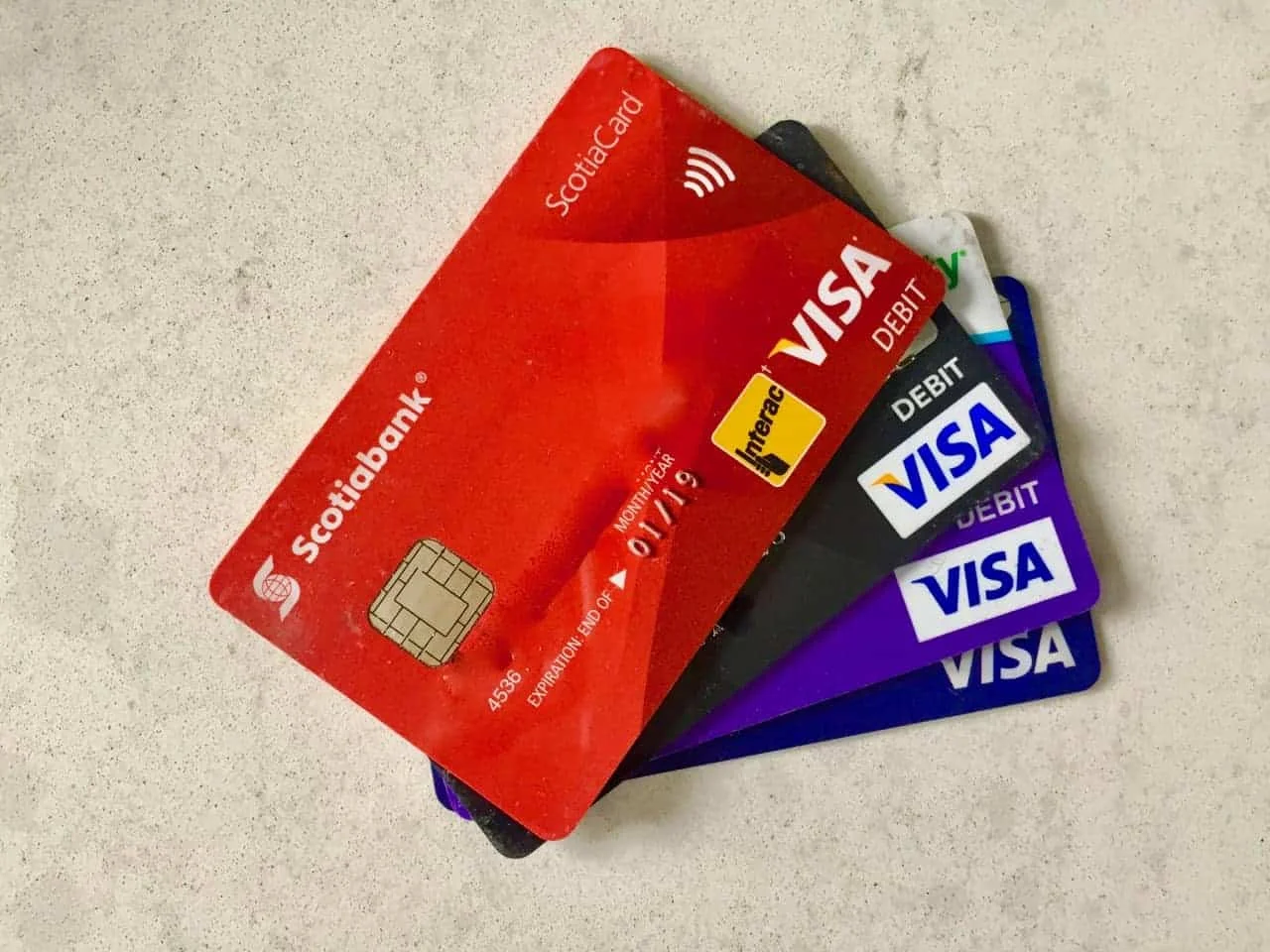
Spanish financial institution CaixaBank has successfully completed its inaugural transaction executed by an artificial intelligence agent acting on behalf of a cardholder.
www.crowdfundinsider.comSpanish banking major CaixaBank has completed its first transaction executed by an AI agent acting on behalf of a cardholder, in collaboration with Visa. The test purchase used genuine card credentials and passed through standard merchant checkout systems, confirming that agent payments can work without extensive changes to existing payment networks.
The bank participates in Visa's Agentic Ready program, and the transaction ran on Visa Intelligent Commerce with tokenization, identity verification, and real-time fraud monitoring. Following Worldline and ING earlier this month, July has seen a steady drumbeat of European financial institutions reaching live agentic payment transactions.
AI Commerce on XRPL Tops 1 Million Transactions

AI-driven commerce on the XRP Ledger has surpassed 1 million transactions, as AI agents buy and pay for computing resources, data and services without human involvement.
www.digitaltoday.co.krTransactions executed autonomously by AI agents on the XRP Ledger have surpassed 1 million, according to the XRPL AI Hub operated by t54 and the XRP Ledger Foundation. AI agents are buying GPU compute, data, and services at meaningful scale, with no human in the payment loop.
Three services account for 77% of volume: decentralized GPU service Heurist Mesh (about 404,000 transactions), AI agent OS LucyOS (about 368,000), and data search service AskSarf. With the x402 protocol connected to XRPL's payment system, AI programs can manage assets and settle costs directly, an early data point for stablecoins as machine-to-machine payment infrastructure.
Global E-commerce
China Unveils Retail Roadmap to Shield Physical Stores, Pushing 'Immersive' Experiences

Beijing's new 2030 retail road map targets price parity and social experiences to combat 'trading down' as retail growth hits weakest pace since pandemic.
www.scmp.comChina's Ministry of Commerce and eight other authorities have released guidelines for retail sector development through 2030. To protect brick-and-mortar operators from intense price competition with e-commerce platforms, the roadmap calls for "differentiated competition" between online and offline retail, a more rational pricing system, and transforming physical stores into destinations for shopping, immersive experiences, and social entertainment.
The backdrop is retail sales growth cooling in May to its slowest pace since December 2022, with consumers "trading down" to cheaper alternatives. The world's most advanced e-commerce market turning to state policy to protect physical stores is a telling signal about where online-first retail structures lead.
India's E-commerce Market to Reach $250 Billion by 2030, Powered by AI

Shiprocket-Deloitte report says personalised recommendations, smarter fulfilment and rising digital adoption in smaller cities and rural India will fuel the next phase of growth
www.business-standard.comIndia's e-commerce market is projected to nearly triple from about $90 billion in 2025 to roughly $250 billion by 2030, according to a Shiprocket-Deloitte report. AI-powered product discovery, personalized checkout, and smarter fulfilment are expected to drive the next phase of growth.
The report highlights "Bharat," rural and small-town India: 488 million rural internet users make up 55% of the country's active internet population, vernacular voice queries are growing 156% faster than English, and tier-2 and tier-3 cities already account for over 60% of online shoppers. Multilingual, voice-first AI commerce design is becoming a precondition for growth.
Wrap-up
Today's news shows agentic commerce shifting from "can it work?" to "who gets trusted, and who gets chosen?" Live agent payment pilots stacked up in Hong Kong and Spain, while in the US the average AI readiness score of 41.9 across 1,000 retailers laid out how unprepared the merchant side remains. Whether Juniper's 1.3 billion user forecast materializes depends on trust infrastructure like Business Certificates and on merchants investing in agent readability. We will keep watching the middle layer of the agent economy: rankings and certification.