
AI Commerce News Digest (July 16, 2026)
Stripe and Advent's $53 billion bid for PayPal, the x402 Foundation launch, Tencent Yuanbao x JD.com integration, Akamai's AI bot attack report, and more: today's retail e-commerce and AI commerce news.


Key Takeaways
- Stripe and Advent reportedly made a formal $53 billion bid to acquire PayPal
- The x402 Foundation, a standards body for AI agent payments, officially launched with 40 members including Visa and Mastercard
- Behind the standardization push, Akamai reported a surge in AI bot attacks targeting commerce
Here is your AI commerce news roundup for July 16. Today felt like a tectonic shift in agent payments. Reports emerged that Stripe and Advent International submitted a $53 billion bid for PayPal, while the Linux Foundation announced the operational launch of the x402 Foundation, the standards body for AI agent payments. In China, Tencent's AI assistant Yuanbao completed its integration with JD.com, moving the race for AI-assistant-driven shopping into the implementation phase. Following yesterday's XDC x Bridge stablecoin settlement news, the infrastructure build-out for agent payments is accelerating on every front. Meanwhile, Akamai's latest report put hard numbers on a sobering reality: commerce has become the epicenter of AI bot attacks.
Today's Top Stories
Stripe and Advent reportedly bid $53 billion for PayPal
The digital payments startup has reportedly made a bid for a stake in its older predecessor, potentially creating a massive processor.
www.paymentsdive.comReuters reported on July 15 that Stripe, together with private equity firm Advent International, has made a bid of more than $53 billion to acquire PayPal. The formal offer reportedly came this month, following an initial approach in April. Stripe, PayPal, and Advent all declined to comment, but PayPal shares surged on the news.
The bid has credibility behind it. Stripe carries a valuation of $159 billion, and Advent is a seasoned payments-sector investor with $100 billion in assets under management. Analysts at TD Cowen called a joint offer from a leading payments operator and an active payments investor "more credible."
What makes this deal so consequential is that both companies sit at the core of agentic commerce payments. Stripe drives the Agentic Commerce Protocol (ACP) with OpenAI, while PayPal has been racing to build out its own agent readiness. If the two online payments giants combine, the balance of power in AI-era payment rails changes dramatically.
The x402 Foundation officially launches with 40 members

Forty companies now govern x402, the protocol Coinbase built and handed away. It settled about $24 million across 75 million payments last month.
www.coindesk.comThe Linux Foundation announced on July 14 the operational launch of the x402 Foundation, the standards body governing the x402 payment protocol for AI agents. The organization counts 40 members, with 17 premier members including Visa, Mastercard, American Express, Stripe, Adyen, Fiserv, Shopify, Google, AWS, Cloudflare, Ripple, Circle, and Coinbase.
x402 activates the long-dormant HTTP "402 Payment Required" status code, letting AI agents settle payments in stablecoins (typically USDC) without bank accounts or cards. Coinbase introduced the protocol in May 2025 and announced its transfer to the Linux Foundation in April 2026.
The volumes remain modest: roughly 75 million transactions totaling about $24 million over the past 30 days, at an average of about 32 cents per payment. Those numbers show the machine-to-machine micropayment thesis working as designed, at charges no card network could process profitably. Our deep dive unpacks why every major card network signed on anyway.
Agentic Commerce
Tencent's Yuanbao integrates JD.com shopping, with Meituan in testing

JD.com is the first e-commerce platform partner integrated with Yuanbao.
news.futunn.comTencent announced on July 15 that its AI assistant Yuanbao has completed integration with JD.com's AI Agent mini-program ecosystem. When users ask Yuanbao about products, they now see JD product cards alongside answers and comparisons, and a tap takes them into JD's shopping mini-program. JD.com is Yuanbao's first e-commerce platform partner.
The division of labor is clear: Yuanbao handles intent understanding and conversation, while JD covers catalog, ordering, logistics, and after-sales service. Integration with Meituan's AI assistant Xiaomei is in gray-scale testing, pulling shopping and local services into the assistant itself. Following ByteDance's Doubao and Alibaba's Qwen, China's race for AI-assistant-driven shopping has entered the implementation phase.
Akamai report finds commerce has become the epicenter of AI bot attacks

The SOTI Security report examines how agentic AI is disrupting commerce security, scaling API abuse, and driving up infrastructure costs.
www.akamai.comOn July 15, Akamai published its first commerce-focused SOTI security report in three years, "Securing the Agentic Storefront." AI bot traffic grew 19% year over year in 2025, and the commerce industry faced more than 200 billion application and API attacks between 2024 and 2025, while 2025 alone saw nearly three trillion Layer 7 DDoS attacks.
The tactics are what stand out. Attackers are manipulating chatbot logic, running prompt injection against back-end AI agents, and freeloading on AI tokens to drain infrastructure budgets. As legitimate shopping agents proliferate, telling good bots from bad ones becomes structurally harder, a problem that touches every e-commerce operator building for agentic commerce.
Read more: Akamai SOTI Report: AI Bots Now 47.9% of Commerce Traffic, and How Ecommerce Should Respond
AI Commerce Tools
TikTok Shop bans AI voices from live commerce streams

TikTok Shop's AI voice ban now carries real teeth: violations feed into the Account Health Rating system that replaced Violation Points in July 2026.
www.techtimes.comTikTok Shop has banned AI-generated voices from live commerce streams. Violations now feed into the Account Health Rating system that replaced Violation Points in July 2026, and sellers running automated narration streams face compounding score deductions that can block campaign participation, freeze listings, or trigger account suspension.
Unmanned streams with AI narration had been spreading rapidly across live commerce. The platform's decision to protect the "humans selling to humans" experience highlights a tension the entire live commerce industry now faces: how to balance AI leverage against viewer trust.
Payments & Fintech
Thredd joins Visa's Agentic Ready program to bring European issuers into agent payments

Artificial intelligence-focused issuer-processing platform Thredd joined the Visa Agentic Ready program, according to a Wednesday (July 15) press release.
www.pymnts.comIssuer-processing platform Thredd has joined Visa's Agentic Ready program, enabling card issuers across Europe to accept payments initiated by AI agents through Thredd's infrastructure. BNPL provider Zilch will be the first issuer onboarded.
Visa has been expanding agent-payment readiness across its network step by step, and processor participation widens the on-ramp for issuers. In a world where agents pay by card, issuers need to identify and authorize agent-initiated transactions. It is unglamorous plumbing work, but exactly the kind that agent payments need to scale.
Corporate Moves & Partnerships
Whatnot acquires AI recommendation startup Shaped

Livestream shopping platform Whatnot has acquired AI startup Shaped, a machine learning company focused on real-time recommendations and search.
techcrunch.comLivestream shopping platform Whatnot has acquired Shaped, an AI startup specializing in real-time recommendations and search. The deal strengthens Whatnot's personalization and discovery capabilities as it expands into new product categories.
Live commerce lives or dies by what it shows viewers in the moment, which makes real-time recommendation engines a natural fit. A platform absorbing an AI company outright signals that recommendation technology is becoming core infrastructure rather than an outsourced tool.
Consumer Trends
Accenture: APAC consumers are ready for AI-led shopping
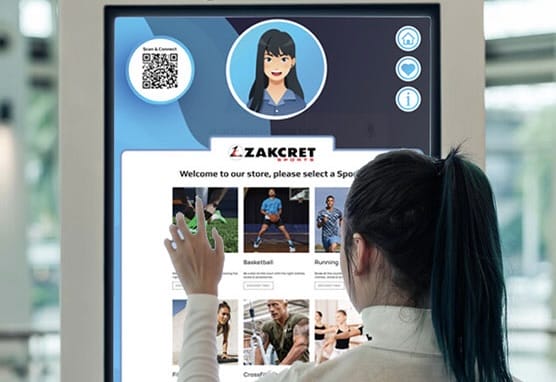
Consumers across Asia Pacific are rapidly embracing AI-powered shopping assistants, signalling a major shift in how purchasing decisions are made.
www.businesstoday.com.myAccording to Accenture research, consumers across Asia Pacific are rapidly embracing AI-powered shopping assistants, shifting how purchasing decisions get made. With agentic commerce gaining momentum, the study urges businesses to prepare for the next frontier of digital commerce.
Read alongside yesterday's Deloitte study showing 56% of European consumers have already shopped with AI, the picture is consistent across regions: AI shopping adoption is advancing everywhere. For e-commerce operators, making product data agent-ready is quickly becoming a question of when, not whether.
K-Beauty sales rose 430% on TikTok Shop, NIQ finds

TikTok Shop searches for K-Beauty rose 125% in the UK in 2025, while Canada reached $164M; NIQ says wellness and haircare are next areas to watch.
www.stocktitan.netNIQ research shows K-Beauty value sales surged 430% across four key TikTok Shop markets, while global K-Beauty sales grew 53% overall. TikTok Shop searches for K-Beauty rose 125% in the UK, and Canadian sales reached $164 million.
It is a vivid example of social commerce catapulting a single category across borders. NIQ points to wellness and haircare as the next areas to watch, and TikTok Shop's discovery-to-checkout funnel is cementing itself as the primary channel for trend-driven consumption.
Global E-Commerce
EU imposes a flat EUR 3 customs duty on low-value parcels

On 1 July 2026, Commission Delegated Regulation (EU) 2026/1022 took effect, eliminating duty-free treatment for low-value consignments and introducing a flat EUR 3 per item duty on goods worth up to EUR 150.
research.hktdc.comAn EU delegated regulation that took effect on July 1, 2026, ends duty-free treatment for low-value imports, introducing a flat EUR 3 per-item customs duty on goods worth up to EUR 150. The change has immediate implications for e-commerce platforms, marketplaces, and logistics operators shipping into the EU from third countries, particularly across Asia.
The reform is part of Europe's institutional response to the explosive growth of ultra-low-price e-commerce epitomized by Temu and Shein. Business models built on high-frequency, small-parcel cross-border shipping now face a changed cost structure, likely accelerating the shift toward in-region inventory and local fulfillment.
South Korea requires Temu and AliExpress to appoint local agents

South Korea's e-commerce rules force Temu, AliExpress, and Shein to appoint Korea-based domestic representatives by January 2027.
www.techtimes.comNew South Korean e-commerce rules require foreign platforms including Temu, AliExpress, and Shein to appoint Korea-based domestic representatives by January 2027. It is the first mechanism giving the Korea Fair Trade Commission a legally reachable in-country contact for overseas operators.
The rules follow years of documented product-safety failures and consumer-protection enforcement gaps on Chinese platforms. Landing the same day as the EU's customs reform, the move underscores that tightening regulation of cross-border e-commerce has become a global trend.
Vietnam's Sendo shuts down its online grocery platform and exits e-commerce

Sendo Farm, the online grocery platform operated by Sen Do Technology, has wound down operations, marking the company's withdrawal from Vietnam's e-commerce industry.
fintechnews.sgVietnam's Sen Do Technology has wound down its online grocery platform Sendo Farm, marking its exit from e-commerce after more than a decade of competing against well-funded giants. The outcome illustrates how hard it has become for independent platforms to survive in Vietnam's market.
Southeast Asian e-commerce is consolidating around Shopee, Lazada, and TikTok Shop, and the shakeout of local players is accelerating. Even as the market grows, some players are stepping away from the war of attrition, a signal worth noting for any business choosing sales channels in the region.
Logistics & Fulfillment
Tractor Supply teams with Instacart for same-day delivery
The nation's largest rural lifestyle retailer is the latest to join the grocery tech company's marketplace.
massmarketretailers.comTractor Supply, the largest rural lifestyle retailer in the US, has partnered with Instacart to offer same-day delivery. With its feed, garden, and rural-living assortment joining the Instacart marketplace, the delivery platform's expansion beyond groceries continues.
Instacart gains category breadth, while the retailer gets same-day delivery without building its own logistics. Together with yesterday's DoorDash x Shopify integration, delivery platforms keep cementing their role as retail's instant-fulfillment infrastructure.
Maersk to run a $100 million Boston fulfillment center for a large retailer

Maersk will fulfill orders for the Northeast region for a large e-commerce seller from a new Boston facility.
www.freightwaves.comShipping giant Maersk will operate a $100 million fulfillment center in Boston, handling Northeast US order fulfillment for a large e-commerce seller. The facility extends Maersk's integrated logistics strategy, which spans ocean freight through warehousing and delivery.
An ocean carrier pushing this far downstream into e-commerce logistics reflects how fulfillment has become a strategic asset that wins on delivery speed rather than a cost center. Shippers gain more 3PL options, even as logistics networks grow more vertically integrated.
Wrap-Up
Today can be summed up as the day both the standards and the capital behind agent payments moved at once. The x402 Foundation's launch brought every major card network aboard an open payment standard, while the Stripe-Advent bid for PayPal showed the payments layer consolidating at the capital level too. In China, the Yuanbao x JD.com integration turned AI-assistant-driven shopping into a live product. And Akamai's report on surging AI bot attacks was a reminder that a growing agent economy means a growing defensive burden. Standardization, consolidation, and security: the infrastructure race for agentic commerce is now a full-scale campaign.