
AI Commerce News Digest (July 28, 2026)
Adobe Commerce ships product discovery on LLM surfaces, Alibaba.com launches the Accio Sourcing Toolkit for agentic B2B procurement, and Whatnot buys Shaped. Here is the AI commerce news that mattered on July 28, 2026.

Key Takeaways
- Adobe Commerce ships product discovery on LLM surfaces
- Alibaba.com automates B2B negotiation and ordering with AI agents
- Ownership of product discovery becomes the day's dividing line
Here is the AI commerce news for July 28, 2026. One question ran through the day: where does product discovery actually happen now? Adobe moved its LLM surface capability into general availability so AI crawlers can read catalog data directly, while Alibaba handed sourcing negotiations themselves to agents. Whatnot went the other way, buying a recommendation company to keep discovery inside its own platform. Yesterday's Visa and Lianlian story marked progress on the payment rail. Today the movement was on the discovery and sourcing side, and this time it arrived as shipping product.
Top Stories
Adobe Commerce makes product discovery on LLM surfaces generally available

Customers now ask AI to recommend products. Explore how agentic AI in Adobe Commerce makes your online presence highly discoverable for AI.
business.adobe.comAdobe announced on July 27 that product discovery on LLM surfaces is now generally available in Adobe Commerce. At the center sits the Adobe Catalog Agent, which enriches product detail pages with structured product information pulled straight from the Commerce catalog.
That enrichment arrives as a machine-readable layer aimed at AI crawlers and LLM-powered discovery systems, leaving the human shopping experience untouched. By exposing richer names, attributes, specifications, compatibility, availability and pricing, Adobe wants AI applications to interpret and recommend products with more confidence.
The traffic picture explains the timing. According to Adobe Digital Insights, AI-sourced traffic to US retail sites grew 125% between April and June 2026 compared with the same period a year earlier. During the November to December 2025 holiday season, that figure reached 693% year over year.
The practical question for merchants is whether effort once spent on search engine optimization can be redirected toward machine readability. Fixing this at the catalog layer, without rebuilding the storefront, gives existing operations a realistic place to start.
Full article: Adobe Commerce Ships Product Discovery on LLM Surfaces: Machine-Readable Catalogs Now Decide AI Search Visibility
Alibaba.com launches the Accio Sourcing Toolkit, handing supplier negotiation to round-the-clock agents
Alibaba’s toolkit is designed to make processes such as supplier matching, bulk outreach and order placement easier for e-commerce sellers using automation
procurementmag.comAlibaba has introduced the Accio Sourcing Toolkit, an automation layer for procurement work. Integrated into the company's agentic Accio Work platform, it treats supplier discovery and comparison, bulk outreach, negotiation and order placement as one continuous flow.
Negotiation is the part worth watching. Once buyers define product specifications, lead times and sourcing requirements, AI agents pursue suppliers around the clock across time zones. Models trained on real trading data, with contextual awareness of the workflow, refine enquiries and chase down missing supplier information.
Procurement is not moving wholesale to agents, though. Research published by Ivalua and Ardent Partners found 63% of procurement leaders say critical sourcing decisions should still require human verification, and concerns about black-box reasoning remain widespread. Deciding what runs autonomously and where approval steps in is where implementations succeed or stall.
Full article: Alibaba.com Launches Accio Sourcing Toolkit, Handing 24/7 B2B Negotiation and Follow-Up to AI Agents
Agentic Commerce
Agentic AI is changing who influences online shopping decisions

Agentic Commerce: As AI shopping agents evolve from assistants to decision-makers, retailers may need to rethink how they reach customers, present products and compete online
www.business-standard.comBusiness Standard published an analysis arguing that AI shopping agents are shifting from assistants toward decision-makers. Once agents sit close to the final purchase call, the assumption about who a merchant is persuading changes entirely.
Conventional ecommerce tactics were built for human eyes. Banner treatment, review ordering and price presentation all assume a person looking at a screen. When the decision moves to an agent, accuracy of structured attributes and freshness of inventory matter more than presentation.
The piece argues retailers need to revisit how they reach customers, how they present products and how they compete. That connects directly to a harder question: which metrics count as success when AI-sourced traffic keeps growing.
AI shopping carts may become the next retail media channel, with a twist
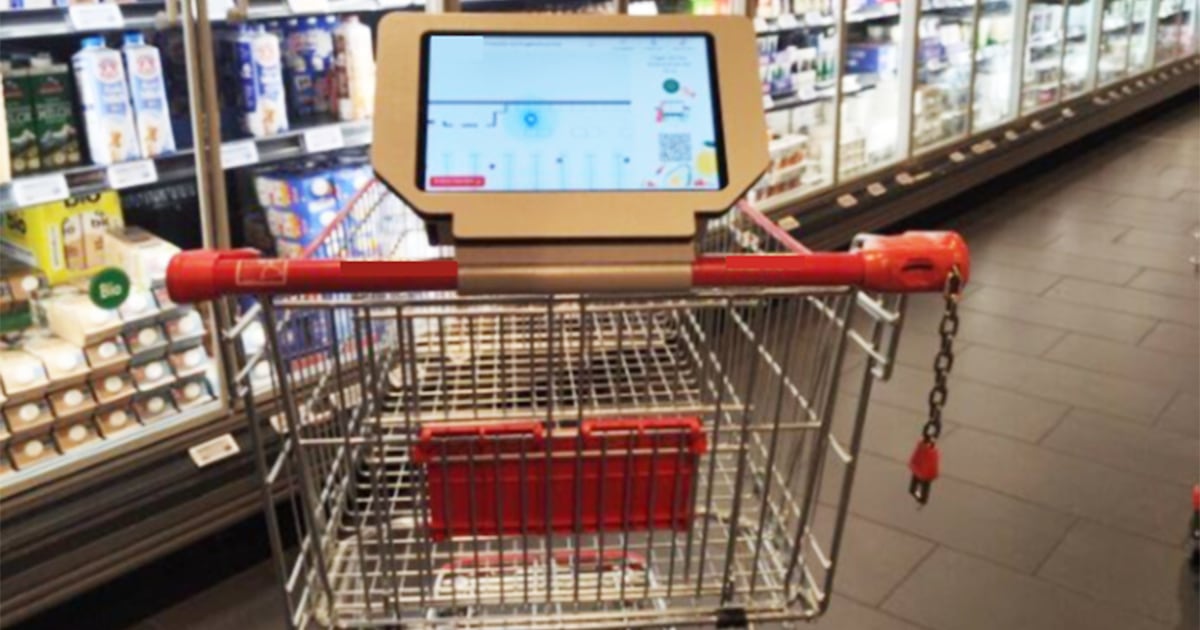
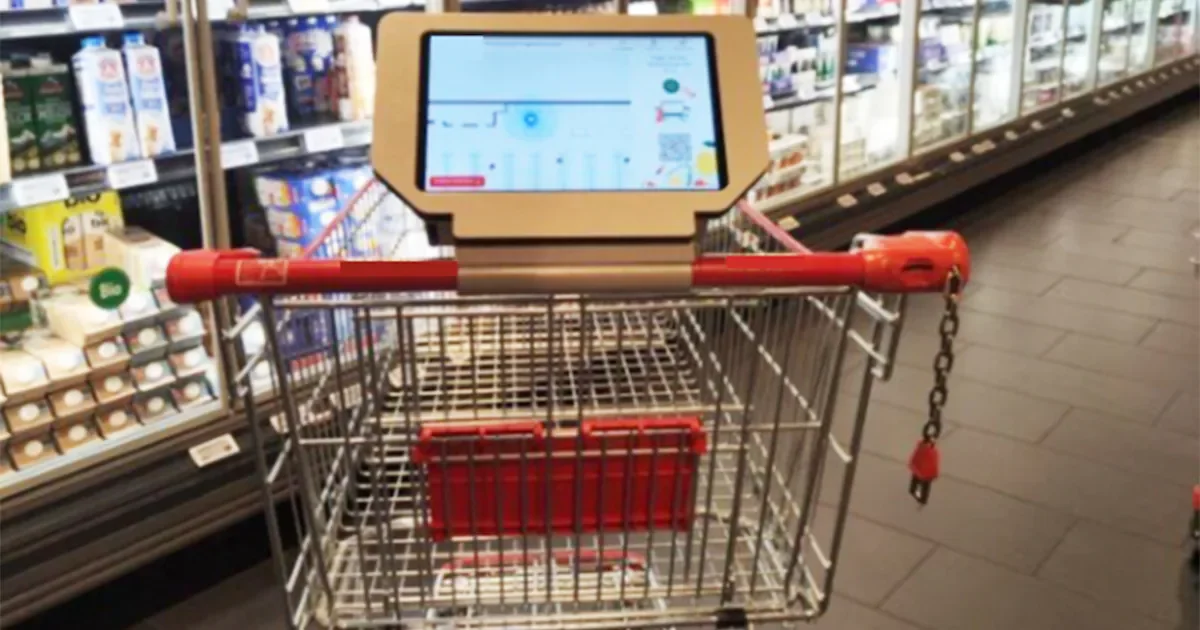
A new pilot study suggests AI-powered shopping carts could become a new retail media channel, even as the most engaged users appear to use the technology to look for better values rather than simply spend more.
www.foodnavigator.comAI-powered shopping carts arriving in stores are becoming a new visibility battleground for brands. The pilot study covered by FoodNavigator suggests cart screens can function as an ad surface that reaches shoppers moments before the purchase decision.
The findings cut both ways. The most engaged cart users moved toward hunting better value rather than spending more. The easier comparison and substitute discovery become, the closer shoppers get to buying strategically.
Putting AI at the final point of the aisle means both opportunity and pressure for brands. If comparison at the shelf is the default, the burden shifts to having a reason beyond price.
AI Commerce Tools
Whatnot acquires Shaped to bring live commerce discovery in-house

Whatnot, the livestream shopping platform, has acquired Shaped, a machine learning company specializing in real-time recommendation and search technology.
theaiinsider.techLivestream shopping platform Whatnot has acquired Shaped, which builds real-time ranking infrastructure for recommendation and search. Financial terms of the deal were not disclosed. Shaped counted Outdoorsy and QVC among its clients and combined customer data with large language models for personalized search.
Live commerce is unusually hard for recommendation systems. Inventory and buyer intent shift continuously during auctions that end in minutes, so conventional ecommerce approaches do not transfer cleanly. Emmanuel Fuentes, Whatnot's VP of Data and AI, said the company spent six years cutting recommendation latency from roughly a day to minutes.
Whatnot processes more than 500,000 hours of live video and millions of interactions weekly. Pushing that latency closer to real time is the point of the integration, and it reads as a deliberate move to hold on to in-platform discovery while product search drifts toward external AI.
Full article: Whatnot Acquires AI Recommendation Startup Shaped, Betting on Owning Live Commerce Discovery
Rezolve Ai expects roughly $127 million in first-half revenue, nearly 20 times a year ago
Company reaffirms approximately $360 million full-year revenue guidance as enterprise deployments, Tata Consultancy Services momentum, Microsoft Foundry...
www.globenewswire.comRezolve Ai (NASDAQ: RZLV), which supplies agentic commerce infrastructure, said it expects first-half 2026 revenue of approximately $127 million. That is nearly 20 times the same period last year.
The figure rests on preliminary, unaudited management accounts and remains subject to the company's normal half-year close and review procedures. Earlier this month Rezolve also disclosed a partnership bringing its agentic commerce capabilities to payments platform Zilch, extending its reach into financial services.
Examples of agentic commerce revenue reaching meaningful scale are still scarce. Whether specialist vendors can sustain that trajectory is a judgment best made once audited figures and customer counts arrive.
Advertising and Retail Media
Google Ads changes target-based bidding on August 17

Google's August 17 change makes budget-limited Target CPA and Target ROAS campaigns chase their targets instead of beating them, raising costs unless you act.
www.searchenginejournal.comStarting August 17, Google is changing how target-based automated bidding behaves. Budget-limited Target CPA and Target ROAS campaigns will move toward the target you set rather than aiming to beat it.
Campaigns pinned against a budget cap have often delivered better efficiency than their stated target. Once the target itself becomes the reference point, advertisers who set conservative targets are the ones most likely to see acquisition costs rise.
For merchants that means an audit at the campaign level. Checking which campaigns are budget-constrained, and whether Target CPA and Target ROAS values still match actual performance, has to happen in the roughly three weeks left before the change lands.
Corporate Moves and Partnerships
Lightspeed connects in-store sales to Meta ads through the Conversions API
Called Lightspeed with Meta Conversions API, the software interface gives brick-and-mortar stores a better way to measure the in-store impact of their online ads.
tech.yahoo.comCommerce and POS provider Lightspeed announced Lightspeed with Meta Conversions API, an interface that feeds physical store sales data into Meta's ad measurement so retailers can see what online advertising delivered in-store.
Evaluating online advertising has long been awkward for merchants with physical stores. The path from ad exposure to store visit to purchase was broken, which left budget allocation resting on intuition.
Feeding purchase data back into ad optimization grows more valuable as automated bidding takes over. The quality of the signals available for learning increasingly determines the outcome.
Fincart raises $2.8 million seed to expand across MENA and Africa

Egypt-based e-commerce operations platform Fincart has raised an oversubscribed $2.8 million Seed round, co-led by Launch Africa...
www.wamda.comEgypt-based Fincart closed an oversubscribed $2.8 million seed round co-led by Launch Africa and Antler MENAP, with participation from Yango Ventures and other MENA and Africa-focused investors.
The company provides shipping and operations infrastructure for ecommerce merchants and plans to use the funding to expand across the Middle East, North Africa and the wider African market. Where logistics infrastructure lags, this operational layer is a precondition for ecommerce growth.
There is a second reading. Infrastructure in emerging markets doubles as the foundation automation later sits on, because consolidating order and delivery data makes agent capabilities easier to add.
Temu partners with a Swiss SME association to help smaller businesses sell online
The partnership gives Swiss SMEs a route onto Temu's marketplace and practical guidance on going digital.
www.martechcube.comTemu signed a memorandum of understanding with the Schweizerischer KMU Verband (SKV), one of Switzerland's SME membership associations. Swiss small and medium-sized businesses gain a route onto Temu's marketplace along with practical guidance on selling online.
Cross-border platforms partnering with national business associations has become a standard way to widen the supply side. Platforms secure local assortment while merchants reduce the cost of building a channel from scratch.
Better product data has a downstream effect worth noting. Structured marketplace listings circulate in a form conversational AI can reference when recommending products.
Global Ecommerce
Albertsons CEO reorganizes the omni-channel model around AI

A business re-org with AI at its beating heart? That’s what’s on offer from the US grocery giant it seems.
diginomica.comSusan Morris, CEO of US grocery group Albertsons, is restructuring the business with AI as an operating assumption rather than a separate initiative. The stated view is that technology and AI belong inside omni-channel operations, not alongside them.
Grocery turns inventory fast, and store and online demand feed off each other. Widening what AI handles in forecasting and assortment requires changing cross-functional decision structures first.
As long as technology adoption is treated as an IT project, business processes stay where they are. Starting from the organizational side makes this a reference point for other retailers.
Indian quick commerce leans on AI and consumer data for growth
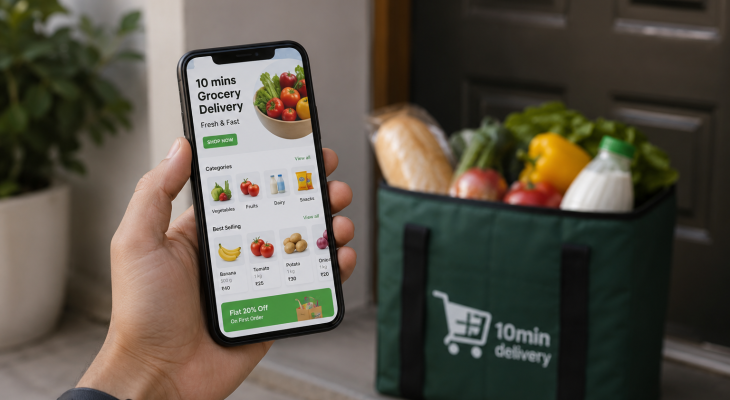
Quick commerce firms are using AI and consumer data to personalise shopping, optimise inventory and expand retail media while prioritising trust.
www.businessworld.inQuick commerce operators in India are pivoting toward growth strategies built on AI and consumer data. Personalizing the shopping experience, optimizing inventory placement and expanding retail media are the main levers.
Read another way, competition is shifting from delivery speed to what gets recommended and how. In a market where delivery in well under an hour is routine, speed alone stops being a differentiator.
Trust is the common thread across these companies. The further data usage goes, the more prominent the question of keeping shoppers comfortable becomes.
Logistics and Fulfilment
Fulfilment operators are outpacing retailers on AI-powered shopping

New Google Trends data suggests fulfilment operators are getting ahead of retailers when it comes to AI-powered shopping, as they transform supply chains.
homeofdirectcommerce.comAn analysis built on Google Trends data suggests fulfilment operators are ahead of retailers in attention to and preparation for AI-powered shopping. The supply chain side appears to be moving first.
As agent-driven purchasing spreads, order patterns and delivery expectations change shape. Operators running warehouses and delivery have to revisit demand forecasting and inventory placement, which tends to force earlier action.
The lesson for retailers is that discovery cannot be designed in isolation from fulfilment. If agent-originated orders grow, the accuracy of inventory data and the immediacy of delivery information become the constraint.
DHL eCommerce acquires Baltic parcel carrier Venipak
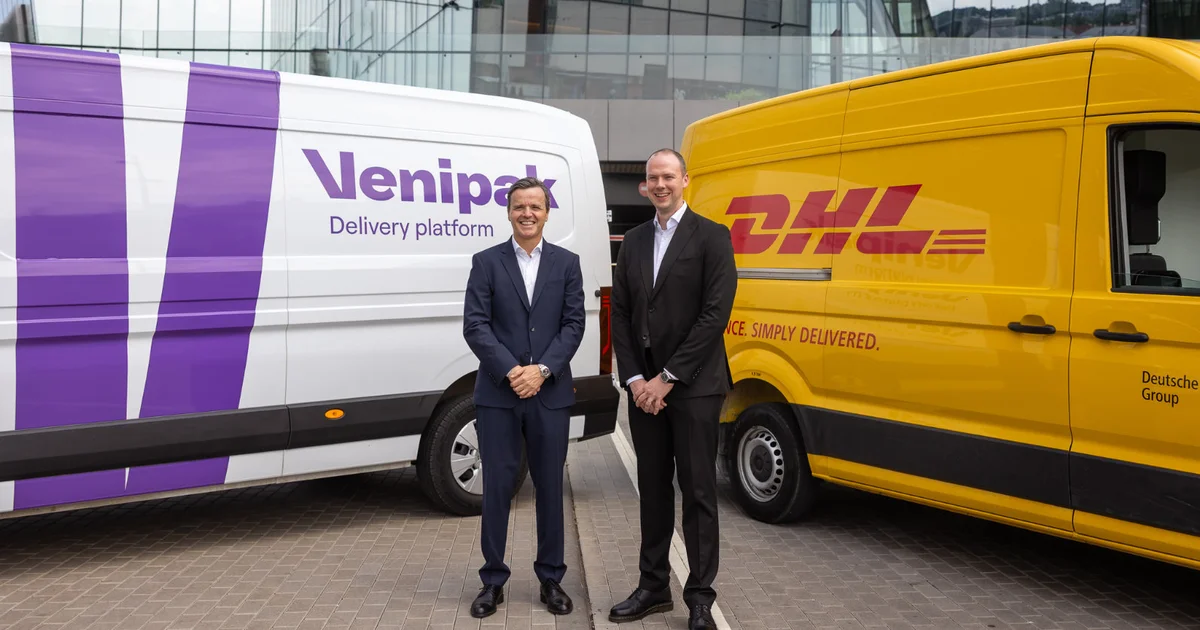
Through the acquisition DHL will establish a fully owned presence in the Baltic region, combining Venipak's local infrastructure with its global network.
group.dhl.comDHL eCommerce announced the acquisition of Venipak, a parcel carrier operating across the Baltic states. The deal gives DHL a fully owned presence in the region and connects Venipak's local infrastructure to its global network.
Cross-border delivery quality in Europe depends heavily on carriers that understand local conditions. Owning last-mile locations and collection options is what separates one delivery experience from another.
With changes to EU customs rules approaching, larger operators consolidating regional networks looks set to continue.
Consumer groups press the EU over unexpected duty charges on parcels

Europe's consumer federation and a leading EU lawmaker are pressing the European Commission to ensure that consumers do not face unexpected charges for online purchases to cover a new customs duty.
www.reuters.comEurope's consumer federation and a leading EU lawmaker have asked the European Commission to address how the cost of a new customs duty reaches shoppers. Their concern is charges that appear at delivery rather than at purchase.
Price transparency sits at the heart of the dispute. If the total is not settled at checkout, buyers cannot know what they owe until the parcel arrives. Rising returns and refused deliveries then land back on the merchant.
For cross-border sellers, the practical task is being able to present a duty-inclusive total at checkout.
Closing Thoughts
Underneath all of today's news sat a single question: who controls product discovery. Adobe chose to open its catalog to external AI. Whatnot bought its way back into owning in-platform discovery. The directions look opposite, yet both are decisions about where to stand once AI is the thing choosing products.
Sourcing moved too, with Alibaba handing negotiation and ordering to agents. AI is now entering the operational reality of transactions on both the buying and selling sides. What to watch next is whether numbers appear showing how much transaction volume this automation actually moved.