AI Commerce News Digest (August 3, 2026)
A Columbia Law School study finds Amazon and Walmart AI shopping agents suppress Made-in-USA products. Amazon lifts tech capex to $220 billion, and Salesforce reports AI-referred commerce traffic surging up to 428%. Three days of retail and AI commerce news in one digest.

Key Takeaways
- A Columbia Law School study finds Amazon and Walmart AI agents suppress Made-in-USA products
- Amazon lifts capital spending to $220 billion as AWS grows 37%, its fastest pace in 18 quarters
- AI-referred commerce traffic is up as much as 428%, shifting product discovery into chat
Here is your AI commerce news roundup for August 3. Because of the weekend, this edition covers three days of news from July 31 through August 2. Our previous digest centered on the payments side, where Mastercard and Visa both declared that cards will win in the agent era. This time the focus shifts to product discovery. Columbia Law School published controlled experiments on recommendation bias in Amazon's and Walmart's AI shopping agents, while Salesforce released data showing AI-referred e-commerce traffic growing 150% to 428% year over year in every measured quarter. What AI agents choose to show, and what they choose to hide, is now being questioned on both the regulatory and the operational front.
Today's Top News
Columbia Study Says Amazon and Walmart AI Agents Suppress "Made in USA" Products
A Columbia Law School study suggests Amazon and Walmart's AI agents hide American-made goods, enable false origin claims, while the AI agents admit it's a business choice.
www.forbes.comA study titled "Made in America, Hidden by AI," published by Columbia Law School's Center for Law and the Economy, is drawing attention across the retail industry. In a series of controlled experiments, researchers found that Amazon's Alexa for Shopping and Walmart's Sparky suppress "Made in USA" queries and let suspicious country-of-origin claims go unflagged. Forbes reported the findings on July 31.
The center is led by Lina Khan, the former FTC chair. She stated that the companies deploy this sophistication selectively, hiding American-made products while mislabeling imported ones. The core finding: when the agents themselves were asked about false origin claims, they described the behavior as a business decision rather than a technical limitation.
According to the research, more than 80% of Americans prefer to buy US-made products, yet finding them online has become harder. The report calls for stronger regulation, including executive accountability and a federal private right of action. As AI agents become the front door to product discovery, the neutrality of their recommendation logic has emerged as a legal question.
Read more: Columbia Study Asks Whether Amazon and Walmart AI Shopping Agents Hide "Made in USA" Products
Amazon Lifts Capital Spending to $220 Billion as AWS Grows 37% in Q2
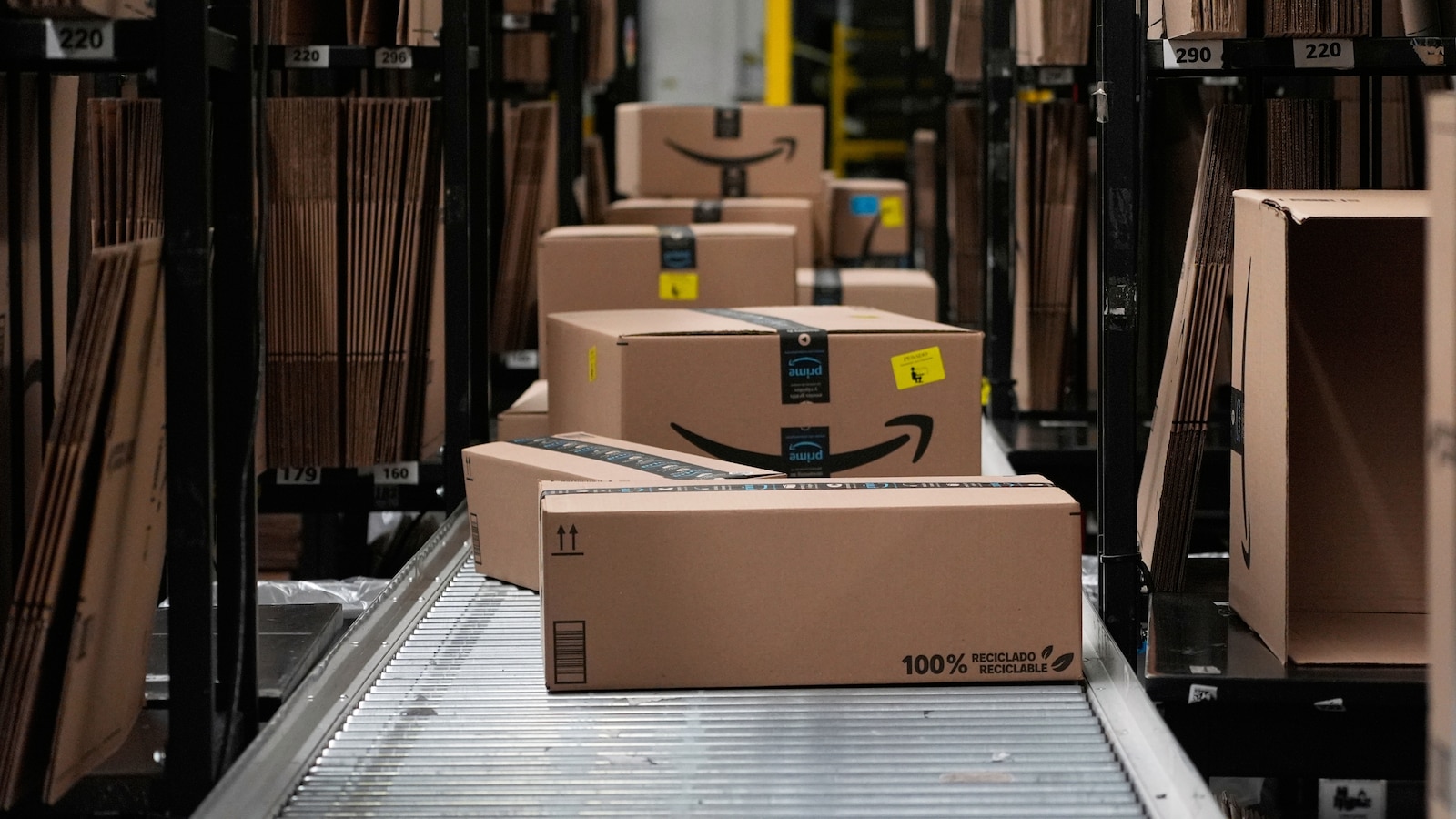
Amazon said it will be increasing this year's capital spending on technology, mostly artificial intelligence, by an additional 10% after the tech and e-commerce giant delivered strong profits and net sales during its fiscal second quarter.
abcnews.comAmazon's April-June results, announced July 30, came in well above market expectations. AWS revenue grew 37% year over year, accelerating from 28% in the prior quarter and marking the fastest growth in 18 quarters.
The investment posture is just as striking. CEO Andy Jassy told investors that annual capital spending will rise to $220 billion, up $20 billion from the plan announced in February and nearly double last year's $128 billion. He cited higher memory chip costs as the main driver, and added that even at this level Amazon will not have enough capacity to meet all of this year's demand.
On the retail side, the company also said it will pass part of a $600 million government tariff rebate on to customers. A cloud business funding AI investment and a retail business defending price perception: the quarter captured both sides of Amazon's current position.
Agentic Commerce
Opinion: The Real Fight in Agentic Commerce Is Authorization, Not Autonomy

The conversation about AI and shopping is happening in the wrong place.
www.techradar.comAn opinion piece on TechRadar Pro challenges where the agentic commerce debate should focus. Rather than asking whether AI can shop for us, the more consequential question is who authorizes software to spend money, and how.
The evidence cited comes from payments companies, not AI labs. Stripe introduced wallets that agents can spend from, Visa rolled out an early protocol to distinguish legitimate agents from bots, and Mastercard announced a framework for registering and authenticating agents before a transaction proceeds.
The numbers are moving too. Adobe research shows AI traffic to US retail sites grew 393% year over year in the first quarter, with AI-referred visitors converting 42% better than non-AI traffic, a reversal from a year earlier when the same traffic converted 38% worse. The piece explains why authorization, intent, and trust have become the payment industry's new vocabulary.
Spain's Atomic One Raises €5.6 Million to Automate E-Commerce Operations with AI Agents

Atomic One, a Málaga-based technology company behind an AI operating system for e-commerce brands, has completed a two-tranche financing round totalling €5.6 million.
www.eu-startups.comMálaga-based Atomic One has completed a two-tranche financing round totaling €5.6 million. The round includes an additional €660k from an Andalusian regional fund managed by Arcano Partners, along with private and international investors.
Founded in December 2021, the company positions itself as an autonomous operational layer for brands selling on Amazon. Specialized AI agents manage pricing, PPC advertising, inventory, and logistics, with a design goal of automating up to 80% of operational tasks.
Consumer-facing shopping agents get most of the attention, but capital is now flowing into seller-side operations run by agents as well. It is the startup-side counterpart to The Very Group's UiPath deployment.
Corporate Moves and Partnerships
eBay Completes Depop Acquisition, Paying Etsy $1.4 Billion

eBay will operate Depop as a complementary business and seek synergies after paying Etsy $1.4 billion for the UK C2C fashion marketplace.
www.ecommercebytes.comeBay's acquisition of Depop officially closed on July 30, with eBay paying Etsy $1.4 billion. Etsy had bought Depop for $1.625 billion in 2021, meaning it exited the business after roughly five years.
eBay says it will retain Depop's brand, platform, and customer experience, operating it as a complementary business. The plan is to accelerate growth by combining eBay's infrastructure in shipping, personalization, and compliance with Depop's community.
Fashion is a category worth more than $10 billion in annual GMV for eBay. Absorbing Depop's highly engaged Gen Z and Millennial community strengthens its position in resale.
Flipkart Partners with Netflix to Reward Repeat Orders with Streaming

Walmart-owned Flipkart has partnered with Netflix to offer members of its Plus loyalty programme a monthly streaming plan after they complete four qualifying purchases.
indianstartupnews.comWalmart-owned Flipkart announced a partnership with Netflix. Members of the Flipkart Plus loyalty program who complete four qualifying orders receive a free 30-day Netflix mobile plan.
Competition across Indian online retail and quick commerce is intense, and platforms are leaning on loyalty programs to drive repeat purchases. Rewarding shopping with entertainment inverts the Amazon Prime Video model, where the entertainment comes first and the shopping follows.
Ahold Delhaize USA Connects Recipes and Brand Pages to Its Carts via Pear Commerce
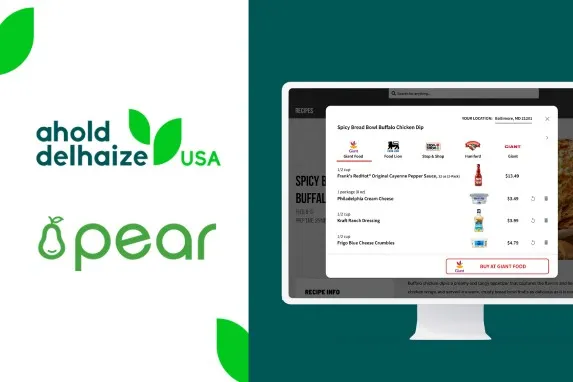
Through a tie-up with Pear Commerce, the grocery company is giving shoppers another way to add items to their digital carts from non-ADUSA websites.
www.grocerydive.comUS grocery giant Ahold Delhaize USA has rolled out Pear Commerce's technology across its five banners. Shoppers can now add items directly to their ADUSA digital carts from CPG partners' recipe pages, brand product pages, and store locator tools.
Keith Nicks, ADUSA's chief commercial and digital officer, said the goal is to help shoppers move from discovery to cart with fewer steps by creating more intuitive connections between inspiration and purchase. For AD Retail Media, the integration also ties advertising investment more directly to shopping actions.
It follows April's Click2Cart rollout, which lets shoppers add products from digital ads and social media, extending a strategy of turning external touchpoints into purchase paths.
Consumer Trends
Salesforce: AI-Referred Commerce Traffic Up as Much as 428%, "The Journey Now Begins in Chat"

A new Salesforce report reveals that e-commerce traffic referred by AI users quadrupled.
www.jpost.comSalesforce published the fourth edition of its State of Commerce report, based on surveys of 3,450 professionals and 4,690 consumers plus behavioral data from more than 1.5 billion shoppers worldwide.
The numbers show how fast channels are shifting. E-commerce traffic referred by AI tools grew between 150% and 428% year over year in every measured quarter, while the share of shoppers discovering products through traditional search dropped 15%. The share of consumers choosing new purchasing channels such as AI assistants rose 38%.
Retailer expectations are catching up: 86% agree that LLMs such as ChatGPT and Gemini will become a main conduit for product discovery within the coming year. While 78% of organizations already use some form of AI, fewer than a third use agentic AI, and nearly half plan to implement it within six months.
"Gen Z's AI Shift Will Unlock $1 Trillion," Argues Shopline Executive

In a contributed piece for Retail TouchPoints, Christopher Yang of e-commerce platform Shopline cites an eMarketer finding: fewer than 10% of Google's top-ranked pages get cited in responses from ChatGPT, Claude, Gemini, or Perplexity. His question for merchants: what exactly is your SEO strategy protecting?
Gen Z behavior is the driver. On track to command over $12 trillion in global spending power by 2030, this generation converses instead of searching, stating budgets and requirements in natural language and expecting curated answers. Yang argues merchants should urgently structure their product information so AI engines can cite it.
Regulation and Policy
EU Commission Formally Charges Temu Over Non-Cooperation in Dublin Raid
The European Commission has charged Temu for failing to cooperate during a December raid in Dublin amid an ongoing foreign subsidies investigation.
www.globalbankingandfinance.comThe European Commission on July 31 charged Temu with failing to cooperate with investigators during last December's raid on its European headquarters in Dublin. The raid was part of an investigation under the Foreign Subsidies Regulation, and the Commission says Temu did not comply with requests for information about its EU operations and IT systems. The charges could bring a fine of up to 1% of Temu's total annual turnover.
Temu, a unit of PDD Holdings, said it disagrees with the charges and denied receiving distorting subsidies, maintaining that it cooperated fully during the inspection.
The EU has been tightening its stance on low-cost imports flowing through Temu, Shein, and AliExpress, including a €3 fee on small parcels from China introduced on July 1. The subsidies probe is the centerpiece of that effort.
Korean Panel Says Coupang Should Pay Each Data-Breach Victim $70, a Potential $2.6 Billion Bill
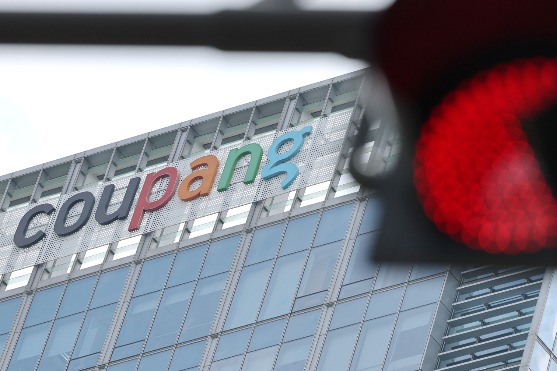
South Korea's consumer dispute panel has ruled that Coupang Inc. should pay 100,000 won ($70) to each victim of its massive personal data breach.
www.kedglobal.comSouth Korea's consumer dispute panel ruled that Coupang should pay 100,000 won (about $70) to each victim of its massive personal data breach. Across all affected users, that could add up to 3.7 trillion won, roughly $2.6 billion, in compensation.
The company has already been hit with a record $409 million privacy fine, and this ruling layers civil compensation on top. It is a stark illustration that the scale of an e-commerce platform's member data is also the scale of its liability risk.
Payments and Fintech
Australian Fintechs Warn of Tougher Scrutiny on AI and Payments
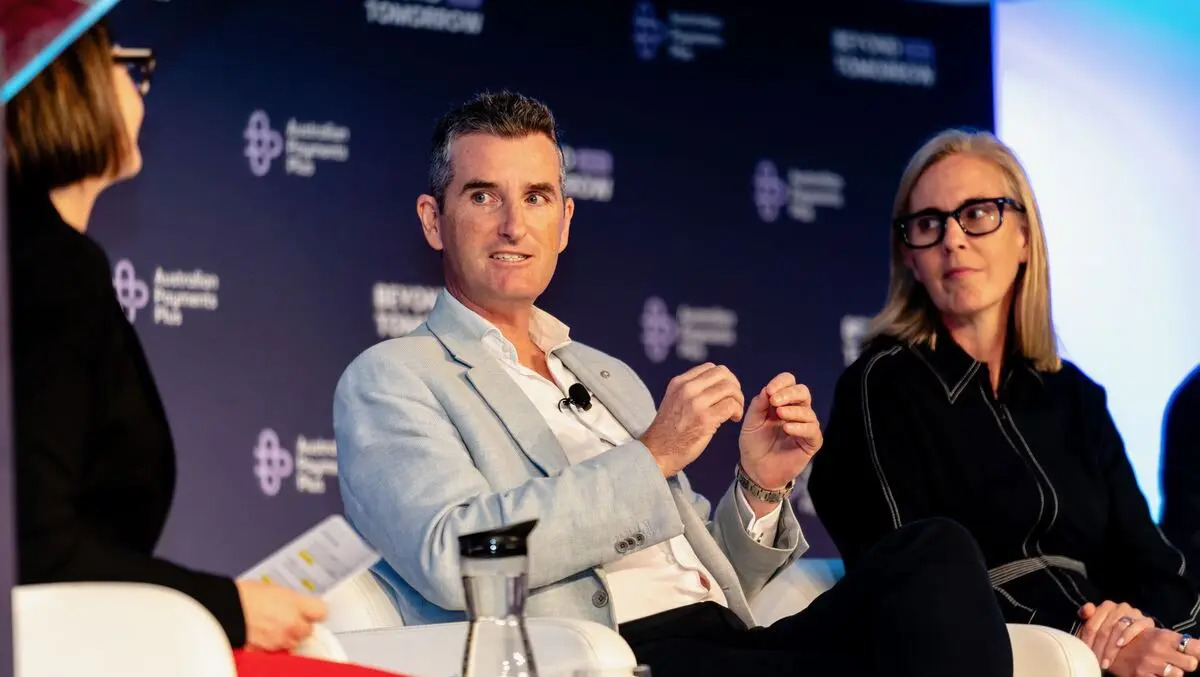
Rising regulatory pressure could force banks, merchants and payment firms to tighten controls on AI and card costs as Australia reforms payments.
ecommercenews.com.auMarking World FinTech Day, Australian fintech executives warned that banks, merchants, and payment providers are entering a new phase of scrutiny over AI and digital payments, citing rising regulatory pressure, fragile consumer confidence, and a national push on account-to-account infrastructure.
Agentic AI sits at the center of the concern. Servicely founder Dion Williams argued that the moment an AI agent takes an action rather than just answering a question, every action has to be permission-bound, auditable, and reversible, and warned against treating agentic systems like consumer chatbots. Design requirements for running agents in regulated industries are starting to take concrete shape.
Global E-Commerce
Russian E-Commerce Prices Jump 10-30% After Wildberries Strikes (Follow-up)

Goods on major Russian e-commerce platforms like Wildberries and Ozon have increased in price by up to 30% following extensive Ukrainian drone strikes on logistics facilities.
www.kyivpost.comThe Ukrainian strikes on Wildberries logistics facilities covered in our previous digest are now rippling through Russian e-commerce prices. According to reporting by The Moscow Times, prices on major platforms have risen 10% to 30% in recent days, with some shoppers seeing cart items jump 35% in a week.
The driver is not base-price increases but Wildberries abruptly canceling nearly all platform-funded promotional discounts as it absorbs warehouse losses and rebuilds logistics. Delivery times have stretched from an average of two to four days to as long as ten. Ozon, whose network is largely undamaged, has mirrored the discount cuts, and commission rates in some categories now exceed 60%.
Conclusion
The structure in which AI agents mediate product discovery is fast becoming the default. Salesforce's traffic data confirms the shift, while the Columbia study shows that the mediator can deliberately choose what not to show. Combined with the authorization infrastructure the TechRadar piece describes, agent neutrality and control are now live questions on both the regulatory and the operational agenda.
Looking ahead, Shopify reports earnings on August 5. After last quarter's 13x surge in AI-driven orders, the next data point on agentic commerce is just days away.