
AI Commerce News Digest (August 18, 2026)
Synchrony announces an enterprise collaboration with OpenAI, Alipay unveils a full-stack agentic commerce foundation with the AHA protocol, and PPRO partners with BLIK on agent-initiated local payments. Plus NIQ earnings and TikTok Shop's US surge.


Key Takeaways
- Synchrony partners with OpenAI to embed financing into ChatGPT
- Alipay unveils a full-stack agent foundation and the AHA protocol
- Agent readiness advances across payment and data layers at once
Here is your AI commerce news roundup for August 18. Major announcements landed on both sides of the Pacific today. In the US, consumer finance giant Synchrony announced an enterprise collaboration with OpenAI, bringing financing and rewards directly into ChatGPT. In China, Alipay held its first AI ecosystem conference in Hangzhou and unveiled a full-stack foundation for agentic commerce. In contrast to yesterday's B2B implementations from Metcash and Fiserv, today's stories center on the consumer-facing payments and finance layer.
Today's Top Stories
Synchrony Partners with OpenAI to Embed Financing and Loyalty into ChatGPT
Synchrony's collaboration with OpenAI emphasizes innovative AI strategy and investments to lead in agentic commerce.
www.prnewswire.comUS consumer finance major Synchrony announced an enterprise collaboration with OpenAI on August 17. The core of the deal is bringing the company's financing, rewards, and loyalty capabilities into AI-native shopping and checkout experiences.
As a concrete first step, Synchrony is launching an official plugin in the ChatGPT plugin directory. Consumers will be able to browse Synchrony Marketplace savings and promotional financing offers directly within ChatGPT conversations. Internally, the company will also deploy the latest OpenAI models across its enterprise through ChatGPT Work, Codex, and AWS Bedrock.
Synchrony laid out its agentic commerce strategy back in May, and this announcement turns that strategy into a concrete partnership and product. A financial company built on private label cards and BNPL is now placing its products directly into AI agent purchasing journeys.
Full article: Synchrony Partners with OpenAI: Inside the Agentic Commerce Strategy Embedding Financing into ChatGPT
Alipay Unveils China's First Full-Stack Agent Commerce Foundation and the AHA Protocol
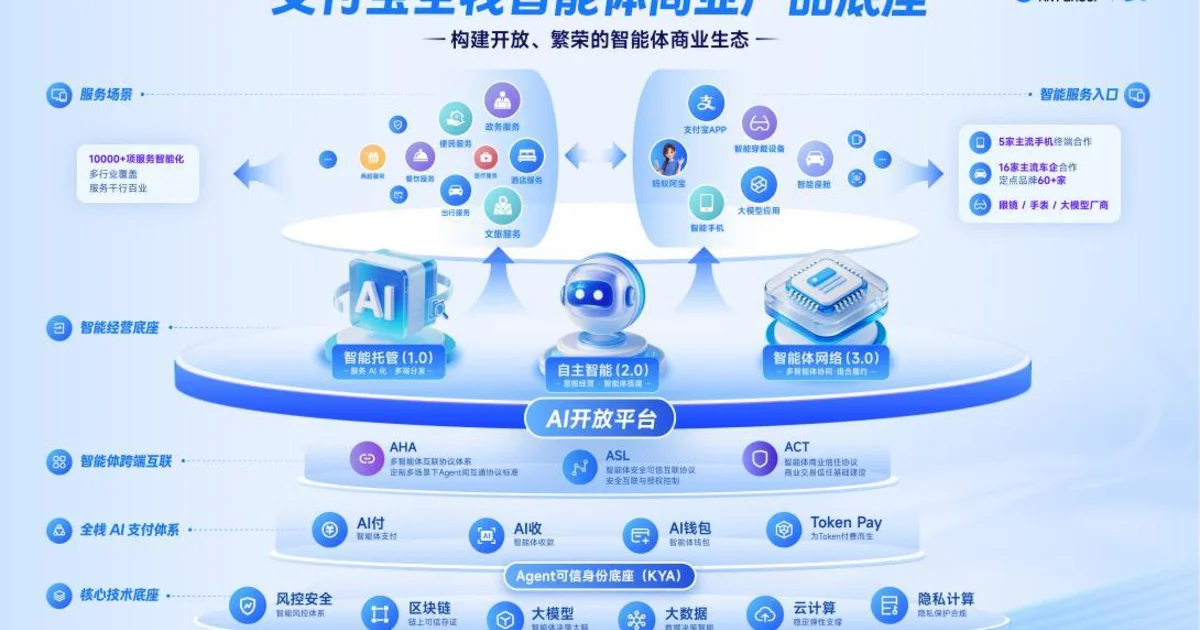
On August 17, 2026, Alipay hosted its inaugural AI ecosystem conference in Hangzhou, unveiling China's first full-stack agent commercial foundation and the AHA protocol suite.
www.crowdfundinsider.comAlipay (Ant Group) held its inaugural AI ecosystem conference in Hangzhou on August 17, unveiling what it calls China's first full-stack agent commercial foundation. The centerpiece is AHA (Agent Hub Access), a protocol suite for interconnecting agents, devices, and services from different vendors.
The announcement goes beyond the foundation itself. Ant Digital released the Agentar ecosystem edition with more than 200 skill packages, and Alipay formed an interconnection alliance with over 20 device makers, automakers, and model developers including Qwen, Huawei, OPPO, BYD, and NIO. The Abao agent, in invite-only testing since June, has already adapted more than 10,000 services including McDonald's and Luckin Coffee.
Ant Group CEO Cyril Han Xinyi said agentic commerce is poised to expand rapidly within the next six to twelve months. Following payments in May, an AI-native app in June, and an open platform in July, China's agent commerce stack is now essentially complete.
Full article: Alipay Unveils Full-Stack Agent Commerce Foundation with the AHA Protocol for Cross-Vendor Interconnection
Payments & Fintech
PPRO Partners with Poland's BLIK, a First for Local Payment Methods in Agentic Commerce
PPRO has partnered with Polish payment scheme BLIK to develop agentic commerce capabilities for local payments.
ibsintelligence.comLocal payments infrastructure provider PPRO announced a partnership with Polish payment scheme BLIK to develop support for agent-initiated transactions. BLIK is Poland's dominant local payment method, accounting for roughly 71% of e-commerce transactions in the country.
Agent payment news has so far centered on card networks like Visa and Mastercard, and Stripe. This is a local, account-based payment method stepping into agent readiness in a market where cards are not dominant, and the companies describe it as one of the first implementations of a local payment method for agent-initiated transactions. PPRO projects AI agents could account for up to 15% of European e-commerce spending by 2030.
Full article: PPRO and BLIK Partner to Bring Poland's Dominant Local Payment Method into Agentic Commerce
Circle Publishes a Roadmap for AI Agents as Sellers

Circle outlines a roadmap for AI agent seller infrastructure, focusing on identity, reputation, validation, and trusted discovery.
cryptobriefing.comCircle, the company behind the USDC stablecoin, published a roadmap for "agentic features," infrastructure that lets AI agents operate as sellers in digital commerce. The plan rests on four pillars: identity, reputation, validation, and trusted discovery.
The idea is to make it verifiable who a selling agent represents and what track record it holds, for both buying agents and human counterparties. As agent-to-agent transactions grow, this seller identity layer becomes increasingly important. It complements existing efforts that have focused on authenticating the buying side of agent payments.
Corporate Moves & Partnerships
NIQ's AI-Native Revenue Grows 34%, Agent Measurement Product Coming in September

Optiq Bridge opens retail measurement to AI agents via MCP in September, and NIQ plans a share-of-prompt measurement product by year-end.
ppc.landConsumer intelligence group NIQ reported Q2 revenue of $1,124.2 million, up 8.0% year over year, with AI-native solutions revenue growing 34%. The company plans a full launch of Optiq Bridge, its product serving retail measurement data to AI systems via MCP, in early September.
By year-end, NIQ also plans to ship a product measuring "share of prompt" and "share of discovery" in agent-mediated shopping. As AI agents increasingly shape product recommendations, a market is emerging for brands to measure how visible they are inside AI answers.
Alibaba Sells Lingxi Games to Sharpen Focus on E-commerce and AI

The landmark deal sees Citic Capital's private equity arm acquiring the unit famous for strategy game Three Kingdoms Tactics.
www.scmp.comAlibaba agreed to sell its wholly owned gaming studio Lingxi Games to Trustar Capital, the private equity arm of Citic Capital. The deal was confirmed through an internal letter seen by SCMP; terms were not disclosed, though Bloomberg reported a figure of around $1.5 billion.
Following exits from Sun Art and Intime, this continues Alibaba's shedding of non-core assets to concentrate on e-commerce, cloud, and AI. It is emblematic of Chinese big tech rebalancing capital toward AI commerce as the main battleground.
TikTok Shop's US GMV Doubles to an Estimated $11.8 Billion in H1

Its marketplace business is growing quickly in the US, but it faces a long road against established players such as Amazon.
kr-asia.comAccording to a new report from Momentum Works and Tabcut, TikTok Shop generated an estimated $11.8 billion in US GMV in the first half of 2026, up 103% year over year. The US has overtaken Indonesia as the platform's largest single market.
Consumer Edge transaction data shows TikTok Shop reached about 1.5% of US online retail spending in Q4 2025. For a platform that only launched in the US in late 2023, the trajectory shows video-driven discovery commerce taking firm root.
Global E-commerce
Shein Cuts Hong Kong IPO Valuation Target to Around $25 Billion (Update)
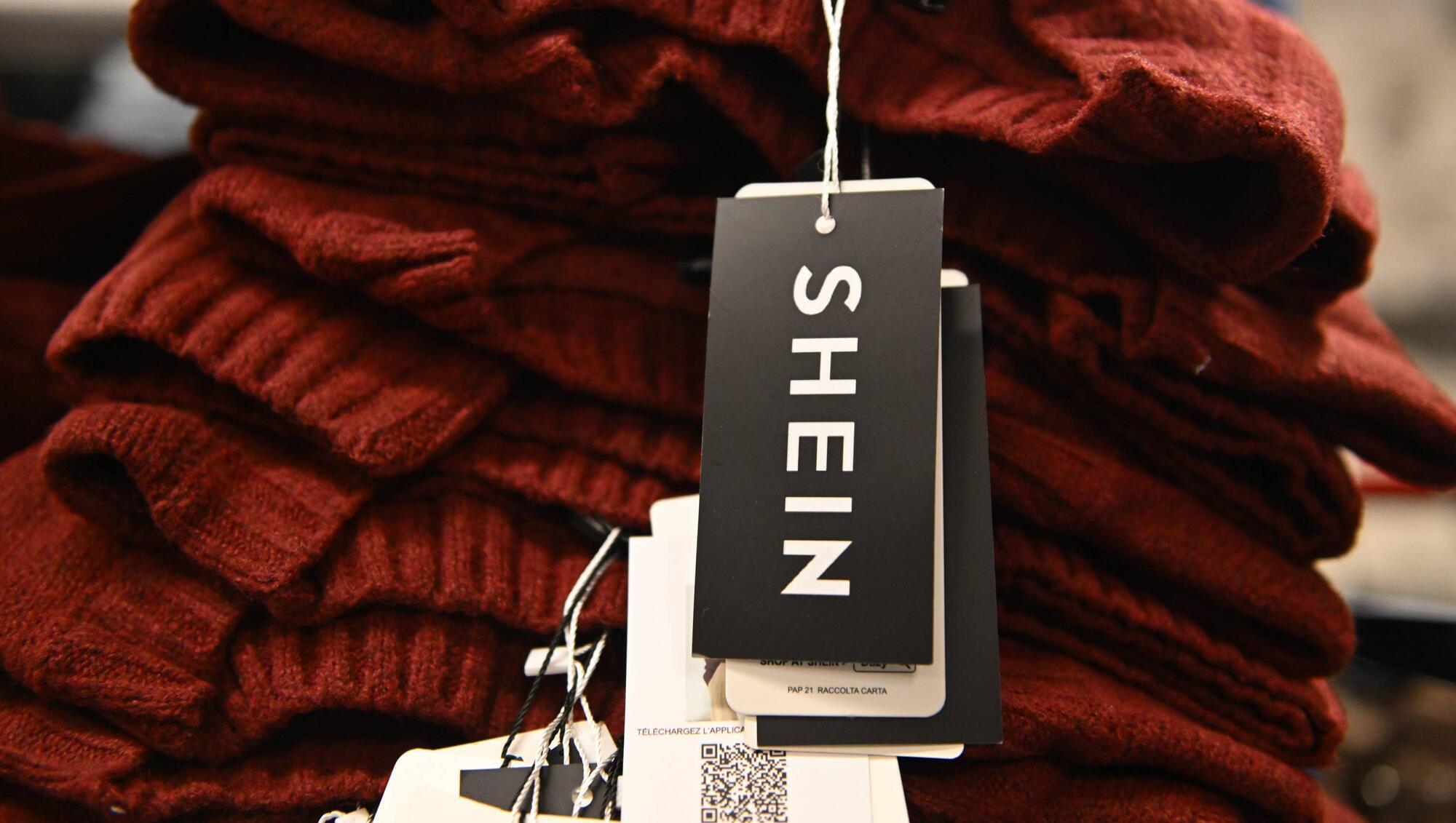
Shein is aiming to launch its much-awaited initial public offering later this week.
www.irishexaminer.comShein is now targeting a valuation of around $25 billion (a $25-28 billion range) for its Hong Kong IPO expected as early as this week, Reuters reported. That is down from the $30-40 billion range reported on August 4, and roughly a quarter of the $98.2 billion valuation from its 2022 fundraising round.
Some investors who attended IPO presentations remain unconvinced the company can return to its former growth rates. Where cross-border fast fashion ultimately gets priced will ripple through e-commerce valuations broadly.
Brazil's Casas Bahia Files for Bankruptcy Protection After $1.9 Billion Q2 Loss

Brazilian retailer Casas Bahia has filed for bankruptcy protection with a Sao Paulo court, citing deteriorating financial conditions.
www.reuters.comBrazilian retail major Casas Bahia filed for bankruptcy protection with a Sao Paulo court. Its Q2 net loss ballooned to 10.1 billion reais (about $1.94 billion) from 555 million reais a year earlier, with failed fundraising efforts triggering the filing.
High interest rates, credit restrictions, and weak consumer spending compounded the cost of its e-commerce transition. The company has already closed 298 stores as part of its turnaround plan, marking a stark example of consolidation in Latin American e-commerce.
China's Online Goods GMV Grows 3% in July as Platforms Diverge
China's online physical goods GMV grew 3% year-over-year in July, with online penetration expanding to 42.3%.
www.investing.comAccording to Macquarie's analysis, China's online physical goods GMV grew 3% year over year in July, slowing from 3.9% in June. National Bureau of Statistics data puts total online retail at 1.65 trillion yuan, up 2.4%, with online penetration expanding to 42.3%.
By app, Douyin's daily active users jumped 19% while Taobao fell 11% and JD declined 7%. The shift toward video commerce is unmistakable, and Macquarie projects Q3 GMV growth of 3-7% as comparison bases normalize.
Consumer Trends
89% of Canadian Retailers Say LLMs Will Be Essential to Product Discovery Within a Year

Salesforce's State of Commerce report shows agentic search at the start of the purchase journey rose 200% year over year globally.
www.fintech.caSalesforce's State of Commerce report shows agentic search used at the start of the purchase journey rose 200% year over year globally. Among Canadian commerce leaders, 89% say LLMs will be essential to product discovery within a year.
Top responses include improving product-content quality (46%), optimizing for conversational queries (42%), and rewriting descriptions for natural-language discovery (38%). With 34% of organizations already using agentic AI and another 33% planning deployment within six months, adoption is rapidly heading toward the majority.
Wrap-up
Today the layers supporting agent-driven purchasing got one level deeper. Synchrony is bringing financing and rewards inside ChatGPT, while Alipay went as far as cross-vendor agent interconnection with its AHA protocol. The PPRO-BLIK partnership shows that local payment methods beyond cards cannot avoid agent readiness either.
As NIQ's share-of-prompt measurement and Salesforce's research both indicate, being discoverable inside AI answers is retail's new competitive axis. Watch for Shein's final IPO terms and for other financial institutions following Synchrony's plugin playbook.