AI Commerce News Digest (September 7, 2026)
AEON opens AI agent payments across 3 million Shopify storefronts. Plus Taobao's causal ranking test, the first dedicated agentic commerce summit, and what merchants should fix in their product data for AI-driven discovery.


Key Takeaways
- AEON launched Agentic Checkout for AI agents, opening 3 million Shopify storefronts to autonomous purchasing
- Taobao rebuilt its search ranking around causal effect rather than predictive accuracy, lifting GMV 0.36% in a 41-day A/B test
- Implementations keep landing, but actual agent-driven transaction volume stays small, and attention has moved to authority and liability design
Here is the AI commerce news for September 7, 2026. This edition covers developments from September 4 through 7. What stands out is that agentic commerce talk has shifted from concept to implementation language: which storefronts, and with what spending authority. Following Anthropic's commerce agent blueprint, payment and checkout implementations have arrived in quick succession. At the same time, the first dedicated agentic commerce summit put hard numbers on how small real transaction volume still is.
Top stories
AEON opens agent checkout across 3 million Shopify storefronts

AEON, the settlement layer built for the AI economy, has launched Agentic Checkout, enabling AI agents to autonomously shop, check out, and pay across e-commerce platforms such as Shopify and Amazon.
www.prnewswire.comAEON, which builds a settlement layer for the AI economy, announced Agentic Checkout on September 4, letting AI agents search for products, build a cart, and complete payment on their own. It ships alongside the AEON AI Card, the instrument that carries spending authority for the agent.
A user describes what they want through a conversational interface, and the agent searches for matching products and assembles a cart. Once the user approves the payment, settlement runs on the AEON AI Card. The card runs over Visa and Mastercard networks, and authority is constrained through single-use agent cards and predefined budget limits. With MCP and UCP integrated natively, the company says agents can reach more than 3 million active storefronts across 175 countries and over a billion products through Shopify.
The notable choice here is opening an entire commerce ecosystem to agents rather than a curated merchant list. Amazon and Travala are named as the next integrations, though the connection route and timing were not disclosed. Note that this company is unrelated to the Japanese retail group of the same name.
Full article: AEON Launches Agentic Checkout, Letting AI Agents Buy Across 3 Million Shopify Storefronts
Taobao rebuilds search ranking around causal effect, lifting GMV 0.36% over 41 days

Seventeen funnel predictions replaced one hand-tuned formula, giving search teams a personalised weighting. Whether 0.36% survives beyond one platform is open.
ppc.landSeven researchers at Alibaba's Taobao & Tmall Group posted a paper to arXiv on August 26 describing a ranking layer that learns its objective by causal effect. Across a 41-day online A/B test, the approach raised GMV by 0.36%, clicks by 0.36% and purchases by 0.12% against the conventional predicted-GMV proxy.
The central claim is that pushing up a metric correlated with revenue does not necessarily move revenue. The configuration that used only a direct GMV prediction score turned out to be the weakest of the five compared. By learning per-request weights across click and purchase predictions, two shoppers issuing the same query can see different orderings.
The paper places its own caveats. The authors state that the offline estimate rests on assumptions their observational data cannot verify, and they do not claim the result generalises beyond a single platform. For anyone optimizing visibility in AI-mediated discovery, it raises a pointed question about whether the metric being chased actually moves sales.
Full article: Why Taobao's Search Ranking Stopped Optimizing for Prediction: A Causal Rebuild That Lifted GMV 0.36%
Agentic commerce
First dedicated agentic commerce summit centers on who pays

ACPS 2026 in Stockholm puts payment control, trust, and liability at the center of the agenda, but the gap between institutional ambition and commercial reality remains wide.
forkast.newsThe first summit devoted entirely to agentic commerce and payments takes place in Stockholm this September. The agenda avoids discovery excitement and leans into the operational side: trust, identity, fraud, and embedded finance architecture.
Line up the numbers and the distance between ambition and reality is stark. Juniper Research projects $1.5 trillion in global spend by 2030 and 120 billion transactions by 2031, while current commercial volume sits at roughly $28,000 per day. More than 200 million x402 transactions have been recorded, but over 95% of that is protocol signaling rather than actual commerce.
Trust is equally constrained. An April 2026 Product.ai survey found only 14% of consumers trust AI to execute purchases on their behalf. With x402, UCP and Mastercard's AP4M all in play, deciding where liability sits is the near-term question.
The race to own AI shopping: external platforms or your own site

Will shoppers use AI mostly on external platforms, or on-site directly with merchants?
www.practicalecommerce.comPractical Ecommerce argues that merchants will soon compete not only for shoppers but for the AI those shoppers buy through. The framing mirrors search engine optimization, where the engine is the proxy standing between merchant and customer.
The open question is whether AI shopping resolves on external platforms or on the merchant's own site. If the former, visibility depends on someone else's recommendation algorithm; if the latter, deploying AI on your own storefront becomes the battleground. The piece draws on an August 2026 Bain & Company survey of 1,105 US consumers to show where holiday purchases are expected to land.
Where generative engine optimization has focused on visibility, this adds a layer above it: which AI the shopper travels through in the first place.
Alibaba.com's Accio brings an AI Exhibition Agent to UK and European trade shows

Accio, Alibaba.com's agentic AI platform for businesses, today announced it has been appointed as the Official Agentic AI Partner for three leading trade shows.
www.prnewswire.co.ukAccio, Alibaba.com's agentic AI platform for businesses, has been appointed Official Agentic AI Partner for three leading trade shows in the UK and Europe, where it will provide an Exhibition Agent.
Trade shows are where B2B buyers and exhibitors meet face to face. Putting an agent into that setting targets the work on either side of the meeting: researching exhibitors beforehand and following up afterwards. Accio has been building toward cross-border B2B sourcing automation through its Sourcing Toolkit and Accio Work.
Agents entering the procurement side of goods trade run on a separate track from consumer purchasing. B2B sourcing carries heavy negotiation overhead, which is precisely where automation tends to pay off.
AI commerce tools
AI search became a deal-finding tool, and promotions data is the weak point

Shoppers are turning to AI tools to find deals, and bad promotions data could cost you the sale.
www.cmswire.comWhat consumers ask AI for is shifting. Not just 'find me a winter jacket for my trip to the Arctic Circle', but the same request with 'and the best available deal near me' attached.
CMSWire cites an XCCommerce survey finding that more than 70% of shoppers are exploring AI tools to find better deals, with roughly a third actively using them. The problem is that promotions live across in-store, e-commerce and marketing systems, which makes the data easy to contradict. An outdated offer surfaced by AI that then fails at checkout costs the transaction outright.
Sixty percent of consumers said they would abandon a retailer after encountering inconsistent pricing across channels. Centralized promotions data is framed as a loyalty issue rather than merely a technical one.
Consumer behavior
AI is becoming a new gatekeeper for product discovery, NIQ finds

Nearly three-quarters of shoppers now use AI for product discovery, while social commerce is also reshaping the path to purchase.
www.asiantrader.bizAccording to NIQ research, nearly three-quarters of shoppers now use AI at the discovery stage. The entrance to product discovery has moved, and from a brand's perspective a new gatekeeper has appeared.
Social commerce is reshaping the path to purchase in parallel. The route from discovery to checkout no longer passes through a single search box, which means securing visibility across both AI and social surfaces. Whether your product information is good enough to be surfaced now determines sales opportunity more than before.
The previous week saw NIQ and Similarweb announce measurement methods for agentic commerce, making this part of the same thread about how AI-driven traffic gets counted.
Payments and fintech
AI moves down India's payments stack, with caution around agentic commerce

From improving payment success rates to letting AI run payment operations, India's payment companies are moving AI down the stack.
www.moneycontrol.comIndian payment companies are extending AI from the surface into the underlying stack. The move runs from operational efficiency, such as improving payment success rates, toward letting AI run payment operations themselves.
UPI's scale sits behind this. Transaction volume is large enough that a few percentage points of success rate improvement matter, which makes the return on AI investment easier to justify. Applying the same to agentic commerce, however, still draws caution.
Stepping into autonomous payment requires settled answers on liability and identity verification. With the regulatory framework unformed, how much execution authority to hand over remains each company's own call.
Wero arrives in French online checkout with Decathlon, Lidl and Leclerc
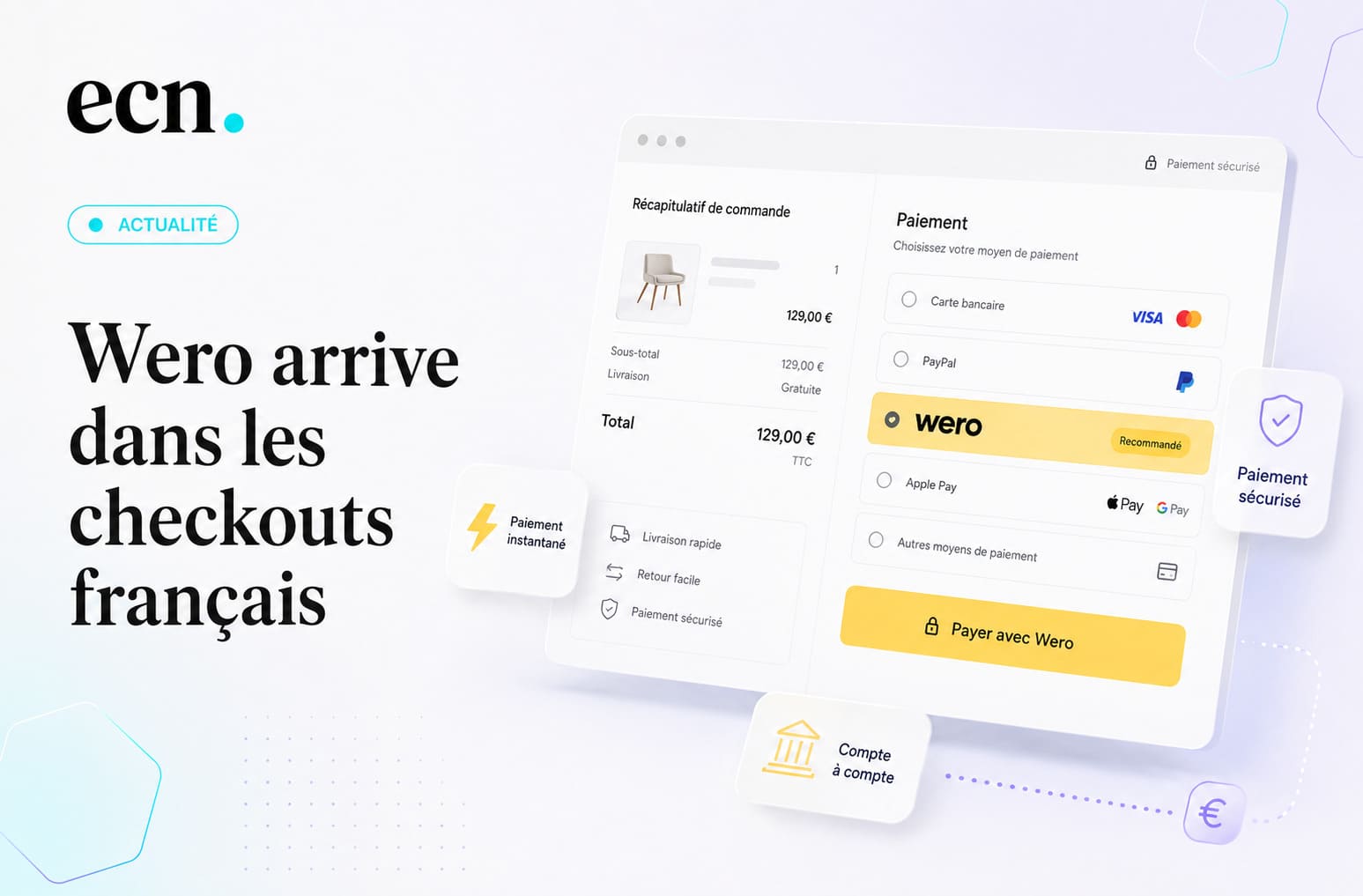
Wero arrives in French checkouts from autumn 2026. Decathlon, Lidl, Leclerc and Veepee are among the first merchants announced.
www.ecommerce-nation.frWero, the payment scheme backed by a consortium of European banks, comes to French e-commerce checkout from autumn 2026. Decathlon, Lidl, Leclerc and Veepee are named among the first participating merchants.
Wero was launched jointly by European banks with the aim of reducing dependence on international card brands. It began with person-to-person transfers, expanded into physical stores, and is now reaching online checkout. With major retailers moving together, consumer exposure grows quickly.
If agent-driven purchasing spreads, which payment methods an agent can actually use becomes a condition merchants cannot ignore. Whether a homegrown European scheme takes hold shapes that starting position.
Corporate moves
Saudi platform Salla acquires fintech Paylink to bring payments in-house

The deal brings Paylink's regulated payment infrastructure into Salla's platform for online and in-person transactions.
cairoscene.comSalla, a Saudi e-commerce platform, has acquired payments fintech Paylink. The deal folds Paylink's regulated payment infrastructure into Salla's platform, covering both online and in-person transactions.
Commerce platforms absorbing payments is a pattern repeating across markets. Merchants get one admin surface, and the platform gains recurring revenue from processing fees. In the Middle East, where fragmented payment methods are a known friction, consolidation also addresses a practical problem.
Once agent-driven purchasing enters the picture, having product data and payments under one operator's control becomes an implementation advantage. The acquisition reads as groundwork for that.
Unpatched Magento and Adobe Commerce zero-day exploited to install backdoors

Sansec says attackers exploit an unpatched Magento and Adobe Commerce flaw to run server code without authentication and install persistent backdoors.
thehackernews.comE-commerce security firm Sansec reports active exploitation of an unpatched flaw in Magento and Adobe Commerce. Attackers run code on the server without authentication and install persistent backdoors.
Because remote code execution succeeds without authentication, the blast radius is wide. Once a backdoor is planted, access can survive patching, which means applying the fix alone does not close the incident. Compromise assessment is required.
Timing matters too, with the holiday season approaching. Given that the targets are stores handling payment data, merchants running affected versions should treat verification as the immediate priority. Adobe Commerce has also declared support for UCP and ACP, so agent readiness and basic maintenance have to advance together.
eBay rolls out Bundle Discounts, and sellers are split

Included in the eBay September Seller Update was the new Bundle Discounts feature, which according to sellers has pros and cons.
www.ecommercebytes.comeBay's September Seller Update introduced Bundle Discounts, applying a discount when buyers purchase multiple items together. Sellers have raised both benefits and reservations.
Encouraging multi-item purchases helps sellers spread shipping cost across a larger order. Questions have surfaced about how discounts are scoped and how the feature overlaps with existing promotion tools.
Bundling also sits close to AI recommendation territory. If agents increasingly buy several items in one pass, pricing designed around bundles becomes more consequential.
Global e-commerce
EU parcel levy sharply cuts e-commerce freight at Liège Airport

The European Union's 3 euro customs duty on low-value e-commerce goods has significantly reduced the flow of small parcels through Liège Airport.
www.aviation24.beThe EU's 3 euro duty on low-value e-commerce goods is now visible in logistics data. Liège Airport, one of Europe's main e-commerce freight hubs, has seen small parcel flows fall sharply.
The airport is a primary gateway for cross-border e-commerce originating in Asia, concentrating shipments from operators such as Temu and SHEIN. A flat duty erodes per-unit price competitiveness, and shippers appear to have revised their dispatch plans in response.
As a case of policy change feeding straight through to trade volume, it is instructive for cross-border sellers. The lower the unit price, the more exposed the product is to a flat levy, and the more pricing strategy needs revisiting.
India's festive season heats up as quick commerce reshapes the field

The festive season is also expected to generate significant seasonal employment. Amazon India said it has created more than 1.6 lakh seasonal work opportunities across its pan-India operations.
www.moneycontrol.comIndia's festive shopping season is in full swing, and expanding quick commerce is redrawing the online purchasing landscape. Delivery in tens of minutes now extends to electronics and household goods, blurring the line with conventional e-commerce.
Employment effects follow. Amazon India said it has created more than 160,000 seasonal work opportunities across its pan-India operations, with logistics expansion translating directly into short-term hiring demand.
India's e-commerce market is projected to grow from $125 billion in 2024 to roughly $345 billion by 2030. In a market where delivery speed is the competitive axis, decisions about where to hold inventory carry more weight.
Conclusion
Across these three days, the clearest signal is that agentic commerce discussion has been replaced by implementation language. AEON pushed all the way to payment across 3 million Shopify storefronts and put a concrete answer on how to constrain spending authority. Set against that, the numbers shared around the first summit are sobering: real transaction volume still sits under $30,000 per day.
Measurement is the other axis. The Taobao paper's finding that chasing a well-correlated metric does not move revenue speaks directly to anyone optimizing for AI-mediated visibility. The NIQ research and the promotions data question both reduce to the same thing: whether your information is published in a form AI can actually read.
Near-term, watch how AEON's promised Amazon integration is actually routed, and how much agent-driven volume accumulates through the holiday season. Meanwhile, events like the Magento vulnerability can undercut a store mid-season. This is a period that demands attention to both offense and defence.