
AI Commerce News Digest (October 30, 2026)
AI commerce news for October 30. Shopify's Fall '26 Edition extends Shop Pay to personal AI agents and to brands off Shopify, and NIQ and Google partner on product and store availability data. We also cover Mastercard's token stance on agent payments, DoorDash's deal to buy Instacart and Adobe's latest AI traffic data.

Key Takeaways
- Shopify built Shop Pay into leading personal AI agents
- NIQ and Google will use product and store availability data to make agents more accurate
- Card networks and retailers are starting to set the rules for agent payments
Here is today's AI commerce news for October 30. The common thread is what AI agents need in order to shop: payment and product data. In its Fall '26 Edition, Shopify built Shop Pay into personal agents such as Meta's Muse and Claude Duet, and Mastercard said on its earnings call that agents should use network tokens rather than one-time virtual cards. On the product data side, the NIQ and Google partnership and Coveo's acquisition of Anglera landed on the same day. The previous digest centered on indemnification and liability for agent transactions. This time the focus moves one step earlier, to authenticating payments and preparing the information agents receive.
Today's Top Stories
Shopify Fall '26 Edition brings Shop Pay to Muse, Claude Duet and other agents, and to stores off Shopify
Shopify's Fall '26 Edition for merchants.
www.shopify.comShopify released its Fall '26 Edition, the twice-yearly product showcase, on October 28. The centerpiece for agentic commerce is that Shop Pay now works in personal agents such as Meta's Muse, Claude Duet, Grok Bot and Instinct. Shoppers can discover products, approve a purchase and pay with Shop Pay without leaving the agent.
What is new is that shoppers can also use Shop Pay to buy from brands that do not run on Shopify. According to Shopify, these purchases are protected by tokens from Mastercard, Visa and Discover, with American Express coming soon. Rohit Mishra, Shopify's vice president of product, wrote on X that "the agent never sees the buyer's card." The next day, October 29, Mastercard said on its earnings call that Shop Pay uses Agent Pay and Mastercard network tokens.
The Edition also includes selling in Google Search AI Mode and the Gemini app with Shopify checkout, passing compare-at prices to agents through Shopify Catalog, and a Knowledge base where merchants review and approve the store facts shared with agents. The announcement moves agent sales from simply being connected to a stage where merchants manage how their prices and information appear.
Related article: Shop Pay Now Works at Brands Off Shopify: Fall '26 Edition Extends Agent Checkout in Claude Duet, Grok Bot, and More with Visa and Mastercard Tokens
NIQ and Google partner on agentic commerce, adding data on 250 million products and store availability to the Shopping Graph

Built with Google Cloud and Gemini for business, NIQ and Google commit to transforming AI-driven product discovery, availability...
nielseniq.comNielsenIQ (NIQ) and Google announced a broad agentic commerce collaboration on October 29. The goal is to complement Google's Shopping Graph, which holds more than 60 billion product listings, with NIQ's Commerce Intelligence.
NIQ brings Product Intelligence covering more than 250 million products and Store Intelligence that tracks retail store locations and sales across 90 countries. The data is meant to help AI systems identify relevant products and judge whether they are available nearby. NIQ is also naming Google Cloud as a primary AI and cloud provider and integrating Meridian, Google's open-source marketing mix model, into its NIQ Cadence measurement platform.
Google's Ashish Gupta, VP/GM of Merchant Shopping, was careful to say the partnership will help Google examine how NIQ's data can best support agentic experiences. Product data and store availability are the foundation for agents that recommend items actually in stock nearby. Which features will use the data, and when, remains to be announced.
Related article: NIQ and Google Partner on Agentic Commerce, Adding Store Data to the Shopping Graph to Answer 'Can I Buy It Nearby?'
Agentic Commerce
Home Depot will ask AI agents to identify themselves and is in talks with Meta about Muse (update)

An artificial intelligence (AI) agent can now put groceries in a cart and pay for them, and the retailer on the other end decides whether the agent gets
www.pymnts.comHome Depot CIO Angie Brown told Business Insider that the retailer will support agents that search, compare and buy for customers, as long as they identify themselves as agents and confirm the customer they represent. She said Home Depot is in active talks with Meta about how its Muse agent should introduce itself.
PYMNTS set this alongside the tools Walmart announced on October 21. Walmart's Agent Profiles launch in November and let customers cap an agent's spending at $50, $100 or $200, or approve every order. Home Depot is taking the same position without building a gateway.
Large retailers are not shutting agents out. They are setting the terms of entry themselves. Home Depot says it does not want to lose contact with the customers behind those agents, and agent identification is becoming a precondition for access.
Alphabet earnings: agents become a unifying layer across products, and UCP gives hundreds of thousands of brands direct checkout
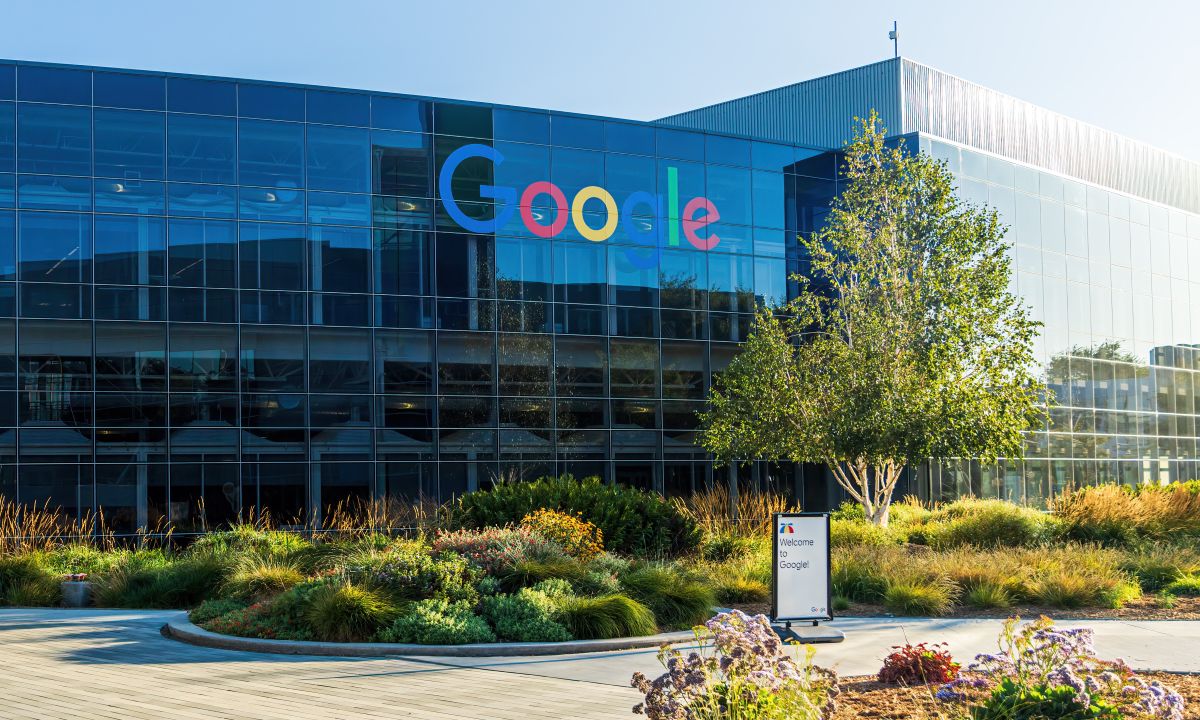
Alphabet's third-quarter results put a familiar fear back in focus: Big Tech's artificial intelligence spending could outrun the earnings and cash needed
www.pymnts.comOn its October 28 third-quarter earnings call, Alphabet laid out plans to extend AI agents into shopping and task completion. CEO Sundar Pichai said "agents will operate as a unifying layer across our products" and that Google will bring the experience to consumers later this year, starting with the Gemini app's 1 billion users.
For retailers, the key piece is the Universal Commerce Protocol (UCP). Chief Business Officer Philipp Schindler said it enables direct checkout across Google for hundreds of thousands of brands, including Chewy, Nike and Tapestry, and that Google is combining it with the Agent Payments Protocol.
Capital spending reached $51.4 billion in the quarter, and free cash flow was negative $9.1 billion. Whether agent shopping can turn into revenue is now a central question for investors.
Carvana plans to push its data out so AI agents can find its cars

Carvana is hoping to reap the benefits of agentic commerce as it enjoys record revenues. The online used vehicle marketplace reported quarterly
www.pymnts.comUS online used car retailer Carvana reported on October 28 that revenue rose 42% year over year to $8 billion. On the call, CEO Ernie Garcia said agentic AI pushes more people toward digital transactions.
An analyst noted that when he asked an agent to find a used car, Carvana's competitors showed up in many of the results. Garcia replied that Carvana needs to make its cars readily available and push out data in all the ways different bots can see it.
Even for big-ticket items, appearing in an agent's results is becoming the entry point to a sale. Designing inventory data for outside consumption now matters as much as the usability of a retailer's own site.
AI Commerce Tools
Coveo acquires product data enrichment company Anglera, citing a 270% rise in AI-referred visits in an A/B test

Coveo (TSX: CVO), the Experience AI leader, today acquired Anglera, a San Francisco-based, AI-native product data enrichment company.
www.prnewswire.comAI search and product discovery company Coveo acquired Anglera, a Y Combinator-backed product data enrichment company, on October 29. Anglera's agentic AI engine extracts attributes such as dimensions, materials and compatibility from manufacturer specifications, PDFs and images, then standardizes and validates them while keeping source references.
Coveo argues that products missing attributes are easily overlooked, both in onsite search and by external AI assistants. According to Anglera, a 30-day A/B test on about 300 SKU variants at an apparel retailer saw enriched product pages gain 120% more organic landing-page traffic and 270% more AI-referred visits.
The figures are self-reported and the sample is small. Still, the deal shows the work of getting chosen by AI assistants shifting from page copy to the product attributes themselves.
Related article: Coveo Acquires Anglera to Enrich Product Attributes from Spec Sheets for AI Search Discovery: How to Read the 270% AI-Referred Traffic Claim
Feed management platform Lengow acquires marketplace operations provider Daily&Co

French ecommerce automation platform Lengow has acquired Daily&Co, a provider of multi-channel marketplace integration.
ecommercenews.euFrench ecommerce automation platform Lengow has acquired Lisbon-based Daily&Co, which runs marketplace sales for brands and manufacturers on more than 40 marketplaces in Europe and North America. Financial terms were not disclosed.
Founded in 2009, Lengow provides AI-powered feed management and price monitoring and connects more than 3,600 customers to advertising channels and marketplaces in over 60 countries. The deal lets it offer catalog managed services on top of its software.
CEO Nicolas Appert said the company will use generative AI in catalog management work. As sales channels multiply, product data gets harder to manage, and demand is growing for tools and hands-on operations offered together.
Payments and Fintech
Mastercard CEO says one-time virtual cards for agent payments are not a long-term solution

CEO Michael Miebach said during the company's third-quarter earnings call that one-time virtual cards as a go-between were not a long-term solution to facilitate agentic payments.
www.americanbanker.comOn Mastercard's October 29 earnings call, CEO Michael Miebach said that putting a one-time virtual card number (VCN) in front of an agent purchase "fundamentally breaks the transaction." He accepted it as a bridge while processors move to fully tokenized transactions, but said it is not a long-term solution Mastercard will support.
Mastercard favors agentic tokens, which replace card credentials with a random number and also carry information about what the agent is allowed to do. Visa Intelligent Commerce and American Express's Intent Intelligence follow the same approach. Miebach said transactions through personal agents such as Muse and Instinct are growing at impressive weekly rates, but are not yet significant in the grand scheme.
The split between the card networks and single-use card approaches such as Stripe's is now in the open. For merchants, whether a processor supports tokenized agent payments is becoming a selection criterion.
Tencent and Visa sign MoU to explore cross-border payments and agentic payments

Proposed collaboration spans cross-border payments, AI-powered commerce, and global business growth
www.tencent.comTencent and Visa signed a memorandum of understanding (MoU) on October 29 to explore collaboration across cross-border payments, agentic commerce, enterprise AI and support for global business expansion. Core pieces include payments for travelers to and from China through TenPay Global and Visa Pay, and more remittances into Weixin Pay through Visa Direct.
On agentic payments, the companies will explore how Visa Intelligent Commerce could support experiences in which AI agents help eligible users discover, select and buy goods or services. The partnership also extends the long-standing gaming relationship between Visa and Midas, Tencent's international payments platform, to Tencent's overseas AI businesses.
The agreement is at the MoU stage, and no launch dates were given. A Chinese super app and a card network teaming up on agentic payments has implications for the payment options available in cross-border ecommerce.
Shufti launches Know Your Agent to verify AI agent identity and human authorization in one flow

Businesses can manage agentic commerce with greater confidence by verifying AI agent identities, enforcing human approvals, and blocking unauthorized or high-risk activity.
finance.yahoo.comIdentity verification provider Shufti launched Know Your Agent (KYA) on October 29. In a single flow, it checks whether an agent is genuine, who is accountable for it, and whether the action falls within what that person approved.
Each agent receives a time-bound, revocable credential. Known agents are recognized by name, new ones are assessed through behavioral signals, and every agent gets a trust score. Shufti says it supported Meta Muse, Grok Bot and OpenAI Dots within a week of each launch.
The company's argument is that an access token alone cannot catch stolen credentials or impersonation. Tools are arriving that let merchants verify the kind of self-identification Home Depot is asking for.
Wero goes live for Dutch ecommerce as the migration from iDEAL begins

Photo: Martina Weimert, chief executive, European Payments Initiative
thedigitalbanker.comSince October 26, customers of 11 Dutch banks, including ABN AMRO, ING and Rabobank, have been able to pay online with Wero, the wallet run by the European Payments Initiative (EPI).
iDEAL has long been the standard way to pay online in the Netherlands. Merchants can now start switching to Wero through their payment service providers, and EPI aims to complete the migration, which involves about 15 million consumers, by the end of 2027. Wero already has about 60 million person-to-person users in Belgium, France, Germany and Luxembourg.
Unlike P2P transfers, online checkout is judged on conversion, refunds and disputes. Merchants selling in Europe should check when they will need to switch.
Consumer Trends
Adobe: AI-referred visits in September generated 83% more revenue per visit and converted 90% better

AI-referred shoppers spent 73% more time on retail sites, viewed 25% more pages and added products to carts at a 53% higher rate.
searchengineland.comAccording to new Adobe data, AI-referred visitors to US retail sites in September generated 83% more revenue per visit than other visitors and converted at a 90% higher rate. AI traffic grew 71% year over year.
The picture has changed in a year. In August 2025, AI visitors converted at a 9% lower rate than others, and revenue per visit was roughly equal in September 2025. Adobe expects AI-referred traffic to grow 159% year over year on Thanksgiving, 95% on Black Friday and 88% on Cyber Monday.
The data covers more than 1 trillion visits to US retail sites and counts clicks on links inside AI platforms. AI referrals now lead not only in volume growth but also in the quality of visits that turn into sales.
Corporate Moves and Partnerships
DoorDash to buy Instacart for about $17 billion
The deal marks the consolidation of two major players in the grocery e-commerce industry.
www.grocerydive.comDoorDash announced on October 29 that it will buy Instacart for about $17 billion, or $65 per share, a 26% premium to Instacart's October 22 close. The deal is expected to close at the end of 2027 or in the first half of 2028, and the companies will operate separately until then.
DoorDash plans to keep Instacart's brand, enterprise technology products and app. It gains Instacart's grocery partnerships, more than 600,000 couriers and its retail media business. Instacart's advertising and other revenue was $331 million in the third quarter, roughly 30% of its total. DoorDash's Q3 revenue of nearly $4.6 billion was about four times Instacart's.
It is one of the largest consolidations in US grocery ecommerce, and regulatory review will be the next hurdle. Both companies have invested heavily in AI shopping features, so how the combined grocery buying experience changes is also worth watching.
Amazon Q3: AWS grows 39%, but the holiday outlook is cautious
E-commerce company posts high cloud computing sales but gives a cautious sales forecast for the fourth quarter
www.theguardian.comAmazon reported third-quarter results on October 29. According to ADWEEK, net sales rose 12% to $201.9 billion, ad revenue grew 11% to $19.6 billion, and the operating margin hit a record 13.9%. AWS revenue grew 39%, its fastest growth in almost five years.
Results still fell short of analyst expectations, and the company's cautious forecast for the fourth quarter, which includes the holiday season, sent shares down more than 6% after hours. Amazon expects capital spending of $220 billion this year, mostly on AI.
ADWEEK reports that Amazon said external agents such as ChatGPT, Gemini and Meta's Muse are not hurting its ad business. How well Amazon can protect ad revenue while continuing to block outside agents remains an open question.
eBay Q3: GMV up 15%, with eBay Live growing more than 100%

eBay Inc., the global e-commerce marketplace connecting millions of buyers and sellers worldwide, reported revenue of $3.2 billion for the third quarter of 2026, up 14% year over year.
fintechgate.neteBay reported third-quarter 2026 revenue of $3.2 billion, up 14% year over year, with gross merchandise volume (GMV) up 15% to $23.2 billion. CEO Jamie Iannone credited growing consumer adoption of recommerce.
eBay Live set another quarterly record, with year-over-year growth well above 100% across its seven markets. The company expanded its AI-powered Magical Listing tool to new and reactivated sellers in the US, UK, Germany, Australia, France and Italy.
Using AI to cut listing effort and live streams to draw buyers has become the center of eBay's growth.
Global Ecommerce Trends
Malaysia to require foreign ecommerce platforms to adopt e-invoicing and set up local offices
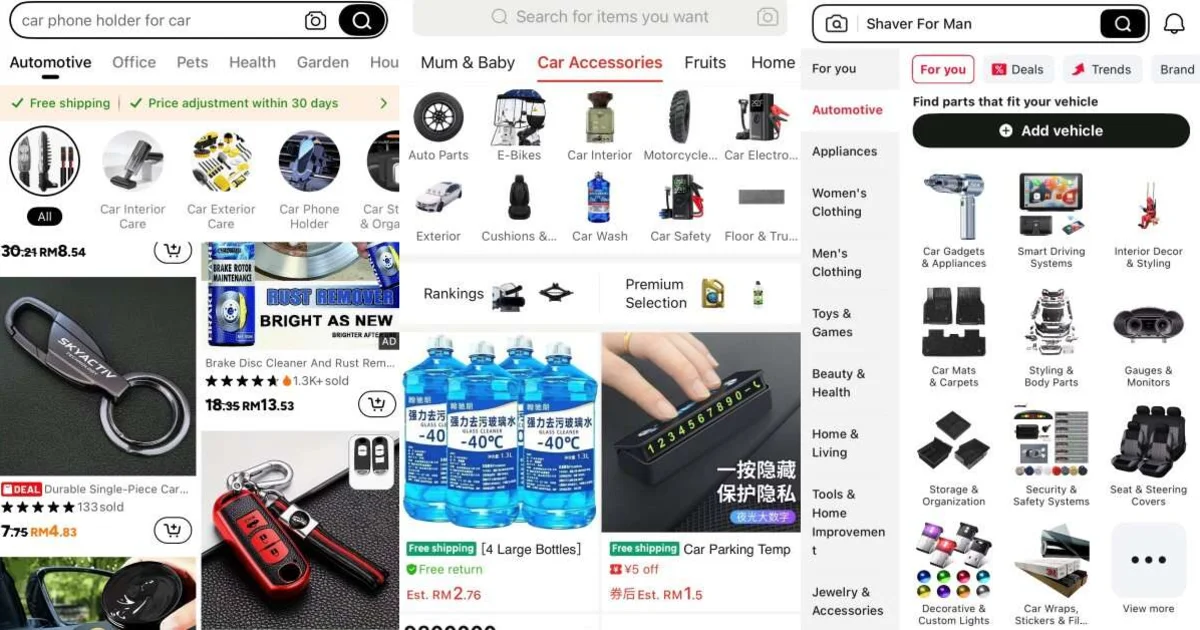
Malaysia will impose e-Invoicing requirements on foreign online commerce platforms as part of efforts to strengthen oversight of their operations, reports The Edge.
paultan.orgDuring the Budget 2027 debate, Malaysia's domestic trade and cost of living minister said foreign ecommerce platforms such as Pinduoduo, Temu and AliExpress will be required to adopt e-invoicing, a measure the finance ministry will implement.
Foreign platforms and their vendors will also have to set up offices in Malaysia. The government plans to table a bill regulating foreign platforms in the first parliamentary sitting of 2027, including a consultation mechanism with sellers and the ministry before changes, consumer protection and dispute resolution. A 10% low-value goods tax already applies to imports of RM500 or less.
Local retailers have complained of an uneven playing field. Southeast Asia continues to tighten rules on cross-border ecommerce.
Shein warns of online shopping chaos as Mexico delays customs permit renewals

The online fashion retailer's warning is part of growing alarm in the industry as 11 logistics operators have started losing their authorizations to clear large volumes of lower-value shipments.
us.fashionnetwork.comShein warned that delays in renewing permits under Mexico's T1 framework, which streamlines customs for low-value shipments, are putting its business in the country at risk. T1 lets couriers import shipments worth up to $2,500 per recipient more easily and has fueled Mexico's ecommerce growth.
Two T1 permits expired in October, including that of a local subsidiary of J&T Global Express that delivers for Temu and AliExpress. Permits for DHL, UPS and FedEx expire on December 2, and local carrier Estafeta's on December 22. Mexico's customs council has not disclosed whether it will renew them.
Lost delivery capacity in the middle of the holiday season would translate directly into cross-border delivery delays. Merchants selling into Mexico should check the permit status of their carriers.
Taiwan's 91APP hit by hack, with order data for about 4.8 million consumers possibly exposed

Taiwanese over-the-counter e-commerce technology service provider 91APP*-KY (6741.TW) held a material-information press conference on the 29th.
finance.biggo.comTaiwanese ecommerce technology provider 91APP disclosed on October 29 the results of its investigation into a breach of its order database. Attackers entered the internal network through a third-party tool and reached a short-term order database under Commerce Cloud.
Potentially affected are online orders placed between April 4, 2025 and October 14, 2026, covering 1,329 brands and 4,798,255 consumers. The exposed data may include names, phone numbers, delivery addresses, emails and order records, but not passwords or payment information such as card numbers. The chairman and president apologized at the press conference.
When many brands share one commerce platform, a single breach reaches the customers of thousands of stores. Controls over third-party tool connections are again a question to ask when choosing a platform.
AliExpress sets 11.11 sale for November 1 to 18 and adds a YouTube Shopping affiliate partnership

AliExpress has announced that its annual 11.11 Global Shopping Festival will run from 1st-18th November this year.
retailtechinnovationhub.comAliExpress will run its annual 11.11 Global Shopping Festival, also known as Singles' Day, from November 1 to 18. Alongside Brand+ deals, launched a year ago, US shoppers get delivery protections, free shipping and returns on Choice items, and stronger customer support.
A new affiliate partnership with YouTube Shopping lets people discover and buy products directly through creator recommendations, and there will be giveaways for the Reddit community.
Ahead of the US holiday season, Chinese cross-border marketplaces keep competing for shoppers through video and community channels.
Logistics and Fulfillment
Amazon launches FBA Returnless Resolutions in five European markets

Amazon is bringing its 'no-return' solution for FBA-sellers to Europe. Customers get their money back without having to return the item.
ecommercenews.euAmazon has launched FBA Returnless Resolutions, which refunds customers without requiring them to send items back, for Fulfillment by Amazon sellers in the UK, Germany, Italy, France and Spain. The program was already available in the US.
Sellers set a maximum item price between €1 and €75 and can apply it to their whole catalog or specific ASINs. Amazon automatically decides which requests qualify based on price, the customer's return history, the category and the seller's account status. Sellers cannot resell items customers keep, and Amazon does not compensate them.
The program cuts return shipping, processing and storage costs, but sellers have raised concerns about lost inventory and abuse. Sellers of low-priced items in particular will need to weigh the trade-off.
Colruyt Group adds 134 robots to expand online grocery capacity
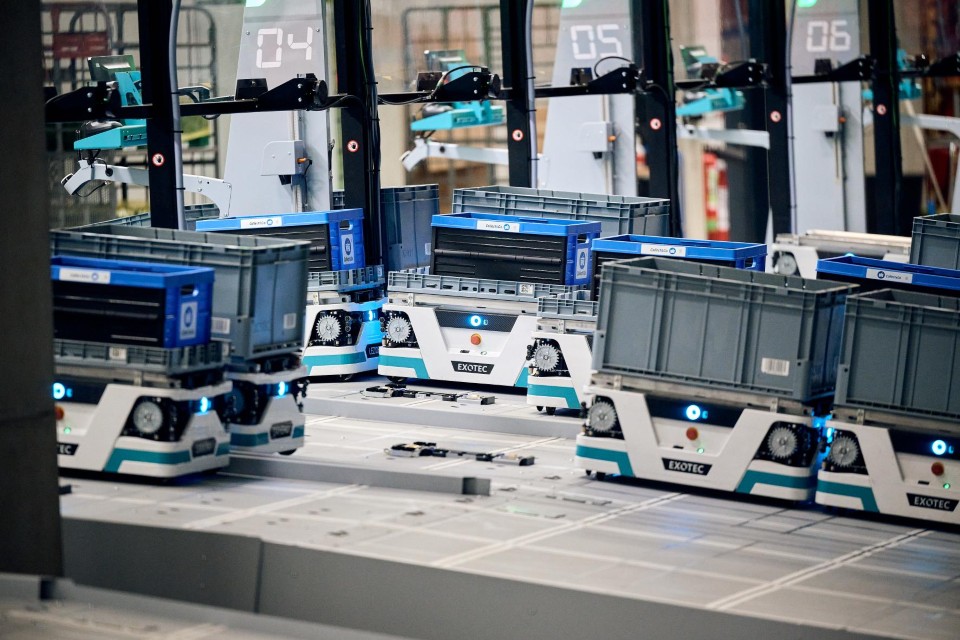
At Collect&Go, the Colruyt Group's grocery delivery service, 134 robots provide additional capacity. They help prepare orders up to five times faster.
www.retaildetail.euBelgian retailer Colruyt Group said 134 robots at the distribution center for its Collect&Go online grocery service now prepare orders up to five times faster. The €19 million system is Belgium's largest Exotec installation, with 40,000 shelf locations and room for up to 200 robots.
Live since spring, the system already handles more than 80% of the Colruyt and Bio-Planet range. The center expects to double capacity over five years, adding 15 pickup locations a year to the current 50.
One in two Belgians uses an online grocery service, and Colruyt now treats online grocery as an integral part of how Belgians shop rather than a supplementary service.
Summary
Taken together, today's news shows the infrastructure for AI agent shopping becoming concrete on both payments and product data. Shopify's Shop Pay with network tokens, Mastercard's stance against virtual card workarounds, and the identification that Shufti KYA and Home Depot call for are all about verifying who is paying and with what authority. The NIQ and Google partnership and Coveo's acquisition of Anglera are investments in giving agents accurate product information and availability.
Adobe's data shows AI-referred visits already outperforming on the quality of traffic. Next, watch the launch of Walmart's Agent Profiles, how AI referrals perform during the holiday season, and what happens to the DoorDash and Instacart deal.