NIQ and Google Partner on Agentic Commerce, Adding Store Data to the Shopping Graph to Answer 'Can I Buy It Nearby?'
NIQ's product and store data will complement Google's Shopping Graph of more than 60 billion listings. How AI agent product discovery and local inventory judgments may change, what is decided versus still being examined, and what retailers should check now.

Key Takeaways
- NielsenIQ (NIQ) and Google announced a broad agentic commerce partnership on October 29, 2026. The aim is to complement the Shopping Graph's more than 60 billion listings with NIQ's data on more than 250 million products and stores across 90 countries, strengthening how AI agents discover products and judge whether they can be bought nearby
- Once AI agents handle everything from recommendation to purchase, wrong inventory information turns directly into recommendations that cannot be fulfilled. The core of this partnership is Google's move to bring in store data from a source other than merchant feeds
- Google's own statement, however, describes the work as examining how the data can help. The shopper-facing features, APIs, timing, and countries covered have not been disclosed. Retailers should first make sure their own local inventory and product attribute data are accurate
What was announced: what is decided and what is still being examined

Built with Google Cloud and Gemini for business, NIQ and Google commit to transforming AI-driven product discovery, availability...
nielseniq.comA single announcement holds three commitments of very different kinds. NIQ's press release and Google Cloud's joint announcement split the partnership into three areas: enterprise scale and speed, commerce innovation, and measurement and return on investment.
The first is internal. NIQ is naming Google Cloud as a primary AI and cloud services provider and plans to deploy Gemini for business across its global workforce. The second is the focus of this article: combining Google's product database, the Shopping Graph, with NIQ's Commerce Intelligence, its body of product and store data. The third integrates Meridian, the open-source marketing mix model (MMM, a statistical method for estimating how advertising and promotions contribute to sales) that Google publishes, into NIQ's measurement platform, NIQ Cadence.
Technology outlet OpenTools points out that the three serve different users and have different completion criteria. Lining up the wording of the announcement makes the difference in certainty clear.
| Area | What was announced | How the announcement phrases it |
|---|---|---|
| Enterprise | Google Cloud named a primary AI and cloud services provider; Gemini for business to be deployed across the workforce | The naming is decided. The workforce rollout is a plan |
| Commerce (discovery and availability) | Complement the Shopping Graph with NIQ Product Intelligence and Store Intelligence | The companies agreed to partner, but the substance is at the 'aiming' and 'examining' stage. Features, APIs, timing, and countries not disclosed |
| Measurement and ROI | Integrate Meridian and Meridian GeoX into NIQ Cadence | Integration is under way. No results disclosed |
The most important pillar, product discovery and availability, is written in the least certain terms. The companies say that details on specific initiatives and milestones will be shared as the partnership progresses. What is fixed today is the direction of the work and the scope of the data NIQ brings.
What the Shopping Graph has been missing
Start with the numbers. This announcement describes the Shopping Graph as holding more than 60 billion product listings. In Google's official blog from November 2025, the figure was more than 50 billion, with 2 billion updated every hour. That works out to roughly 10 billion more in about a year.
NIQ's Product Intelligence, by contrast, covers more than 250 million products. On count alone, NIQ does not reach even 1% of Google. Google still wants the partnership because the two numbers count different things. A Shopping Graph "listing" counts the same product separately for each seller or store. An NIQ "product" is a unit in which the same item has been matched into one record across retailers. OpenTools also cautions that the two figures describe different collections and units and cannot be added together.
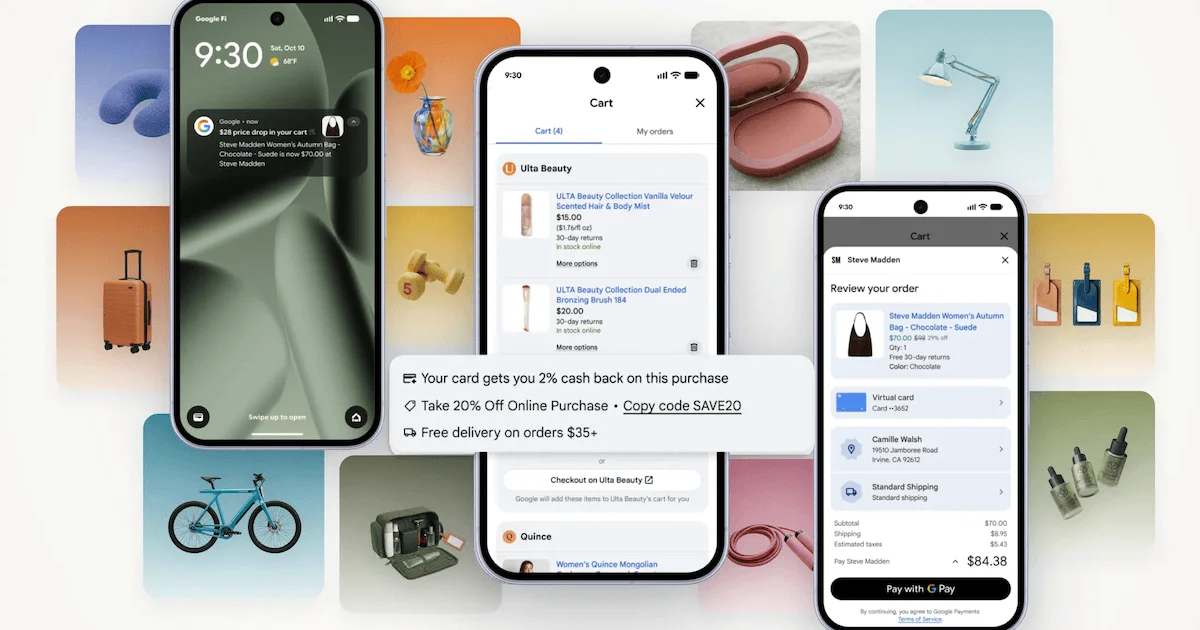
The sources of inventory information differ too. Google's in-store inventory has centered on the local inventory data that merchants register in Merchant Center. In November 2025, Google added "Let Google Call," in which AI phones nearby stores to ask about availability, price, and promotions. It started in the U.S. with categories such as toys, health and beauty, and electronics. The feature itself shows how hard in-store inventory is to obtain as data, to the point that it has to be confirmed by phone.
NIQ has spent decades collecting retail sales data. In a June announcement, it said it has relationships with more than 8,900 retailers in 90 countries and maintains 246 million products and more than 10 billion product attributes. Store Intelligence in this partnership is supported by NIQ's tracking of store locations and sales. For Google, that offers a way to check which stores are likely to carry which products through a channel separate from feeds that merchants report themselves.
If an agent only recommends, a small inventory mismatch ends with the shopper noticing at the store. If the agent states "you can pick this up at this store" and goes on to place the order, the mismatch becomes a failed transaction. A statement from Google's Ashish Gupta, VP/GM Merchant Shopping, reflects that concern.
While every brand is pursuing AI-driven growth, autonomous agents are only as reliable as the data behind them. Part of our partnership with NIQ helps us examine how their rich catalog and availability data can best support new agentic commerce experiences.
Finding a product and buying it nearby are different problems
The announcement splits what NIQ brings into two parts: Product Intelligence, which identifies products, and Store Intelligence, which looks at the store side. In the companies' words, the goal is to supplement AI commerce systems with additional information to identify relevant products and assess local availability.
On identifying products, NIQ gave concrete examples in June. Keyword search only surfaces products containing a term like "protein snack." Requests to AI carry context, such as a healthy brownie alternative that still feels indulgent. Answering those requests requires well-structured attributes such as ingredients, nutrition, and use. The new Shopper Experience Platform capabilities NIQ announced on October 28 come from the same concern and identify gaps in product content. That announcement also said 55% of global consumers report having been influenced by AI tools or assistants when buying household and grocery items.
The store side is harder. Note that the announcement never says it will provide real-time stock counts. What it describes is Store Intelligence supported by tracking store locations and sales, and the goal is to "assess" availability. Inferring from sales history that a store carries a product is a different task from confirming that three units are on the shelf right now. OpenTools likewise writes that identifying a relevant product is not confirmation that it is available at a particular nearby store.
The picture that emerges is Google layering several sources for inventory judgments: merchant feeds, phone confirmation, and NIQ's sales data as a third-party view. How each source will be weighted, and how NIQ's data will appear in agent responses, has not yet been made clear.
The measurement pillar: integrating Meridian
The third pillar extends the measurement work NIQ has been pushing. With Meridian integrated into NIQ Cadence, brands can feed real-world purchase data into their own Meridian models. Experiments that vary advertising by region and compare the effects run on Meridian GeoX.
The announcement says this closes the loop with a complete picture of what was recommended, what was bought, and what truly drove growth. A record of recommendations, a record of purchases, and an estimate of incremental sales each require their own evidence, however. The announcement does not include any result showing that this integration improved an advertiser's ROI.
Caveats: this is not a product yet
At least three points call for discounting the promoters' language.
First, nothing has changed yet from the user's point of view. No new button, public API, or launch date has been given. Second is the word "primary." As OpenTools notes, it does not mean an exclusive contract, so NIQ remains free to work with other cloud and AI providers. Third, the company-wide rollout of Gemini for business is also at the "plans" stage, with no figures on progress or results.
The regions covered have not been disclosed either. NIQ's store data spans 90 countries, but the announcement does not say in which countries the combination with the Shopping Graph will be available. Whether store inventory in Japan will be reflected in AI agent answers cannot be judged at this point.
Even so, it matters that Google's merchant shopping lead named the reliability of inventory data as an issue. It amounts to an admission that even Google, which runs the Shopping Graph itself, cannot fully capture in-store inventory with its own data alone.
What retailers should check now
There is work to do while the details of the partnership take shape. NIQ's data is a third-party supplement and does not replace merchants' own information. The first thing an agent sees is still the information a company publishes itself.
- Local inventory feeds: if you send store inventory to Merchant Center, check that the update frequency and the distinction between out of stock and available to order match reality
- Basic store information: outdated hours or contact details make a store less likely to be suggested at all, before inventory even comes into play
- Product identifiers and attributes: with identifiers such as GTIN or JAN codes and attributes for ingredients, size, and use in place, your products link correctly to your company even when matched against third-party data
For retailers with physical stores and manufacturers selling through mass retailers, this means sales data they did not publish themselves may be used in an agent's judgment of where a product can be bought. Which source takes priority when a company's own information and third-party data disagree is a point to watch in future announcements.
Summary
The NIQ and Google partnership shows that the weak point of AI agent shopping is shifting from not knowing the product to not knowing whether it can really be bought nearby. Google holds more than 60 billion listings, yet it phones stores to confirm in-store inventory and is now seeking third-party sales data.
The inventory pillar is still at the examination stage, though. The next things to watch are where NIQ's data will be used in agent answers, which countries and when, and how it ranks against merchant feeds. Once those are shown, it will become clear whether this partnership makes a difference in actual transactions.