France's Competition Authority Warns of Product Visibility Concentration in AI Shopping Agents: Who Controls the Storefront Now
France's competition authority warned on July 17, 2026 that AI agents could concentrate product visibility in a few platforms. Here is how agentic commerce reshapes merchant traffic and what to do about AI visibility (LLMO/AEO).

Key Takeaways
Key Takeaways
- France's competition authority published an opinion on AI agents (Avis 26-A-05) on July 17, 2026, flagging the risk that product visibility becomes concentrated in a handful of large platforms
- With OpenAI, Google, and Anthropic holding more than 84% of the sector, merchant traffic acquisition could shift from search to agent recommendations, creating a new dependency structure
- The authority calls for enforcing existing law and continued monitoring, yet leaves concrete remedies undisclosed for now, deferring the regulatory direction to further review
The Problem the Opinion Frames

France's competition authority warns of the risk that AI agents concentrate product visibility. A look at what e-merchants should prepare for.
www.ecommerce-nation.frOn July 17, 2026, France's competition authority (Autorité de la concurrence) published an opinion on the competitive dynamics of the AI agents sector. Known as Avis 26-A-05, it was compiled after hearing from around 40 stakeholders. As the technology moves from simple conversational chatbots to agents that reason, plan, and act on their own, the document maps out the distortions that could emerge in market structure.
The starting figures are clear. The authority noted that OpenAI, Google, and Anthropic together hold more than 84% of the sector. Players such as Amazon, Microsoft, Mistral AI, and Perplexity exist, but they still trail in scale. And while traffic reaching e-commerce sites through AI agents is currently below 5%, the authority expects it could reach 20 to 25% by 2030.
Why "Visibility Concentration" Becomes a Competition Issue
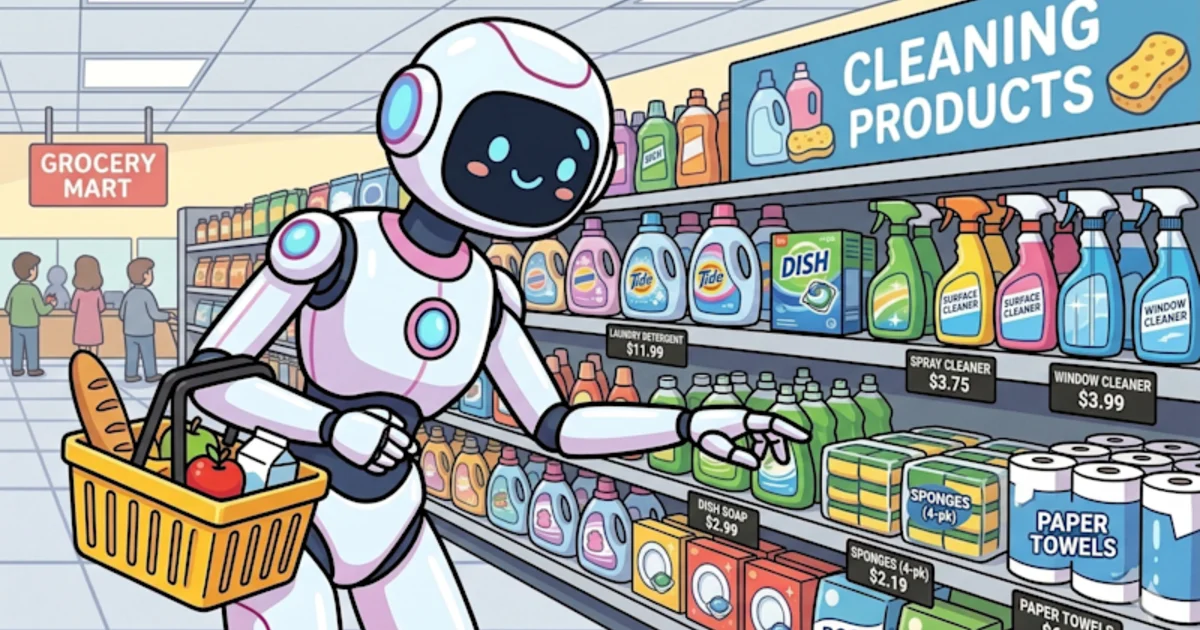
The heart of the opinion lies in a structural shift: AI agents becoming the intermediary that sits between shoppers and stores. Rather than consumers comparing sites and choosing for themselves, the agent narrows the shortlist and sometimes completes the purchase on their behalf. In that world, whatever product a user ends up seeing is decided by the party providing the agent.
What the authority takes issue with is the risk that the criteria governing this visibility turn opaque. The opinion questions whether the conditions determining what appears in an agent's answers are clear, objective, and non-discriminatory. If ranking and recommendation logic stays hidden while exposure is shaped by price, margin, or advertising deals, consumers end up choosing without a full picture.
The power to allocate demand also gathers in a few platforms. If a fifth to a quarter of traffic flows through agents, the companies that own that entry point effectively decide where shoppers are steered. It reads as agents inheriting the role search engines have played, in an even stronger form.
The Starting Point of Acquisition Shifts from Search to Recommendation
From a merchant's vantage point, this change rewrites the blueprint for acquisition. Many stores have long drawn customers in themselves through search engine optimization and paid advertising. But once an agent becomes the intermediary, whether you get exposure is left to the agent's recommendation algorithm. The very premise of direct traffic to your own site starts to wobble.
It is not only traffic that is lost. When a purchase is completed inside the AI interface, merchants find it harder to access customer behavior and purchase history. Who viewed what, where they hesitated, and why they bought. This information is the foundation of CRM and personalization, yet once transactions run through agents, much of it accumulates on the platform side instead. The risk of a thinning direct relationship with the customer runs as deep as the traffic problem.
The opinion also spells out concerns about self-preferencing by vertically integrated players. A company that has embedded its agent into an operating system, a browser, or an office suite is positioned to surface its own adjacent services first, or to bundle them together. Competitors cannot stand on the same footing, and the allocation of visibility is skewed.
The Specific Concerns the Authority Raised
The risks the opinion lists go beyond visibility alone. Data asymmetry is another. Vertically integrated incumbents accumulate vast and ever-expanding proprietary datasets and usage logs, giving them an advantage that later entrants cannot realistically replicate. It also notes that inference costs weigh more heavily than training costs and rise with usage, a structure that makes new entry harder.
Fair access to distribution channels is a further theme. The authority raised the possibility of designating major distribution platforms such as marketplaces as core platform services under the DMA (Digital Markets Act). On that basis, it argued that AI agent developers should be able to secure visibility and access on fair, reasonable, and non-discriminatory terms. On technical standards too, it called for them to be developed in a transparent, open, and collaborative way, rather than controlled centrally by a single operator.
Regulation Starts with Monitoring, and the Remedies Stay Undisclosed
What is worth holding onto here is that the authority's tone is not one of immediate sanctions. The opinion puts full application of current law first and says it prefers soft-law instruments over new rules. According to French press coverage, the authority made clear that it does not prejudge any contentious follow-up at this stage, and its posture is firmly one of reinforced monitoring. The fact that it rates the barriers to launching an agent itself as rather "low" also signals the caution on the regulatory side.
In other words, which companies would face what obligations, and how visibility criteria would be verified, are the concrete remedies that this opinion does not lay out. The authority says only that it will keep a close watch on stakes and partnerships that big players take in competing agent developers, on whether users can genuinely choose rival agents, and on the design of the parameters that drive ranking. The judgment is carried over to future review.
Where the regulatory center of gravity sits varies by country too. India's Ministry of Electronics and Information Technology (MeitY) was reported to be considering a proposal to make human involvement (human-in-the-loop) mandatory in agentic AI payments. The idea is to keep human approval at key points while still recognizing the convenience of autonomous execution. France, questioning visibility through a competition lens, and India, putting a brake on execution through a consumer-protection lens, come at the problem from different angles. That said, the opinion says almost nothing about the benefits, such as agents cutting search effort and improving convenience for consumers, so it is worth remembering that this is a risk-focused warning.
What E-Merchants Can Start Doing Now
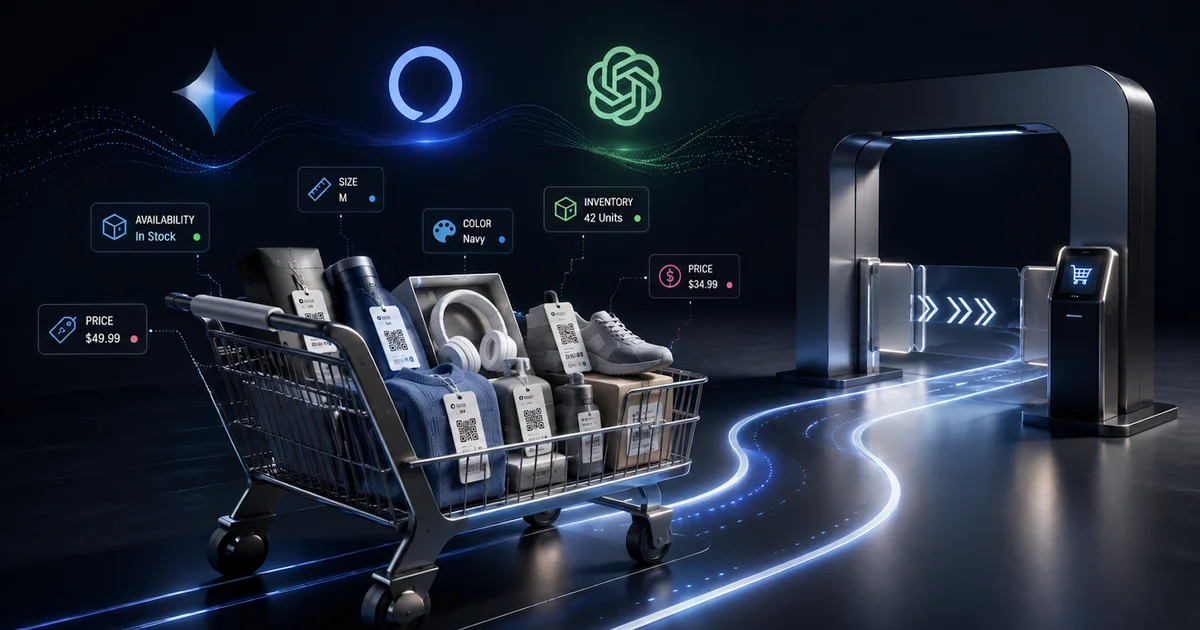
Even with the final shape of regulation unsettled, there is value in merchants beginning to prepare. The starting point is arranging your product information so agents can read it accurately. Structuring data such as price, stock, variants, delivery terms, and reviews, and providing it in standard formats, raises the odds of landing in an agent's shortlist. Just as human-facing SEO has addressed search engines, optimizing to be picked in AI answers, known as LLMO or AEO (Answer Engine Optimization), now takes a share of acquisition.
A design that avoids depending on a single channel is also essential. Keep search, advertising, marketplaces, social commerce, and direct traffic to your own site in reasonable balance. Since agent-driven exposure is hard to predict, securing multiple entry points spreads the risk. Alongside that, preserving direct touchpoints with customers through memberships and loyalty programs, and defending CRM data as your own asset, grows in importance.
As a practical first step, we recommend actually testing how your brand and flagship products appear in the answers of ChatGPT, Gemini, and Perplexity. Are you shown, how are you rated next to competitors, and is the information accurate. Taking that inventory gives you a read on where your visibility stands as the agent era arrives.
Conclusion
France's competition authority's opinion shows that the debate over agentic commerce has moved from "convenience" to the competitive question of who controls the entry point. The weight of the document lies in the fact that a regulator, not a promoter, sounded the alarm head-on about the concentration of product visibility.
That said, the authority stops at reinforced monitoring and does not present concrete remedies. It looks like it will take time for the real picture of regulation to settle. That is exactly why, for e-merchants, the practical question comes first: not waiting for a regulatory conclusion, but deciding how to protect your own visibility and data now. Assuming a future where agents act as the intermediary, how far you can pull the initiative over acquisition and data back to your own side. The speed of that preparation looks set to decide the next round of competition.