India's E-commerce Giants and Fintechs Plug the Agentic Commerce Gap with UPI Reserve Pay and MCP
Flipkart, Bigbasket, Ajio and Firstcry are racing to ship AI storefronts on ChatGPT, Perplexity and Gemini after Razorpay, Cashfree and PayU closed India's agentic-payments gap with UPI Reserve Pay and MCP. We unpack the four-layer stack — supply, payments, build-partners and AI platforms — that has come together first in India.

Key Takeaways
- Indian e-commerce majors Flipkart, Bigbasket, Ajio and Firstcry are accelerating in-house AI storefronts on ChatGPT, Perplexity and Gemini, rapidly thickening the supply side of agentic commerce.
- With Razorpay, Cashfree and PayU shipping LLM-native UPI payments in February 2026, the long-standing payments gap has closed, turning AI-led search-to-checkout from a concept into a working transaction flow.
- India is now the first large market where supply, payments, build partners and AI platforms have lined up at the same time, raising the priority of "being callable by an agent" for global e-commerce operators outside India as well.
India's e-commerce majors and fintechs pivot to agentic commerce in tandem

Indian ecommerce giants like Flipkart and Bigbasket are building AI storefronts to enable agentic commerce, allowing AI to shop autonomously on platforms like ChatGPT. Fintechs have enabled payments, paving the way for automated searching, ordering, and payment.
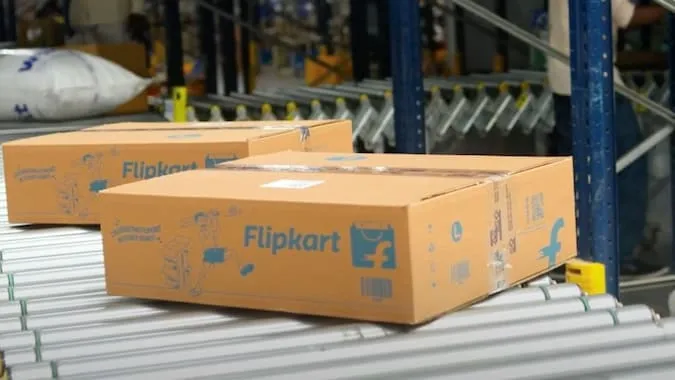
economictimes.indiatimes.comOn April 27, 2026, The Economic Times reported that Flipkart, Bigbasket, Ajio and Firstcry — the bulk of India's mainstream e-commerce roster — are accelerating the build-out of their own AI storefronts for large language models such as ChatGPT, Perplexity and Google Gemini. The piece frames it as a response to LLMs reshaping how consumers discover and purchase products, and the supply side of agentic commerce is thickening fast.
Agentic commerce here means AI agents that search, select, order and pay on behalf of humans, end-to-end. The missing piece in India for most of the past year has been the last step: payments inside the LLM. That gap closed in February 2026, when Razorpay, Cashfree and PayU each shipped agentic payments on LLM surfaces. With supply and rails both in place, the consumer flow is moving from theory to production.
What stands out is that this is not a straight transplant of OpenAI's or Google's US launches. Indian platforms and fintechs are wiring their own connectors behind the LLM — MCP servers, UPI Reserve Pay, and the Agentic Commerce Protocol — to ship endpoints that ChatGPT or Claude can actually transact against domestically.
How fintechs closed the payments gap
The immediate trigger for the agentic-commerce push in India was a payments-layer upgrade. Until recently, products could be discovered on a surface like ChatGPT, but no central payment system inside that surface could complete the purchase. Cashfree Payments SVP Nitin Pulyani summed up the prior state to The Economic Times: "Discovery was already happening on LLMs, but there was no central payment system on platforms like ChatGPT to enable shopping."
The plug came from Razorpay, building agentic payments on the UPI Reserve Pay protocol. Razorpay has tied up with Zomato, Swiggy and Zepto and is piloting with 15-20 merchants. Reserve Pay lets a user pre-authorise a spending limit and use case, after which a trusted platform or AI agent can execute multiple debits within that envelope. The effect is to promote UPI from "just a payment instrument" into an "agent-execution layer."
Khilan Haria, Razorpay's chief product officer, told The Economic Times these deployments "represent the early AI-enabled commerce flows where conversational interfaces handle product discovery, cart creation, and payment initiation, with the final confirmation still performed by the user," and went further: "The opportunity for agentic commerce in India is potentially as large as, if not larger than, UPI." That is not throwaway rhetoric. UPI re-architected Indian retail payments inside a decade, and Haria is explicitly framing agentic commerce on the same scale.
Razorpay simultaneously partnered with NPCI and OpenAI to bring UPI agentic payments to ChatGPT and Claude. Cashfree and PayU are pushing comparable capabilities. Standardisation on UPI Reserve Pay plus multiple competing fintechs means brands no longer obsess over "which fintech do I pick" and can focus on "at what abstraction do I expose my catalogue to AI."
Bigbasket and Swiggy lead with transactable AI storefronts
The supply side is led by Bigbasket and Swiggy. Bigbasket became the first Indian company to enable conversational quick commerce on ChatGPT with embedded UPI payments. Users can search the catalogue, see prices and pay through Razorpay's UPI rail without leaving the chat session.
Bigbasket's chief product and technology officer Keshav Kumar explained the category fit: "In grocery, many use cases are recurring, contextual, and time-sensitive, which makes the category well suited for AI-led assistance." Near-term, he sees AI reducing friction through better discovery, basket building, recommendations and substitutions; over time the model evolves into "more guided and delegated shopping." Note the staging — assist, then guide, then delegate. It is a deliberately gradual roadmap rather than instant full autonomy.
Swiggy has gone in a parallel direction by building its own MCP and exposing food and grocery ordering on ChatGPT, Claude and Gemini without requiring the Swiggy app. The company also unveiled an invite-only developer programme called Builders Club in April 2026, opening three MCP servers and 18+ API tools to external teams. If Bigbasket's play is "ride the LLM's shopping UI," Swiggy's is "anchor on our own MCP and span multiple LLMs." The two are complementary rather than substitutes.
Travel is the other early-mover category. Skyscanner launched its app on ChatGPT last week, enabling conversational flight search. Grocery and travel share a common backbone — recurring, contextual, time-sensitive — which is shaping up to be the early adopter profile for agentic commerce.
A four-layer view of the Indian agentic-commerce stack
To make sense of what is happening in India, it helps to chart the players and their roles as a single stack.
| Layer | Players | What it provides | Current status |
|---|---|---|---|
| AI storefront (supply side) | Flipkart, Bigbasket, Ajio, Firstcry, Swiggy | Catalogue, inventory and cart exposed to LLMs via MCP servers | Bigbasket and Swiggy live on ChatGPT; Flipkart and others under construction |
| Payments layer (fintechs) | Razorpay, Cashfree, PayU | Agentic payments built on UPI Reserve Pay / MCP | Razorpay piloting with 15-20 merchants; live on ChatGPT |
| MCP build partners (startups) | Asva AI, Consumable AI | Outsourced MCP and AI storefront construction for mid-market brands | Live across 30+ brands including ITC and MyMuse |
| AI platforms | OpenAI (ChatGPT), Anthropic (Claude), Google (Gemini), Perplexity | Purchase interfaces via Agentic Commerce Protocol / Agent Skills | ChatGPT live in India; Claude and Gemini in pilot |
What is unusual about India is that all four layers are coming together at once: supply, payments, build partners and AI platforms. OpenAI, Perplexity and Gemini have shipped agentic commerce in the US, but as Cashfree's Pulyani notes, those US launches are not yet available in India. Indian brands and fintechs are filling the gap by building their own connectors instead of waiting.
The build-partner layer deserves particular attention. Bengaluru-based Asva AI and Consumable AI are helping brands ship MCPs and AI storefronts. Asva co-founder Viren Inaniyan put the proposition plainly: "AI storefronts bring the full website experience directly into the LLM. Brands need to have their MCPs to enable agentic commerce in India that ChatGPT, Gemini, and Perplexity have rolled out in the US." Asva offers real-time catalogue, pricing and checkout sync, taking a brand from zero to "transactable on ChatGPT and Gemini." Large platforms build in-house, mid-market brands outsource to specialists — that division of labour is already settled.
Pulyani adds: "We have a role to play in making this mainstream by building a solution which everybody can adopt and without much effort, so they can also be present on LLMs." A fintech-led, near-turnkey MCP enablement layer would lower the barrier even further for the long tail.
Why India came together first
India's lead is not accidental. Three structural factors line up.
First, UPI as a foundational rail. UPI scaled to roughly a billion daily transactions in a decade, with API access and instant settlement built in. Reserve Pay sits on UPI as a thin extension, so the path from spec to production is unusually short.
Second, LLM usage density. India has roughly 65 million daily ChatGPT users, ~105 million Gemini MAUs, and is Perplexity's #1 market by volume. Discovery has already migrated onto LLMs, which is precisely why closing the payments gap matters and why brands now have an economic case to ship AI storefronts.
Third, mobile economics and app fatigue. Device and network diversity caps how many native apps a typical user can sustain. Agent-mediated commerce is therefore a more plausible distribution path in India than in many comparable markets — it lets Flipkart reach users who never installed the Flipkart app. Flipkart's silence on AI storefronts in the Economic Times piece is striking, but its parallel work to tune product listings for AI search is consistent with that pressure.
A note of caution from the same Economic Times piece: agentic-commerce adoption in India is still low. Brands moving now are placing positioning bets — making sure they are first in their category if and when consumer behaviour shifts, rather than reacting after the fact.
Three takeaways for global e-commerce operators
Geographically this is an India story; strategically it is universal.
First, the chicken-and-egg between supply and payments has an answer this time. Payments moved first, and that unlocked the supply side. In Japan, where the payments layer is fragmented across operators, the equivalent question is who ships an "agent-execution rail" akin to UPI Reserve Pay. The timing of that rail will dictate when the wider Japanese ecosystem can ignite.
Second, do not assume US LLM companies will deliver finished products in your market. OpenAI, Perplexity and Gemini launched agentic commerce in the US first, but India did not get an automatic rollout — local brands and fintechs filled the gap with their own connectors. The default assumption in Japan or anywhere else cannot be that ChatGPT will eventually transact your catalogue without you doing anything. Either ship MCP-equivalents yourself or risk being uncallable.
Third, "brand-side MCP" has reached the mid-market. With Asva AI live across 30+ brands including ITC, MyMuse and Kapiva, AI storefronts are no longer a privilege of in-house engineering organisations. Equivalent SIs and SaaS players will appear globally, packaging MCP enablement. Brands that pre-organise their catalogue, inventory, payments and identity for safe agent invocation will absorb that external help fastest.
One risk to flag explicitly: as agent-routed transactions grow, in-app recommendation and ad-surface revenue compresses in relative terms. Businesses leaning on app-based ads and affiliate models should already be modelling the rebalancing. Swiggy is openly redesigning its mix toward platform fees, API transaction fees and partner-routed GMV, and that template translates directly to operators outside India.
Conclusion
The Economic Times story marks the moment agentic commerce moved from concept to infrastructure to deployed reality. Razorpay, Cashfree and PayU plugged the payments hole with UPI Reserve Pay and MCP; Flipkart, Bigbasket, Ajio, Firstcry and Swiggy are wiring up the supply side; Asva AI and similar specialists are extending coverage to mid-market brands. All four layers are aligning at the same time in a single market, and India is currently ahead of the rest of the world.
The notable thing is the motivation. Brands are moving before transaction volumes justify it, because the prize is being first in your category at the moment behaviour shifts. Operators in Japan and globally that defer the decision because today's agentic-commerce GMV is still small risk being absent from the shelf when the migration happens. Getting product data, inventory, payments and identity safely callable by agents during 2026 is shaping up to be the minimum condition for staying competitive in a global market.