Insider One Buys Bluecore: The Quiet End of the Marketing Campaign Era
AI customer engagement unicorn Insider One acquires retail martech leader Bluecore. The deal signals a structural shift from human-designed campaigns to autonomous, AI-driven execution layers.

Key Points
- Insider One has acquired retail martech unicorn Bluecore, gaining 400+ US enterprise customers and a retail identity graph that processes over 10 billion shopper events per day
- The deal's real story is the shift from campaign-based marketing to an autonomous AI 'execution layer' that decides and acts on goals end-to-end
- CDPs are being absorbed into engagement engines rather than sold as standalone products, accelerating a broader MarTech stack realignment
An Istanbul-born unicorn quietly takes US retail martech
Insider One, plateforme spécialisée dans l'engagement client autonome piloté par intelligence artificielle, annonce le rachat de Bluecore, acteur américain du marketing e-commerce.
www.ecommerce-nation.frOn May 13, 2026, AI customer engagement platform Insider One announced the acquisition of Bluecore, a US retail martech unicorn. The deal was structured as a mix of cash and equity, with Bluecore retaining its unicorn valuation of over USD 1 billion. Bloomberg and E-Commerce Nation framed the transaction as preparation for Insider One's planned IPO.
Insider One was founded in 2012 in Istanbul by Hande Cilingir and three co-founders, reached unicorn status in 2022, and raised a USD 500 million Series E led by General Atlantic in November 2024. The company now operates in 28 countries with 1,500+ enterprise customers including Nike, Samsung, L'Oreal, Toyota, and Singapore Airlines. Bluecore, headquartered in New York, serves 400+ leading US retailers — Sephora, Ralph Lauren, J.Crew, The North Face, Michael Kors, Bloomingdale's, QVC, ALO Yoga — and brings approximately 350 employees into the combined entity.
But the most consequential element of the deal is not customer overlap or geographic reach. It is how Insider One has chosen to reposition its own product category.
From 'personalization tool' to 'execution layer'
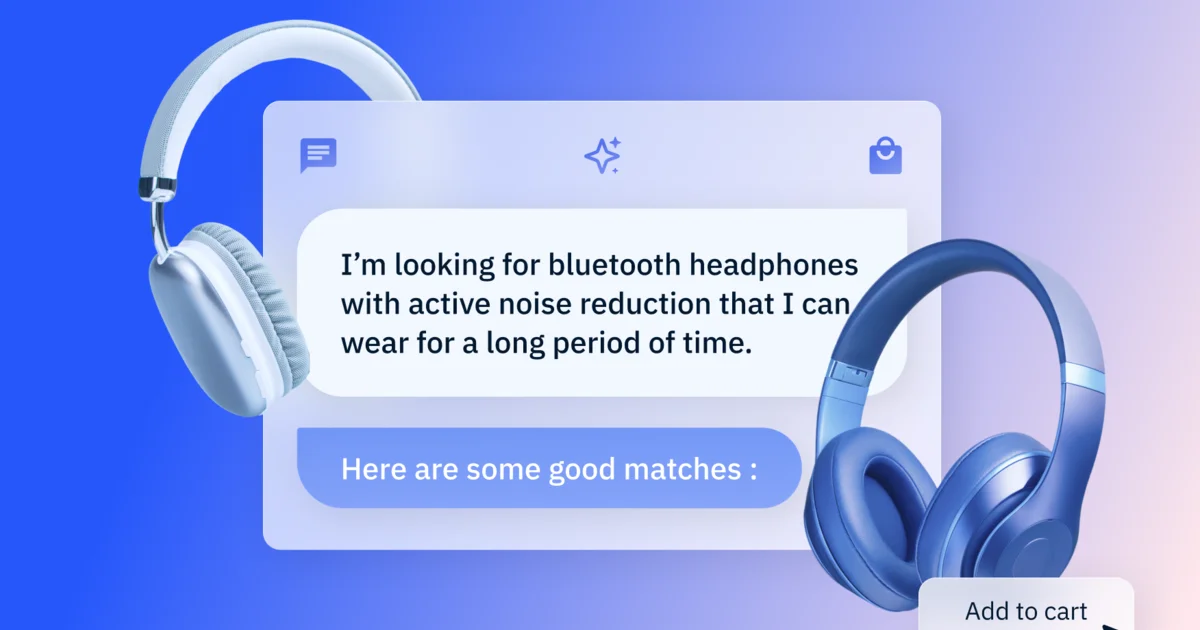
In the announcement, Insider One redefined its product as an 'execution layer' rather than a personalization or marketing automation platform. The framing is deliberate: AI no longer recommends actions to human marketers; it autonomously decides what to do, on which channel, and at which moment, working backwards from a business objective.
CEO Hande Cilingir stated, 'Decision ownership has shifted from humans to intelligent systems that think, decide, and act in real time.' That sentence inverts two decades of MarTech orthodoxy. Until now, CRM and marketing automation assumed humans would build segments, design journeys, and configure triggers, while machines handled delivery. In the model Insider One proposes, marketers input goals — lift repeat purchase rate, improve category conversion — and agents handle the rest.
According to MarTech and CMSWire analyses for 2026, Gartner expects 40% of enterprise applications to embed task-specific agents within the year, and the agentic AI market is projected to exceed USD 10.9 billion at 45%+ CAGR. Insider One's repositioning is best read as a deliberate move to anchor itself as the mothership for those agents.
The real prize: Bluecore's Transparent ID Network
The most strategically important asset Bluecore brings is not its logo list. It is the Transparent ID Network, a retail-specific identity graph that processes over 10 billion shopper events daily and reconciles fragmented signals — web browsing, purchase, email response, mobile session, CRM interaction — into a unified customer ID.
As third-party cookies phase out, retailers have been racing to rebuild a unified customer view from first-party data. Bluecore launched the network in December 2023 and deepened it through a February 2026 partnership integrating dentsu's identity graph. Coverage reported by SalesTechStar and MarTech Cube cited 20-50% lifts in identification rates, 30-40% increases in key campaign sends, and 5-15% lifts in triggered campaign revenue.
Idan Lavin of Insider France described the acquisition on LinkedIn as 'one of the best ID Graph type CDPs on the market.' Insider One did not buy a customer list. It bought the audience-reconciliation infrastructure required for AI-driven commerce.
CDPs are folding into engagement engines
The deal also captures a phase shift in the CDP market itself. CDP Institute data and contentgrip's analysis show that the first half of 2025 alone saw acquisitions of Lytics, mParticle, Relay42, and Informatica — established CDP vendors increasingly absorbed into broader product suites.
This is less commoditization than repositioning. When AI sits at the decision and execution core, data unification stops being a destination product and becomes a precondition. Insider One's closed-loop architecture turns every customer interaction into a signal that immediately enriches the intelligence layer and sharpens the next decision. The CDP becomes the starting point of that loop, embedded inside the engine rather than sold beside it.
Market sizing forecasts still show CDPs growing from roughly USD 11.8 billion in 2025 toward USD 95 billion by 2032, but the composition of that growth is shifting from standalone CDP vendors toward CDP capabilities embedded inside engagement engines.
The campaign as a unit is dissolving
The sharpest line in the E-Commerce Nation piece quoted Insider One directly: 'Every outcome directly feeds the intelligence layer and entirely removes the need for traditional marketing campaigns.'
For two decades, retail marketing has been organized around campaigns — Black Friday, product launches, win-back. Marketers spent weeks to months designing each one: defining segments, preparing creative, scheduling sends.
In the agentic model, the unit dissolves. Instead of sending one million people the same Black Friday email, AI reads each customer's recent browsing, purchase cycle, channel preference, and inventory in real time, and generates micro-interactions across 12+ native channels. Humans no longer hand-design who, when, and what for each campaign — they hand the machine an objective and a guardrail, and let it run.
That changes the marketing organization itself. Future CRM and MA teams will be measured less on craftsmanship of workflows and more on the clarity of business goals, the strength of data governance, the precision of brand rules, and the integrity of AI guardrails. The center of gravity moves from 'campaign builders' to 'agent supervisors.'
What this means for retailers and e-commerce operators
Three takeaways stand out.
First, MarTech stack selection criteria are changing. The dominant pattern — best-of-breed CDP, MA, personalization, and delivery wired together with APIs — is hitting limits in data fragmentation and operational overhead. Going forward, closed-loop integrated platforms and best-of-breed stacks will likely coexist, and the right choice depends on each organization's decision velocity and operating model.
Second, the maturity of first-party data integration directly determines competitiveness in the agent era. Just as Bluecore's ID Graph was the heart of this deal, the quality of agent decisions depends on how unified and real-time the underlying data is. With third-party cookie deprecation and agentic AI adoption advancing together, deferring investments in identity resolution and data integration now carries a clearer cost than it did even a year ago.
Third, the marketing organization itself will need redesign. As more execution moves to agents, the skills that matter shift from 'building campaigns' to 'defining objectives, rules, and oversight.' Reorganization need not happen overnight, but leadership should already be redirecting talent investment toward the roles that will matter most three to five years out.
Closing thoughts
The Insider One-Bluecore deal is not just another MarTech acquisition. It captures a structural shift in the engagement layer: an autonomous execution core powered by AI, with the CDP folded inside it as the data foundation, and the campaign — long the atomic unit of marketing — quietly dismantled.
For retailers and e-commerce operators, the question is not whether to watch this realignment unfold, but whether their current investments in data, organization, and stack design will still hold up five years from now. The era in which agents talk directly to customers is no longer hypothetical — preparation has already started.