LTK Launches a New Search Tab Grounding AI Search and Conversational Shopping in Creator Recommendations, With Click-Outs to Retailers Up 84%
Creator commerce platform LTK has unified interest-based discovery, AI overview search and its LTK AI chatbot in a new Search tab. We explain how it differs from general-purpose AI, how to read the 84% figure, and what brands and retailers should prepare.

Key Takeaways
- On September 24, 2026, creator commerce platform LTK announced a new Search tab in its app. It brings interest-based discovery, search with AI-generated overviews and the conversational LTK AI into one screen, all grounded in creator recommendations
- Since launch, product click-outs from search to retailer websites are up 84% and daily users of LTK AI are up 89% month over month. As product discovery drifts toward general-purpose AI, LTK is differentiating with a layer of trust: recommendations from people who actually used the products
- Every figure is a growth rate, with no baseline or purchase rate disclosed. For merchants, creator-led AI discovery is becoming a route to their own sites, which means preparing both the content that gets recommended and the product pages where shoppers land
LTK Brings Three Ways to Discover Into One Search Tab
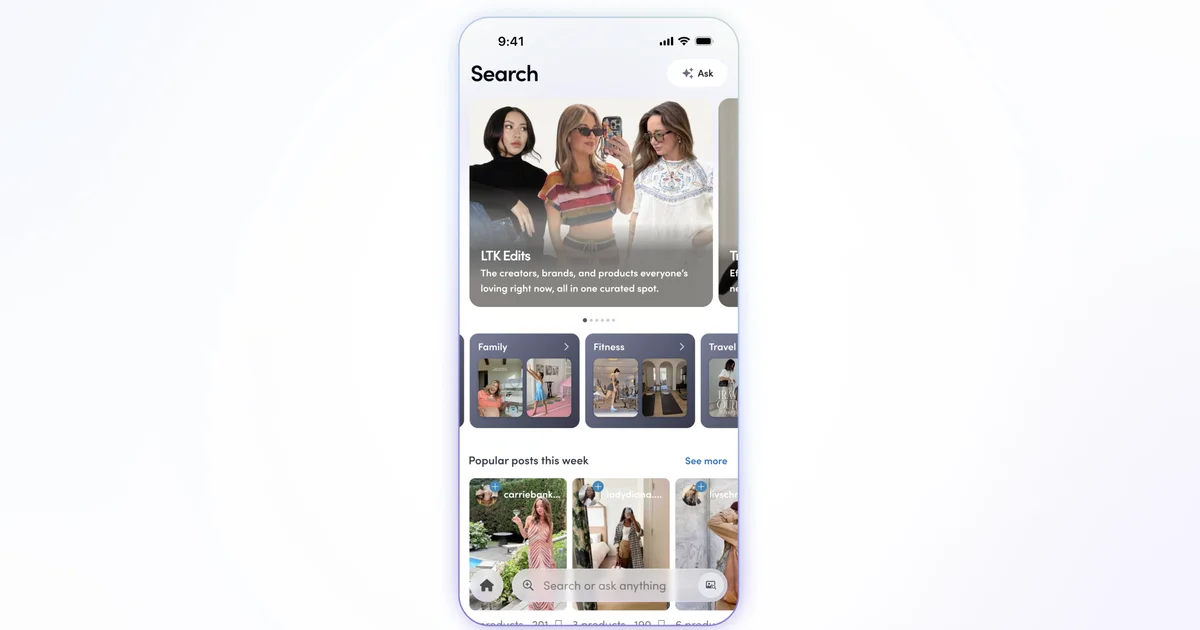
New LTK app Search tab brings together personalized interest-based discovery, AI-powered search and conversational shopping, making it easier to find inspiration, creators and products through trusted recommendations
www.businesswire.comOn September 24, 2026, Dallas-based creator commerce platform LTK announced a new Search tab in its consumer app. Founded in 2011 by Amber Venz Box and Baxter Box, LTK runs a three-sided marketplace connecting creators, brands and consumers. It says it powers more than $6 billion in annual retail sales, serves more than 44 million monthly users and enables more than 8,000 retailers to invest in creator-led marketing.
The new tab combines three ways to discover:
- Discover by interest: across fashion, beauty, home, wellness and lifestyle, AI personalization surfaces creator posts, products and brands based on each user's interests and behavior
- Search with AI overviews: from specific products to broad inspiration, AI-generated search overviews appear alongside creator content and product recommendations that match the user's interests
- Ask LTK AI: users ask natural questions, such as what to wear on a first day at work or how to start a new fitness routine, and get suggestions drawn from creator recommendations
According to LTK, search is already the second most-used function in the app. The company says it built the experience both for people who know exactly which running shoes they want and for people who are just starting to think about running, letting them move between search, interests and AI guidance within the same tab.
What "Grounded" Means: 500,000 Vetted Creators and 15 Years of Transaction Data
The most important part of the announcement is where the AI gets its answers. LTK's discovery experience draws on its proprietary commerce intelligence graph, built from 15 years of creator commerce activity and containing more than 100 billion signals across creators, consumers, products, brands and transactions. Combined with posts and recommendations from more than 500,000 vetted creators, this lets LTK connect consumer interests and shopping intent with relevant creator content and products.
Grounding here means tying an AI's answers to a specific source of evidence. Instead of assembling a generic answer from the open web, LTK uses only the record of what creators on its platform actually wore, used and gifted.
That approach was already clear when LTK launched LTK AI in February 2026. The announcement then said that instead of generating one-size-fits-all search results, the chatbot surfaces real posts, outfits, routines, recipes and reviews from verified creators. The core pattern is to answer contextual questions, such as what to pack for Japan during cherry blossom season or what to use while training for a half-marathon, with examples from real people.
A second feature is that value flows back to creators. The newsletter Scalable pointed out that general-purpose chatbots like ChatGPT rely heavily on creator content to make shopping recommendations, yet creators generally get neither credit nor a share of revenue. On LTK AI, creators are credited and earn a commission when a recommendation leads to a sale. In the same piece, co-founder Amber Venz Box said, "What people expect today is a chat interface."
The design has a flip side. LTK AI can only draw on content from creators who are registered and post on LTK. It does not try to compete with general-purpose AI, which scans the whole web, on breadth of assortment.
LTK has built its consumer-facing AI in stages, and the new tab is the point where those pieces come together.
| Date | Audience | Announcement | Disclosed metrics |
|---|---|---|---|
| February 26, 2026 | Consumers | Launched the in-app LTK AI chatbot, answering with posts, outfits and reviews from verified creators | None |
| May 21, 2026 | Consumers | Added a Home feed toggle for recommendations, AI-powered interest pathways, location-based discovery and Lists | LTK AI monthly active users nearly tripled month over month |
| August 26, 2026 | Brands | Introduced a conversational agentic experience on the Brand Platform (limited beta in September) | None |
| September 2026 (announced on the 24th) | Consumers | New Search tab unifying interest-based discovery, AI overview search and LTK AI | Click-outs to retailers up 84%; LTK AI daily users up 89% month over month |
What Does the 84% Rise in Click-Outs Measure?
The new search experience launched in early September, and LTK shared three early metrics:
- Product click-outs from search to retailer websites: up 84%
- Creator-profile views from search: up nearly 50%
- Daily users of LTK AI: up 89% month over month
The first number matters most to merchants. The LTK app does not sell products itself. It turns recommendations into purchases by sending shoppers to retailer websites. A click-out is a tap on an in-app product link that takes the user to a retailer's site. The figure shows that AI search overviews and conversations are becoming a direct entry point into retail purchase flows.
The numbers need careful reading, though. All of them are growth rates, and the baseline period and absolute volumes are undisclosed. They cover less than a month since launch, so they cannot be separated from a temporary spike driven by a new feature. Click-outs only show movement to a retailer's site; no purchase rate or revenue contribution has been disclosed. LTK's May announcement likewise said LTK AI monthly active users nearly tripled month over month, again without revealing the starting size.
External data helps gauge the quality of AI-referred visits. According to Adobe data reported by Digital Commerce 360, visitors who arrived at U.S. retail sites from AI sources in May 2026 converted at a rate 54% higher than non-AI traffic. That figure, however, includes general-purpose AI such as ChatGPT and does not isolate referrals from in-app AI like LTK's.
How It Differs From General-Purpose AI: Where Trust Comes From
The front door of product discovery is shifting toward general-purpose AI assistants. In a study released on September 9, 2026, the IAB found that 72% of consumers use general-purpose AI assistants for shopping-related decisions. The question then becomes how far those AI recommendations can be trusted.
The same IAB study supports LTK's design. Among 2,200 consumers in the U.S., U.K., Australia, Mexico and India who had used AI for shopping research, 56% preferred AI shopping recommendations that incorporate creator or influencer perspectives, and 65% said they were more confident in AI recommendations informed by credible creator reviews. The generational gap is wide: about 65% of Gen Z and Millennials favor creator-informed AI, compared with 34% of Boomers.
The profile of trusted creators is telling as well. The most trusted were not celebrities but everyday consumers (52%), followed by professional reviewers (43%) and subject-matter experts (37%). The top trust factors were credibility (46%) and consistency (40%), along with independence from brands and sponsorship transparency (34%).
Those numbers are both a tailwind and a challenge for LTK. LTK creators earn a commission on the products they promote, so their recommendations are not purely independent reviews. The more an AI bundles and summarizes recommendations, the harder it becomes for users to see which posts are paid. There is a structural tension between the independence consumers say they want and LTK's business model.
The source of the survey also deserves attention. The IAB is a trade association for digital advertising, including creator advertising, and this study was released ahead of its first IAB CreatorFronts. The "trust in creators up 21% year over year" figure LTK cited in February also comes from its own research.
More neutral data shows that AI recommendations are not taken at face value. In a survey of more than 1,000 U.S. and U.K. shoppers by Rithum and Industry Dive, only 5% of shoppers who verified an AI recommendation went to the retailer's website; the other 95% turned to search engines, reviews, or friends and family. And 58% said their trust in a brand decreases when AI gives them wrong product information. The habit of checking AI answers against human voices is already widespread.
LTK's bet is to build that checking step into the AI from the start. Rather than having a general-purpose AI produce an answer and the user verify it elsewhere, the answer itself is made of recommendations from real people. As Scalable noted, the goal-driven shopping that suits general-purpose chatbots differs from the serendipitous shopping of social platforms, where people stumble on things they want. LTK is using AI while trying to protect the latter experience of finding something you did not know you wanted.
How Brands and Retailers Get Onto This Discovery Surface
For a product to be recommended by LTK's AI, a creator on LTK has to have actually featured it. This is not a surface where buying ad inventory guarantees placement. Instead, creator posts themselves become the AI's index. That is a different entry point from general-purpose AI, where cleaning up product data is the main lever for getting picked up.
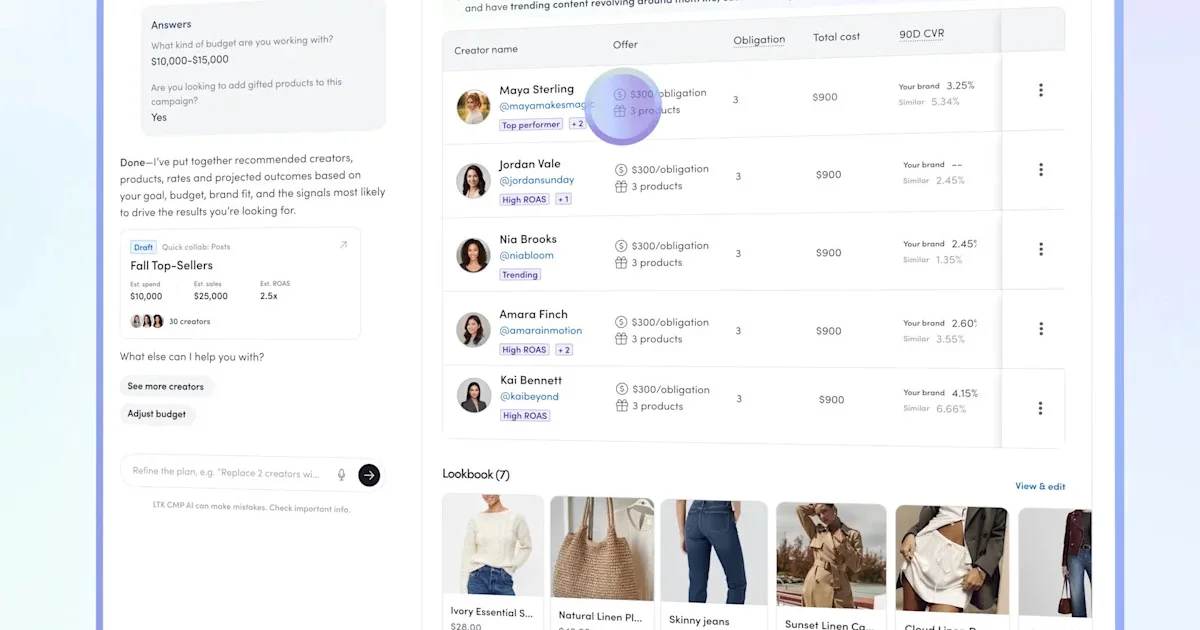
This is where the link to LTK's August announcement of an agentic experience for brands becomes visible. On the brand side, AI helps design campaigns and select creators once a marketer states a goal; on the consumer side, AI uses those creators' posts to make recommendations. AI is at work on both the supply and demand sides, with creator posts and transaction data at the center. For brands, the choice of which creators to work with shapes their visibility inside LTK's AI.
The first practical factor is the quality of the content creators produce. LTK's own examples are contextual questions such as what to wear on a first day at work. To serve as material for such questions, posts need to show the situation, the kind of person (body type, lifestyle) and how the product was used. Setting up creator partnerships so that creators talk about fit and use cases translates directly into visibility in the AI.
The landing page matters too. Click-outs lead to product pages on retailer sites, and if inventory, pricing and product information cannot live up to the expectations set by the AI and the creator, traffic will not turn into purchases.
Measurement granularity is another open issue. Even within traffic from LTK, a shopper arriving from a followed creator's feed, from search or from a conversation with AI is in a different situation. The announcement does not say how finely referral sources can be distinguished, so brands and retailers need to think about how they will separate them in their own analytics.
Conclusion
As AI product discovery gravitates toward general-purpose chat, LTK's new Search tab shows a different path: making "who recommended it" the basis of the answer. The 84% jump in click-outs from search to retailer sites suggests that AI discovery surfaces can feed directly into retail purchase flows, but the baseline and purchase rate remain out of view. The next things to watch are whether that growth holds through the holiday season, and how long consumers keep trusting recommendations that come with a commission attached.