Meta's 'Hatch' AI Shopping Agent: What Instagram, Muse Spark, and a Q4 2026 Launch Mean for Commerce
Meta is reportedly building 'Hatch', an Instagram AI shopping agent powered by Muse Spark and targeting a pre-Q4 2026 launch. We break down what it means for agentic commerce, sellers, and the social shopping race.

Key Takeaways
- Meta is reportedly building an AI shopping agent under the internal codename Hatch, designed to browse, compare, and complete purchases directly inside Instagram Reels and feeds — with a launch targeted before Q4 2026.
- The agent runs on Meta's new flagship Muse Spark model, with internal testing conducted in closed mock environments mimicking Reddit, Etsy, DoorDash, and Outlook, alongside Anthropic models during the evaluation phase.
- With Amazon Rufus, Google's Universal Commerce Protocol, and Alibaba already racing on agentic commerce, Meta's entry from the social discovery side makes getting your product data ready for AI discovery the top priority for sellers.
Why Meta is pushing Hatch now
Meta is reportedly developing an AI shopping agent for Instagram that could browse products and complete tasks on behalf of users.
yourstory.comAccording to reporting from YourStory, Meta is developing a consumer-facing AI agent internally referred to as Hatch, with an Instagram-native shopping agent emerging as one of its first concrete use cases. Drawing on primary reporting from The Information and Reuters, Hatch is being positioned not as a chatbot but as an agentic system that can take actions across apps and services on a user's behalf.
The reference point inside Meta is OpenClaw, the autonomous AI system that drew attention for executing complex digital workflows with minimal human input. What Hatch reportedly aims at is a far more mainstream version of that same idea — one engineered for the billions of casual Instagram users, with the complexity stripped down to a single tap or natural-language instruction. Mark Zuckerberg has repeatedly framed Meta's AI vision around assistants that understand a user's goals and work day and night to help reach them. Commerce is shaping up to be the first domain where that vision needs to actually monetize.
Engadget's report adds important texture: during testing, Meta is using Anthropic models alongside its own, and has built closed mock environments mimicking DoorDash, Reddit, and Outlook to train the agent in third-party-like contexts. Internal testing is targeted for completion by end of June, with public rollout planned closer to the end of 2026.
What Muse Spark unlocks for shopping automation
The foundation under Hatch is Muse Spark, the first flagship model out of Meta Superintelligence Labs, unveiled in April 2026. Two of its design traits map directly onto shopping automation: deep multimodal understanding, and a built-in capacity to orchestrate multiple specialist agents in parallel.
As TechCrunch detailed, Muse Spark's "Contemplating" mode can spin up multiple agents that work simultaneously without dragging on latency. Applied to a shopping request, that translates into one agent comparing prices, another summarizing reviews, a third checking stock and delivery windows, and a fourth executing checkout — all running in parallel behind a single instruction like "buy me trail-running shoes under $150 that ship by Friday."
Meta has already started exposing some of this through Meta AI's shopping features, where Muse Spark helps users figure out what to wear, how to style a room, or what to buy as a gift. Hatch takes this an order of magnitude further — moving from suggestion to actually adding items to cart, populating address and payment details, and pressing checkout. That last mile is the entire game.
"See it in a Reel, buy it on the spot" — for real this time
The choice of Instagram as the launchpad is no accident. Creators can already tag up to 30 products per Reel, meaning visual discovery and purchase intent fire on the same scroll. Drop an AI agent into that surface, and users can move from "I like that" to "ship it in my size for next weekend" with a single sentence, while the agent handles every step in between.
eMarketer's analysis reports that roughly 47.2% of US social buyers will shop on Instagram this year, versus 51% on TikTok. The gap is small but it explains Meta's urgency. Where TikTok Shop has gone all-in on a closed marketplace, Meta's answer with Hatch is different: don't force every brand onto Meta's checkout — let the agent absorb the friction of bouncing out to external sites.
The result is a hybrid model where some flows complete inside Instagram and others route through brand-owned ecommerce sites, but in both cases the agent shields the user from any UX inconsistency between merchants. For Meta, it's a way to lift the quality of in-app purchasing without having to renegotiate revenue share with every brand. Time-in-app goes up, ad ROI rises, and Meta gets a credible path to recouping the roughly $135 billion annual capex bill that AI infrastructure has driven up.
How Hatch differs from Amazon, Google, and Alibaba
The agentic commerce race already has its main characters. Hatch only makes sense once you can place it next to the others.
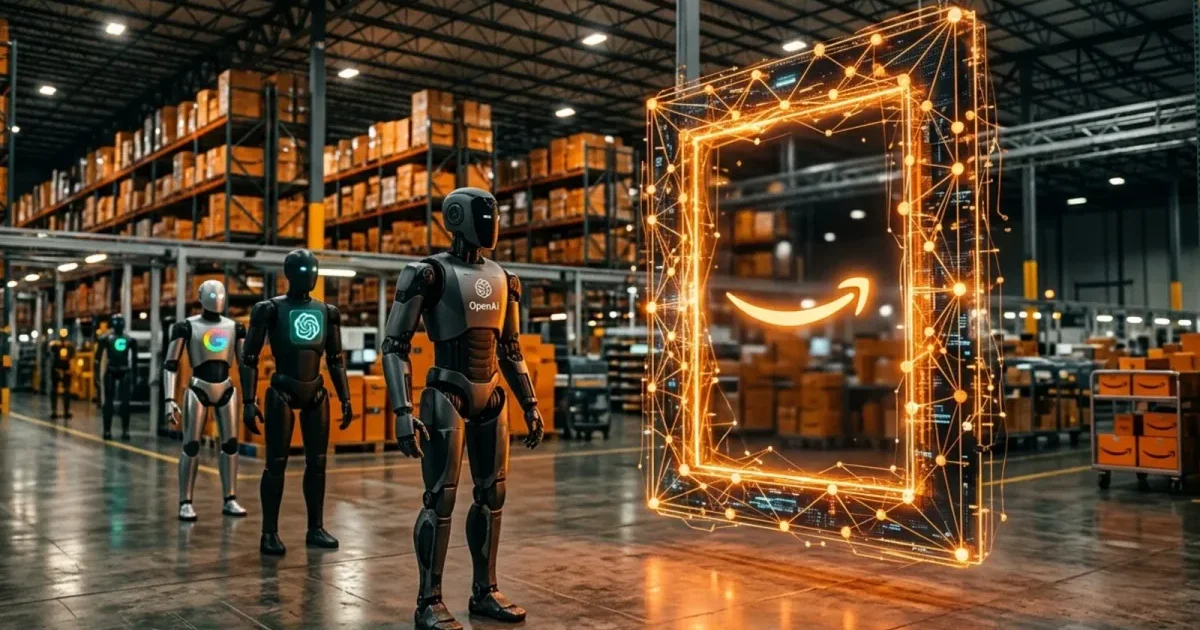
Amazon's Rufus is the agent built on top of the most complete product catalog in the world — monthly active users up 115% year over year, engagement up nearly 400%, and an estimated $12 billion in incremental sales. Amazon's strength is vertical integration: catalog, reviews, purchase history, fulfillment. Rufus competes on certainty of execution.
Google launched its Universal Commerce Protocol (UCP) in January 2026, betting on standardization. UCP is meant to be the open spec that lets any agent talk to any retailer, with Gemini and AI Mode as the surfaces where intent gets translated into transactions. Google is defending its position as the starting point of purchase intent.
Chinese players — Alibaba, Tencent, ByteDance — are building their own AI shopping apps, with Qwen-powered chatbots already capable of completing transactions inside the chat surface.
Against that lineup, Meta owns something the others don't: the unarticulated, pre-intent surface of browsing and inspiration. The desire you haven't typed into a search bar yet. The product that lands while you're scrolling without a goal. The aesthetic universe a creator pulls you into. That layer sits upstream of Amazon's search-led commerce and Google's intent-led discovery. Hatch's real bet is that an agent can productize the moment before you knew what you wanted.
What sellers should be doing now
In the world Hatch is sketching, what shoppers consume is no longer the image or the product page — it's the AI's summary, comparison, and recommendation. The competitive axis for sellers shifts from "how does this look to a human" to "how does this read to an agent." Concretely, four things move up the priority stack.
First, structured product data becomes the headline workstream. Size, materials, use cases, shippable regions, compatibility, occasion, target demographic. Agents don't infer attributes from a vibe — they parse structured catalogs to make decisions. The completeness and accuracy of those fields directly determines whether your product surfaces at all. eMarketer's point that AI will identify products visually from feed content holds, but the visual signal still has to be cross-referenced with structured data the agent can trust.
Second, reviews and Q&A become finer-grained leverage. The Rufus growth curve makes this concrete: agents lean heavily on reviews at the moment of decision. The relevant question isn't whether your product ranks on a search keyword, but whether your existing reviews can answer the dynamically assembled questions an agent will pose mid-purchase about fit, durability, or use context.
Third, payments and API integration need to move in parallel. Hatch's design implies two flows: one where everything completes inside Instagram, and another where the agent navigates to your own ecommerce site to close the purchase. Both require frictionless authentication, authorization, cancellation, and returns through APIs. That same investment positions you for Google's UCP and whatever protocol comes after.
Fourth, brand storytelling has to be re-architected for compression. When an agent summarizes your brand into a few hundred characters for the user, ten years of brand-building gets squeezed through a very narrow funnel. Short, machine-readable, emotionally legible copy becomes as important as the rich landing pages and video assets that defined the last era.
Conclusion
Meta's Hatch is the most concrete attempt yet at dissolving the boundary between social media and purchase. With Muse Spark's parallel agent orchestration underneath and Instagram's massive discovery funnel on top, users could shift from watching to delegating in a single product cycle.
What Meta actually ships before Q4 2026 will depend on regulation, payment safety, and how cleanly it can be reconciled with the existing ads business. But Amazon, Google, and Alibaba are running in the same direction, and the window for sellers to stay invisible to agents is closing faster than most assume.
For merchants the playbook is uncomplicated: get product data, reviews, APIs, payments, and content ready to be read by AI — and start now. Waiting for Hatch's official launch is already late for the shelves on Instagram, and far too late for the agent-driven commerce that comes after it.