How Meta's Muse Spark Reshapes Shopping: Conversational Discovery, Hatch, and Merchant Implications
Meta's Muse Spark moves shopping inside Instagram, Facebook, and WhatsApp toward AI conversations. We unpack multimodal discovery, the Hatch positioning gap, and what it means for catalogs, ad creative, and SKU strategy.

Key Takeaways
- Meta's Muse Spark moves shopping inside Instagram, Facebook, and WhatsApp from feed browsing toward AI-driven conversational discovery
- Multimodal text and image inputs consolidate discovery, comparison, and recommendation into a single interface
- Merchants must navigate a three-layer structure: Muse Spark (the model), Hatch (the consumer agent), and a separate Instagram shopping agent
How Muse Spark Rewrites the Shopping Entry Point

Meta Muse Spark is shifting shopping inside Meta apps toward AI-driven conversations where users discover, compare, and evaluate products using text and images.
www.thekeyword.coIn April 2026, Meta Superintelligence Labs unveiled Muse Spark, a new model that is quietly rewriting the assumptions behind the shopping experience. On the surface, this is a chatbot refresh. Underneath, it is a structural change that absorbs the traditional feed-and-search discovery path into a single AI conversation layer.
According to a feature analysis from The Keyword, Muse Spark coordinates multiple AI agents, breaking user requests into smaller sub-tasks before combining the outputs into a unified answer. Vague, multi-part prompts like "suggest an outfit for this event" or "find a rug that works with this sofa" can now be resolved in a few conversational turns rather than through endless feed scrolling.
Muse Spark currently runs in the Meta AI app and web experience in the US, with rollouts planned for Instagram, Facebook, WhatsApp, Messenger, and smart glasses. Meta's official announcement introduced two operating modes — "Instant" for simple queries and "Thinking" for complex multi-step requests — making the dual-track reasoning architecture explicit.
Multimodal Discovery Pushes "Image SEO" Into the Spotlight
The defining trait of Muse Spark is its multimodal design, treating text and image inputs as equally legitimate. A user can upload a photo of a shirt or a chair, and the system interprets not just product descriptions but also color, shape, style, and contextual signals to find similar items.
For merchants, this elevates product imagery from a branding asset to a ranking and interpretation signal. Images with clean backgrounds, multiple angles, and lifestyle context are more likely to be accurately recognized and matched inside AI-driven recommendation systems.
Catalog visual standards become a new competitive frontier. Consistent shooting formats, the pairing of white-background and lifestyle cuts, and alignment between product metadata and imagery now influence AI recommendation exposure rather than search rankings. Products with low-quality or inconsistent visuals risk being filtered out at the AI interpretation stage.
As McKinsey research has noted, digital commerce journeys had grown increasingly fragmented. AI systems like Muse Spark compress discovery, evaluation, and recommendation into one interface, eliminating multiple pre-purchase touchpoints.
The Three-Layer Structure: Muse Spark, Hatch, and the Instagram Shopping Agent
Meta's AI initiatives are easy to conflate, but the architecture resolves into three distinct layers.
Layer 1: Muse Spark is the foundation model developed by Meta Superintelligence Labs. Unlike Llama, which has carried a research-first positioning, Muse Spark was designed from the ground up for product integration. According to CNBC, it is the first major model under former Scale AI CEO Alexandr Wang, whose lab represents Meta's roughly $14.3 billion acquisition bet.
Layer 2: Hatch is the internal codename for Meta's consumer agent. According to The Information's reporting, Hatch trains in closed mock environments that mimic Reddit, Etsy, and DoorDash, learning to operate UIs rather than relying solely on text-based API calls. It currently runs on Anthropic's Claude during development but will switch to Muse Spark at launch.
Layer 3: The Instagram shopping agent is a separate commercial project distinct from Hatch and Muse Spark itself. eMarketer frames it as a response to TikTok Shop, with development targeting a launch before Q4 2026. The envisioned UX lets users obtain product information, ask AI questions, and complete purchases without leaving Reels or the feed.
Confusing these three layers leads to misreading the use cases that matter for any given merchant. Muse Spark is the assistant that runs across every entry point, Hatch is the task-executing agent, and the Instagram shopping agent is the funnel-embedded purchase tool — each with different purposes, granularities, and journeys. Our Hatch deep dive covers more of the agent layer.
Social Commerce Funnels Move Toward a "Recommendation Economy"
Meta's funnel has historically been engineered around ad creative optimization and bid logic. As Muse Spark spreads, two major shifts overlay this structure.
The first is a migration from impression-based pricing to recommendation-based placement. When users ask the AI "what goes with this?", the relevant inventory unit is no longer a feed ad slot but a product slot in an AI-generated recommendation list. Meta has not yet detailed monetization models for Muse Spark, but sponsored placements inside recommendations and product-data-linked ad formats are likely candidates.
The second is that creator content becomes an input layer for recommendation algorithms. A viral styling video on Instagram or a frequently saved review post may function as a signal that Muse Spark draws on when answering fashion-related queries. This creates a path to AI recommendation exposure outside of paid ad inventory, expanding creator marketing ROI from "feed views" to "contribution to AI recommendations."
Meta's Q1 2026 earnings already reported measurable improvements in ad efficiency tied to its AI systems, including conversion rate gains and continued growth in Meta AI usage. How those metrics shift once Muse Spark fully rolls out will be a key indicator going forward.
WhatsApp and the Redefinition of Conversational Commerce
Muse Spark's expansion into WhatsApp could meaningfully change messaging-based commerce. WhatsApp Business is already the primary customer channel in many markets, but when AI-driven product Q&A, comparison, and recommendations are layered in, discovery and purchase can complete inside a one-to-one conversation without ever invoking a storefront UI.
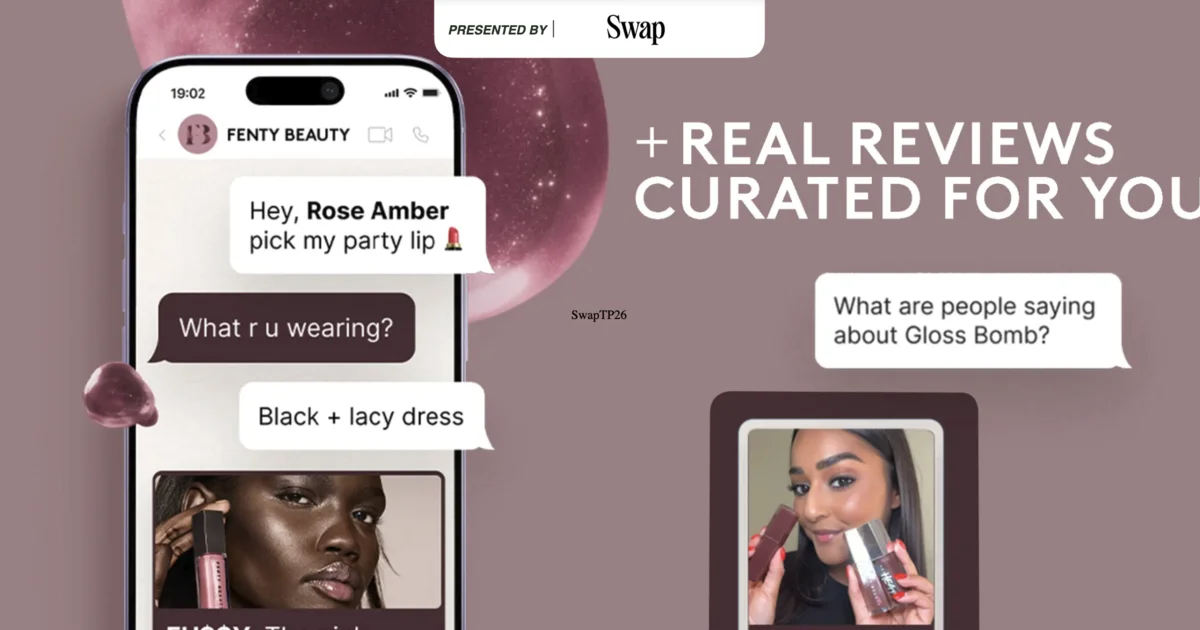
This pattern aligns naturally with the chat commerce traditions of Southeast Asia and Latin America, which evolved separately from Western feed commerce. As demonstrated by Fenty Beauty's WhatsApp AI advisor deployment, brands now have the foundation to build "conversational storefronts" that integrate CRM and recommendation directly on Meta's stack.
Three Preparations Merchants Should Begin Now
To prepare for the Muse Spark wave, here are the practical priorities merchants should address.
Prioritize structured, machine-readable product data. Muse Spark generates recommendations based on catalog quality. If product titles, descriptions, attributes, and inventory are not synchronized in real time, the AI will surface stale items or out-of-stock products and erode user trust. Feed freshness becomes an even more important operating metric than it is for ad delivery.
Redesign your catalog visual standards. Beyond a single white-background image, lifestyle shots, multiple angles, and scale-conveying scene cuts unified under a single specification meaningfully improve AI visual interpretation. Documenting shooting guidelines internally and planning a back-catalog remaster project in parallel is the realistic path.
Reconfigure KPIs around platform dependency. If discovery shifts from feeds and search engines into AI interfaces, direct traffic to merchant websites is likely to decline. Rather than bounce rate or session counts, merchants need to capture new metrics: AI recommendation exposure counts, conversions attributed to AI-driven discovery, and question patterns observed inside AI conversations. eMarketer's retail media projections point in the same direction.
Conclusion
Muse Spark is not a simple model upgrade. It is a project that redesigns the entry point of shopping across Meta's apps. A new conversational AI layer overlays the existing feed-and-search paths, and product data, content signals, and catalog integrity now influence visibility at least as much as advertising spend.
The implication for merchants is clear. After separating Muse Spark, Hatch, and the Instagram shopping agent into their distinct layers, the next step is to lock in three foundations before mass rollout: structured product data, unified visual standards, and a new measurement framework. As the competition among the four AI commerce players accelerates into the full agentic commerce era, whether your products get "chosen by AI" inside Meta's ecosystem will define your revenue trajectory for the next two to three years.