Country Road Group Moves Five Brands to Shopify Unified Commerce in ANZ's Biggest Fashion Replatforming
Woolworths Holdings-owned Country Road Group is moving Country Road, Witchery, Trenery, Mimco and Politix to Shopify's unified commerce platform. We unpack the move against Salesforce Commerce Cloud and SAP Commerce, what it means for the ANZ market, and the implications for enterprise ecommerce operators.

Key Takeaways
- Country Road Group, owned by South Africa's Woolworths Holdings, has signed up Shopify's Unified Commerce platform to power its five fashion brands (Country Road, Witchery, Trenery, Mimco and Politix) across Australia and New Zealand
- The deal is a flagship win for Shopify's enterprise push, combining multi-brand architecture, online-to-store unification and a marquee ANZ retailer in a single reference case
- For ecommerce operators, the takeaway is that replatforming from Salesforce Commerce Cloud or SAP Commerce has become a normal board-level decision, and that "shared backbone, independent brand experience" is now a baseline requirement for multi-brand enterprises
A Landmark Replatforming in ANZ Fashion Retail
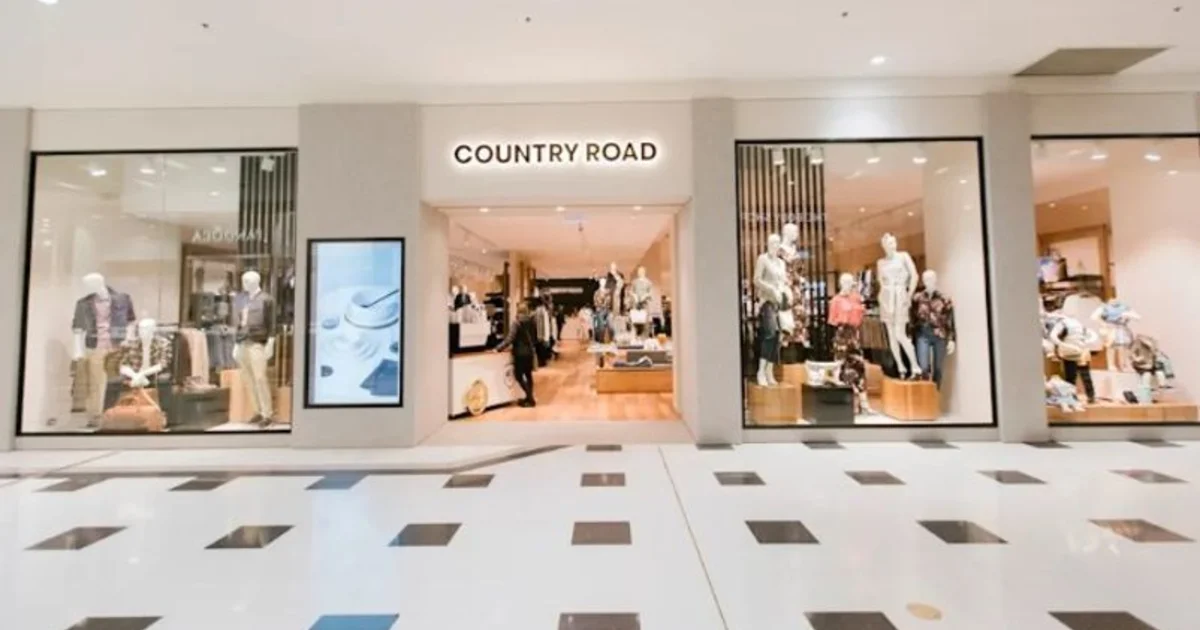
Country Road Group is overhauling the ecommerce backbone of its five fashion brands through a new partnership with Shopify, betting unified online and in-store systems will sharpen growth, speed and customer experience across Australia and New Zealand.
www.mi-3.com.auOn 12 May 2026, Country Road Group, one of Australia's largest fashion retailers, announced that it would move the ecommerce backbones of its five brands — Country Road, Witchery, Trenery, Mimco and Politix — onto Shopify's Unified Commerce platform. The rollout will be progressive, and the design pulls online and in-store experiences onto a single foundation. Group CEO Steven Cook framed the move as a commercial decision as much as a technology one: "We have five brands that each occupy a distinct position in the Australian market. Our investment in a unified commerce platform is about ensuring every customer touchpoint, online and in store, reflects the quality and identity our customers expect, while giving our teams the tools and speed to grow."
What makes the news matter beyond the deal size is the company doing the signing. Country Road Group is a core operating division of South African retail holding company Woolworths Holdings (WHL), and runs more than 630 stores across Australia, New Zealand and South Africa. When an ANZ retailer of that scale shifts five brands onto Shopify's enterprise tier in one move, Shopify's standing in the ANZ enterprise conversation steps up a notch.
CIO Phil Lewis framed the technology rationale around four points: a modern commerce engine that lets each brand move independently, faster site performance, quicker product launches and a seamless omnichannel offering between online and in-store. His specific wording is worth highlighting: "Country Road, Witchery, Trenery, Mimco and Politix each retain full control of their look, feel and customer journey but share a platform that gives them enterprise-grade capability without enterprise-grade complexity." Shared backbone, independent brand experience.
Who Is Country Road Group?
Country Road Group started in 1974 with the Australian lifestyle brand Country Road and has since grown into a portfolio of five distinct brands. South Africa's Woolworths Holdings took a majority stake in 1998 and brought the business fully in-house in 2014. The same year, WHL acquired Australian department store David Jones for AU$2.1 billion, but offloaded that business to private equity firm Anchorage Capital in December 2023. Today, Country Road Group is the central ANZ engine of the WHL group.
The brand portfolio is structured as follows:
- Country Road: the founding 1974 Australian lifestyle brand and the group's anchor
- Witchery: contemporary womenswear
- Trenery: an adult lifestyle line that spun out of Country Road in 2009
- Mimco: accessories and bags
- Politix: men's formal and contemporary
The group runs 630+ stores across ANZ and South Africa, with roughly 88 outlets located in South Africa. Inside Australian retail, it sits alongside David Jones and Myer as a benchmark name.
A useful piece of context: in November 2025, Country Road Group launched a curated marketplace offering on Country Road and Witchery using French marketplace platform Mirakl, with plans to extend it to Trenery, Mimco and Politix during 2026. That makes the architecture clearer — Mirakl powers the marketplace layer, Shopify becomes the unified commerce backbone, and the group's underlying strategy looks composable: peel apart the old monolithic commerce suite and reassemble it from best-of-breed components.
What Shopify Means by "Unified Commerce"
Shopify has been using Unified Commerce as its enterprise banner for several quarters now, with three load-bearing ideas behind it.
The first is single-platform online-to-store. DTC, B2B, marketplace and POS Pro run on the same product catalog, inventory, order and customer model. Patterns like "online order picked from store stock", "buy online, pick up in store" and "endless aisle" stop being middleware integration projects and start being native flows. Shopify states that Plus supports POS Pro deployments from one store up to 200 locations.
The second is multi-store architecture. Plus customers run a primary store and up to nine expansion stores, covering regional sites, separate brand storefronts and B2B portals from one administrative layer. Country Road Group's setup, with five distinct brands needing their own front-end identities, lines up neatly with that pattern.
The third is positioning as the commerce infrastructure for the AI agent era. Shopify's Q1 2026 results showed merchants over $100M in annual GMV have nearly doubled in two years, and enterprise wins like Lands' End, Mulberry, The Outnet, rag & bone and Balmain Paris continue to land. In parallel, Shopify is investing heavily in agentic commerce: ACP (Agentic Commerce Protocol) support, Shopify Sidekick and AI Discovery features. Choosing Shopify in 2026 is also, implicitly, a bet on which substrate will carry agent-driven traffic best in the next few years.
How Shopify Stacks Up Against the Alternatives
Country Road Group's choice has to be read against the realistic enterprise shortlist: Salesforce Commerce Cloud (SFCC, formerly Demandware), SAP Commerce Cloud (formerly Hybris), Adobe Commerce (formerly Magento), plus headless-first options like commercetools and the more upmarket end of BigCommerce. Four axes plausibly drove the call.
The first is total cost of ownership. SFCC's revenue-share licensing (roughly 1-3% of GMV) tends to scale super-linearly with success. Shopify Plus runs on annual-commitment subscription pricing (AU$3,700-4,000 per month range in Australia), and multiple analyst benchmarks put average TCO at roughly 54% below Salesforce on comparable footprints. Across five brands, the math compounds quickly.
The second is implementation speed. SFCC and SAP Commerce implementations of 9 to 18+ months are common; Shopify Plus implementations in the same complexity band frequently land in months rather than quarters, with implementation partners reporting 50-75% reductions in timelines on comparable projects. Country Road Group's phased rollout signals a roadmap that is built around that kind of cadence.
The third is multi-brand, multi-store operations. SFCC has handled multi-site setups via Site Genesis and SFRA, but truly independent brand experiences on a shared operational backbone tend to be a custom-build problem. Shopify's "separate stores under one admin" model is the default rather than a workaround, and that matches Lewis's stated requirement of brand independence on a shared platform.
The fourth is standardized omnichannel integration. Salesforce Commerce Cloud pairs well with Service Cloud and Marketing Cloud, but in-store POS is typically a separate product or implementation project. Shopify's Online Store, POS Pro, B2B and checkout sit on the same platform, which removes a lot of friction when reporting unified KPIs across channels.
There are cases where SFCC or SAP still win — catalogs with 500,000+ SKUs and deeply nested bundles, or enterprises already standardized on Salesforce CRM, Marketing Cloud and Service Cloud. Country Road Group's choice indicates that the four axes above outweighed those considerations in its context.
What It Means for ANZ and for Shopify Enterprise
Shaun Broughton, Shopify's MD for APAC and Japan, framed the deal in the announcement: "Country Road Group has a clear vision for its brands and a genuine commitment to delivering exceptional customer experiences across every channel. We're proud to provide the commerce platform that supports that ambition. With this move, the team will spend less time managing complexity, and more time innovating, scaling, and responding to how Australians are actually shopping." Read as positioning, this is Shopify formalizing the message it has been making to ANZ enterprise: stop spending engineering hours on complexity, redirect them to innovation and speed.
Shopify's Q1 2026 results, reported in early May, showed GMV crossing $100B in the quarter and a steadily growing enterprise mix. On the earnings call, enterprise wins were called out as a structural driver of growth, and Country Road Group sits naturally in that lineage alongside Lands' End and Mulberry. It is the ANZ reference case for the same story.
For the broader ANZ market, the move is the kind of thing that prompts board conversations at David Jones, Myer, JB Hi-Fi, Bunnings and Endeavour Group. Multi-brand fashion groups in particular tend to converge on similar requirements ("keep brand DNA, optimize at group level"), and Country Road Group has now provided a concrete benchmark for what that looks like with five brands on one Shopify backbone.
The second-order effect worth noting is that Shopify is increasingly a surface for AI agents, not just a commerce backend. Shopify was an early ACP implementer and has integrations with OpenAI, Perplexity, Anthropic and Microsoft. When a large multi-brand retailer adopts Shopify, it implicitly opts into easier discoverability for its products from agent-driven shopping surfaces. That side effect will matter more as agent-driven traffic moves from edge case to mainstream.
Three Takeaways for Ecommerce Operators
Three points to internalize from this announcement.
First, replatforming is now a normal management decision. Replacing SFCC or SAP Commerce was an outlier project five years ago; in 2026, one of the largest multi-brand fashion groups in ANZ is doing exactly that. Once TCO, implementation speed and lag on AI/agent readiness all line up against the legacy platform, the case for staying put gets thin fast.
Second, "shared backbone, independent brand experience" has graduated into a baseline architectural requirement for multi-brand enterprises. The composable and headless debate, in operational terms, comes down to two simple questions: can each brand move independently, and can the group capture the leverage of a shared platform? Every platform decision should be evaluated against both at the same time.
Third, multi-surface strategy needs to be priced in at platform selection time. Country Road Group is running a Mirakl marketplace alongside its Shopify unified commerce platform, and will eventually be discovered by AI shopping agents on top of both. Modern ecommerce backbones never operate on a single surface. API openness, support for standards like ACP, and the ability to plug into third-party marketplaces and agent surfaces should all be in scope when choosing a platform.
Closing Thoughts
Country Road Group's full adoption of Shopify Unified Commerce is less a single success story and more a marker of the platform shift happening in ANZ enterprise fashion retail. Consolidating five brands onto one backbone while preserving each brand's independent experience will be referenced as a multi-brand architecture pattern for years to come.
For Shopify, this validates the enterprise narrative the company has been building through 2026 earnings. For Salesforce Commerce Cloud and SAP Commerce, it adds pressure for a re-evaluation against the same four axes — TCO, implementation speed, multi-brand fit and omnichannel standardization. For ecommerce operators, it's a concrete prompt to ask whether your current platform can survive the next three years. As AI agents take their place as a real shopping surface, the choice of commerce backbone becomes a core strategic question, not an IT one.