Salsify Unveils SalsifyIQ: The First PXM Intelligence Layer Built for Agentic Commerce
Salsify launches SalsifyIQ, an AI-powered PXM intelligence layer that turns product data into the fuel for agentic commerce. Alongside Mirakl Agentic Activation and Syndigo Synapse, brand-side agent readability is becoming a new axis of competition in 2026.

Key Takeaways
- Salsify announces SalsifyIQ, the first PXM intelligence layer designed to turn product data into fuel for agentic commerce.
- Alongside Mirakl Agentic Activation and Syndigo Synapse, brand-side agent readability is emerging as a distinct competitive axis in 2026.
- To be picked by ChatGPT, Perplexity, or Gemini, brands need a product knowledge graph that holds context, not just attributes.
What SalsifyIQ Actually Is — A New Intelligence Layer for PXM
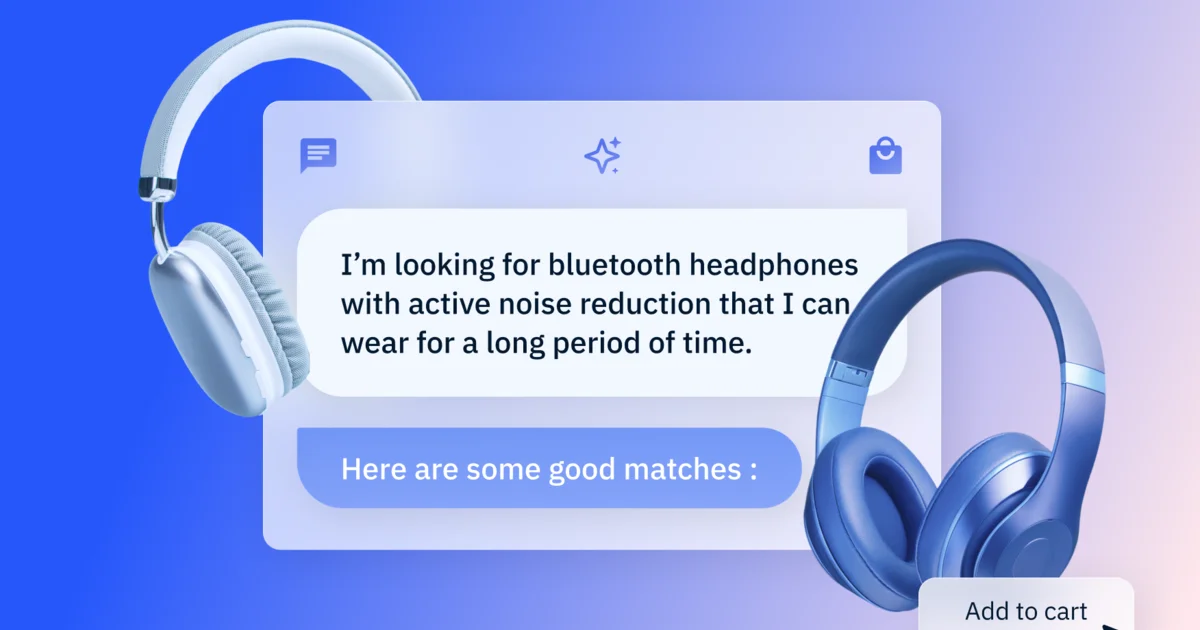
Salsify launches SalsifyIQ, an AI-powered PXM intelligence layer helping brands turn product data into growth across digital and agentic commerce.
www.globenewswire.comOn May 5, 2026, from the main stage of Digital Shelf Summit 2026 in Atlanta, Salsify announced SalsifyIQ — what the company is positioning as the first intelligence layer purpose-built for Product Experience Management (PXM).
The crucial point is that SalsifyIQ is not just a new feature, but a redefinition of the PXM platform itself, with intelligence sitting as the platform's "brain." It acts as a shared substrate where human teams, AI agents, and automated workflows all operate from the same contextual grounding, connecting brand-side operations with agent-facing distribution end to end.
At the core sits a product knowledge graph. Beyond raw attributes, it embeds a decade of Salsify expertise — retailer-specific schemas, GDSN requirements, shelf error-code patterns, and now agentic shelf standards. Layered on top are brand-specific style guidelines, approved terminology, shopper personas, and external signals like conversion data and shopping trends.
In parallel, Salsify is extending its conversational assistant Angie across the full platform, broadening the surface area where users can drive complex actions through plain-language commands. A Model Context Protocol (MCP) layer is also introduced so that internal agents and third-party systems can securely access approved product attributes directly.
Why "Brand-Side Agent Readability" Matters Right Now
The center of gravity in the product data conversation has shifted in just the past six months. A key catalyst was Mirakl's Agentic Activation, launched on April 29, 2026, which dropped a striking number: less than 1% of eCommerce product pages currently meet the minimum bar for being recommended by LLMs.
The market data backs up the urgency. AI agents drove $67 billion in global Cyber Week 2025 sales — about 20% of total purchases — and on Black Friday alone, AI-referred traffic to U.S. retail sites surged 805% year over year. Reports also show AI-referred shoppers convert about 42% higher than visitors arriving from traditional channels.
The tension is that ranking high on a search results page and being named "the recommendation" inside an agent's conversation are increasingly different problems. The shift from SEO to AEO (Answer Engine Optimization) is not buzzword positioning, but a structural change with real revenue impact.
Salsify, Mirakl, and Syndigo (which announced Synapse Agentic PXM in March) are each running ahead of this curve. Their approaches differ, but the common thread is that they are not just rewriting product copy — they are restructuring product data itself for agent readability.
Forrester has also flagged that brands preparing for the agentic era need to advance attribute hygiene and contextual enrichment in parallel. SalsifyIQ's four-tier knowledge architecture — Shelf Knowledge, PXM Knowledge, Brand Knowledge, and Ecosystem Knowledge — is a direct expression of that "context-as-platform" thinking.
How Products Get Picked by ChatGPT, Perplexity, and Gemini
It helps to walk through how an agent actually arrives at a recommendation. When ChatGPT, Perplexity, or Gemini returns a "best for you" answer, it is collapsing candidates from many sources behind the scenes.
Master data, PDPs, reviews, manuals, brand sites, knowledge bases, retailer feeds — the more these are connected through a consistent attribute model, with use cases, scenes, and personas tied to each item, the more confidently an agent can elevate a brand into its candidate set.
Brands missing attributes, using inconsistent expressions across retailers, or letting copy and imagery drift apart get filtered out before they enter consideration. When Salsify says "product facts are just the starting line," it is acknowledging this hard reality.
SalsifyIQ's Automapping and Auto-healing capabilities analyze retailer requirements and proactively repair schema errors, aiming for "touchless" syndication with minimal human touch. The AEO Accelerator, meanwhile, generates Q&A and use-case copy at volume to influence how LLMs and answer engines describe a product.
The notable design choice is that these are not standalone tools sold separately — they are wired through a shared knowledge layer. When every capability runs on a common context grid, AI-generated Q&A stays inside the brand's voice, generated imagery respects retailer rules, and trust scores accumulate instead of leaking. That is becoming the dividing line for PXM in the agentic era.
MCP support belongs in the same frame. Internal chatbots, support tools, marketing automation, affiliate partners — instead of trading spreadsheets, they reference Salsify directly as a single source of truth. As agent-to-agent collaboration becomes the default, traceability of "where did this attribute come from" matters more than the attribute value itself.
A Brand Product Data Checklist for May 2026
Setting aside whether to actually adopt SalsifyIQ, Mirakl Agentic Activation, or Syndigo Synapse, here are practical checkpoints brands should run through right now.
First, get explicit about ownership of product data. Even with a PIM/PXM in place, many companies still keep the latest copy in marketing's Slack, hero imagery in a designer's Dropbox, and pricing logic in the ERP. Variant-naming drift across retailers tends to live in the gaps.
Second, decide where to store contextual information beyond attribute values. Who is the product for, what scene does it fit, how does it differ from competitors. This context often hides in long-form PDP descriptions, but it has to be reorganized into LLM-friendly shapes — FAQ blocks, use-case modules, comparison tables — to actually surface in agent answers.
Third, audit the quality of feeds going to retailers and marketplaces. GDSN compliance, alignment with the latest retailer-specific schemas, freshness of attribute values. Salsify's emphasis on Auto-healing exists precisely because day-to-day drift is a constant operational tax.
Fourth, content work for AEO. Brand sites need to carry not just product facts, but use cases, comparisons, and Q&A in depth, with reviews and case studies exposed as structured data, and imagery enriched with lifestyle context. This is exactly the territory that Salsify's AEO Accelerator and Mirakl's Catalog Transformer are automating.
Fifth, governance for connections to internal AI agents. Independent of MCP adoption, brands should decide which attributes are exposed to which agents, what the approval flow looks like, and how logs are kept. Knowing how to roll back a misstated attribute is part of the design surface.
Finally, expand measurement beyond pageviews and CVR. AI-referred traffic share, brand citation rates as an answer source, and tracking where a brand appears in agent-presented rankings all become required KPIs. Forward-leaning brands like Vessi already track product-data "cleanliness" as an independent metric.
Closing Thoughts
The SalsifyIQ launch underscores that PXM is shifting from a "product data warehouse" to a "context engine that powers AI agents." Read alongside Mirakl Agentic Activation and Syndigo Synapse, 2026 is shaping up as the year when brand-side agent readability solidifies as a standalone competitive axis, sitting beside SEO and traditional ecommerce ops.
What stands out is that the change is not "install the new tool and you are done." It re-elevates the unglamorous work of data ownership, contextual structuring, and governance. No volume of LLM-friendly copy compensates for a master catalog that contradicts itself.
Is your PIM/PXM designed not just for human teams, but for AI agents as primary consumers? Can retailer-specific drift be absorbed in a near-touchless way? Asking those questions internally is the first step into agentic commerce.