Shein Targets a $40-50 Billion Hong Kong IPO: How the EU's EUR 3 Parcel Fee Broke Cross-Border E-Commerce Unit Economics
The EUR 3 duty the EU imposed on low-value imports on July 1 is now showing up in Shein's IPO valuation. Here is why the number fell from $100 billion in 2022, and what a per-tariff-heading fee means for cross-border pricing and logistics.

Key Takeaways
- Shein is targeting a $40 to $50 billion valuation in its Hong Kong IPO, roughly half the $100 billion reported in 2022. The EUR 3 fee the EU imposed on low-value e-commerce imports on July 1 is squeezing both growth and margins.
- The EUR 3 is charged per tariff heading, not per parcel. Five different items in one box means EUR 15, which penalizes exactly the basket-building tactics low-price cross-border retail depends on.
- The same fee lands differently on Shein and Temu. The dividing line is whether inventory already sits locally, which makes logistics redesign a more urgent question than price pass-through for cross-border operators.
From $100 billion to $40 billion: what happened along the way
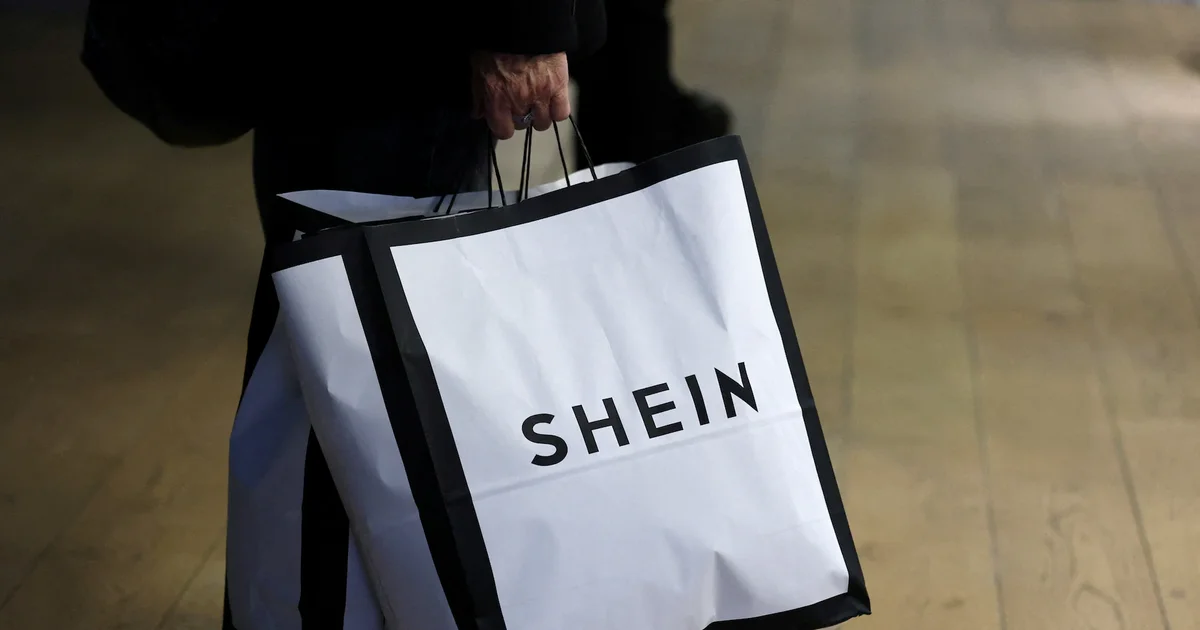
Shein's ambitions for a valuation of up to $50 billion in its long-awaited Hong Kong IPO are likely to face a tough test from investors, as new fees on e-commerce parcels in Europe weigh on sales growth and profits.
www.reuters.comThe Reuters story published on July 16 captures the moment regulation shows up as a number on a term sheet. Shein, the fast-fashion giant, is seeking a valuation of $40 to $50 billion for its Hong Kong listing. That is a long way from the $100 billion valuation media reported for its 2022 funding round. Its May 2023 round valued it at $66 billion, so the decline has been a three-year slide rather than a single shock.
What makes the reporting notable is that it puts numbers on results the company keeps confidential. Two sources with knowledge of the matter told Reuters that Shein earned more than $40 billion in global revenue last year and close to $2 billion in net profit. Its latest results filing in Singapore shows $37 billion in revenue and $1.29 billion in profit for 2024. The business is growing. The tension at the heart of this story is that a growing company is being valued at half of what it once was.
Investors are specific about why. Eddie Tam, chief investment officer at Hong Kong's Central Asset Investments, told Reuters:
If its valuation is $40 billion, I think that's still a bit expensive. But if it's closer to $30 billion, maybe it looks more attractive. The problem is that the company is already on a downward trajectory. E-commerce competition is extremely intense, both in China and overseas.
Shein won approval from the China Securities Regulatory Commission on July 10, clearing the way for a Hong Kong listing after failed attempts in New York and London. The approval took a year to secure. Its final pre-IPO hearing with the exchange's listing committee was due on July 16, with a public filing expected by the end of the month and a listing targeted for September. Founder and CEO Sky Xu will have to convince investors that the slowdown is a temporary blip and that growth resumes in 2027, one of the sources said.
What the number EUR 3 actually means
The design of the measure matters more than its size. The EU Council agreed on December 12, 2025 to apply a fixed EUR 3 customs duty to small parcels valued under EUR 150, effective July 1, 2026. Until then, parcels below EUR 150 entered the bloc duty free. That EUR 150 threshold dates back to 2008.
Here is the part that matters: the EUR 3 is applied to each different item according to its tariff heading, not once per parcel. The Council's announcement states this explicitly. Three T-shirts in one box incur EUR 3. A T-shirt plus a phone case plus an accessory incurs EUR 9. Reuters reports that a parcel containing five different items would be charged EUR 15. The standard cross-border playbook of encouraging bigger mixed baskets to lift average order value now works against the seller.
Why did the EU go this far? The volume of duty-free small parcels entering the bloc reached 5.8 billion in 2025, up from 1.4 billion in 2022. Dirk Gotink, the EU lawmaker leading customs reform in the European Parliament, told Reuters that the exemption "was abused and misused on an industrial scale to create a competitive advantage at the expense of EU businesses."
The EUR 3 is not permanent. It is due to be replaced by category-specific duties around July 1, 2028, when the new EU Customs Authority begins operations. It applies to goods from sellers registered in the EU's Import One-Stop Shop (IOSS) for VAT, which covers 93% of e-commerce flows into the EU.
Why the same fee hits Shein harder than Temu
This is where the story deserves the most attention. The EU fee applies uniformly to Chinese platforms, but the damage is not evenly distributed. The dividing line is where inventory sits.
Shein's model rests on launching thousands of new styles each week and reordering in small batches based on what sells. Air freight shipping directly from Chinese factories to consumers is what makes that velocity possible. Holding no inventory is precisely what lets the company widen its assortment without fearing misses. The flip side is that a fee charged every time an individual parcel crosses a border strikes at the root of Shein's advantage.
Temu, by contrast, started preparing before the US closed its own exemption. According to a Reuters analysis published in February 2025, Temu rapidly expanded what it calls a semi-managed model: an Amazon-style approach where sellers ship goods in bulk to local warehouses and fulfill from there. Within months of courting sellers holding US inventory, about 20% of Temu's US sales shipped from local sellers rather than directly from China, according to estimates from e-commerce research firm Marketplace Pulse. Temu also raised its share of ocean freight. Move goods in bulk and you clear customs once.
The US precedent is a useful comparison. The Trump administration ended the de minimis rule, which exempted shipments under $800 from import duties, for Chinese imports in May 2025 and for all imports at the end of August. Shein was able to pass those higher costs on to US consumers. Europe is different. Reuters notes that European shoppers are more price-sensitive, making pass-through harder. Europe accounts for a third of Shein's revenue, according to Euromonitor. The biggest escape hatch from the US turned out to be the market where raising prices works least well.
The reaction is already visible in the data. E-commerce industry analyst Juozas Kaziukenas told Reuters:
If you're used to buying EUR 3 T-shirts on Shein, those are now double the price which is quite significant, even if they're still cheaper than local alternatives. It's killing the conversion rates they previously had, and thus they reduced marketing spend.
An analysis by Smarter Ecommerce based on Google advertiser auction data shows both Shein and Temu cutting advertising spend in Europe. Spending to acquire customers does not pay back when prices have just gone up. That is the reverse of May last year, when both platforms ramped up marketing in Europe to offset weaker US growth after de minimis ended. Shein has been expanding warehouse space in Wroclaw, Poland and shipping top-selling products to the EU in bulk, but whether it can match in months what Temu built over years is a separate question.
Temu is not unscathed either. Parent company PDD Holdings missed revenue expectations and is trying to move beyond the ultra-low-price model. Regulatory pressure is bearing down on the whole category.
The counterargument: European growth may not stop
The damage to Shein should not be overstated, and there is a case on the other side.
Derek Lossing, an e-commerce and air cargo consultant who runs Cirrus Global Advisors, expects air shipments of e-commerce goods into the EU to fall by 10% to 35% in the weeks after the fees take effect. But he frames the real question as "how effective the platforms are in pivoting to other markets." He also notes that "when the U.S. ended de minimis, Europe was a really good alternative that platforms could shift to, but now there's not a really clear alternative to Europe." Pessimism and hedging sit side by side.
Industry analysis suggests the EUR 3 fee is unlikely to reverse either platform's European share gains, and that EU growth will probably stay clearly positive through the third quarter ending September 30. Temu operates its own warehouse network across Germany, France, Spain, the Netherlands, Italy and Austria, already handling a large majority of its European orders. In that scenario the measure does not raise prices so much as relocate inventory.
Which view investors take will be priced in at the September listing. Shein has already begun testing the waters.
Three implications for e-commerce operators
It would be a waste to read this as someone else's problem. For anyone moving goods across borders, there are practical consequences.
First, the assumptions behind unit pricing have changed. A flat EUR 3 hits low-priced goods hardest in relative terms. It adds 30% to a EUR 10 item and 100% to a EUR 3 one. Price bands that worked because "it's cheap even with shipping" can fall straight into loss-making territory. Re-sorting your catalog along that axis is something you can do this week.
Second, per-tariff-heading charging feeds back into how baskets are built. Cross-selling across categories stacks up duties, so recommendation and bundle design now need a customs-classification lens. Configurations that keep purchases within a single tariff heading become the advantaged ones, which inverts the usual instinct.
Third, and most importantly, there is the choice between passing costs on and redesigning logistics. What the Shein and Temu contrast shows is that the player that tried to absorb this through pricing is the one whose valuation got cut, while the player that moved inventory locally is holding up better. But localizing inventory means pulling cash flow and inventory risk forward. For merchants who won on assortment breadth and turn speed, as Shein did, that shift erodes the very advantage they built on. "Just build a warehouse" is not the answer.
| Dimension | Direct-ship model | Local inventory model |
|---|---|---|
| Low-value fee exposure | Hit on every parcel | Diluted by bulk clearance |
| Inventory risk | Low | Pulled forward |
| Assortment breadth | Easy to maintain | Requires narrowing |
| Delivery speed | Air-freight dependent | Shortened by local dispatch |
For operators outside the EU, the two years before the permanent regime arrives in 2028 are an observation window. The US closed its low-value exemption in 2025 and the EU followed in 2026. That sequence suggests the direction is not a passing phase.
Conclusion
What Shein's valuation reveals is an obvious truth that was easy to ignore: the cheapness of cross-border e-commerce rested on a gap in the rules. A company posting $40 billion in revenue and $2 billion in profit sees its valuation halve because investors have priced in the closing of that gap.
Watch the September listing price and the filing Shein makes public at the end of the month. How much it discloses about European revenue and the progress of local warehousing will show whether Sky Xu's "temporary blip" framing holds up. When the EU moves to its permanent regime in 2028 and the EUR 3 gives way to normal category tariffs, the structure shifts again. In an era where regulation sets the price, an old question about where to put your logistics has come back around.