Spreedly Says Good Bots Convert 2 to 3 Times Better, and Bot Blocking Now Costs Merchants Revenue
Spreedly's Adam Hiatt on why LLM-originated traffic converts far better than search, and how merchants can separate good bots from bad ones using Web Bot Auth, Visa TAP and Mastercard Agent Pay.

Key Takeaways
- Adam Hiatt of payments orchestration company Spreedly says not all bots are bad anymore, and argues that AI agent traffic should be treated as an acquisition channel rather than something to block
- At one of Spreedly's ticketing customers, sessions that began inside LLM chat interfaces converted at roughly two to three times the rate of sessions that began with traditional search
- Fraud stacks built to filter out all automation now reject legitimate agent orders, which makes agent identification through Web Bot Auth and Visa TAP a revenue question for merchants
The assumption that all bots are bad is breaking down
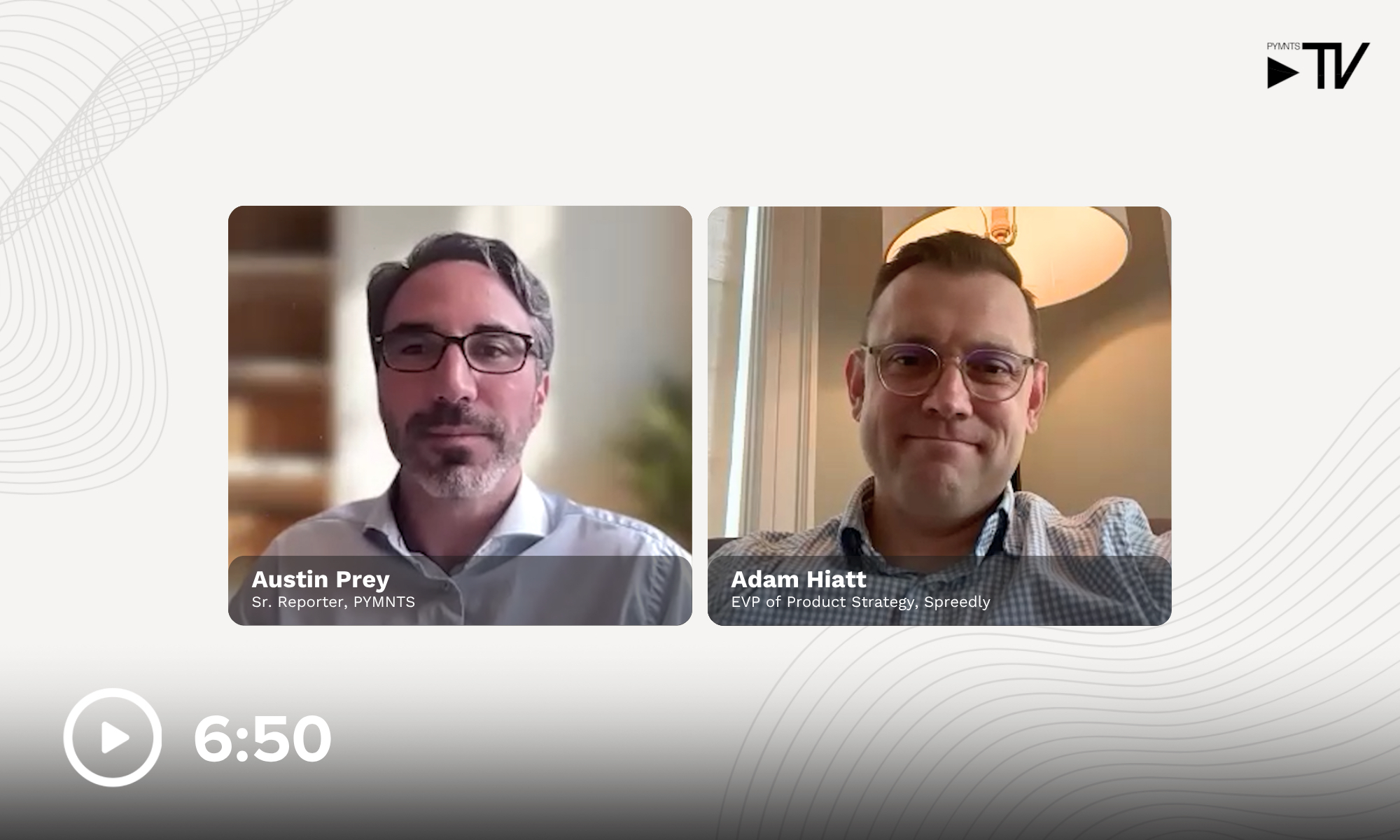
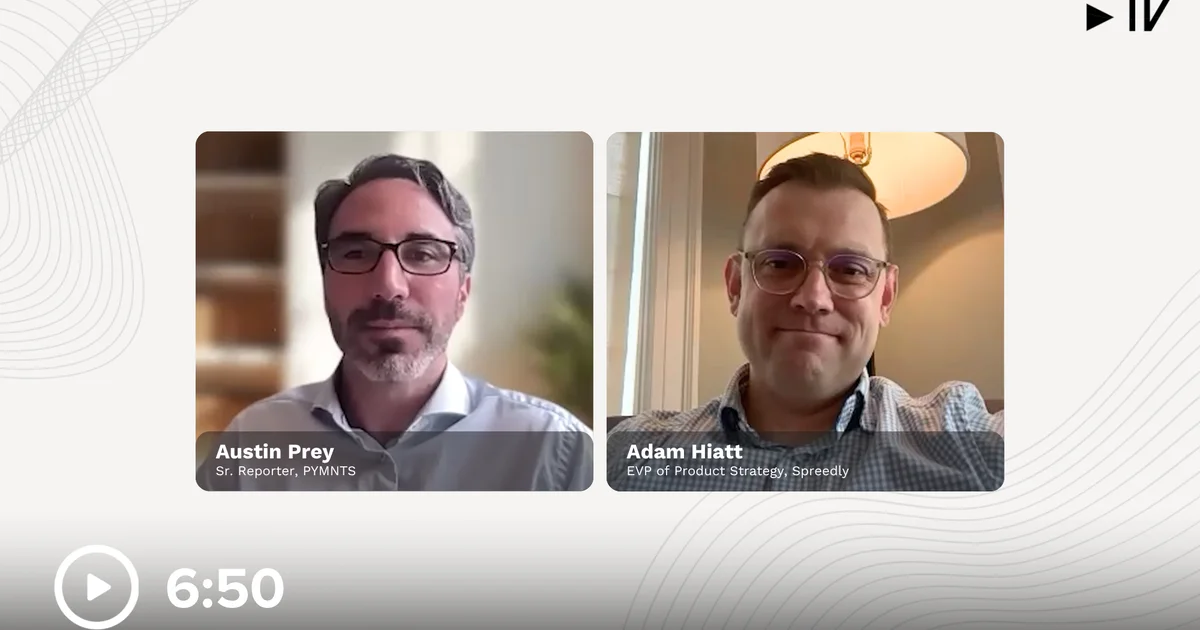
Spreedly's Adam Hiatt shares why, in agentic commerce, some bots may arrive carrying exactly what merchants have always wanted.
www.pymnts.comAutomated traffic has been the enemy since digital commerce began. Credential stuffing, scraping, inventory hoarding, fraudulent orders. Bots showed up almost exclusively in defensive conversations, and the idea that a legitimate customer might not be human was never seriously examined. That is why merchants built a three-layer filter of WAF rules, bot management and fraud scoring around automated access.
That assumption is now shaking, because AI has moved from recommending products to initiating transactions. Adam Hiatt, executive vice president of product strategy at payments orchestration company Spreedly, put it this way in a PYMNTS interview published on September 2, 2026.
The biggest evolution is that not all the bots are bad now.
According to Hiatt, the commercial challenge is no longer detecting whether a visitor is a bot. The question has shifted to whether that bot represents a legitimate customer with genuine purchase intent, and, once that is established, making it easy for the agent to transact. Spreedly, which aggregates connections to multiple PSPs, activated agentic commerce as a live channel on its platform in March 2026, saying merchants can accept agent-initiated transactions while keeping their existing payment relationships and their merchant of record status.
LLM-originated sessions converted two to three times better than search
Numbers make this concrete. Hiatt disclosed that at one Spreedly ticketing customer, sessions originating inside LLM chat interfaces converted at roughly two to three times the rate of sessions that began with traditional search.
"That's not two to three percent," he added. "That's 100% to 200% greater."
Why such a gap? A shopper arriving from search may still be researching, comparing alternatives, or reconsidering whether to buy at all. An AI assistant, by contrast, has already evaluated price, availability and criteria before it ever reaches the merchant's site. "When the bot hits the site, the decision's pretty much ready to go," Hiatt said. The upper part of the funnel now closes outside the merchant's property.
This figure deserves caution, however. What has been published is a single anonymous customer case, and the measurement period, session volume and comparison conditions are all undisclosed. It is also possible that this reflects the particular economics of ticketing, where inventory is perishable and purchase intent is unusually explicit. There is not yet enough evidence to generalize that agent traffic always converts better.
The implication still stands. If agent traffic becomes a distinct acquisition channel alongside search, marketplaces, social and direct, the merchant's job shifts from persuading a shopper to making sure the transaction can complete. The conversion questions Hiatt named were not about landing pages but about whether the catalog is accurate and whether the brand is well represented inside AI environments. SEO does not disappear; it acquires a counterpart in model visibility.
Where do you draw the line between a good bot and a bad one?
The difficulty starts one step later. Deciding to welcome agents does nothing to guarantee that a given agent is genuine. User-Agent strings are trivially spoofed and IP allowlists collapse operationally. The notion of a good bot only works once it can be verified cryptographically.
The foundation for that is Web Bot Auth. Proposed by Cloudflare in May 2025 and now moving through the IETF, it uses HTTP Message Signatures under RFC 9421 so that an agent signs each HTTP request with its own private key, and the server verifies that signature against a published key directory. A spoofed User-Agent no longer gets through. We covered the mechanics in our explainer on Web Bot Auth. Cloudflare announced its first cohort of signed agents in August 2025, and AWS WAF Bot Control and Shopify have since added support.
The card networks are layering intent on top of that verification. Visa's Trusted Agent Protocol (TAP), published on October 14, 2025 and designed with Cloudflare in alignment with Web Bot Auth, carries an indication of whether the agent intends to browse or to purchase, plus data elements showing whether the consumer is an existing customer of the merchant. Visa framed the launch around Adobe data showing that AI-driven traffic to US retail sites surged over 4,700% in a year. Mastercard's Agent Pay, announced in April 2025, registers and verifies agents before issuing Agentic Tokens, and lets merchants confirm agent authenticity by implementing Web Bot Auth at the CDN layer rather than writing new code. Looking at how Cloudflare came to support both networks' protocols, the verification foundation is effectively converging on a single standard.
| Layer | Owner | What it proves | Merchant-side implementation |
|---|---|---|---|
| Web Bot Auth | Cloudflare / IETF | The request is signed with a registered agent's key | Enable signature verification at the CDN or WAF |
| Visa Trusted Agent Protocol | Visa (designed with Cloudflare) | Agent intent (browse or purchase) and whether the consumer is an existing customer | Acceptance-side integration for TAP |
| Mastercard Agent Pay | Mastercard | Validity of an Agentic Token bound to a pre-registered, verified agent | Web Bot Auth at the CDN layer, via certified processors |
From the merchant's seat, these three layers answer who the visitor is, what it came to do, and how it intends to pay. When Hiatt pointed to "the ability to create nuanced risk policies that aren't simply one size fits all" and called the fraud orchestration problem "deeply crucial," he was describing the machinery that takes these signals and decides order by order.
What over-blocking costs merchants
Running without that discrimination has a price. In a Darwinium survey of 500 fraud, risk and security leaders, 48% of organizations allow agentic traffic by default, 31% block it by default, and 20% decide case by case at the endpoint or action level. The permissive group absorbs risk it cannot quantify and monitors after the fact; the restrictive group forfeits revenue. Neither is really a choice so much as a compromise made without the means to tell the two apart.
Fraud vendor Chargebacks911 warns that detection engines built around human behavior are misclassifying legitimate AI shopping agents as malicious bots and driving up false declines. Founder and CEO Monica Eaton told PYMNTS that as agentic commerce scales, merchants face a clear choice: adapt their detection and evidence infrastructure now, or watch a growing share of legitimate revenue get declined by their own systems.
The unresolved parts
Lining up only the vendor case makes this look tidier than it is. Three problems remain open.
First, signature verification proves only that the agent holds a key registered in a directory. It does not cover a compromised registered agent, or one acting beyond the scope the user consented to. Second, false positives cut both ways. Blocking a legitimate agent that has not adopted signing turns standards compliance into a sales differential, and tightening policy before the standards settle means discarding demand from smaller agents that have not caught up.
The heaviest question is chargeback liability, where no settled industry standard exists. Card networks, issuers and agent platforms are still working through where responsibility sits between the consumer, the merchant and the agent provider, and in practice merchants are the ones responding to disputes. The traditional evidence used in a chargeback response, such as IP address, device fingerprint and on-site navigation, was generated by an agent rather than a human and is weak proof of human intent. The United States has no federal law addressing AI-agent purchasing liability, and Europe's PSD3 is still under negotiation. Any decision to grow agent-originated revenue is made while that allocation is unsettled.
What merchants should settle now
The list is short. Start by checking how your WAF and bot management currently treat signed agents. Then tag agent-originated orders separately from human ones so approval rates, false decline rates and chargeback rates can be measured on their own. Without that measurement there is no basis for arguing whether you are blocking too much or letting too much through.
Beyond that, the work is catalog accuracy and machine-readable inventory data. Because agents finish deciding before they arrive, a wrong price or a stale availability flag quietly eliminates you at the comparison stage, and the merchant never even sees the lost sale.
Conclusion
Bot filtering used to be a pure cost center. It is becoming the point at which revenue is decided, separating the traffic that should pass from the traffic that should not. Hiatt called the shift a tidal wave and said standards and infrastructure are the remaining constraints on adoption.
Those standards are largely visible now: a shared verification layer in Web Bot Auth, with Visa and Mastercard adding intent signaling and payment tokens on top. What to watch next is when merchant-side fraud vendors actually fold these signals into their scoring, and when the card networks publish their first rules on liability. Until then, only the merchants who know how many agent orders they approve and how many they reject will be able to participate in the argument.