Target Reports 2,000% Surge in AI-Driven Traffic as Shopping Goes Live on ChatGPT, Google, and Copilot
Target's AI-driven traffic jumped 2,000% in Q1 2026, roughly five times the retail average. We break down the data behind the surge, the three-platform rollout, and the measurement and product-data groundwork e-commerce operators should start now.

Key Takeaways
- AI-driven traffic to Target, the major US retailer, leapt 2,000% year over year in the first quarter of 2026. Target positions itself as the first mass retailer offering shopping experiences across all three leading AI platforms, Google Search and the Gemini app, ChatGPT, and Microsoft Copilot, letting shoppers go from discovery to purchase inside the AI itself
- The surge is five times the roughly 400% increase in AI-driven traffic to retail sites overall. Adobe Analytics data also shows AI-referred visitors now converting 42 to 54% better than non-AI traffic, a reversal that makes AI referrals a channel that is still small in volume but high in quality and growing fast
- The first moves for e-commerce operators are measuring AI-referred traffic and making product data readable to AI agents. Investment decisions should rest on absolute volumes and quality rather than headline growth rates. Preparing product data for this channel resembles the early-mover opportunity of SEO investment around 2010
Sorting the Headlines From the Primary Source on the 2,000% Surge
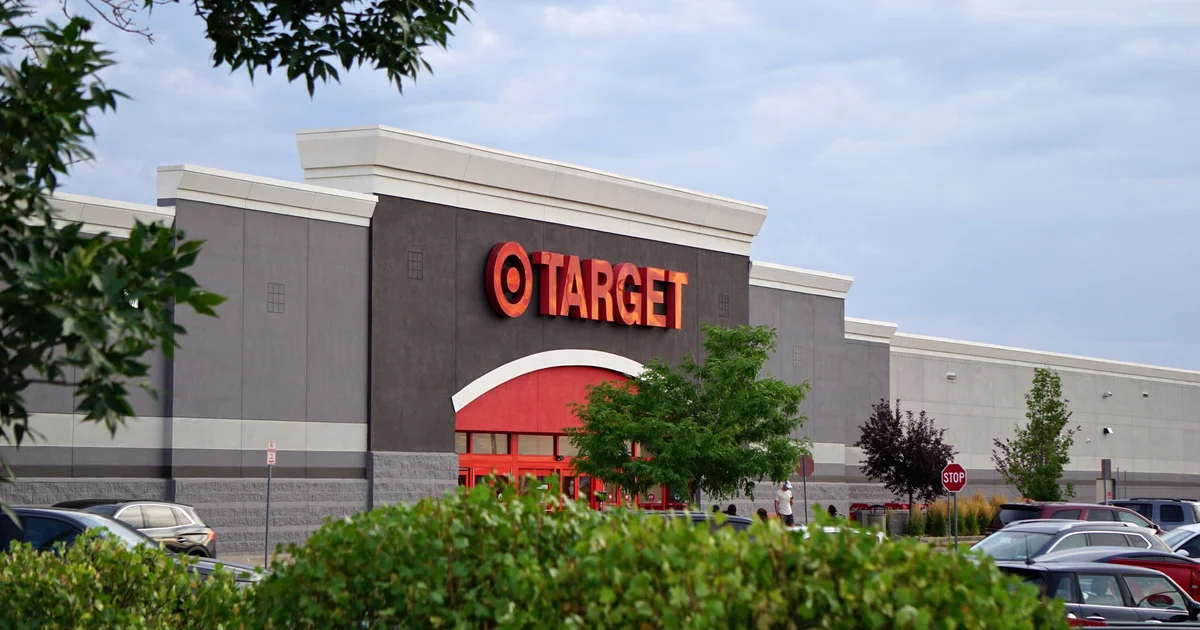
Retailer, Target, has seen a 2,000% increase in AI-driven traffic during the first quarter of 2026 as it continues to shape its consumer experiences with conversational AI.
www.marketingtechnews.netOn August 4, 2026, Marketing Tech News reported that AI-driven traffic to Target surged 2,000% in the first quarter of 2026. The figure originates from the official fact sheet Target published on June 18, which states that AI-driven traffic to Target leapt 2,000% in the first quarter compared to last year, far outpacing the nearly 400% increase across retail sites overall.
Traffic is only half of the announcement. In the same document, Target declares itself the first mass retailer with shopping experiences available across all three leading AI platforms: Google Search (including AI Mode and the Gemini app), OpenAI's ChatGPT, and Microsoft Copilot. Shoppers can discover products in conversation, receive recommendations, build multi-item baskets, and complete purchases while staying connected to the Target Circle loyalty program.
The reason international media keep returning to this number six weeks after the announcement is simple: it is one of the few measured data points from a major retailer that answers the question of whether AI shopping has become real demand. This article tests the 2,000% figure against third-party data and then draws out what it means for e-commerce operators.
How to Read a 2,000% Growth Rate
An increase of 2,000% means roughly 21 times the prior-year level. Taken alone the rate looks like an outlier, so evaluating it requires two checks: whether the base was small to begin with, and how the figure compares with the industry as a whole.
Target itself supplies the yardstick. The fact sheet cites a benchmark of nearly 400% growth in AI-driven traffic to retail sites overall. Target does not name a source, but the figure closely matches the 393% year-over-year increase in AI traffic to US retail sites in Q1 2026 reported by Adobe Analytics. By Adobe's measurements, the 2025 holiday season (November and December) saw 693% growth, and May 2026 came in at 138%, so growth rates are moderating while expansion continues. Cumulative growth since Adobe began tracking in October 2024 stands at 1,324%.
Placed in that context, Target's 2,000% works out to roughly five times the industry average. The natural explanation is that simultaneous coverage of three platforms widened Target's exposure. A caveat is warranted, though. Target has not disclosed how it defines or breaks down AI-driven traffic, which AI sources it counts, or which metric it uses, and per-platform contribution is unknown. Only the growth rate has been published, not absolute volumes, and readers should discount accordingly.
Third-party data on traffic quality, on the other hand, has clearly turned positive. According to Adobe Analytics, AI-referred visitors converted 38% worse than non-AI traffic as of March 2025. By March 2026 that had flipped to 42% better, and by May the gap widened to 54% better. AI-referred shoppers also spend about half again as much time on site and browse more pages. The conventional wisdom of a year ago, that AI is used for research but not for buying, has been overturned in the data.
AI is quickly becoming the primary interface between consumers and their favorite brands.
The key figures so far are summarized below.
| Metric | Figure | Source |
|---|---|---|
| AI-driven traffic to Target (Q1 2026, YoY) | Up 2,000% | Target official fact sheet |
| AI-driven traffic to retail sites overall (same period, benchmark cited by Target) | Up nearly 400% | Target official fact sheet |
| AI-driven traffic to US retail sites (Q1 2026, YoY) | Up 393% | Adobe Analytics |
| AI-driven traffic to US retail sites (Nov-Dec 2025, YoY) | Up 693% | Adobe Analytics |
| AI-driven traffic to US retail sites (May 2026, YoY) | Up 138% | Adobe Analytics |
| Conversion rate of AI-referred visitors (March 2026, vs non-AI) | 42% higher | Adobe Analytics |
| Conversion rate of AI-referred visitors (May 2026, vs non-AI) | 54% higher | Adobe Analytics |
Even so, the caveat about absolute volume stands. In a May 2026 analysis, research firm eMarketer acknowledged the rapid growth and high quality of the AI referral channel while implying that current penetration remains limited. A spectacular growth rate and a small absolute base are not contradictory. Holding both ideas at once is the key to avoiding overestimation and underestimation alike.
What Runs Where, and the Fine Print Behind "First"
So what exactly has Target put into operation on each platform? The depth of implementation differs across all three.
The deepest integration is with Google. In Google Search (including AI Mode) and the Gemini app, shoppers can browse Target product listings and complete purchases on the spot. The capability rests on UCP (Universal Commerce Protocol), an open standard co-developed by Google, Target, and others; payment runs through Google Pay with major credit cards or the Target Circle Card, with shipping anywhere in the US. As of the fact sheet, however, single-item purchases come first, and buying multiple items in one transaction on Google is listed as coming soon.
In ChatGPT, the Target app invoked with "@Target" is the entry point. It supports multi-item purchases in a single transaction and fresh food orders, with same-day Drive Up, in-store Order Pickup, or shipping as fulfillment options. In Microsoft Copilot, Target is an early launch partner for loyalty experiences in Copilot Checkout via account linking, so shoppers can log in and complete purchases inside the chat. Target Circle members receive exclusive discounts and free shipping, and paying with the Circle Card saves an extra 5%.
The phrase "first mass retailer" carries fine print. Looking at direct purchases inside ChatGPT alone, Walmart got there first in October 2025 through its OpenAI partnership and Instant Checkout. Target's claim rests specifically on being the first mass retailer with shopping experiences across all three platforms. Moreover, Retail Dive reported that when OpenAI pivoted from Instant Checkout to a retailer-app model in March 2026, seven retailers including Target, Sephora, Nordstrom, and Lowe's had already integrated with the updated Agentic Commerce Protocol (ACP). Supporting any single platform is no longer rare; the competitive axis has shifted to breadth of coverage and depth of implementation.
The Strategy Behind the Number: Loyalty Hooks and a Learning Loop
What should not be overlooked is that all three channels place the Target Circle connection at the center of the experience. Discounts and free shipping nudge shoppers to log in, tying every purchase made on an external AI back to Target's own customer IDs. Even as the top of the funnel moves into AI platforms, the customer relationship stays in-house.
The learning loop is explicit as well. Target says it will apply what it learns in external AI environments to improve Target.com and its app, sharpening recommendations, easing checkout, and personalizing benefits. Prat Vemana, chief information and product officer, describes the posture this way.
Consumers are beginning to shop in more conversational ways, and Target has an opportunity to help shape where those experiences go next. As the technology evolves, we're moving with intention: learning quickly, partnering closely and building experiences that feel intuitive, trusted and unmistakably Target.
Corporate context is a useful lens here. US media outlets report that Target has faced prolonged weakness in comparable sales and is in the middle of a turnaround under Michael Fiddelke, who became CEO in February 2026. Against that backdrop, surging AI-driven traffic is one of the few high-growth metrics the company can showcase. Readers should factor in that this is a number the announcing company wants to promote.
What E-commerce Operators Should Do Now
Dismissing the Target case as something only a giant can pull off would be premature. At least two lessons apply regardless of scale.
The first is measurement. The starting point is separating and visualizing traffic from referrers such as ChatGPT, Gemini, Copilot, and Perplexity in your analytics. The decision criteria are absolute numbers and conversion rates, not growth percentages. As the Adobe data shows, AI-referred visitors tend to arrive with strong purchase intent, so even modest volumes can contribute meaningfully to revenue. Only after grasping your own reality in both volume and quality can you set investment priorities.
The second is making product information readable to AI. eMarketer's analysis finds that retailers winning AI referrals share a trait: complete, structured product content on their entry and discovery pages. It likens the investment to SEO investment around 2010. Are product names, specifications, inventory, prices, and delivery terms machine-readable? AI-driven branded searches and comparison traffic are already arriving at e-commerce sites in Japan as well, and it is not too early to prepare.
At the same time, platform dependency deserves caution. As noted above, OpenAI changed its Instant Checkout approach roughly half a year after launch. Because AI-side specification changes will keep landing directly on storefront design, investing in a durable foundation of product data that any AI can reference beats betting everything on optimizing for a single platform.
Conclusion
Target's 2,000% surge in AI-driven traffic is a leading indicator, backed by a major retailer's measured data, that AI is becoming a genuine entry point for shopping. What matters is not the flashy rate itself but the combination of relative growth at five times the industry average and a quality reversal in which AI-referred conversion now beats non-AI traffic.
The next things to watch are the expansion of multi-item purchasing on Google, whether other mass retailers follow, and whether Target can sustain the growth into the second quarter and beyond. AI-driven traffic is shifting from an experimental talking point to a channel verified by numbers every quarter.