AI Shopping App Minty Launches Shopify App, Bringing In-ChatGPT Cashback to the Cart Abandonment Fight
Minty, formerly addShoppers, launches a free Shopify app placing cashback offers inside ChatGPT at the moment of purchase intent. How it works, the company's history, and what merchants should verify in an era of 74% cart abandonment.

Key Takeaways
- On August 4, 2026, Minty, a U.S. AI shopping app, announced a free Shopify app that places cashback offers at the moment of purchase intent across AI chats such as ChatGPT, mobile, and browsers
- The company behind it rebranded from addShoppers in January 2026, and the app builds on SafeOpt technology that identifies and re-engages anonymous site visitors. "First cashback app live inside ChatGPT" is the company's own claim, and the pay-for-results fee rate is undisclosed
- With cart abandonment above 74% in the Americas, an incentive layer is now being stacked on top of AI visibility. Merchants have reached the stage where they must measure AI-driven traffic and decide where to deploy purchase incentives
What Is Inside Minty's New Shopify App
As more consumers consider how artificial-intelligence services can help with the shopping experience, payments and commerce providers are preparing.
www.digitaltransactions.netAs payments publication Digital Transactions reported on August 4, 2026, Minty, an AI shopping app based in Charlotte, North Carolina, announced the launch of an app for Shopify merchants. Installation is free, and the company says setup takes minutes with no theme edits or developer work.
The app's functions fall into two groups. The first connects a store to Minty's shopper network and places cashback offers at the moment purchase intent emerges, across AI chats, the mobile app, and Chrome and Safari browser extensions. Digital Transactions reports that the app's Shopify App Store page displays compatibility with ChatGPT, Perplexity, and Claude. The second identifies shoppers who visit a site and leave without sharing contact details, then reconnects with them via email and SMS. The company says this includes anonymous traffic and visitors arriving through AI tools.
Pricing is described as pay-for-results, but the actual rate does not appear in the announcement and remains undisclosed. The App Store listing itself has been live since June 9 and displays integrations with marketing tools such as Klaviyo and HubSpot, yet it carried no merchant reviews at the time of the announcement. The sales pitch has arrived ahead of any third-party validation of results.
How Cashback Gets Inserted Into a ChatGPT Conversation
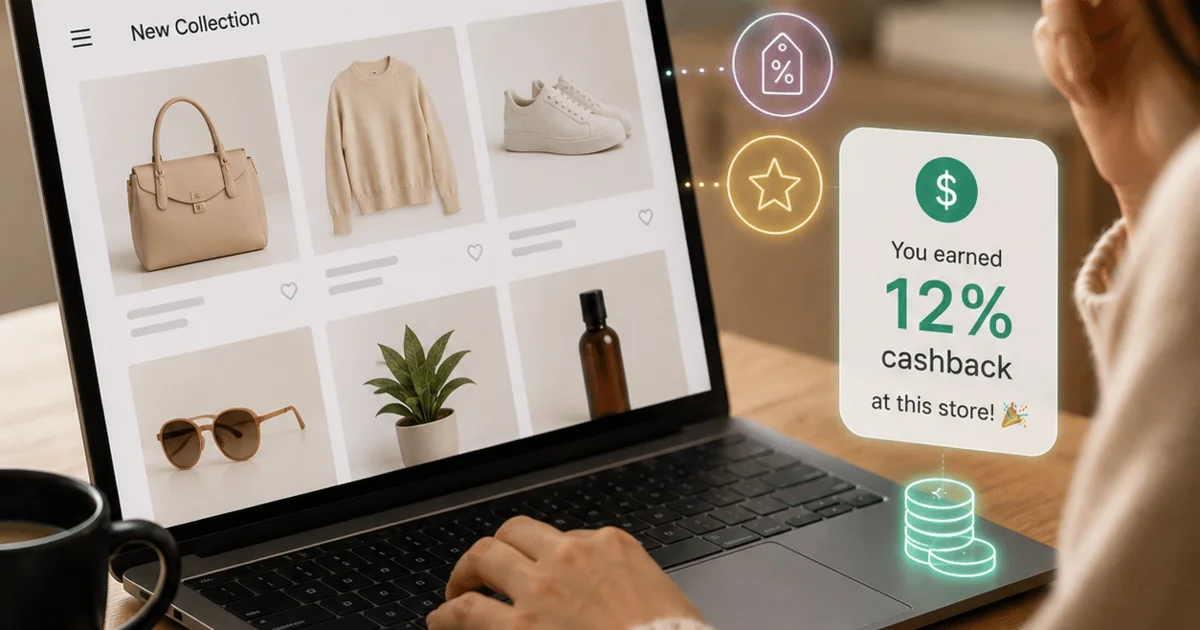
Understanding this Shopify app requires tracing the groundwork Minty has laid since April on what amounts to opening storefronts on AI surfaces. On April 22, 2026, the company launched a cashback integration built on ChatGPT's app capability and called it "the first cashback app live inside ChatGPT." The "first" is Minty's own characterization, but the mechanism itself is concrete. Users add the app from the tools menu or invoke @Minty in a conversation, and as they browse products or ask shopping questions, relevant cashback offers appear in the chat in real time. The design removes the detour of leaving the chat to hunt for coupon sites.
The conversation surface is not the only one. Minty says merchant profiles registered on its platform also appear across AI search and assistant surfaces such as Google AI Overviews and Apple Intelligence. Where traditional cashback players fought mainly with browser extensions and their own apps, Minty is positioning to distribute offer-attached store information to the multiple surfaces where generative AI assembles answers. The company brands this approach "Proactive Commerce": reaching shoppers before they arrive rather than waiting for them.
| Surface | What Minty provides | Status |
|---|---|---|
| ChatGPT (in-app integration) | Displays relevant cashback offers in real time during conversations | Live since April 22, 2026. "First cashback app" is the company's own claim |
| Perplexity / Claude | Compatibility displayed on the Shopify App Store listing | Operational details undisclosed (per Digital Transactions) |
| Google AI Overviews / Apple Intelligence | Merchant profile placement | Per company statements. Display conditions undisclosed |
| Chrome / Safari extensions and mobile app | Applies cashback for stores the shopper is browsing | Live (the company's traditional core surfaces) |
| Shopify (merchant app) | Store connection, offer distribution, identifying and re-engaging lost visitors | Listed June 9, 2026; announced August 4. Free, pay-for-results (rate undisclosed) |
The traditional shopper journey is going away and merchants can no longer wait for shoppers to come to them. Shopping now happens across search, social, and AI conversations, and the moment a shopper decides to buy can pass in seconds.Source: Rodney Mason (CMO, Minty)
The April announcement also carried a comment from the IAB's VP of commerce and retail media, who observed that AI-driven discovery is reshaping how consumers evaluate products. The advertising industry, too, has started operating on the assumption that this shift in the path to purchase is real.
Formerly addShoppers: A Decade of Assets and a Litigation History
This is not an unknown startup appearing from nowhere. Minty's predecessor is addShoppers, a marketing technology company that operated in Charlotte for more than a decade. On January 7, 2026, it announced a rebrand consolidating all products under the Minty name, and co-founder and CEO Jon West described the goal as uniting next-generation shopping tools for savvy consumers with a new growth channel for brands. In the August announcement, the company also cites a G2 ranking placing it among the top five commerce tools for generating incremental revenue for e-commerce brands (per its own release).
That corporate history connects directly to the app's second function. SafeOpt, addShoppers' flagship product, identified anonymous visitors on e-commerce sites and delivered discount offers by email through a partner network. The new "identify and reconnect with lost shoppers" capability is an extension of that lineage. The method, however, has drawn multiple class actions in the United States from consumers who received marketing emails despite never handing over their contact details. In November 2024, the U.S. District Court for the Eastern District of Pennsylvania dismissed the Ingrao case against addShoppers and others, citing grounds including lack of standing. The company states on a dedicated site that three such challenges were all dismissed with no findings of wrongdoing or liability.
Winning in court and being risk-free for an adopting brand are two different things. The repeated lawsuits themselves signal how much scrutiny anonymous-visitor identification attracts. The app promises "compliant email and SMS" and one-click opt-in, but what counts as lawful and appropriate depends on national and state regulations and on consistency with a merchant's own privacy statements. Merchants who install it carry their own responsibility to verify how consent is obtained for the audiences being contacted.
Cart Abandonment at 74% and AI-Driven Buying: Two Numbers Behind the Pitch
The tailwind data is lining up. According to Mastercard's June eCommerce Benchmarks report, the average cart abandonment rate in the Americas was 74.22%. Baymard Institute research likewise puts the cross-industry average near 70%, and Minty's announcement cites that research's estimate of roughly $260 billion in recoverable revenue per year in the U.S. alone. A design that inserts a financial incentive at the moment of purchase intent takes direct aim at that last-step drop-off.
The spread of AI-driven buying is starting to show up in numbers as well. An IDC report commissioned by WooCommerce and published on August 3 found that 70% of U.S. consumers already use AI to help them shop and 30% have completed a purchase through AI. The same report forecasts $500 billion in digital spending shifting to AI agents and platforms. Minty itself cites a figure that 77% of shoppers use AI tools for pre-purchase research. The sources vary, but they point in the same direction: AI surfaces are becoming an entrance to purchasing.
One caveat: Minty's claimed network size is inconsistent across documents. The press release says "hundreds of millions of shoppers," while the Digital Transactions article reports "millions," and the company's own site also describes millions. No third-party data verifying the reach of the offer network has been published, so merchants evaluating the app need to ask for evidence in their own category.
What This Means for Merchants: An Offer Layer on Top of AI Visibility
In the context of agentic commerce, this launch shows the contest on AI surfaces moving from getting found to inserting a reason to be chosen. Appearing in an AI answer through structured data and feed hygiene is one problem; being selected within that answer is another. If financial incentives like cashback surface directly inside AI conversations, a new comparison axis emerges alongside price, shipping, and reviews.
The same article reports that Pie, which helps merchants improve their visibility to AI agents, received an investment from Amex Ventures. Minty distributes offers and Pie works on discoverability, but the direction is the same: capital and new entrants are flowing into the intermediary layer forming between merchants and AI surfaces.
For merchants considering the app, the checklist narrows to three items. The pay-for-results rate and how results are measured, whether it double-counts with existing affiliate and coupon channels, and whether re-engagement emails contradict the store's own privacy policy. Waiting for those answers costs little. The step worth taking first is building measurement that identifies AI-driven visits in analytics and shows which surfaces actually convert. Those numbers will reveal where an offer budget is worth deploying.
Conclusion
Minty's Shopify app is a play for offense: it loads a cashback incentive onto AI surfaces including ChatGPT and chases shoppers who walked away. It is also a case study of a company with more than a decade of anonymous-visitor marketing experience reorganizing its business around the growth of AI shopping.
Undisclosed elements remain, from the fee rate to the true reach of the network. Even so, a buying experience in which offers appear inside AI conversations is already operating in the United States. Start by understanding how AI surfaces treat your products, then decide where incentives belong. Merchants who do that preparation now will adapt first to the next shift in the path to purchase.