Korean Startup Waddle Targets U.S. Market with AI Commerce Agent Gentoo
OpenAI hackathon winner Waddle expands to the U.S. with AI commerce agent Gentoo, leveraging its Korean e-commerce client base

Key Takeaways
- Korean startup Waddle won first place among 93 teams at the OpenAI GPT-5 Hackathon, now entering the U.S. market in earnest
- AI commerce agent Gentoo is not a conventional chatbot but a "digital salesperson" that optimizes conversions in real time
- Secured 11 U.S. clients within two months, with adopters reporting 36% monthly revenue increase—a new wave of agentic commerce from Asia
OpenAI Hackathon Winner Expands to the U.S.

Waddle said it is expanding into the U.S. market with its AI commerce agent 'Gentoo,' following momentum from winning a global hackathon hosted by OpenAI.
www.thelec.netKorean AI startup Waddle has begun its full-scale entry into the U.S. market with its proprietary AI commerce agent, Gentoo. The company established its U.S. subsidiary, Waddle Labs, in San Francisco in February 2026.
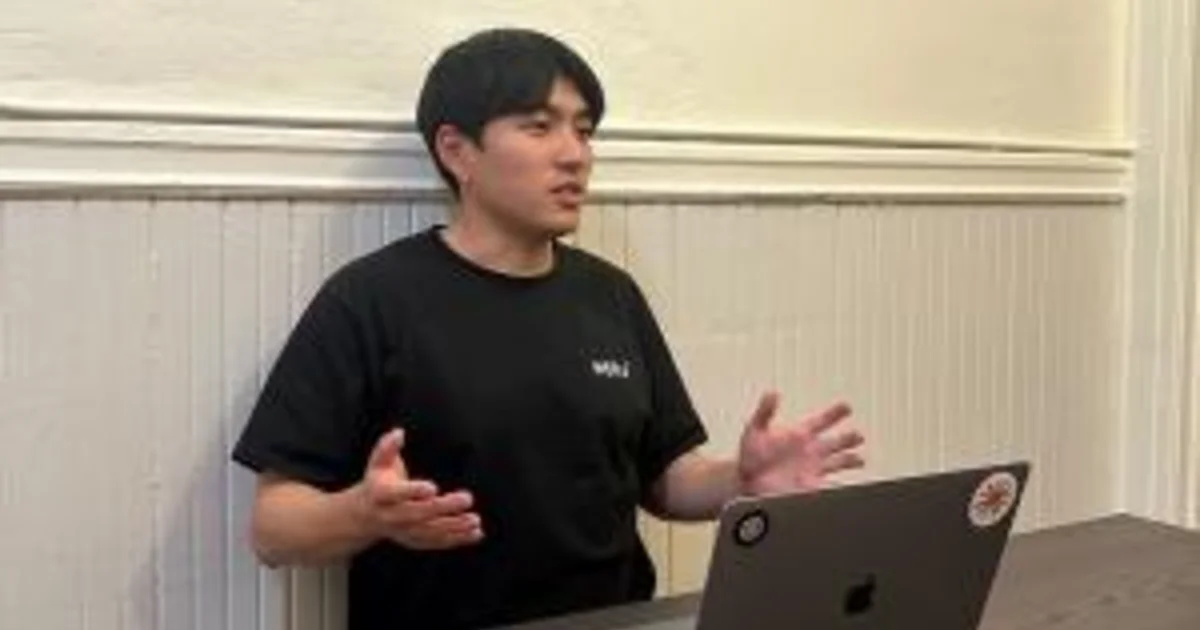
Co-founder and Waddle Labs CEO Cho Yong-won stated:
Winning the OpenAI hackathon confirmed that Gentoo can succeed in the U.S. market. Gentoo is an AI salesperson embedded in online shopping malls.Source: Cho Yong-won, Waddle Co-founder
Since its founding in 2019, Waddle has grown under the leadership of CEO Park Ji-hyuk, who oversees the technology roadmap, while Cho leads global expansion. Both are KAIST (Korea Advanced Institute of Science and Technology) alumni who have worked together for over a decade.
Background and Industry Trends
The biggest challenge facing e-commerce is cart abandonment. Many visitors browse products but abandon their purchase at the final stage. Traditional chatbots, focused primarily on FAQ support, have been unable to fundamentally solve this problem.
Against this backdrop, "agentic commerce"—where AI agents assist consumers from product search through purchase—is rapidly gaining ground. According to a Deloitte report, the Asia Pacific region accounts for 60% of the world's consumers and leads globally in technology adoption. South Korea and China are at the forefront of this movement.
Infrastructure developments are also accelerating on the payments side. Visa launched agentic commerce pilots in the Asia Pacific region in 2026, with Singapore's DBS Bank as its first partner. As this infrastructure matures, attention is growing for Asia-born AI commerce startups like Waddle.
Gentoo's Technical Features and Differentiation
Waddle positions Gentoo not as a traditional chatbot but as a "digital salesperson." Its technical advantages fall into three main areas.
First, real-time behavior detection. Gentoo detects visitor hesitation in real time and initiates conversations at optimal moments. Like an experienced in-store salesperson sensing customer indecision, it fulfills the same role in the digital space.
Second, multi-agent architecture. The system employs a Mixture-of-Experts (MoE) architecture combining multiple large language models and slim LLMs. Specialized models collaborate to solve problems, achieving both product search accuracy and natural conversation quality.
Third, evolution into an "AI store manager". According to Cho, Gentoo has evolved from an "AI salesperson" to an "AI store manager." It analyzes site traffic and user behavior to identify operational issues and even suggest storefront improvements.
The relationship with OpenAI is also a significant advantage. Waddle became the first Korean startup to sign an enterprise agreement with OpenAI in October 2024. Furthermore, at the GPT-5 Hackathon held in San Francisco, the company took first place out of 93 teams worldwide, earning the highest score from a judging panel comprising representatives from Sequoia Capital, Conviction, and OpenAI.
Impact on E-commerce Operators
Waddle's track record is backed by concrete numbers. In the Korean market, the company has secured over 40 clients, including Agabang & Company and Ivana Helsinki. In the U.S. market, it signed 11 clients within just two months and held meetings with over 260 prospective customers.
According to its press release, four U.S. e-commerce companies that adopted Gentoo recorded an average monthly transaction volume increase of over 35% within four months. Beta testing in Korea yielded a 36% increase in monthly online revenue and a 30% increase in order volume.
The highest impact is seen in "high-involvement" product categories. In areas such as cosmetics, fashion, and furniture—where product interpretation is complex and customer consultation is frequent—the value of conversational AI engagement is particularly significant.
Gentoo is also available on the U.S. Shopify App Store, making it accessible for SMBs. The company has raised approximately 2.7 billion won (about $1.9 million) in total funding from investors including Kakao Ventures, Fast Ventures, and BonAngels Venture Partners.
Summary
Cho identifies "vibe shopping" as a key upcoming trend. He predicts an era where product recommendations matching consumers' mood and emotional preferences will be demanded, beyond purely quantitative factors like price and specifications.
Waddle's challenge serves as a litmus test for how far Asia-born agentic commerce startups can establish their presence in the U.S. market. As competitors like Spangle AI and Lemrock emerge, Waddle's close relationship with OpenAI and performance data accumulated in the Korean market will serve as key differentiators.
For e-commerce operators, the key takeaway is that conversational AI salespersons like Gentoo are delivering fundamentally different conversion results compared to traditional FAQ-style chatbots. Operators struggling with cart abandonment rates, in particular, should consider exploring these agentic approaches.